
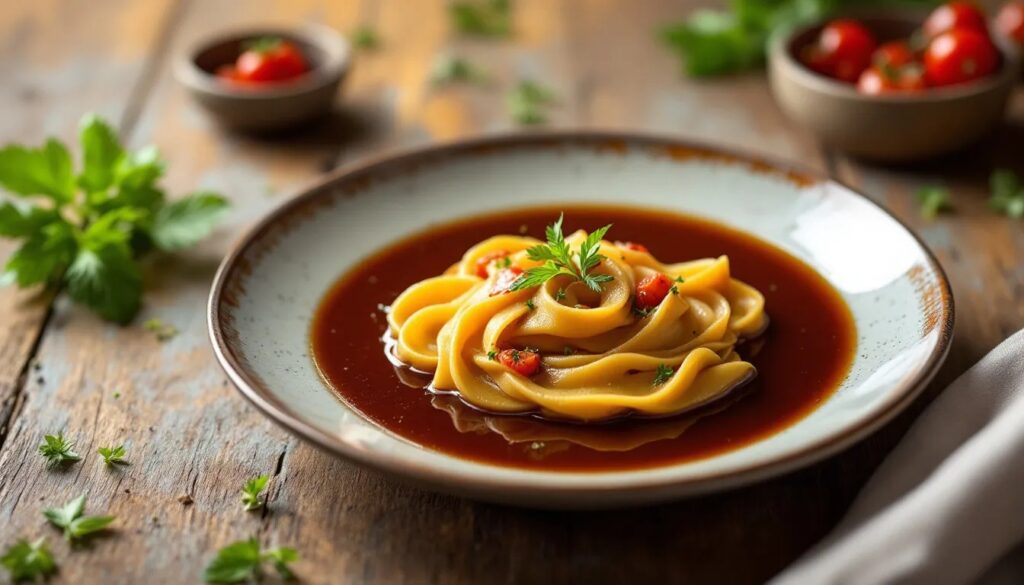
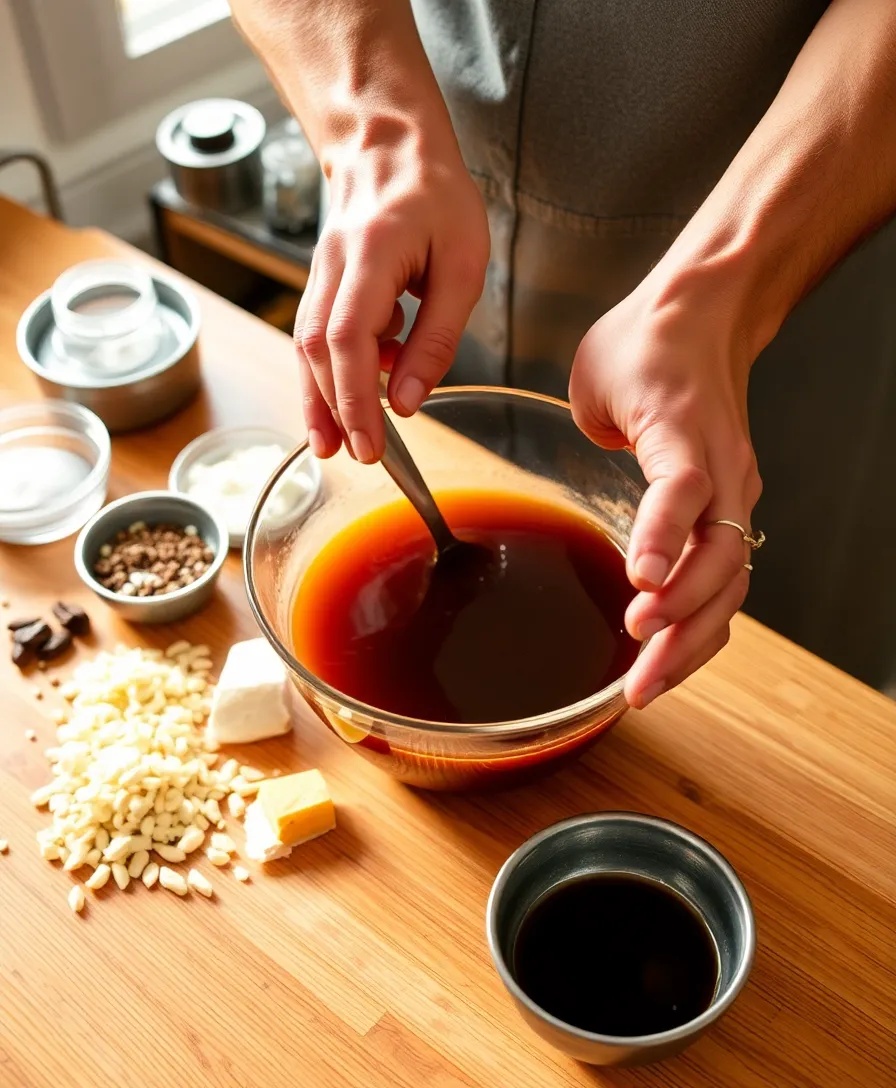
Welcome to this exploration of Homemade Demi-Glace (and Stock Base), a recipe deeply rooted in regional culinary traditions and the shared history of home cooks. Across generations, the combination of these ingredients has served as a cultural bridge, adapting to local climates while preserving the spirit of its creators. The use of simple, nourishing staples combined with aromatic seasonings speaks to the resourcefulness and artistry of historical cooks. In studying this dish’s preparation, we find not just a guide to nourishing the body, but a living connection to the migrations, trade routes, and communities that shaped modern dining. This recipe reflects a beautiful harmony of textures and flavors, showing how basic ingredients can be elevated through traditional techniques. We invite you to prepare this dish, savoring the history and stories baked into every bite.
Homemade Demi-Glace (and Stock Base)
Unlock a world of deep, savory flavor with this meticulous vintage recipe for demi-glace. A cornerstone of classic French cuisine, this rich, concentrated reduction elevates sauces, stews, and braises, promising an unparalleled depth that transforms any dish into a culinary masterpiece. This heritage technique requires patience but rewards with an intensely satisfying flavor profile.
Ingredients
-
As needed
Existing stock
bone-based, implied as starting point; sufficient quantity to yield 6 cups demi-glace -
To taste
Tomatoes
for flavoring the stock -
To taste
Leek
for flavoring the stock -
To taste
Celery
for flavoring the stock -
To taste
Bay leaves
for flavoring the stock -
To taste
Thyme
for flavoring the stock -
To taste
Peppercorns
for flavoring the stock
Instructions
-
To skim, use a net-like skimmer to lift off scum while stock is simmering gently. For an alternate method, use a ladle: push fat to one side of the pot by sliding the round back of the ladle on top of the liquid, then use the front of the ladle to scoop off fat.
-
A third alternative for fat removal is to let the stock cool in the refrigerator overnight and then remove the fat, which has solidified on top.
-
Add tomatoes, leek, celery, bay leaves, thyme, and peppercorns to the stock.
-
Bring the stock to a boil again, then reduce heat and simmer for a generous 10 hours.
-
During the cooking process, water will evaporate, so replace it periodically to keep the same level. (The stock can simmer very gently overnight.)
-
Strain the liquid through a fine strainer. (It is better to end up with more yield than with less. When a lot of liquid is left, the bones get “well washed” and the liquid contains all the nutrients of the stock. If the liquid is reduced too much, when you strain it, a lot of the glace and taste will stick to the bones and be lost.)
-
Return the strained liquid to a clean pot and boil down until it reduces to 3 quarts of liquid.
-
Cool overnight and remove any solid fat from the top.
-
Reduce the stock by half again.
-
Cool until solid.
-
With a sharp knife, cut the solid demi-glace into chunks of about 1 cup each.
-
Wrap each chunk to seal in plastic and freeze until needed.
Recipe Notes
This recipe assumes an existing bone-based stock as its starting point. While the instructions include skimming techniques and adding aromatics for flavor, the initial preparation of the base stock (e.g., type of bones, roasting, initial water amount, and simmer time before adding specified aromatics) is not detailed. The listed aromatics (tomatoes, leek, celery, bay leaves, thyme, peppercorns) are introduced after the initial skimming phase.
Global Heritage Archive
Anthropological & Spice Migration Record
“A testament to global culinary exchange.”
🌿 Spice & Botanical Migration
Spices and botanical ingredients trace ancient trade routes, bringing distinct regional markers to heritage cooking.
🏺 Historical & Archaeological Record
Archaeological evidence shows humans have combined local spices and grains for over 10,000 years.
💡 Little Known Facts
- Heritage recipes carry the stories of families across multiple generations.
- Vintage cookbooks preserve regional adaptations of traditional techniques.
📸 Made This Heritage Recipe?
We would love to see how your dish turned out! Send a photo of your culinary creation to [email protected] to be featured in our community gallery.
Leave a review and rate this recipe below!
Curated Literature & Washington DC Downtown Calendar
The Culinary Alchemist: Modern Gastronomy & Flavor Pairing
By LDN Gastronomy Series
Artisanal technique, seasonal sourcing, and kitchen mastery.
Upcoming Downtown Happenings
Live acoustic sessions, gallery receptions, literary salons, and independent trade shows across Washington DC.
