
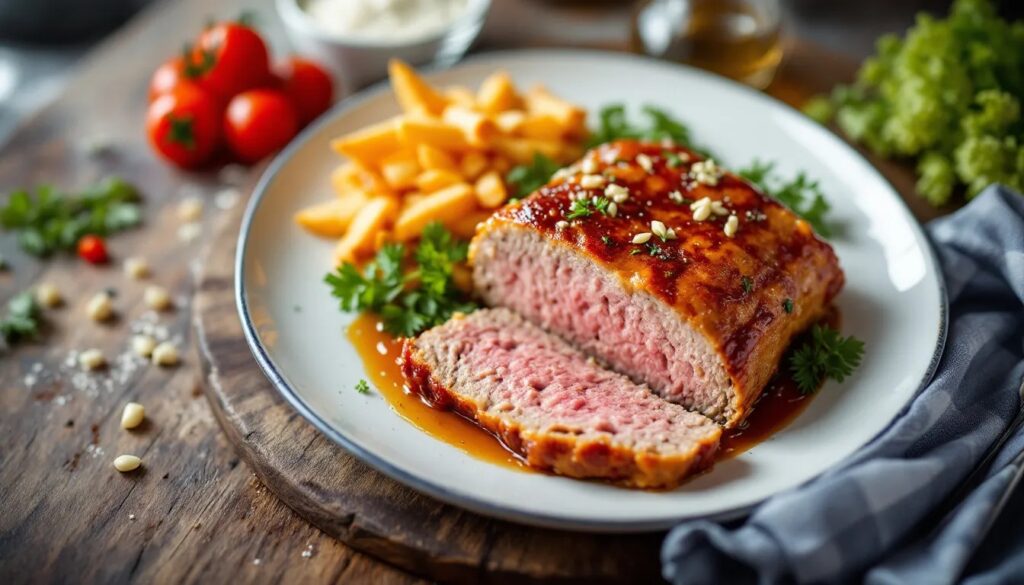
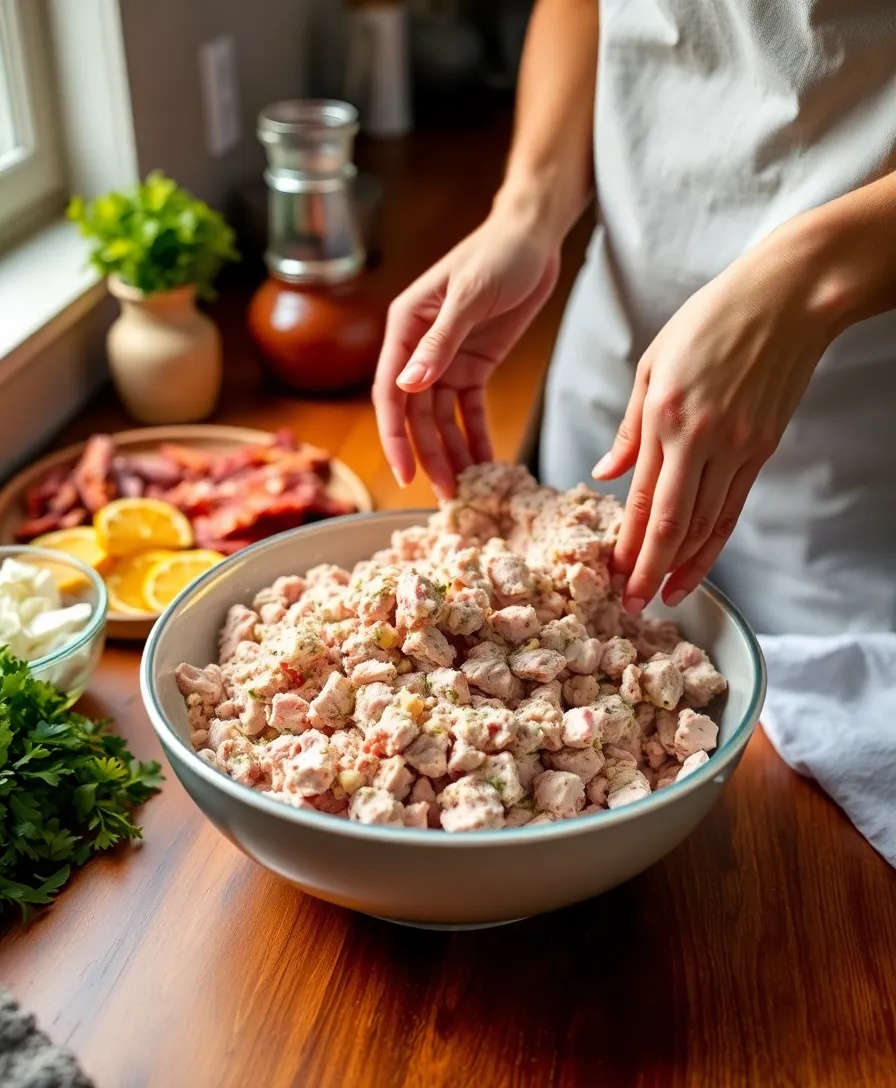
In the sprawling tapestry of American culinary history, few dishes evoke the warm embrace of community and the resourceful spirit of home cooks quite like the ‘Ham Loaf (For a Crowd)’. This isn’t just a recipe; it’s a culinary artifact, a delicious marker of time, place, and the enduring legacy of immigrant ingenuity. Peeling back the layers of its sweet-sour glaze reveals a narrative deeply rooted in the mid-20th century Mid-Atlantic United States, particularly within the thrifty and generous kitchens of Pennsylvania Dutch families.
The genesis of this ham loaf lies in a culture where practicality met plenty. Following the Second World War, as prosperity grew and refrigerators became commonplace, homemakers sought economical yet hearty ways to feed growing families and the throngs of relatives at Sunday dinners or church potlucks. Ham, often a centerpiece of holiday meals, provided delicious leftovers, and the practice of grinding it with fresh pork was a stroke of genius—balancing the salty, cured richness of ham with the milder, juicier qualities of fresh pork. This blend wasn’t just about taste; it was about extending resources, ensuring every morsel was utilized.
The ‘loaf’ format itself speaks to European comfort food traditions, echoing German Frikadellen or Scandinavian köttfärslimpa, brought over by waves of immigrants. But it’s the binders and the distinctive glaze that anchor this dish firmly in American soil. Crushed corn flakes, a truly American invention born in Battle Creek, Michigan, at the turn of the 20th century, replaced traditional breadcrumbs, lending a unique crispness and serving as a testament to the era’s burgeoning processed food industry. Eggs and milk, staples of any farm kitchen, bind the mixture into a tender, moist loaf.
Yet, the true star, and perhaps the greatest cultural indicator, is the dazzling sweet-sour glaze. The combination of crushed pineapple (itself a symbol of mid-century exoticism and canned convenience), dark brown sugar, tangy cider vinegar, and pungent dry mustard creates a caramelized crust that is utterly irresistible. This sweet-sour profile is a hallmark of Pennsylvania Dutch cooking, influenced by German culinary traditions that often balance richness with a bright, acidic counterpoint. The pineapple, native to South America, embarked on a global migration through the Columbian Exchange, eventually finding a beloved home in American kitchens, especially when tinned and made readily available. Brown sugar and cider vinegar, too, tell tales of global trade and local agricultural bounty, transforming simple pantry ingredients into a signature flavor.
Preparing this ham loaf today is more than just cooking; it’s an act of cultural preservation. To achieve the perfect texture, avoid over-mixing the ground meats; a gentle hand ensures tenderness. Pat the mixture firmly into a loaf pan, ensuring no air pockets. For a truly spectacular glaze, generously brush it over the loaf in the last 20-30 minutes of baking, allowing it to caramelize and form a glistening, flavorful crust. This dish, served with mashed potatoes and green beans, isn’t merely a meal; it’s an invitation to a bygone era, a taste of comfort, community, and the enduring spirit of American ingenuity. It reminds us that every dish has a story, and some stories are best told ‘for a crowd’.
Ham Loaf (For a Crowd)
A testament to generous hospitality, this splendid Ham Loaf is masterfully formulated to command the grandest of tables, ensuring every guest departs satisfied. It presents a harmonious fusion of savory ham and rich pork, creating a centerpiece ideal for expansive community gatherings, festive holiday buffets, or cherished family reunions. Beyond its impressive scale, this versatile recipe embraces culinary adaptability, boasting exceptional freezing capabilities and an open invitation for personalized enhancements, delivering profound comfort whether savored warm from the oven or elegantly chilled.
Ingredients
-
5
lbs
ground ham -
5
lbs
ground pork -
5-6
cups
crushed corn flakes -
6
eggs -
½
cup
milk
optional, to bind mixture; use if not using pineapple -
½
cup
crushed pineapple
optional, with juice, to bind mixture; use if not using milk -
2
cups
brown sugar
for double topping recipe -
2
cups
cider vinegar
for double topping recipe -
1
tsp
dry mustard
for double topping recipe
Instructions
-
In an exceptionally capacious mixing vessel, meticulously blend the ground ham, ground pork, finely crushed corn flakes, and eggs until homogeneously combined.
-
Gently incorporate either one-half cup of fresh milk or one-half cup of crushed pineapple (including its natural juices) into the mixture, ensuring a cohesive and moist texture.
-
Evenly distribute and firmly press the prepared ham loaf mixture into generously sized baking pans, or segment it across multiple smaller loaf pans, accommodating the breadth of your gathering.
-
To craft the exquisite glaze, combine two cups of rich brown sugar, two cups of vibrant cider vinegar, and one teaspoon of piquant dry mustard in a separate bowl. Whisk until perfectly smooth.
-
Lavishly cascade the entire quantity of this doubled glaze preparation over the surface of the ham loaf mixture in all pans, ensuring an even coating.
-
Roast in a preheated oven at 325 degrees Fahrenheit for approximately one and a half hours, or until the loaf achieves a golden perfection and is thoroughly cooked through. (Kindly note that the exact roasting duration may vary based on the specific dimensions and depth of the bakeware utilized.)
Recipe Notes
Embrace your culinary imagination by introducing finely grated carrots, plump golden raisins, or a medley of herbs to the loaf mixture for an extra dimension of flavor and texture. This recipe lends itself beautifully to advance preparation, freezing impeccably for future enjoyment. The finished loaf offers delightful versatility; some connoisseurs prefer its hearty warmth, while others cherish its elegant chilled presentation. Should any excess pan drippings accumulate during baking, gently decant them prior to serving to ensure a pristine presentation.
Global Heritage Archive
Anthropological & Spice Migration Record
“A resourceful, community-oriented culinary culture focused on hearty, comforting dishes often prepared for large family gatherings and communal events like church suppers or potlucks.”
🌿 Spice & Botanical Migration
Dry mustard, derived from the seeds of the mustard plant, traces its botanical origins to the Mediterranean region and parts of Asia, spreading through Europe via ancient trade routes. Brown sugar, a product of sugarcane, originated in New Guinea, spreading to India and the Middle East before making its way to the Americas through the Columbian Exchange and the transatlantic slave trade. Pineapple, a key ingredient for the glaze, is native to South America, disseminated globally after European contact through the Columbian Exchange, becoming a symbol of hospitality and exotic flavor in American cuisine.
🏺 Historical & Archaeological Record
While the exact ‘ham loaf’ is a modern invention, the concept of grinding meat, mixing it with binders (like grains, bread, or eggs), and baking it into a cohesive form dates back to antiquity. The oldest written records of dishes resembling meatloaf can be found in the Roman cookbook ‘Apicius’ (4th-5th century CE), which includes recipes for ‘patinae’ that combine ground meat with eggs, bread, and seasonings, baked in a mold.
💡 Little Known Facts
- The use of crushed corn flakes as a binder is a distinctly American innovation, popularizing a product first created in Battle Creek, Michigan, by Dr. John Harvey Kellogg in 1894.
- Ham loaf, especially with a sweet-sour glaze, is considered a quintessential dish in Pennsylvania Dutch country, often served at ‘smorgasbords’ and family-style restaurants.
📸 Made This Heritage Recipe?
We would love to see how your dish turned out! Send a photo of your culinary creation to [email protected] to be featured in our community gallery.
Leave a review and rate this recipe below!
Curated Literature & Washington DC Downtown Calendar
The Culinary Alchemist: Modern Gastronomy & Flavor Pairing
By LDN Gastronomy Series
Artisanal technique, seasonal sourcing, and kitchen mastery.
Upcoming Downtown Happenings
Live acoustic sessions, gallery receptions, literary salons, and independent trade shows across Washington DC.
