
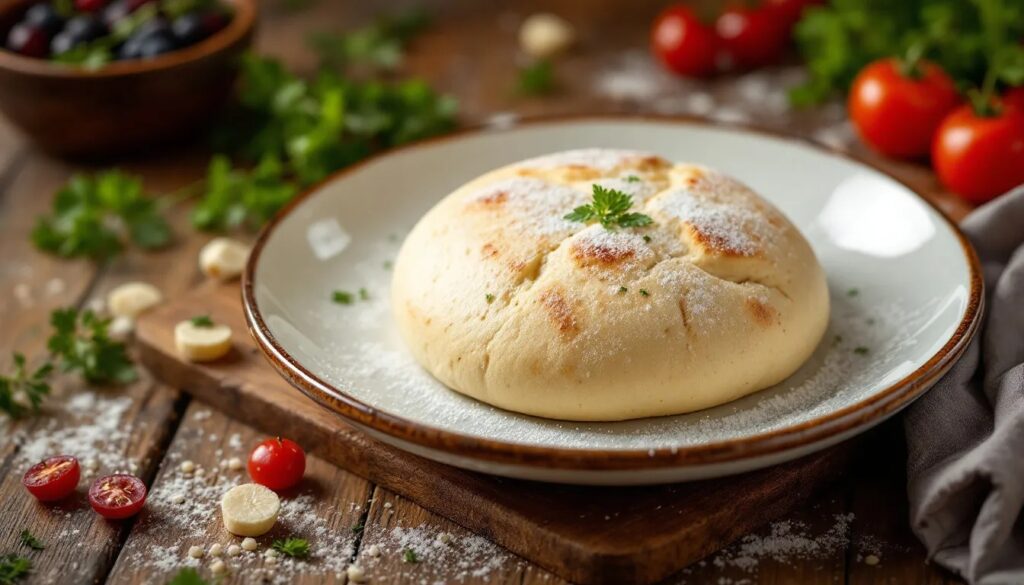
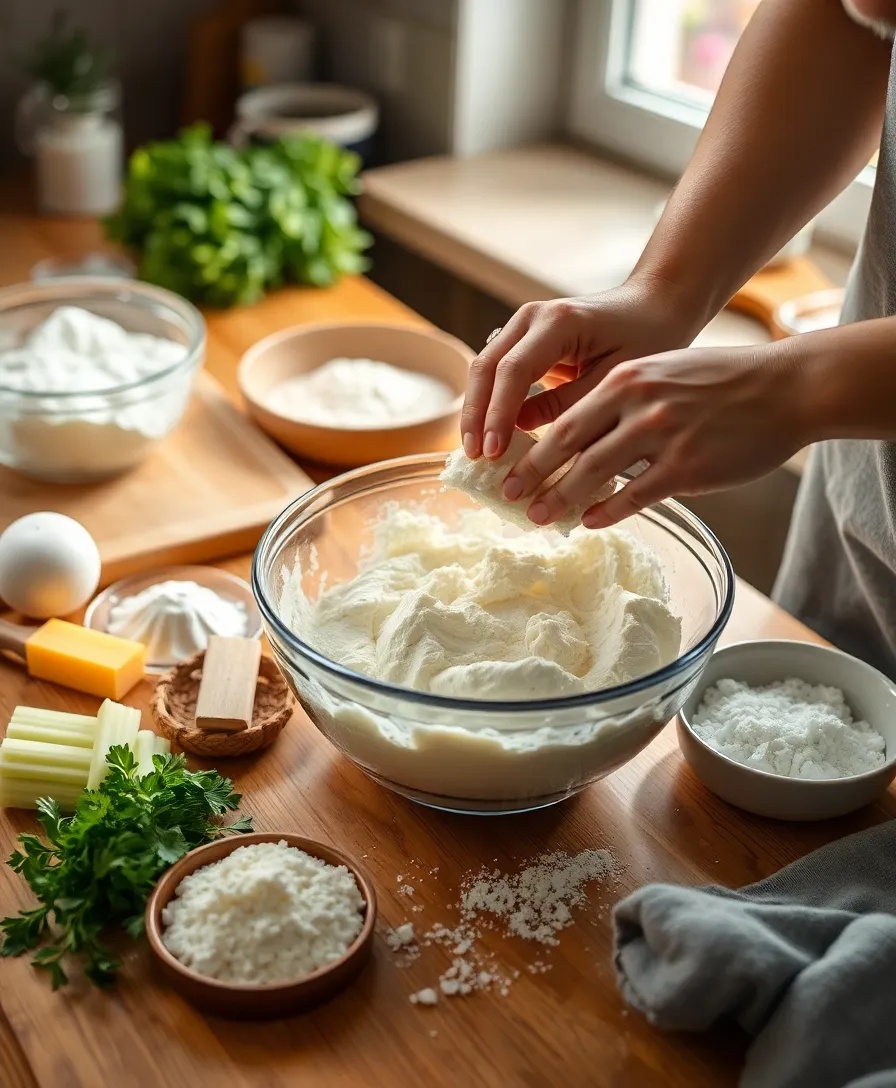
In the annals of culinary history, few foods command the reverence and global affection quite like French bread. It is more than just a staple; it is an icon, a symbol of French gastronomic philosophy that champions purity, simplicity, and an unwavering commitment to quality. The humble ‘French Bread Dough’ recipe, with its seemingly basic ingredients—yeast, water, flour, salt, and a touch of olive oil—is, in fact, a profound narrative of human innovation, migration, and the pursuit of perfection.
The story of French bread begins not in France, but in the fertile crescent, where wheat, the very soul of this bread, was first domesticated over ten millennia ago. From its birthplace, wheat embarked on an epic journey, spreading across continents through ancient trade routes, becoming the bedrock of European agriculture. Similarly, salt, a fundamental component, has been a precious commodity and a driving force behind ancient economies, its exchange shaping civilizations. The yeast, the invisible alchemist responsible for the bread’s airy crumb and distinctive flavor, has an even deeper history, tracing back to the spontaneous fermentation observed by ancient Egyptians. It was through meticulous observation, rather than scientific understanding, that they first harnessed this microorganism to create leavened bread, revolutionizing food production forever. Modern yeast, whether compressed or active dry, represents centuries of scientific advancement, from Louis Pasteur’s revelations in the 19th century to industrial-scale production, democratizing the art of leavened baking.
The inclusion of olive oil in this specific recipe offers a subtle, yet significant, migration indicator. While the lean, iconic baguette famously contains only flour, water, salt, and yeast, the addition of olive oil speaks to a broader ‘French Bread’ tradition, particularly prevalent in the sun-drenched regions of Southern France, such as Provence. Here, the culinary landscape is deeply intertwined with Mediterranean influences, where olive groves dot the landscape and olive oil is a foundational ingredient, lending a subtle richness and tender crumb that distinguishes it from its leaner northern counterparts.
Crafting this quintessential bread at home is a rewarding journey. The magic lies not just in the ingredients, but in the technique. The careful hydration of the flour, the gentle kneading that develops gluten for structure, and the patient proofing that allows the yeast to work its wonders are crucial. A high-quality unbleached bread flour is paramount. Lukewarm water is key for yeast activation. And when it comes to baking, achieving that signature crisp, golden crust requires a hot oven and often a burst of steam at the beginning of the bake, mimicking traditional bakery conditions. This blast of moisture allows the crust to expand before hardening, resulting in a thin, crackly exterior that gives way to a soft, open interior. So, as you knead this dough, remember you’re not just mixing ingredients; you’re participating in a timeless ritual, a culinary legacy that spans millennia and continents, culminating in a simple, yet profoundly satisfying, loaf of French bread.
French Bread Dough
Embark on a culinary journey to the heart of French baking with this timeless dough, a cherished cornerstone for any ambitious home baker. From humble beginnings, it transforms into a rustic masterpiece: a loaf boasting a magnificently bronzed, delicately crisp crust encasing an exquisitely soft, open crumb. Beyond a sublime accompaniment to any repast, this versatile base stands ready to elevate a simple tart into an elegant Pissaladière.
Ingredients
-
½
package
compressed or active dry yeast -
½
cup
lukewarm water -
2
cups
flour -
1
teaspoon
salt -
2
Tablespoons
olive oil
Instructions
-
To awaken the yeast, gently introduce compressed yeast into water maintained at a pleasant 80-90°F (27-32°C). Should you opt for active dry yeast, a slightly warmer temperature of 105-115°F (40-46°C) is ideal for its activation.
-
In a spacious mixing vessel, combine the flour and the finely granulated salt, ensuring an even distribution.
-
Pour the activated yeast solution and the designated oil into the dry mixture. Gently incorporate these elements until they coalesce into a cohesive, pliant dough.
-
If the dough presents as overly firm, sparingly add an additional tablespoon of water to achieve the desired supple, yielding consistency.
-
Dedicate approximately fifteen minutes to the kneading process, working the dough until it achieves a silky smoothness and remarkable elasticity.
-
Shape the kneaded dough into a perfect sphere, nestle it back into its bowl, and allow it to proof in a draft-free, warm environment. This crucial resting period, typically around two hours, will permit it to elegantly double in volume.
-
Gently deflate the risen dough, releasing the accumulated gases. It is now primed for its next culinary application.
-
Should your intention be to craft a classic French loaf, preheat your oven to a robust 400°F (200°C). Bake for approximately 25 minutes, or until the exterior achieves a beautiful, golden-amber hue.
Recipe Notes
This recipe gracefully yields enough dough for one exquisite medium-sized French bread loaf or one perfectly proportioned Pissaladière tart.
Global Heritage Archive
Anthropological & Spice Migration Record
“The culinary culture surrounding French bread emphasizes simplicity, high-quality staple ingredients, and sophisticated baking techniques to produce a crusty, airy loaf central to daily meals and national identity.”
🌿 Spice & Botanical Migration
This recipe for French bread dough notably lacks spices or herbs, highlighting a culinary tradition that prioritizes the purity and quality of its core ingredients. The principal ingredient, wheat flour, traces its botanical origin to the Fertile Crescent in Southwest Asia, migrating westward through ancient trade routes across Europe. Salt, a universally essential seasoning and preservative, has been traded since antiquity across vast networks. The inclusion of olive oil, while not universal for all French breads (especially lean baguettes), points to a strong Mediterranean influence, common in southern France, where olive cultivation and trade have flourished for millennia.
🏺 Historical & Archaeological Record
The oldest archaeological evidence of bread-making dates back over 14,000 years to a Natufian site in northeastern Jordan, where researchers discovered charred crumbs of a flatbread-like product made from wild wheat, barley, and oat. The earliest evidence of leavened bread, using wild yeast, comes from ancient Egypt, around 3000 BCE, with depictions of bakeries and bread-making processes found in tombs. Written recipes detailing specific bread types and leavening methods emerged more formally in Roman texts and medieval European culinary manuscripts.
💡 Little Known Facts
- In 1993, France passed a law, ‘Le Décret Pain,’ to protect the traditional baguette, specifying it must be made only with wheat flour, water, salt, and yeast, without additives, and must be baked on the premises where it is sold.
- The distinct crackle and crispness of a French baguette’s crust is largely due to the high baking temperature and the introduction of steam into the oven during the initial baking phase.
📸 Made This Heritage Recipe?
We would love to see how your dish turned out! Send a photo of your culinary creation to [email protected] to be featured in our community gallery.
Leave a review and rate this recipe below!
Curated Literature & Washington DC Downtown Calendar
The Culinary Alchemist: Modern Gastronomy & Flavor Pairing
By LDN Gastronomy Series
Artisanal technique, seasonal sourcing, and kitchen mastery.
Upcoming Downtown Happenings
Live acoustic sessions, gallery receptions, literary salons, and independent trade shows across Washington DC.
