
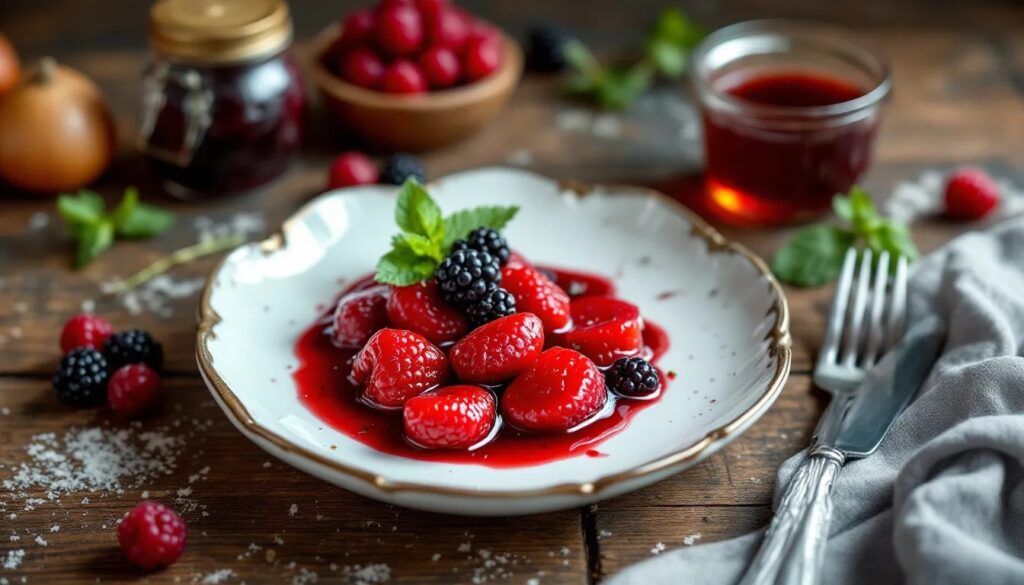
“Framboise Syrup” – two simple words, yet they evoke a world of sophisticated taste, careful craftsmanship, and a surprisingly deep global history. More than just a sweet concoction, this vibrant crimson liquid is a testament to the enduring human desire to capture fleeting seasonal delights and elevate them into something timeless. At its heart lies the humble raspberry, or *framboise* as it’s known in French, a name that immediately signals the syrup’s probable cultural provenance.
The raspberry (*Rubus idaeus*) itself is a marvel of nature, a delicate fruit with a tart-sweet perfume that has graced European landscapes for millennia. Legend ties its scientific name to Mount Ida in ancient Turkey, suggesting its long presence and appreciation across the continent. For centuries, raspberries were foraged, then cultivated across Europe, prized for their flavor, their vivid color, and their brief summer season. To preserve this fleeting essence, ancient methods of drying, fermenting, and later, sugaring, were employed. The French culinary tradition, with its profound respect for terroir and the art of transformation, embraced the raspberry fully, integrating it into everything from elegant tarts to refreshing beverages.
But the other half of this seemingly simple recipe – superfine sugar – carries a narrative far grander and more complex. It’s a tale that stretches across continents and centuries, intertwined with trade, empire, and unspeakable human cost. Sugar cane, the source of this crystalline sweetness, originated in the tropical climes of New Guinea, spreading to India where, by 500 CE, the art of refining it into granular sugar was perfected. From India, it embarked on its epic journey, carried west by Arab traders across the Silk Road and the Spice Route to the Middle East, North Africa, and ultimately, to medieval Europe via the Crusades. Once a rare luxury, an apothecary’s remedy, or a symbol of aristocratic power, sugar became the “white gold” that transformed European palates and kitchens. Its insatiable demand fueled the Age of Exploration, leading to the brutal establishment of vast sugar plantations in the Americas, powered by the forced labor of millions of enslaved Africans. The Columbian Exchange brought the cane across the Atlantic, making sugar accessible in quantities previously unimaginable, and fundamentally altering global dietary habits. Without this global odyssey, the creation of refined sugar-based syrups like Framboise Syrup would not have been possible.
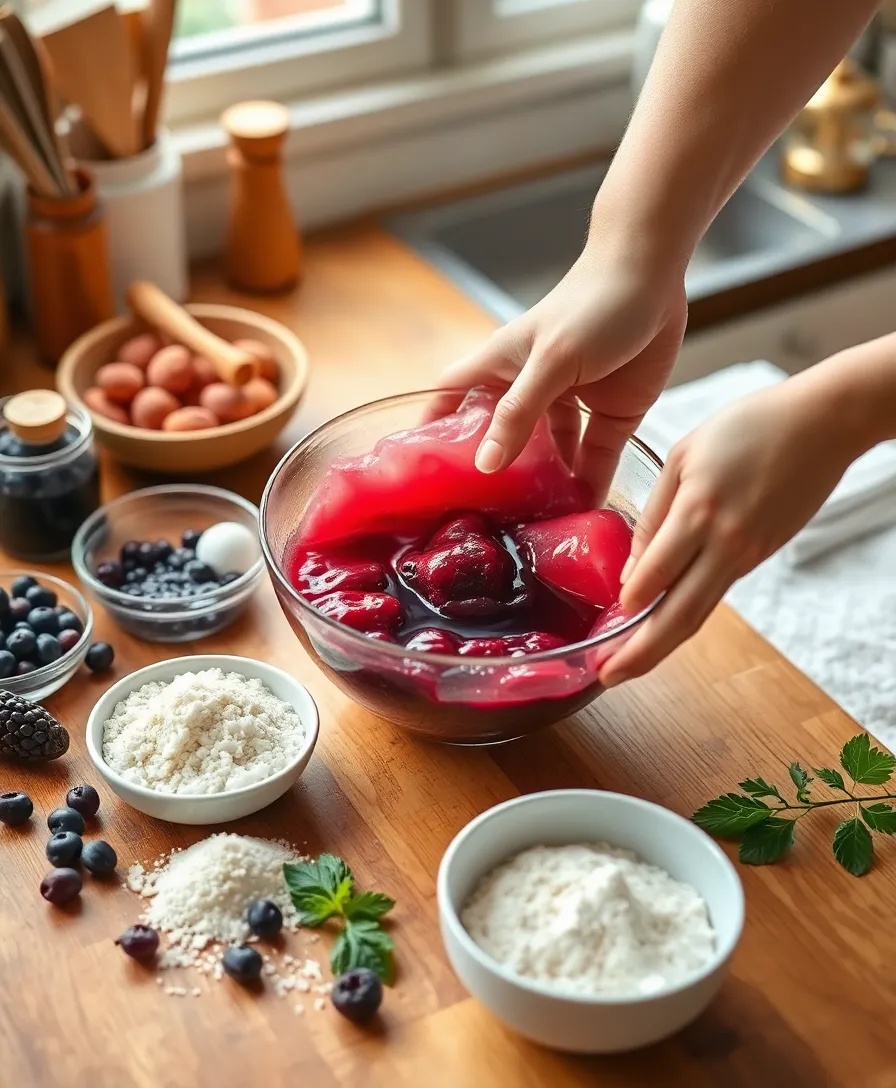
Traditional preparation methods for fruit syrups are deceptively simple, often relying on just fruit, sugar, and heat. The goal is to extract the fruit’s essence while concentrating its flavor and providing a stable, preserved form. For Framboise Syrup, fresh, ripe raspberries are paramount. They are gently simmered with superfine sugar and a touch of water, allowing the fruit to release its juices and mingle with the sweetness. The mixture is then carefully strained, traditionally through a cheesecloth, to achieve a perfectly clear, jewel-toned liquid, free of seeds and pulp. The resulting syrup is a versatile treasure, capable of elevating a plain seltzer into a sparkling *framboise* soda, drizzling over pancakes or crêpes, sweetening a yogurt parfait, or adding a sophisticated note to cocktails and desserts.
In your own kitchen, choose the freshest, most aromatic raspberries you can find; their quality will directly translate into the syrup’s vibrancy. Superfine sugar dissolves more easily, ensuring a smooth, consistent texture. Don’t be tempted to overcook the mixture, as this can dull the fresh fruit flavor. A gentle simmer is all that’s needed to achieve that perfect balance. Store your homemade Framboise Syrup in a sterilized bottle in the refrigerator, where it will keep its dazzling flavor and color for several weeks, ready to infuse a touch of French elegance into your everyday. This seemingly modest syrup, therefore, is not merely a recipe; it is a profound historical artifact, linking the delicate beauty of a European berry to the complex and often challenging narrative of global trade and human ingenuity.
Framboise Syrup
Unveil a world of vibrant flavor with our exquisite Framboise Elixir. This effortlessly crafted, two-ingredient masterpiece transforms simple moments into gourmet experiences, offering a profound burst of authentic raspberry essence. A truly versatile jewel, it elevates desserts, enchants beverages, and bestows a sophisticated touch upon any fruit presentation, proving that true luxury often lies in elegant simplicity and the purity of exceptional ingredients.
Ingredients
-
1/2
cup
superfine sugar -
2
Tablespoons
Framboise
raspberry eau-de-vie
Instructions
-
Into the work bowl of a high-speed food processor, introduce the superfine sugar and the aromatic Framboise (raspberry eau-de-vie).
-
Process thoroughly until the mixture achieves a perfectly smooth, velvety consistency, ensuring all sugar crystals are fully dissolved and integrated.
-
Carefully pass the nascent syrup through a fine-mesh sieve or chinoise into a pristine, small serving vessel, ensuring an impeccably clear and refined end product.
-
Transfer the prepared elixir to refrigeration, allowing it to chill thoroughly until it reaches its optimal serving temperature and is ready to grace your culinary creations.
Recipe Notes
This luminous raspberry-infused concoction transcends the typical syrup, serving as an exceptional culinary complement designed to elevate a myriad of dishes and libations. Imagine it delicately drizzled over artisanal vanilla bean gelato, adorning a delicate panna cotta, or as the sophisticated ‘x-factor’ in a bespoke cocktail. It also presents a sparkling counterpoint to a medley of fresh, seasonal berries, transforming a simple fruit plate into an elegant presentation. Its versatile nature makes it an indispensable addition to any gourmet pantry.
Global Heritage Archive
Anthropological & Spice Migration Record
“A culinary tradition deeply rooted in the art of patisserie, fruit preservation, and the enhancement of natural flavors, often served with desserts or beverages in sophisticated settings.”
🌿 Spice & Botanical Migration
While this recipe does not feature traditional spices or herbs, its key sweetening agent, superfine sugar, boasts a profound migratory history. Originating in New Guinea and spreading to India, sugar cane was refined into crystalline sugar by the 5th century CE. Arab traders then introduced it to the Middle East and North Africa, from where it traveled to Europe during the Crusades, becoming a vital commodity that fueled the transatlantic slave trade and the establishment of vast plantations in the Americas, fundamentally reshaping global diets and economies. Raspberries, on the other hand, are indigenous to temperate Europe and northern Asia, cultivated locally for centuries.
🏺 Historical & Archaeological Record
The earliest archaeological evidence of sugar cane cultivation dates back to 8000 BCE in New Guinea. Written records of sugar refining appear in ancient India around 500 CE. The concept of fruit syrups, using various sweetening agents like honey or grape must for preservation and flavor, can be traced back to ancient Roman and Greek texts. More specifically, sugar-based fruit syrups like this began appearing in medieval Arabic cookbooks (e.g., Kitab al-Tabikh, 10th century CE) and later in European confectionery manuals from the Renaissance onward, reflecting the increasing availability of refined sugar.
💡 Little Known Facts
- The scientific name for raspberries, Rubus idaeus, is believed to derive from Mount Ida in ancient Turkey, where they were said to grow in abundance.
- Before the widespread cultivation in the Americas, sugar was a costly luxury in Europe, often referred to as ‘white gold,’ and primarily used by apothecaries and the aristocracy.
📸 Made This Heritage Recipe?
We would love to see how your dish turned out! Send a photo of your culinary creation to [email protected] to be featured in our community gallery.
Leave a review and rate this recipe below!
Curated Literature & Washington DC Downtown Calendar
The Culinary Alchemist: Modern Gastronomy & Flavor Pairing
By LDN Gastronomy Series
Artisanal technique, seasonal sourcing, and kitchen mastery.
Upcoming Downtown Happenings
Live acoustic sessions, gallery receptions, literary salons, and independent trade shows across Washington DC.
