
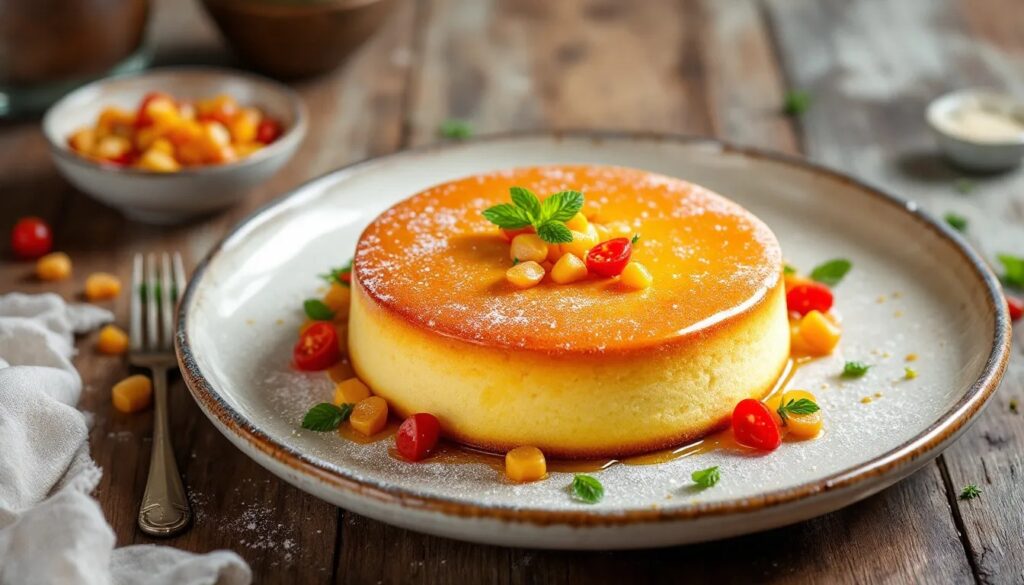
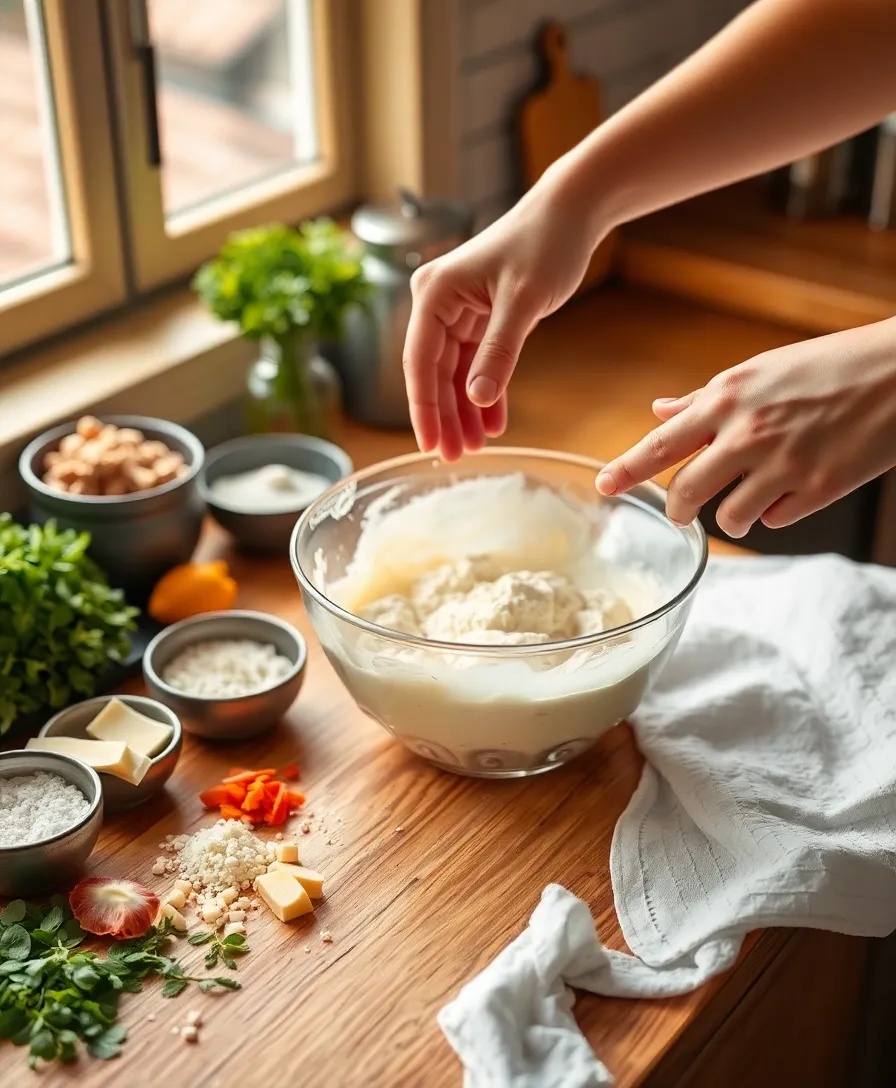
In the realm of confections, few desserts possess the ethereal charm and delicate grace of a ‘Floating “Cake”’. This isn’t merely a dessert; it’s a whisper of culinary history, a testament to innovation, and a cloud-like canvas for the season’s finest fruits. At its heart lies the meringue, a marvel of culinary alchemy transforming simple egg whites and sugar into an airy, crisp delight that seems to defy gravity itself.
The story of meringue begins centuries ago in Europe, with debates placing its origins between the Swiss village of Meiringen and the Italian kitchens of Maria de’ Medici. By the 18th century, it had enchanted the courts of France and England, evolving from a humble sweet into a symbol of refined elegance. The advent of highly refined superfine sugar was crucial to its ascent, allowing for a smoother, more stable foam, distinguishing these delicate creations from the coarser confections of earlier eras. The incorporation of cream of tartar, a natural byproduct of wine production, further stabilized the fragile egg white structure, showcasing a fascinating link between the vineyard and the pastry kitchen.
As European culinary traditions crossed the Atlantic, they intertwined with the unique agricultural landscape and inventive spirit of North America. This particular ‘Floating “Cake”’ recipe beautifully illustrates this migration, maintaining the classic meringue foundation while introducing ingredients distinctly American. The almond extract, a flavoring that journeyed from the almond groves of the Middle East to become a beloved staple in Western baking, provides a delicate warmth. However, the inclusion of light corn syrup is a pivotal indicator, grounding this recipe firmly in American innovation. Corn syrup, an industrially produced sweetener that gained widespread popularity in the 20th century, offered a reliable and consistent texture, preventing crystallization and ensuring a silken finish to the accompanying sauce or the meringue itself.
The ‘Floating “Cake”’ is typically a baked meringue, often shaped into a nest or disc, providing a crunchy contrast to the soft, luscious berries it cradles. Raspberries and strawberries, whether fresh or frozen, are a seasonal celebration, their vibrant acidity cutting through the meringue’s sweetness. To perfect this seemingly simple dessert, precise technique is paramount. Ensure your mixing bowl and whisk are immaculately clean and grease-free, as even a trace of fat can prevent egg whites from whipping properly. Gently incorporate the superfine sugar, a little at a time, to create a stable, glossy meringue. Baking at a low temperature for an extended period, followed by cooling in the oven, creates that signature crisp shell and chewy interior. Serve it unadorned, allowing its airy structure to speak for itself, or alongside a vibrant berry compote, perhaps sweetened with a touch of corn syrup, for a truly transcendent experience. This dessert, then, is more than just a sweet treat; it’s a delicate dance of history, geography, and the sheer joy of culinary artistry.
FLOATING “CAKE”
Prepare to be utterly captivated by this majestic vintage confection, a true ‘Floating Cake’ that promises an experience as visually stunning as it is gastronomically delightful. This sophisticated creation showcases an ethereal, cloud-like baked meringue, subtly sweet and graced with a hint of almond, forming its delicate foundation. Each slice is destined to be draped in a velvety, house-made caramel, then sumptuously adorned with a vibrant cascade of fresh berries and a vivid raspberry coulis. It stands as a sublime tribute to enduring culinary artistry, making it the quintessential centerpiece for any momentous celebration.
Ingredients
-
unspecified amount
Butter
for greasing pan -
unspecified amount
Superfine sugar
for coating bundt pan -
8
egg whites
at room temperature -
½
teaspoon
cream of tartar
None -
1/8
teaspoon
salt
None -
1
cup
superfine sugar
for meringue -
½
teaspoon
almond extract
None -
2
Tablespoons
hot water
for caramel -
2
Tablespoons
light corn syrup
for caramel -
1½
cup
superfine sugar
for caramel -
Fresh
raspberries and/or strawberries
for garnish -
2
10-ounce packages
frozen raspberries
thawed but not drained, for sauce
Instructions
-
Set your oven rack to the central position and preheat the oven to 350°F (175°C).
-
Lavishly coat a 12-cup Bundt pan with softened butter, then evenly dust with superfine sugar, inverting to remove any surplus.
-
Prepare a circle of parchment paper large enough to fully cover the top of the Bundt pan, then butter one side thoroughly.
-
In a spacious bowl of an electric mixer, whisk the egg whites, cream of tartar, and salt until they achieve the consistency of soft, yielding peaks.
-
Gradually incorporate the superfine sugar, adding it one tablespoon at a time, continuing to beat until the whites are firm, glossy, and hold their shape beautifully.
-
Gently fold in the almond extract until just combined.
-
Delicately spoon the meringue mixture into the prepared Bundt pan, smoothing the surface with a spatula to eliminate any trapped air bubbles.
-
Place the buttered parchment paper over the pan, ensuring the buttered side faces downwards.
-
Carefully set the Bundt pan into a deep roasting pan. Fill the roasting pan with boiling water, allowing it to reach approximately halfway up the sides of the Bundt pan, creating a bain-marie.
-
Bake for approximately 30 minutes, or until the meringue’s crown has risen about an inch above the pan’s edge and shows a subtle golden hue.
-
Remove the Bundt pan from the roasting pan and transfer it to a wire rack to cool completely to room temperature.
-
Once cooled, gently cover the top of the pan with plastic wrap and refrigerate.
-
Just before serving, carefully peel away the parchment paper. Submerge the bottom of the Bundt pan in warm water for several seconds, then confidently invert it onto your chosen elegant serving platter.
-
Gently blot away any residual syrup that may appear on the platter or the meringue’s surface.
-
For the velvety caramel sauce: Combine the hot water and light corn syrup in a small, heavy-bottomed saucepan.
-
Stir in the superfine sugar and cook over low heat, gently swirling the pan occasionally, until the sugar is fully dissolved.
-
Increase the heat to medium-high and boil without stirring until the mixture transforms into a rich amber caramel color.
-
Continue cooking briefly until it achieves a slightly thickened consistency.
-
For the vibrant raspberry coulis: Verify that two 10-ounce packages of frozen raspberries are thawed, retaining all their natural juices.
-
Immediately prior to presenting, elegantly drizzle the warm caramel sauce over the cooled meringue.
-
Generously fill the hollow center of the meringue with a medley of fresh raspberries and/or strawberries.
-
Artfully spoon a pool of raspberry coulis around the base of the meringue on the serving platter.
-
Offer any remaining raspberry coulis and fresh berries separately for guests to add as they desire.
Recipe Notes
This exquisite meringue ‘cake’ offers excellent make-ahead potential; it can be fully prepared up to two days in advance. For optimal presentation, you may unmold the meringue several hours before serving. After unmolding, simply cover it loosely with the Bundt pan itself or plastic wrap and store it in the refrigerator until it’s time to dazzle your guests.
Global Heritage Archive
Anthropological & Spice Migration Record
“A celebration of lightness and sweetness, often served as a refreshing dessert, showcasing seasonal fruits and refined baking techniques adapted for American kitchens.”
🌿 Spice & Botanical Migration
The almond extract in this recipe traces its botanical origin to the almond tree (Prunus dulcis), native to the Middle East and Central Asia. Almonds were among the earliest domesticated fruit trees, spreading westward through ancient trade routes across the Mediterranean, becoming a staple in European cuisines before migrating to the Americas. While not a ‘spice’ in the traditional sense, cream of tartar is a potassium salt of tartaric acid, a natural byproduct of grape fermentation. Its use in this recipe highlights the historical interconnectedness of viticulture, primarily concentrated in Europe, with global baking practices.
🏺 Historical & Archaeological Record
The earliest known written recipes for meringue-like preparations appear in European cookbooks, such as François Massialot’s *Nouvelle instruction pour les confitures, les liqueurs, et les fruits* (1692), with more explicit ‘meringue’ recipes emerging in the early 18th century, notably in Hannah Glasse’s *The Art of Cookery Made Plain and Easy* (1747) in England.
💡 Little Known Facts
- The etymology of ‘meringue’ is debated, with theories linking it to the Swiss town of Meiringen, the Polish word ‘murzynka’ (meaning ‘little black woman’ or ‘dark-skinned woman’), or even a personal name.
- Cream of tartar, a byproduct of winemaking, has been utilized as a culinary ingredient for centuries, with its earliest recorded use as a leavening agent appearing in the 17th century.
- The widespread use of light corn syrup in American desserts became prominent in the 20th century, particularly after World War II, due to its cost-effectiveness, consistent quality, and ability to prevent crystallization in candies and sauces.
📸 Made This Heritage Recipe?
We would love to see how your dish turned out! Send a photo of your culinary creation to [email protected] to be featured in our community gallery.
Leave a review and rate this recipe below!
Curated Literature & Washington DC Downtown Calendar
The Culinary Alchemist: Modern Gastronomy & Flavor Pairing
By LDN Gastronomy Series
Artisanal technique, seasonal sourcing, and kitchen mastery.
Upcoming Downtown Happenings
Live acoustic sessions, gallery receptions, literary salons, and independent trade shows across Washington DC.
