
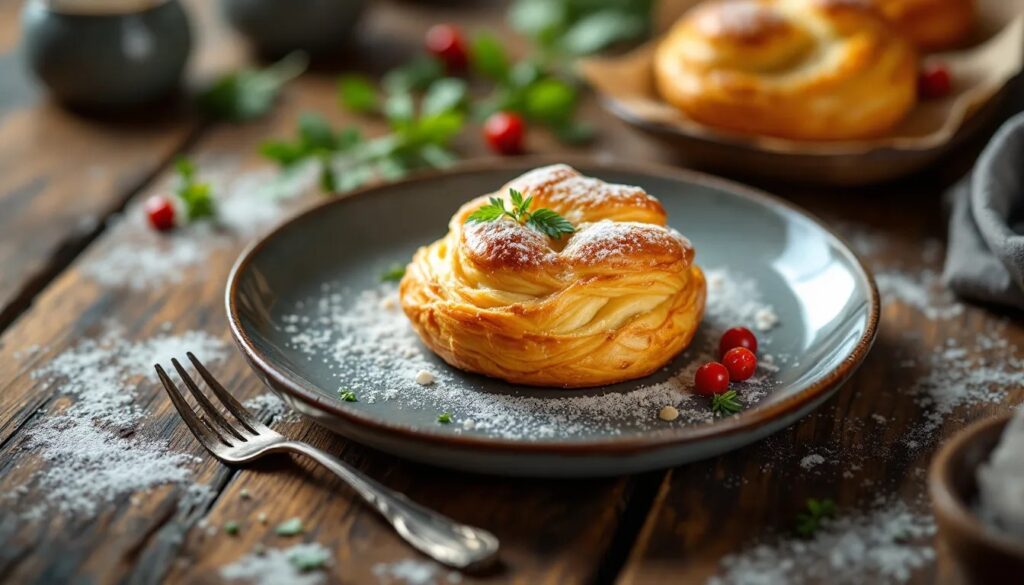
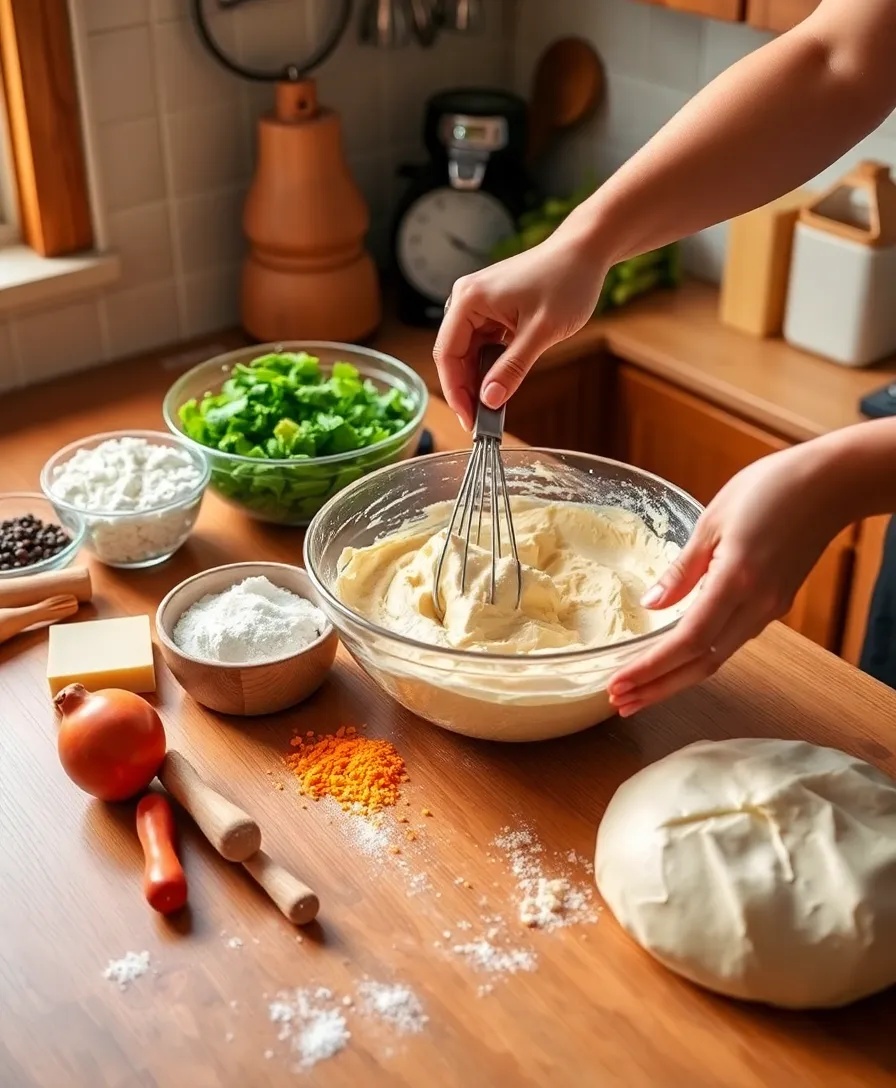
In the grand tapestry of global gastronomy, few preparations hold as revered a place as puff pastry. Its very name, ‘pâte feuilletée’ in French, evokes the delicate, ethereal ‘leaves’ that compose its structure—a culinary marvel of hundreds of buttery, crisp layers. This ‘Fast French Puff Pastry,’ though bearing the humble designation of ‘incomplete,’ is, in fact, the very essence of French patisserie, a foundational canvas upon which countless sweet and savory masterpieces are painted. It is a testament to the power of technique, patience, and a few elemental ingredients transformed into something truly sublime.
The history of puff pastry is as rich and intricate as its layers. While ancient civilizations across the Mediterranean certainly experimented with layered doughs, producing early forms of pastries that eventually evolved into dishes like baklava, the precise method of laminating a butter block within a detrempe (dough) is firmly rooted in 17th-century France. Legend often attributes its accidental creation to a young painter’s apprentice, Claude Gelée, who, while trying to bake a special bread for his ailing father, haphazardly incorporated butter into the dough. The result, unexpectedly, was a bread of unprecedented lightness and flakiness, a culinary serendipity that sparked a revolution in baking. Over centuries, French chefs, notably the influential Marie-Antoine Carême in the 19th century, meticulously refined and codified the lamination process, elevating puff pastry to an art form synonymous with French culinary excellence.
The ingredients themselves—unbleached and bleached flours, unsalted butter, salt, and iced water—might seem prosaic, yet their journey to this recipe is a story of global migration. Wheat, the very soul of flour, began its domestication in the Fertile Crescent thousands of years ago, spreading across continents through ancient trade routes and agricultural expansion to become a staple in European diets. Similarly, the practice of dairy farming and butter production migrated from the Near East, flourishing in the temperate climates of Western Europe, where butter became the fat of choice, lending unparalleled richness and flavor to baked goods. This recipe, therefore, is a confluence of millennia of agricultural development and culinary innovation, harnessing the bounty of these ancient migrations to create a distinctly French delicacy.
Crafting puff pastry is often perceived as daunting, a test of a baker’s mettle, but this ‘fast’ iteration hints at a more approachable path. Traditional preparation involves hours, sometimes days, of repeated rolling, folding (known as ‘turns’), and chilling. Each turn incorporates the butter more finely into the dough, creating infinitesimally thin layers that, when baked, separate into their characteristic crispness as steam from the water in the butter and dough expands. The key lies in maintaining a consistently cold temperature for both the butter and the dough, which prevents the butter from melting and being absorbed, ensuring distinct layers. Iced water is critical here, ensuring the dough remains pliable yet firm throughout the arduous lamination process.
For the home baker, the rewards of mastering puff pastry are immense. It’s a versatile foundation, ready to be transformed into exquisite palmiers, vol-au-vents, galettes, or the perfect base for a delicate fruit tart. The ‘incomplete’ nature of this recipe is its strength: it’s a perfect dough awaiting its destiny. Tips for success include using high-quality, cold butter, not overworking the dough, and having the patience to allow ample chilling time between turns. Embrace the process, and you will unlock a fundamental skill that underpins the elegance and sophistication of French baking, creating culinary magic right in your own kitchen.
Fast French Puff Pastry (Incomplete)
Embark on the foundational journey of crafting a swift interpretation of classic French pâte feuilletée. This introductory chapter guides you through the meticulous development of a rich, flaky butter-and-flour matrix, laying the groundwork for an exceptionally light and ethereal base destined for your culinary marvels. Please note, this exposition focuses exclusively on the initial preparation; the comprehensive directives for the complete transformation of this exquisite dough are not provided herein.
Ingredients
-
3
cups
unbleached all-purpose flour -
1
cup
plain bleached flour -
6½
sticks
chilled unsalted butter -
1½
teaspoons
salt -
1
cup
iced water
Instructions
-
Carefully portion the butter into precise ½-inch dice.
-
Into a capacious mixing vessel, deposit the measured flour, followed by the cubed butter and the designated salt.
-
Rapidly incorporate the flour and butter, employing swift, decisive movements until the mixture yields distinct, shingle-like flakes, each roughly one inch in dimension.
Recipe Notes
This particular exposition details only the foundational phase of the recipe. The comprehensive directives necessary for the subsequent development and ultimate completion of this exquisite puff pastry dough are not included within this document.
Global Heritage Archive
Anthropological & Spice Migration Record
“The culinary culture surrounding puff pastry is deeply rooted in French patisserie, emphasizing precision, technique, and the creation of delicate, multi-layered baked goods that serve as foundations for both sweet and savory dishes.”
🌿 Spice & Botanical Migration
While this particular ‘Fast French Puff Pastry’ recipe focuses on the fundamental dough and does not feature aromatic spices or herbs, its core ingredients tell a story of ancient migrations. Wheat, the basis of flour, originated in the Fertile Crescent around 9000 BCE and spread across Europe through early agricultural expansion and trade. Dairy farming, providing the butter, also traces its roots to the Near East before migrating west, becoming a cornerstone of European agricultural and culinary traditions. Thus, the migration here is less about exotic spices and more about the millennia-long journey of staple ingredients that formed the bedrock of Western European baking.
🏺 Historical & Archaeological Record
The concept of layered doughs has ancient roots, with precursors found in Egyptian and Greek culinary traditions, leading to pastries like baklava, which dates back to at least the Roman era. However, the specific technique of encasing a block of butter within a dough and repeatedly folding it to create hundreds of distinct layers, characteristic of modern ‘pâte feuilletée’ or puff pastry, is generally attributed to 17th-century France. The earliest written recipes specifically detailing this precise lamination method for what we now recognize as puff pastry appeared in French culinary texts around the mid-1600s, with later refinements by master chefs like Marie-Antoine Carême in the 19th century.
💡 Little Known Facts
- One popular legend credits the invention of modern puff pastry to Claude Gelée (better known as the painter Claude Lorrain) in the 17th century, who, as an apprentice baker, created a buttery dough for his ailing father that surprisingly puffed into delicate layers.
- The number of ‘turns’ (folds and rolls) is crucial to puff pastry; typically, six ‘single turns’ (or three ‘double turns’) are performed to achieve the characteristic 729 layers of butter and dough, although simpler versions may use fewer.
📸 Made This Heritage Recipe?
We would love to see how your dish turned out! Send a photo of your culinary creation to [email protected] to be featured in our community gallery.
Leave a review and rate this recipe below!
Curated Literature & Washington DC Downtown Calendar
The Culinary Alchemist: Modern Gastronomy & Flavor Pairing
By LDN Gastronomy Series
Artisanal technique, seasonal sourcing, and kitchen mastery.
Upcoming Downtown Happenings
Live acoustic sessions, gallery receptions, literary salons, and independent trade shows across Washington DC.
