
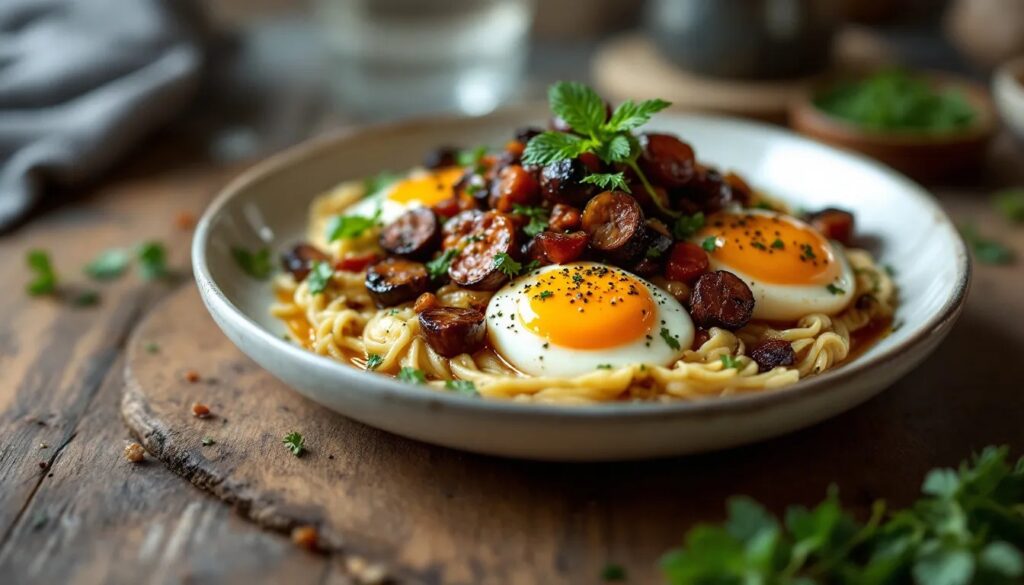

Along the sun-drenched, rugged coast of the Italian Riviera lies Liguria, a region whose culinary heritage is as captivating and picturesque as its terraced hillsides and sparkling azure waters. It’s a land where simplicity reigns supreme, where the integrity of each ingredient speaks volumes, and where the echoes of ancient trade routes and global exchanges resonate in every dish. “Eggplant a la Liguria Style” is not merely a recipe; it is a delicious historical artifact, a testament to the enduring power of culinary adaptation and migration.
The star of this dish, the humble eggplant, carries with it a storied past. Originating in the lush landscapes of India and Southeast Asia, this versatile nightshade embarked on a remarkable journey. It was first introduced to the Mediterranean world by Arab traders and conquerors in the early Middle Ages, who brought it across North Africa and into Spain and Sicily. Initially met with suspicion – sometimes even branded the ‘mad apple’ due to old wives’ tales connecting it to various ailments – the eggplant slowly but surely found its rightful place in Mediterranean kitchens, particularly thriving in the warm climes of Southern Italy, including Liguria.
Then there’s the tomato, an ingredient so central to Italian cuisine today that it’s almost impossible to imagine one without the other. Yet, its presence is a relatively recent phenomenon. Hailing from the distant Andes of South America, the tomato arrived in Europe after the Columbian Exchange in the 16th century. For nearly two centuries, it was cultivated primarily as an ornamental curiosity, often feared for its botanical kinship with poisonous plants. It wasn’t until the late 18th and early 19th centuries that economic hardships and a growing sense of culinary adventure led to its widespread acceptance and integration into Italian cooking, forever changing its gastronomic landscape.
The other ingredients paint a similar picture of interconnectedness. Olive oil, the liquid gold of the Mediterranean, anchors the dish firmly in its regional identity, its cultivation stretching back millennia to ancient civilizations. Onion, a staple across the globe, traces its origins to Central Asia and has been a culinary workhorse for millennia. And black pepper, a once-precious spice from India’s Malabar Coast, signifies the enduring legacy of ancient trade routes that linked East and West for centuries.
Traditional Ligurian preparation methods for this type of dish emphasize quality and gentle handling. The eggplants are typically sliced, perhaps lightly salted to draw out excess moisture and bitterness, then often fried in generous Ligurian olive oil until tender and golden. These fried slices are then layered or combined with a rich sauce made from ripe tomatoes, simmered with onion, salt, and black pepper. The inclusion of eggs (plural) in this recipe suggests a variety of applications: they might be beaten and mixed into the eggplant and tomato mixture for added richness and structure, baked as a rustic gratin, or even used to bind ingredients together for a more substantial, comforting dish. The aim is always to celebrate the ingredients’ natural flavors, creating a harmonious blend that is both hearty and deeply satisfying.
For the home cook, a few tips can elevate this historical dish. Always use the best quality ripe tomatoes you can find, or substitute with good canned San Marzano tomatoes during off-season. Don’t skimp on the olive oil; it’s the heart of Ligurian cooking. When frying eggplant, ensure the oil is hot enough to achieve a golden crust without soaking up too much oil, or consider baking or grilling the eggplant slices for a lighter touch. Allow the flavors to meld, perhaps even making it a day ahead, as many tomato-based dishes improve with time. “Eggplant a la Liguria Style” is more than just food; it’s an edible journey through time, a delicious lesson in history, and a celebration of human ingenuity and cultural exchange.
EGGPLANT A LA LIGURIA STYLE
Journey to the serene, sun-kissed shores of Liguria, Italy, through this exceptional, time-honored eggplant preparation. A harmonious blend of tender eggplant, vine-ripened tomatoes, and aromatic onions, gently stewed in golden olive oil, forms the base, exquisitely finished with delicate, perfectly set eggs. The result is a profoundly satisfying and authentic culinary experience, echoing generations of coastal Italian tradition.
Ingredients
-
2
large
eggplants -
1
cup
olive oil -
3
cups
large ripe tomatoes -
to taste
salt and pepper -
1
onion
thinly sliced -
3
eggs
Instructions
-
Gently cleanse the eggplants with a moist cloth. Trim and discard the fibrous stems, then slice the eggplants into substantial, uniform rounds. Arrange these slices within a colander, generously dust with sea salt, then cover with absorbent paper towels. Position a moderate weight atop the towels and allow the eggplants to rest for sixty minutes, enabling moisture release. Subsequently, thoroughly rinse the slices under cool water and meticulously pat them completely dry.
-
In a spacious, heavy-bottomed pan, warm the olive oil over medium heat. Introduce the onion slices and gently sauté, stirring occasionally, until they achieve a translucent golden hue. Incorporate the prepared eggplant slices and allow them to gently simmer alongside the onions for approximately five minutes. Finally, stir in the ripe tomatoes and a generous grinding of fresh black pepper.
-
Reduce the heat to low, then cover the pan securely. Allow the vegetables to braise gently for approximately thirty minutes, or until they have softened beautifully and their flavors have thoroughly melded into a cohesive mixture.
-
Carefully remove the lid from the pan. In a separate bowl, lightly whisk the eggs until just combined, then pour them evenly over the tender vegetable medley. Continue cooking, uncovered and undisturbed, until the eggs achieve a delicate, set consistency. Serve this exquisite preparation without delay to best appreciate its warmth and freshness.
Recipe Notes
This dish truly shines when served warm, perhaps alongside a crusty artisan bread to sop up the savory juices, or as a sophisticated side to grilled fish. Its rustic elegance makes it perfect for both weeknight indulgence and weekend entertaining.
Global Heritage Archive
Anthropological & Spice Migration Record
“Ligurian cuisine is characterized by its fresh, seasonal ingredients, abundant use of local olive oil, and simple preparations that celebrate the natural flavors of the land and sea.”
🌿 Spice & Botanical Migration
Black pepper, native to the Malabar Coast of India, traveled west along ancient spice routes, becoming a highly prized commodity in Europe by Roman times. While not a spice, the eggplant’s journey began in India/Southeast Asia, reaching the Mediterranean via Arab traders in the early Middle Ages, while the tomato’s botanical origin lies in the Andes of South America, brought to Europe after the Columbian Exchange.
🏺 Historical & Archaeological Record
The earliest known written recipes featuring eggplant appear in 10th-century Arabic cookbooks, such as “Kitab al-Tabikh” (The Book of Dishes) from Baghdad, indicating its widespread adoption and culinary integration across the Islamic world long before it became common in European kitchens.
💡 Little Known Facts
- The tomato, now synonymous with Italian cooking, was originally viewed with suspicion in Europe as a poisonous ornamental plant for centuries after its arrival from the Americas.
- Eggplant, too, faced skepticism in medieval Europe, sometimes called ‘mad apple,’ believed to cause madness, melancholy, and even leprosy, before its culinary virtues were recognized.
📸 Made This Heritage Recipe?
We would love to see how your dish turned out! Send a photo of your culinary creation to [email protected] to be featured in our community gallery.
Leave a review and rate this recipe below!
Curated Literature & Washington DC Downtown Calendar
The Culinary Alchemist: Modern Gastronomy & Flavor Pairing
By LDN Gastronomy Series
Artisanal technique, seasonal sourcing, and kitchen mastery.
Upcoming Downtown Happenings
Live acoustic sessions, gallery receptions, literary salons, and independent trade shows across Washington DC.
