
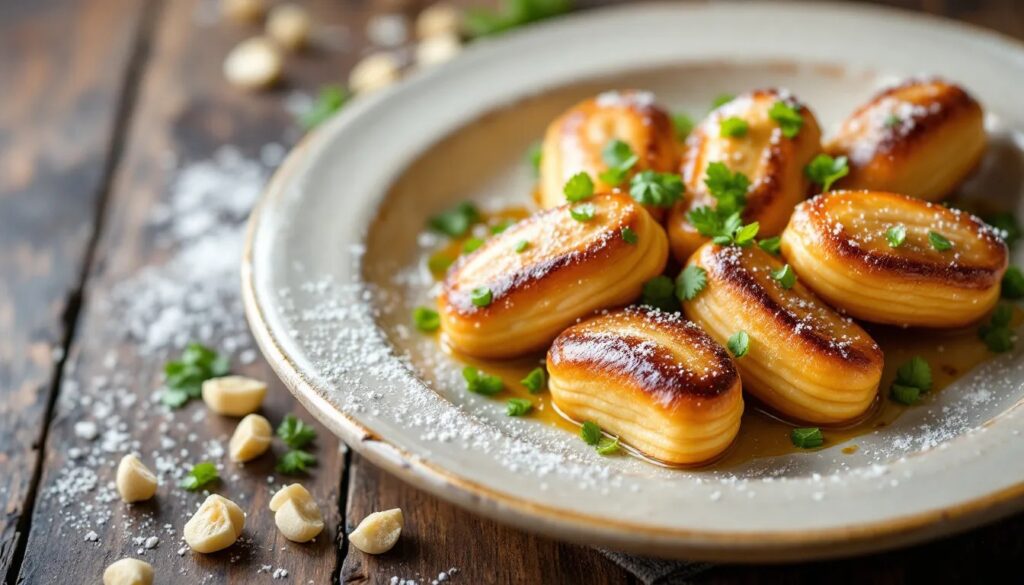
Our journey to the éclair begins not in France, but arguably in 16th-century Italy. It was Catherine de’ Medici, an Italian noblewoman, who, upon her marriage to King Henry II, brought her personal chefs, including a pastry cook named Pantanelli, to the French court. These chefs are often credited with introducing a dough known as *pâte à chaud* (hot paste) or *pâte à Panterelli*, a precursor to what we now know as *pâte à choux*, or choux pastry. This versatile dough, made by cooking flour with water and butter before incorporating eggs, laid the foundation for many iconic French desserts, including profiteroles, gougères, and, of course, the éclair.
The 19th century saw the true blossoming of choux pastry under the masterful hands of Antonin Carême, often considered the father of *haute cuisine*. Carême refined the technique, elevating these simple ingredients into architectural marvels. It was during this era that the elongated shape, destined for a creamy filling and a sleek glaze, began to emerge, eventually earning the name “éclair” – French for “lightning flash” – perhaps alluding to its glistening glaze or the speed with which it disappears from the plate.
The ingredients themselves tell a fascinating story of global migration. While staples like flour, butter, eggs, milk, and sugar were well-established in European kitchens, two key flavor components—vanilla and chocolate—speak volumes about the Columbian Exchange and subsequent global trade routes. Vanilla, the fragrant orchid pod, originated in Mesoamerica, cultivated by the Totonac people of Mexico. Its journey to European palates began with Spanish conquistadors, though large-scale cultivation outside its native habitat only became possible in the mid-19th century with the discovery of hand-pollination techniques. Similarly, cacao, the source of our beloved chocolate, hails from the rainforests of Central and South America. Initially consumed as a bitter, ceremonial drink by indigenous cultures, it arrived in Europe to be sweetened and transformed, eventually becoming the quintessential topping for the éclair.
Crafting the perfect éclair at home is a deeply rewarding experience, requiring both precision and patience. The key lies in the *pâte à choux*: ensure your dough is cooked long enough on the stove to form a film on the bottom of the pan, then cool it slightly before incorporating eggs one by one until it forms a smooth, glossy paste that falls from the spoon in a “V” shape. Baking choux pastry correctly is crucial; it must be baked until fully dry and golden brown, allowing it to hold its shape and prevent collapsing. A rich, silken crème pâtissière, infused with real vanilla, provides the perfect counterpoint to the airy pastry. And for that iconic finish, a well-tempered chocolate glaze, made with both bitter and semisweet varieties, offers a delightful snap and deep cocoa notes.
The éclair is more than just a dessert; it’s a culinary narrative, a journey through time and across continents, culminating in a single, exquisite bite. It reminds us how ancient ingredients, refined techniques, and a touch of human ingenuity can converge to create something truly extraordinary. So, next time you savor an éclair, pause to appreciate the rich tapestry of history, trade, and artistry that brought this beloved pastry to your plate.
ECLAIRS
Embark on a culinary journey to France with these exquisite homemade éclairs, a sophisticated patisserie staple. Each masterpiece begins with a delicate, airy choux pastry shell, baked to a beautiful golden crispness. These elegant vessels are then generously enrobed with a velvety Crème Pâtissière, an undeniably decadent custard, and crowned with a resplendent, mirror-like dark chocolate glaze. The result is an utterly captivating dessert, promising to elevate any occasion with its refined charm and irresistible taste.
Ingredients
-
1
stick
butter
for choux pastry -
1
cup
water
for choux pastry -
1
teaspoon
sugar
for choux pastry -
1
cup
all-purpose flour
for choux pastry -
4
eggs
for choux pastry -
1/8
teaspoon
salt
for choux pastry -
1/3
cup
all-purpose flour
for Crème Patissiere -
3
whole eggs
for Crème Patissiere -
3
egg yolks
for Crème Patissiere -
3/4
cup
sugar
for Crème Patissiere -
2
cups
milk
for Crème Patissiere -
1
teaspoon
vanilla extract
or other flavoring, for Crème Patissiere -
2
ounces
bitter chocolate
for Chocolate Icing (part of 4oz total) -
2
ounces
semisweet chocolate
for Chocolate Icing (part of 4oz total) -
1/2
cup
heavy cream
for Chocolate Icing -
2 to 3
Tablespoons
water
optional, if needed for Chocolate Icing consistency
Instructions
-
Commence the Eclair Pastry (Choux) fabrication: Combine the butter, water, granulated sugar, and salt within a robust saucepan, bringing the mixture to a vigorous rolling boil over medium-high heat.
-
Introduce the sifted all-purpose flour in a singular, swift motion. Immediately and energetically agitate the mixture with a sturdy wooden spoon, working diligently for several minutes until the dough forms a cohesive mass that effortlessly detaches from both the spoon and the interior walls of the pan, signifying proper moisture evaporation.
-
Withdraw the saucepan from the heat source and promptly transfer the warm paste into a spacious mixing bowl. Allow it to cool for a brief period, ensuring it is no longer steaming hot.
-
Incorporate the large eggs individually, thoroughly beating the dough with fervor after each successive addition. Persist with vigorous mixing until each egg is fully absorbed, and the dough transitions from a slick, glossy appearance to a smooth, cohesive consistency, indicative of proper emulsification.
-
Transfer the prepared choux paste into a professional pastry bag outfitted with a ½-inch round piping tip. Artfully pipe elegant strips, approximately 1 inch in width and 4 inches in length, onto an ungreased baking sheet, maintaining even spacing between each form.
-
Preheat your oven to a precise 400°F (200°C). Introduce the piped pastry into the preheated oven and bake for an initial 20 minutes. Subsequently, reduce the oven temperature to 375°F (190°C) and continue baking for an additional 10 minutes, allowing the shells to achieve their signature golden hue and rise.
-
Upon removal from the oven, delicately pierce the side of each baked éclair shell with a small, sharp knife. Return the shells to the now-off oven, leaving the door slightly ajar, for an additional 10 minutes to thoroughly dry and crisp. Once this drying period concludes, transfer them to a wire rack to cool completely before proceeding.
-
Initiate the Crème Pâtissière (Custard Filling): In a mixing bowl, vigorously whisk together the whole eggs, egg yolks, and granulated sugar until the mixture achieves a pale, aerated, and fluffy consistency. Gently fold in the all-purpose flour, ensuring it is fully incorporated without lumps.
-
In a separate saucepan, gently heat the milk until it just begins to simmer, evidencing tiny bubbles around the edges, but do not allow it to boil over.
-
Slowly temper the egg-sugar mixture by gradually streaming in the hot milk while continuously and rapidly whisking, ensuring a seamless and uniform blend.
-
Transfer the entire mixture back to the saucepan. Cook over medium heat, stirring and meticulously scraping the bottom of the pan without cessation, until it thickens to a boil. Maintain this gentle boil for precisely 3 minutes to fully cook the flour. Immediately pour the luscious cream into a clean bowl, then stir in the vanilla extract (or your chosen flavoring). Allow it to cool to room temperature, then refrigerate until thoroughly chilled and firm.
-
Construct the Velvety Chocolate Glaze: In a saucepan, gently combine the chopped bitter and semisweet chocolates with the heavy cream. Over low heat, meticulously stir with a wooden spoon until the chocolates are fully melted and integrated. Continue heating, stirring constantly, until the mixture just reaches a gentle boil.
-
Remove from heat and allow the glaze to cool to a comfortable lukewarm temperature. Should the glaze appear overly thick or possess an unctuous quality, incrementally whisk in 2 to 3 tablespoons of warm water until a pristine, silky-smooth consistency is achieved.
-
The Grand Assembly: With the pastry shells entirely cooled, proceed to fill them generously with the thoroughly chilled Crème Pâtissière. This can be accomplished by carefully piping the custard through the pre-made slit, or for an alternative presentation, by gently slicing the shells horizontally in half.
-
Gracefully drizzle or artfully spread the lukewarm Chocolate Glaze over the crème-filled éclairs. Present these culinary jewels individually on dessert plates or in elegant serving bowls for optimal enjoyment.
Recipe Notes
For an enhanced presentation and an additional layer of indulgence, consider offering an accompanying warm chocolate sauce. Any surplus of the prepared chocolate glaze can be gently warmed to achieve this; alternatively, a slightly larger batch can be crafted from the outset. A paramount detail for the choux pastry’s triumph lies in meticulously incorporating each egg until the dough transforms from a glossy, ‘slippery’ state to a smooth, cohesive emulsion – this precise consistency is indispensable for the characteristic ethereal rise and delicate texture of your éclairs. Furthermore, granting the Crème Pâtissière ample time to chill completely is not merely a recommendation but a foundational step; it ensures optimal setting, lending a luxurious body to the custard and facilitating a clean, effortless filling process.
Global Heritage Archive
Anthropological & Spice Migration Record
“A cornerstone of sophisticated French patisserie, éclairs embody a culinary culture that prioritizes precision, refinement, and aesthetic beauty in celebratory desserts.”
🌿 Spice & Botanical Migration
The defining flavors of the éclair, vanilla and chocolate, are powerful indicators of early global trade and cultural exchange. Vanilla, indigenous to Mesoamerica, was introduced to Europe following the Columbian Exchange, and its cultivation spread globally only after mid-19th century advancements in artificial pollination. Similarly, chocolate, derived from the cacao bean native to Central and South America, arrived in Europe via the Spanish conquest, transforming from a ritualistic drink into a prized dessert ingredient.
🏺 Historical & Archaeological Record
The foundational technique of pâte à choux (choux pastry), from which éclairs are made, is generally attributed to Pantanelli, an Italian chef of Catherine de’ Medici, who introduced it to the French court in the 16th century. The earliest clear written recipes for choux pastry variations appear in French culinary texts of the late 17th and 18th centuries, with the éclair itself being refined and popularized in the 19th century, notably by Antonin Carême.
💡 Little Known Facts
- The term “éclair” (meaning “lightning flash” in French) first appeared in print in the 1860s, possibly referring to how quickly they are eaten or the glistening appearance of their glaze.
- Before being widely known as éclairs, these delicate pastries were often called “pain à la duchesse” or “petite duchesse,” suggesting a royal or noble association in the French court.
📸 Made This Heritage Recipe?
We would love to see how your dish turned out! Send a photo of your culinary creation to [email protected] to be featured in our community gallery.
Leave a review and rate this recipe below!
Curated Literature & Washington DC Downtown Calendar
The Culinary Alchemist: Modern Gastronomy & Flavor Pairing
By LDN Gastronomy Series
Artisanal technique, seasonal sourcing, and kitchen mastery.
Upcoming Downtown Happenings
Live acoustic sessions, gallery receptions, literary salons, and independent trade shows across Washington DC.
