
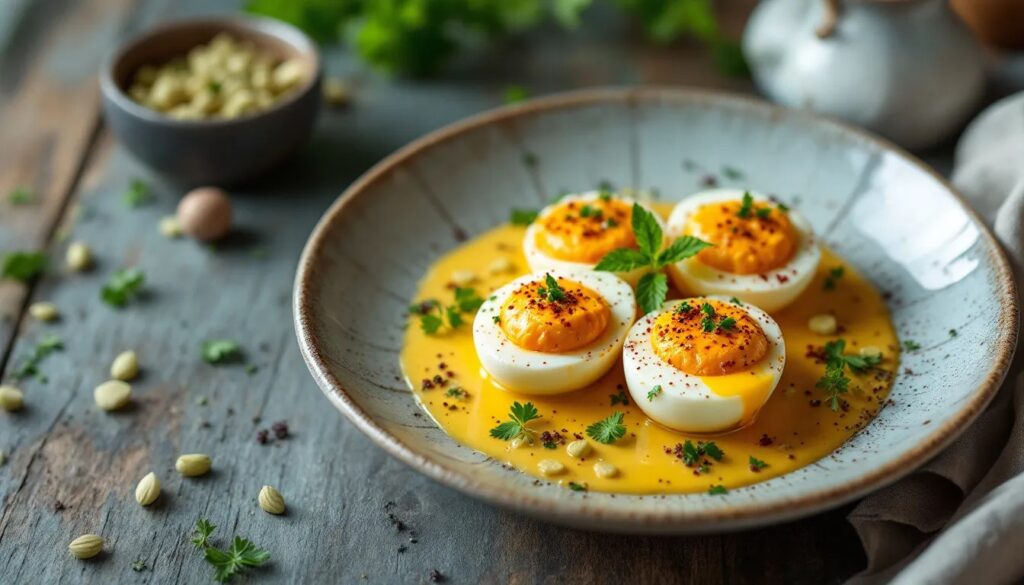
The humble deviled egg, a staple of picnics, potlucks, and holiday gatherings, holds a surprisingly rich and ancient history, a culinary journey that spans continents and millennia. More than just a creamy, piquant bite, this beloved appetizer is a testament to human ingenuity in transforming simple ingredients into something universally appealing, a dish that has adapted and evolved with the ebb and flow of empires, trade routes, and changing tastes.
Our story begins not in an American backyard, but in ancient Rome. Long before the advent of mayonnaise or mustard as we know them, the Romans were already stuffing hard-boiled eggs. Recipes found in Apicius’s “De re coquinaria,” a 4th or 5th-century CE collection of Roman culinary wisdom, describe eggs seasoned with a medley of garum (fermented fish sauce), pepper, pine nuts, and other herbs before being returned to their whites. These ancient stuffed eggs were a far cry from their modern descendants, reflecting the bold, umami-rich flavors preferred in classical antiquity, but they laid the foundational concept: the egg as a vessel for savory delight.
The concept re-emerged in medieval Europe, particularly in 13th-century Andalusia, where similar recipes for stuffed eggs, often enriched with saffron, raisins, and various spices, appeared in Arabic cookbooks. However, the true progenitor of the “deviled egg” as we recognize it today began to take shape in the 18th century, primarily in Europe. The term “deviled” itself, appearing in print around 1786, was initially applied to highly seasoned or spicy dishes, suggesting a fiery character—often achieved with mustard, cayenne pepper, or other piquant ingredients. Early 19th-century recipes from English and American cookbooks began featuring this “deviling” technique applied to eggs, often incorporating mustard, vinegar, and various herbs.
The crucial ingredients that define the modern deviled egg – mayonnaise and paprika – each embarked on their own global migration before uniting in this iconic dish. Mayonnaise, with its disputed origins between France and Spain in the 18th century, provided the creamy, emulsified base, a revelation in culinary texture. Paprika, on the other hand, traces its lineage back to the Capsicum annuum pepper, native to the Americas. After its introduction to Europe by Columbus, the pepper was embraced and cultivated, particularly in Hungary, where it was dried and ground into the vibrant, sweet-and-spicy powder we know as paprika, adding both color and a subtle kick. Black pepper, another indispensable component, journeyed from the Malabar Coast of India, a testament to ancient spice routes, while vinegar, a product of fermentation, has been a global condiment for millennia.
The transition to the deviled egg as a quintessential American dish largely occurred in the 20th century. The rise of convenience foods, the popularity of picnics and outdoor gatherings, and the widespread availability of mayonnaise solidified its place. Today, the classic preparation involves slicing hard-cooked eggs in half, scooping out the yolks, mashing them with mayonnaise, mustard, vinegar, salt, pepper, and a touch of sugar for balance, then piping or spooning the creamy mixture back into the whites, often garnished with a sprinkle of paprika.
For the home cook, perfecting deviled eggs is an art of simplicity. The key lies in perfectly cooked eggs – no green ring around the yolk! A gentle steam or a careful boil followed by an ice bath ensures easy peeling and bright yellow yolks. Don’t be afraid to adjust the mustard and vinegar to your taste; some prefer a tangier bite, others a sweeter, richer filling. And while the classic is always a winner, deviled eggs are an open canvas for creativity – a dash of hot sauce, a sprinkle of fresh chives, a crumble of bacon, or even a smoked paprika can transform the familiar into the extraordinary. The deviled egg isn’t just a recipe; it’s a culinary journey, a comfort food, and a timeless testament to how simple ingredients, through migration and ingenuity, can create enduring joy.
DEVILED EGGS
Journey back to the heart of American entertaining with a timeless culinary gem: the Deviled Egg. Far more than a mere appetizer, these elegant bites encapsulate an era of effortless sophistication and cherished gatherings. Our refined approach elevates this quintessential comfort food, transforming humble hard-boiled eggs into exquisite, creamy morsels. Perfect for gracing any celebratory table, from intimate family brunches to grand social affairs, these deviled delights promise to captivate palates and spark nostalgic joy.
Ingredients
-
as needed
hard-cooked eggs -
to taste
mustard
about half as much as mayonnaise -
to taste
mayonnaise
lo-cal fine -
a few drops
vinegar -
to taste
salt and pepper -
a dash
sugar -
as needed
paprika
for sprinkling
Instructions
-
Carefully halve each hard-boiled egg lengthwise, using a sharp paring knife to achieve clean, symmetrical cuts.
-
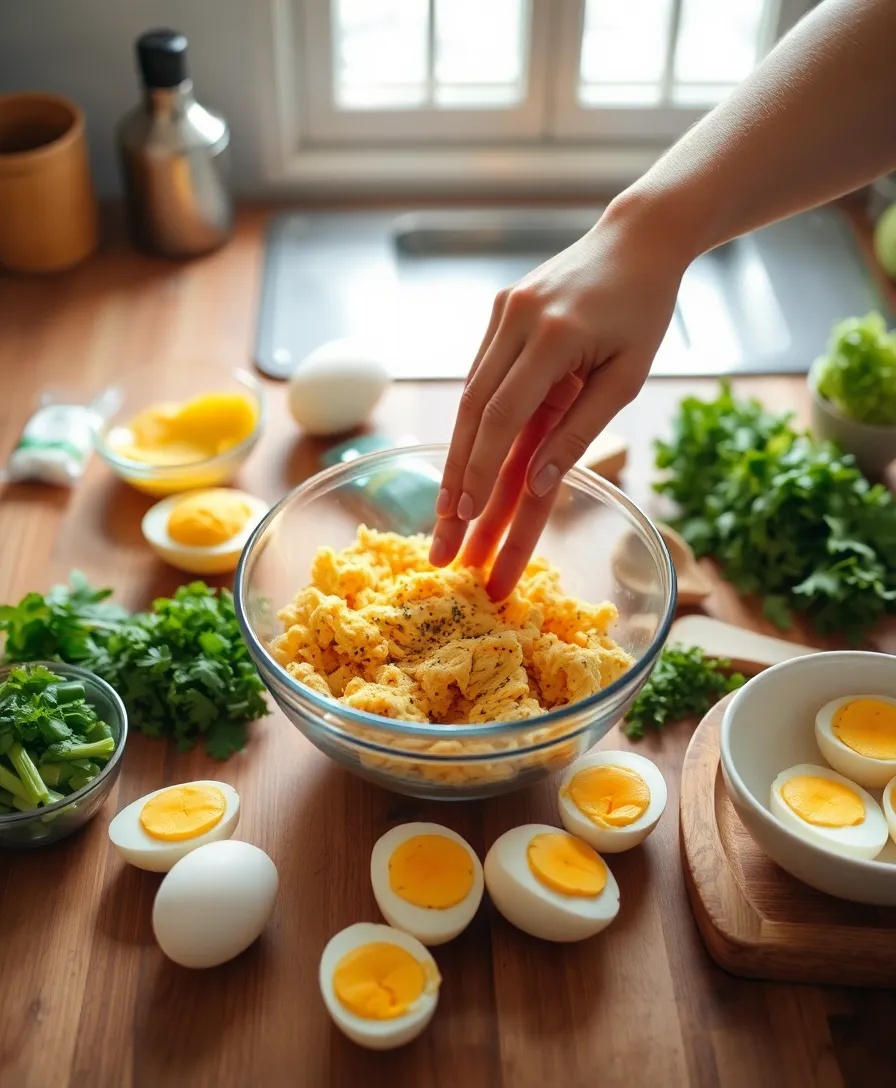
Gently scoop the cooked yolks into a medium mixing bowl. Using a fork or a potato ricer, thoroughly mash the yolks until they are uniformly smooth and free of any lumps.
-
Into the creamy yolk base, fold in the Dijon mustard, rich mayonnaise, a nuanced touch of apple cider vinegar, a pinch of fine sea salt, freshly ground black pepper, and a subtle whisper of granulated sugar. Emulsify the ingredients thoroughly, stirring until the mixture is silken and impeccably blended. Taste and adjust any seasonings to achieve your preferred balance of tang and richness.
-
Employing a small spoon or a pastry bag fitted with a decorative tip, meticulously pipe or spoon the prepared yolk filling back into the hollowed cavities of the reserved egg white halves. Create an elegant, generous mound in each.
-
Finish by lightly dusting each deviled egg with a delicate shower of sweet paprika, adding a vibrant visual flourish and a hint of earthy aroma.
Recipe Notes
For a perfectly harmonious filling, a discerning culinary tip suggests employing approximately half the volume of Dijon mustard relative to your mayonnaise. Introduce the apple cider vinegar sparingly, perhaps just a few measured drops, to brighten the flavor without overwhelming it. Similarly, a delicate dash of granulated sugar, sea salt, and black pepper should be added, allowing you to fine-tune the final seasoning precisely to your individual palate.
Global Heritage Archive
Anthropological & Spice Migration Record
“A culinary culture valuing comfort, communal sharing, and a balance of piquant, creamy, and slightly sweet flavors, often associated with informal gatherings and potlucks.”
🌿 Spice & Botanical Migration
Black pepper (Piper nigrum), a fundamental seasoning, originated on the Malabar Coast of India and journeyed globally via the ancient Silk and maritime Spice Routes. Paprika (Capsicum annuum), though derived from peppers native to the Americas, was developed into the ground spice primarily in Hungary and other parts of Central Europe after its introduction by Spain. Mustard (Brassica juncea/nigra) seeds have been cultivated across the Mediterranean and Europe for millennia, establishing their culinary presence long before their inclusion in this dish.
🏺 Historical & Archaeological Record
The earliest known precursor to stuffed eggs appears in Apicius’s “De re coquinaria,” a Roman cookbook compiled in the late 4th or early 5th century CE, describing dishes of seasoned, refilled eggs, though lacking the modern mayonnaise-mustard base.
💡 Little Known Facts
- The term “deviled” applied to food first appeared in print around 1786, signifying a dish that was highly seasoned, spicy, or piquant, often with mustard or cayenne pepper.
- While modern deviled eggs feature mayonnaise and mustard, the earliest recorded stuffed egg recipes, dating back to ancient Rome, used ingredients like fermented fish sauce (garum), pepper, and pine nuts.
📸 Made This Heritage Recipe?
We would love to see how your dish turned out! Send a photo of your culinary creation to [email protected] to be featured in our community gallery.
Leave a review and rate this recipe below!
Curated Literature & Washington DC Downtown Calendar
The Culinary Alchemist: Modern Gastronomy & Flavor Pairing
By LDN Gastronomy Series
Artisanal technique, seasonal sourcing, and kitchen mastery.
Upcoming Downtown Happenings
Live acoustic sessions, gallery receptions, literary salons, and independent trade shows across Washington DC.
