
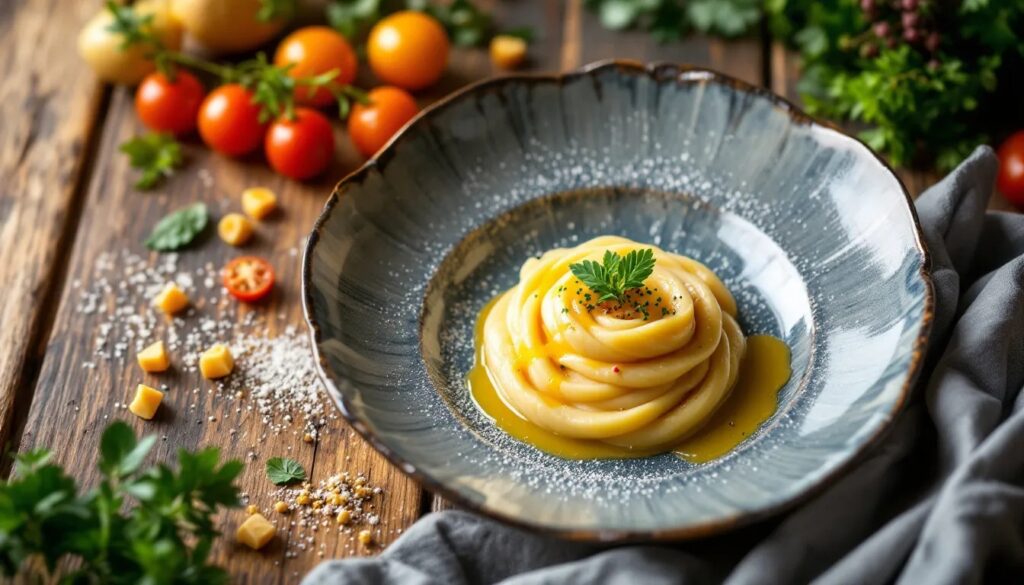
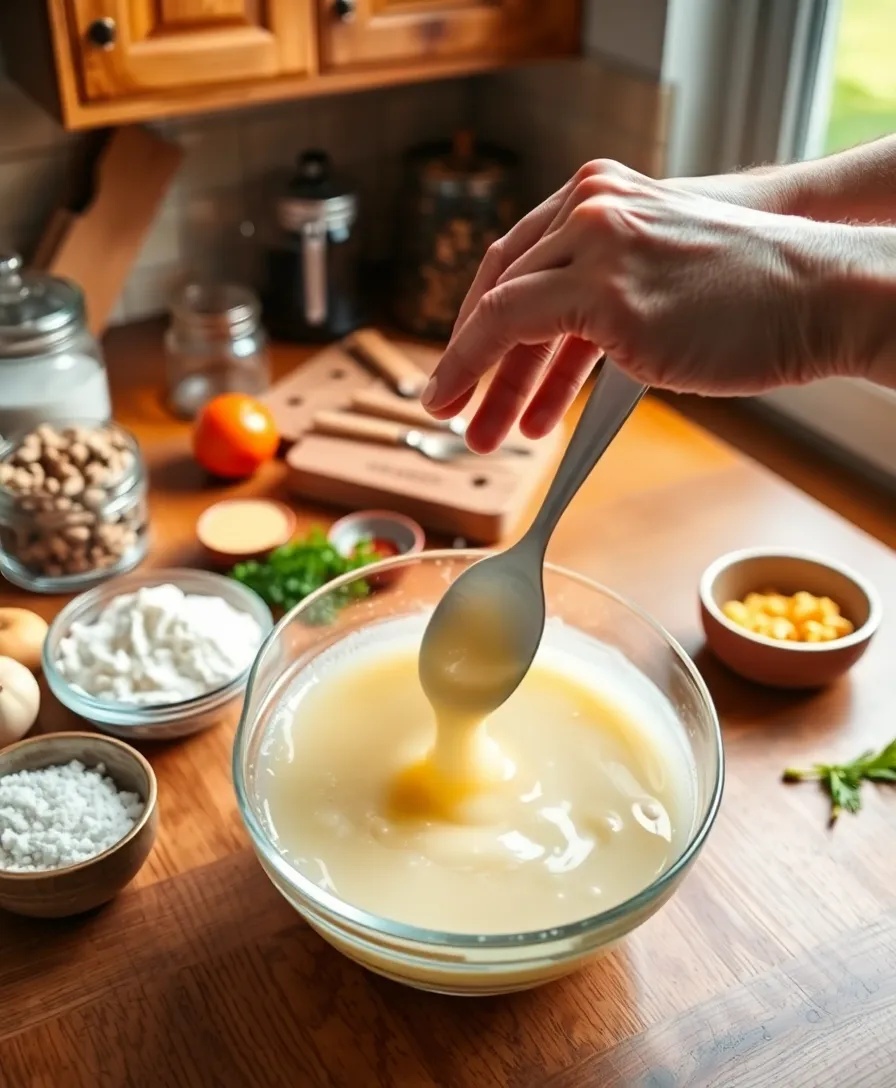
In the pantheon of global culinary arts, few preparations evoke the same reverence and signify the same foundational mastery as demi-glace. It is not merely a sauce; it is the deep, dark, glossy heart of classical French cuisine, a testament to patience, precision, and the profound transformation of simple ingredients into liquid gold. To understand demi-glace is to journey through centuries of culinary evolution, from the humble hearth to the grandest kitchens of Europe.
While the concept of reducing animal broths for flavor concentration is ancient and universal, the specific codification of “demi-glace” as we know it hails from the late 19th and early 20th centuries, largely credited to the legendary Georges Auguste Escoffier. Before Escoffier, French saucery was a labyrinth of complex preparations. He elegantly streamlined the system, establishing demi-glace as a refined derivative of Espagnole, one of the five mother sauces. This brown sauce, already rich with a roux and fortified stock, is further reduced with additional brown stock, wine, and aromatics, slowly simmered until it achieves a velvety, concentrated essence—a “half-glaze” that clings to a spoon, promising unparalleled depth.
The symphony of flavors in demi-glace is a fascinating study in culinary anthropology. At its core are bones, often veal, providing the gelatin and collagen that give the sauce its luxurious body. This practice of extracting sustenance and flavor from animal bones is perhaps humanity’s oldest culinary technique, predating written history. The aromatic foundation—carrots, onions, and celery, the classic *mirepoix*—are European staples, a triumvirate of vegetables that became indispensable to French cooking, providing a sweet, earthy base. The inclusion of ripe tomatoes, however, tells a different story. Originating from the Andes, tomatoes journeyed across the Atlantic as part of the Columbian Exchange, initially viewed with suspicion in Europe. Over centuries, they shed their dubious reputation, becoming a cornerstone of European, and particularly Mediterranean, cuisines, eventually lending their umami and subtle acidity to foundational French sauces.
The herbs and spices in demi-glace further illuminate ancient trade routes and cultural diffusion. Bay leaves and thyme, quintessential Mediterranean aromatics, have graced European kitchens for millennia, native to the region and readily available. Black peppercorns, however, speak of far-flung expeditions and the allure of exotic spices. Hailing from the Malabar Coast of India, pepper was a coveted commodity on the ancient Spice Routes, traded across continents, reaching Europe long before the advent of modern cooking, transforming from a luxury into an everyday essential. The demi-glace, therefore, isn’t just French; it’s a global tapestry woven from local abundance and the threads of international commerce.
For the modern cook, preparing demi-glace is a lesson in patience and respect. It demands time—many hours, sometimes even days—of gentle simmering, meticulous skimming to remove impurities, and gradual reduction. The liquid should never boil aggressively, but rather sigh gently, allowing the flavors to meld and concentrate without clouding. The result is a profoundly versatile elixir, capable of elevating gravies, braises, pan sauces, and roasts from delicious to sublime. Though demanding, the effort yields a product that freezes beautifully, offering instant sophistication to future meals. To make demi-glace is to partake in a culinary legacy, a profound act of creation that transcends mere cooking, transforming simple ingredients into a masterpiece of flavor and history.
Demi-Glace
Elevate your culinary repertoire with this meticulously crafted Demi-Glace, a true cornerstone of classic gastronomy. More than just a stock, this profound reduction captures the essence of slow-roasted bones and aromatic vegetables, yielding a deeply concentrated elixir of unparalleled flavor. It’s the secret weapon of discerning chefs, indispensable for enriching exquisite sauces, imparting luxurious body to stews, and lending sophisticated depth to any gourmet creation. Prepare to transform the ordinary into the extraordinary, making every meal a testament to refined taste.
Ingredients
-
10
pounds
bones
approximately one-third each veal, chicken, and beef bones -
1
pound
carrots
about 4-6 depending on size -
1.5
pounds
onions
about 4-8 depending on size, leave unpeeled -
3
large
ripe tomatoes
about 0.5 pounds collectively -
1
large
leek -
3
ribs
celery -
2
None
bay leaves -
0.5
teaspoon
thyme leaves -
0.5
teaspoon
black peppercorns -
as needed
None
water
Instructions
-
Begin by preparing the mixed bones (veal, chicken, and beef). Segment them precisely into uniform 2-inch pieces. Arrange these bone fragments in a spacious roasting pan and introduce them into a preheated oven set to a robust 425°F (220°C). Allow them to roast undisturbed for 1½ hours, ensuring an an even golden-brown caramelization by turning them diligently once at the halfway point.
-
Concurrently, attend to the vegetable preparation. Thoroughly cleanse and peel the carrots, then cut them into substantial 1-inch chunks. The onions, retaining their peels for added depth, should also be quartered into 1-inch segments. Coarsely dice the ripe tomatoes. The leek requires meticulous cleaning before being halved lengthwise. Finally, slice the celery into manageable pieces.
-
Once the bones have achieved their initial 1½ hours of roasting, incorporate the prepped carrots and onions into the roasting pan alongside them. Return the pan to the oven and continue the roasting process for an additional 30 minutes, allowing the vegetables to gently soften and release their fragrant oils.
-
Carefully extract the roasting pan from the oven. Employing a large slotted spoon, meticulously transfer the roasted bones, carrots, and onions into a substantial stockpot, taking care to leave behind all rendered fat and savory pan drippings within the roasting pan. Reserve these roasted elements for the subsequent phase.
-
With the solids removed, tilt the roasting pan to decant any residual fat. The precious, concentrated essence (known as ‘fond’) adhering to the bottom of the pan is a testament to the rich flavors developed.
-
Pour a generous measure of water into the now-emptied roasting pan. Position the pan on the stovetop over medium-high heat. As the water approaches a boil, skillfully scrape the bottom of the pan with a metal spatula, ensuring all the caramelized, solidified juices are thoroughly dissolved into the liquid. This process, known as deglazing, captures the intense flavor left behind.
-
Integrate this freshly deglazed liquid from the roasting pan into the stockpot already containing the roasted bones and vegetables. Proceed to fill the stockpot with additional water, ensuring all ingredients are submerged.
-
Gently bring the contents of the stockpot to a slow simmer over medium heat. As the liquid warms, a layer of impurities (scum) will rise to the surface; meticulously skim this off using a ladle or fine-mesh sieve to ensure a clear demi-glace. Once a gentle simmer is established, reduce the heat to maintain a barely perceptible bubble and allow it to cook for 1 hour.
Recipe Notes
This foundational demi-glace serves as the ultimate secret ingredient for enhancing a myriad of exquisite dishes. Its complex, savory profile is perfectly suited for enriching gravies, adding body to classic French preparations, or elevating simple pan sauces to gourmet status. For an optimal depth of flavor and a beautifully balanced essence, we recommend a thoughtful blend, ideally incorporating roughly equal parts of veal, chicken, and beef bones.
Global Heritage Archive
Anthropological & Spice Migration Record
“A testament to the meticulous, foundational techniques of classical French haute cuisine, where precision, patient reduction, and the layering of robust flavors create the bedrock of countless sophisticated dishes.”
🌿 Spice & Botanical Migration
The inclusion of black peppercorns in demi-glace signifies an ancient culinary link to the Malabar Coast of India, from where this ubiquitous spice traveled along the Spice Routes to Europe for millennia. Complementing this global import are the inherently Mediterranean herbs — bay leaves and thyme — native to regions spanning Southern Europe and North Africa, which found their way into French cooking through local cultivation and regional trade. This blend of indigenous European aromatics with a prized Asian spice exemplifies the historical convergence of local availability and extensive trade networks that shaped classical French cuisine.
🏺 Historical & Archaeological Record
While “demi-glace” as a specific culinary term and preparation is a relatively modern (19th-century) French innovation, the fundamental technique of boiling bones and vegetables to extract flavor and gelatin, then reducing the liquid to concentrate it, has ancient roots. Archaeological evidence of early bone boiling for nutrient extraction and flavor concentration can be found in prehistoric sites worldwide, with one of the earliest direct textual references to stock-like preparations appearing in Roman culinary texts like Apicius’s “De re coquinaria” (4th-5th century CE), which details the use of concentrated broths and reductions.
💡 Little Known Facts
- Georges Auguste Escoffier, the ’emperor of chefs,’ is widely credited with formalizing and codifying demi-glace in the late 19th and early 20th centuries, streamlining the complex system of mother sauces.
- The term ‘demi-glace’ itself, meaning ‘half-glaze,’ refers to its status as a highly reduced derivative of Espagnole sauce, which in turn is a fundamental brown mother sauce.
📸 Made This Heritage Recipe?
We would love to see how your dish turned out! Send a photo of your culinary creation to [email protected] to be featured in our community gallery.
Leave a review and rate this recipe below!
Curated Literature & Washington DC Downtown Calendar
The Culinary Alchemist: Modern Gastronomy & Flavor Pairing
By LDN Gastronomy Series
Artisanal technique, seasonal sourcing, and kitchen mastery.
Upcoming Downtown Happenings
Live acoustic sessions, gallery receptions, literary salons, and independent trade shows across Washington DC.
