
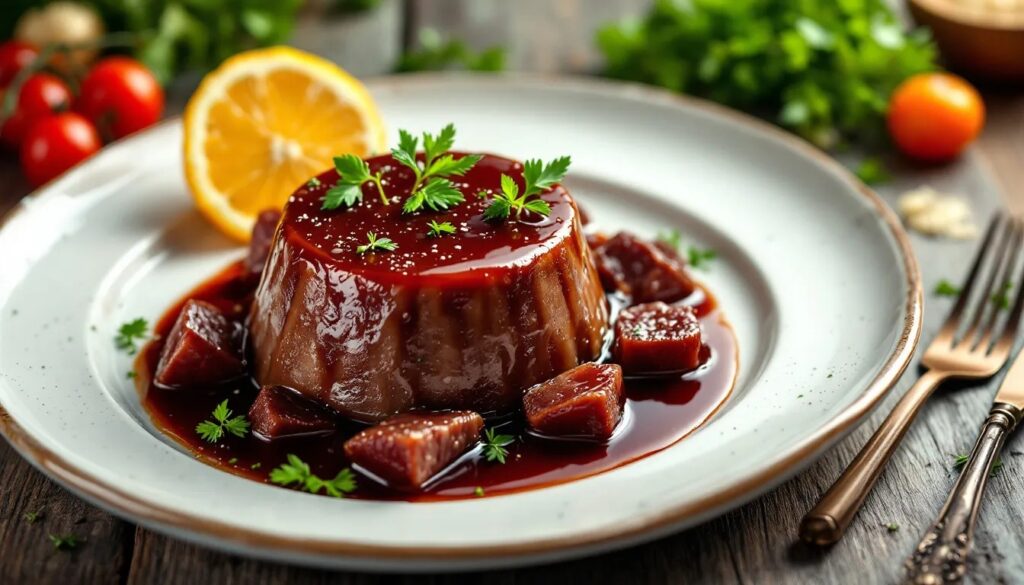
Daube Glacée, or Jellied Beef, is more than a dish; it is a profound testament to the power of time, transformation, and the enduring human desire to elevate humble ingredients into culinary art. Originating from the sun-drenched hills of Provence in Southern France, the daube itself is a classic French stew, a symphony of robust flavors born from hours of slow simmering. Its very name likely whispers of the ‘daubière,’ the specialized, belly-shaped earthenware pot with a tight-fitting lid that has cradled this dish for centuries, ensuring a tender, deeply flavorful result as steam cycles internally, basting the meat in its own juices.
The ‘glacée’ aspect elevates this rustic staple into something truly extraordinary. Born out of both necessity and ingenuity, transforming a hearty winter stew into an elegant, refreshing dish perfect for warmer months or as a sophisticated appetizer, it’s a brilliant example of culinary adaptation. Before refrigeration, jellying was a revered preservation technique, a natural science harnessing the collagen from calf’s feet and veal bones to create a shimmering, savory aspic that encased and protected the flavorful beef.
From an anthropological lens, the ingredient list is a captivating map of global migration and trade. While local heroes like robust beef, fragrant garlic, aromatic shallots, and the omnipresent red wine speak of millennia-old European agricultural practices, other elements tell tales of distant lands. Black peppercorns and nutmeg evoke the ancient Spice Routes, charting journeys from the Malabar Coast of India and the remote Banda Islands of Indonesia, respectively, brought to European tables by daring explorers and tireless traders. Then there’s the tomato, an iconic staple of Mediterranean cuisine today, yet a relative newcomer from the Americas, introduced post-Columbian Exchange and slowly, deliciously integrated into European diets over centuries. Even the final touch of Madeira wine hints at seafaring routes and a history of luxury trade.
The preparation of Daube Glacée is a ritual of patience and precision. It begins with meticulously browning the beef, locking in its savory essence. A long, gentle braise with aromatic vegetables, herbs, and wine follows, allowing flavors to deepen and meld. The true magic, however, lies in the transformation from stew to terrine. The rich braising liquid, bolstered by natural gelling agents, is clarified to a crystal-clear consommé, then poured over the carefully arranged chunks of cooled daube, vegetables, and fresh herbs. Chilled for hours, it solidifies into an exquisite, jewel-like creation.
For the home cook, patience is your most valuable ingredient. Do not rush the browning, nor the braising. Allow the daube to cool completely before attempting to unmold, and remember that the clarity of your aspic is a testament to careful straining and clarification. Serve thin slices with crisp lettuce, perhaps a touch of Dijon mustard, and let each bite transport you to the heart of Provence, a journey through history, flavor, and culinary philosophy. It’s a dish that teaches us that the greatest pleasures often require the most time and care, a culinary legacy that celebrates both the bounty of the earth and the ingenuity of human hands across continents and centuries.
DAUBE GLACÉE (JELLIED BEEF)
Embark on an extraordinary culinary journey with Daube Glacée, a masterful rendition of a vintage French-Southern classic. This exquisite jellied beef dish stands as a profound homage to the art of patient, slow-simmered perfection and refined presentation. Through a meticulous braise, humble cuts of beef are transfigured, absorbing a symphony of rich, complex flavors and aromatic spices. Served exquisitely chilled within a glistening, savory aspic, it offers a captivating interplay of textures and a taste of cherished heritage, making it an impressive centerpiece for any special gathering.
Ingredients
-
3
pounds
top round of beef -
to taste
salt -
to taste
pepper -
to taste
nutmeg -
1
cup
oil -
½
cup
red wine
for marinade -
2
cloves
garlic
finely chopped, for marinade -
4
shallots
finely chopped, for marinade -
12
peppercorns
for marinade -
1
bay leaf
for marinade -
½
teaspoon
oregano
for marinade -
½
teaspoon
sweet basil
for marinade -
3
Tablespoons
lard -
½
cup
water -
1
cup
tomatoes
chopped -
2
calf’s feet -
some
veal bones -
2
cups
red wine
for braising -
3
Tablespoons
Brandy -
1
clove
garlic
for braising -
1
bay leaf
tied with a few celery tops and sprigs of parsley (for bouquet garni) -
few
celery tops
tied with bay leaf and parsley (for bouquet garni) -
sprigs
parsley
tied with bay leaf and celery tops (for bouquet garni) -
12
small young carrots -
12
small onions -
½
cup
Madeira -
shredded
lettuce
for serving
Instructions
-
Generously season the 3 pounds of top round of beef, ensuring an even coating of salt, freshly ground black pepper, and nutmeg.
-
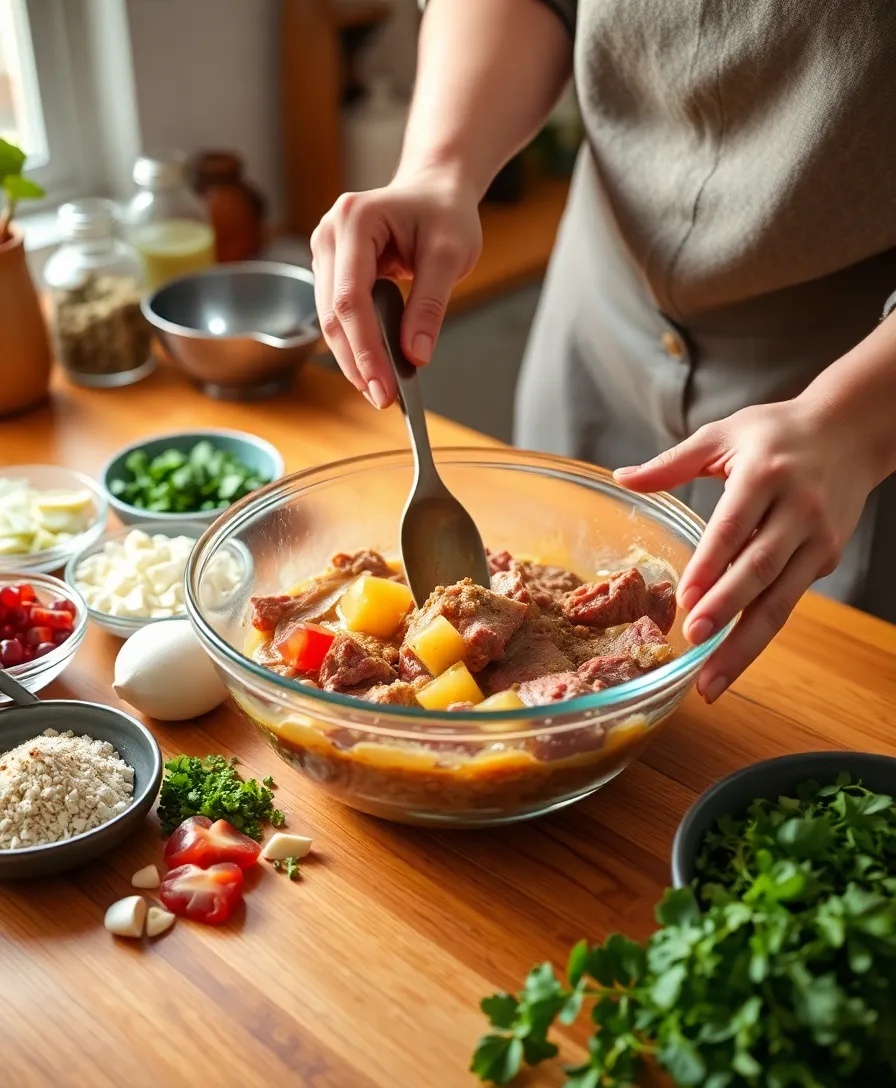
Within a non-reactive vessel, meticulously whisk together 1 cup of oil, ½ cup of red wine, 2 finely minced garlic cloves, 4 finely diced shallots, 12 whole peppercorns, 1 bay leaf, ½ teaspoon of dried oregano, and ½ teaspoon of sweet basil to form your aromatic marinade. Submerge the seasoned beef into this mixture, ensuring every surface is completely enveloped. Cover and refrigerate for a full 24-hour period to allow flavors to deeply infuse.
-
Following the marinating period, extract the beef from its liquid bath and meticulously pat it dry with paper towels. In a substantial skillet, render 3 tablespoons of lard over medium-high heat until shimmering. Carefully introduce the beef, searing it robustly on all surfaces until it achieves a rich, golden-brown crust. Once perfectly seared, transfer the meat to a waiting Dutch oven.
-
Carefully pour off and discard any residual fat from the skillet. Introduce ½ cup of water to the still-warm pan, diligently scraping the bottom with a wooden spoon to release all the caramelized, flavorful fond. This rich deglazing liquid should then be poured directly over the seared beef nestled in the Dutch oven.
-
Into the Dutch oven with the beef, incorporate the strained marinade, 1 cup of chopped tomatoes, 2 calf’s feet, a selection of veal bones, 2 cups of red wine, 3 tablespoons of Brandy, 1 whole clove of garlic, and a freshly prepared bouquet garni (composed of a bay leaf bound with a few celery tops and parsley sprigs). Securely cover the pot and transfer it to a moderate oven, preheated to 350°F (175°C), allowing it to braise gently for approximately 3 hours. Ensure to turn the meat a couple of times throughout this cooking period to promote even tenderization.
-
Upon completion of the braising, carefully relocate the tender beef to a separate, clean pot or kettle. Extract the calf’s feet and dispose of the bouquet garni. Delicately skim away any accumulated fat from the surface of the rich braising liquid, then pass this flavorful liquid through a fine-mesh sieve directly over the reserved beef.
-
Introduce the 12 small young carrots and 12 pearl onions into the pot alongside the beef. Tenderly separate any lingering meat from the braised calf’s feet, finely dice it, and incorporate these morsels into the pot with the beef. Re-cover the pot tightly and return it to the oven. Continue the cooking process for an additional hour, or until the vegetables yield to a fork.
-
Withdraw the pot from the oven and permit both the beef and vegetables to cool entirely to room temperature. When cooled, carefully arrange the beef onto a designated serving dish and refrigerate until thoroughly chilled. Separately, remove the carrots and onions from the pot and chill them as well.
-
Pass the remaining braising liquid through a fine-mesh strainer, then gently fold in ½ cup of Madeira wine, allowing this magnificent sauce to cool completely. Artfully arrange the chilled carrots and onions around the beef on the serving platter. Delicately spoon the cooled, clarified sauce over the beef and surrounding vegetables, ensuring an even and glistening coating. Return the dish to the refrigerator and chill until the sauce firms into a beautiful, natural aspic.
-
For serving, consider carving a portion of the chilled beef into elegant slices and artfully arranging them beside the whole piece, allowing the shimmering aspic to beautifully coat both the meat and vegetables.
-
**Alternative Presentation Option (Molding):**
-
For an alternative, molded presentation, neatly slice the chilled beef into uniform 2-inch by ½-inch strips, each approximately ¼ inch thick. Line the bottom of a rectangular mold with a 1/3-inch layer of the strained and completely cooled aspic, then refrigerate until just firm. If desired, artfully arrange small decorative elements—such as finely diced vegetables or fresh herb sprigs—atop this initial layer. Carefully position the beef strips within the mold, then gently pour the remaining cooled aspic over them until the mold is completely filled. Chill overnight to ensure a thorough setting.
-
To present the molded daube glacée, gently invert the mold onto an elegant serving platter. Encircle the base with a bed of finely shredded crisp lettuce for a refreshing garnish.
Recipe Notes
This timeless Daube Glacée truly shines when prepared with patience and an appreciation for its heritage. For the most pristine aspic, ensure careful skimming of fat and thorough straining of the braising liquid. The quality of your red wine and Brandy will subtly elevate the dish’s complexity. Serve exceptionally chilled, perhaps with a crusty baguette and cornichons, allowing the nuanced flavors to fully unfold. This dish is ideal for preparing a day or two in advance, as its flavors deepen beautifully with time.
Global Heritage Archive
Anthropological & Spice Migration Record
“A culinary tradition centered on slow-cooked, rich stews often prepared for communal gatherings, utilizing local ingredients and time-honored preservation techniques.”
🌿 Spice & Botanical Migration
The recipe’s spices and key ingredients narrate a global odyssey. Black pepper and nutmeg, originating from India and the Banda Islands (Indonesia) respectively, embarked on ancient Spice Routes, eventually enriching European palates through Arab traders and later European colonial powers. Tomatoes, now quintessential to Mediterranean cuisine, are a post-Columbian Exchange gift from the Americas, slowly adopted into European diets from the 16th century onwards, truly blossoming in Provençal cooking much later. Conversely, indigenous Mediterranean herbs like bay leaf, oregano, and basil have been local culinary mainstays for millennia.
🏺 Historical & Archaeological Record
The foundational concept of slow-cooked meat stews is ancient, with archaeological evidence of communal cooking pits and braising vessels dating back to prehistoric eras. Jellied meats, or aspics, have a documented history at least since the Roman Empire, with Apicius’s cookbook (c. 4th century AD) detailing methods that suggest similar preservation and gelling techniques using animal collagen. While medieval European cookbooks further refine similar preparations, the specific ‘Daube’ style, particularly its written recipe and deep cultural integration, likely crystallized in Provençal France during the late medieval to early modern period, evolving from regional ingredients and culinary practices.
💡 Little Known Facts
- The word ‘daube’ likely derives from ‘daubière,’ the specialized earthenware pot with a fitted lid used for slow cooking this dish, designed to prevent moisture loss during long braises.
- Daube Glacée was historically a sophisticated method of preserving cooked meat before refrigeration, allowing a rich stew to be served cold and elegant, especially in the warmer climates of Southern France.
📸 Made This Heritage Recipe?
We would love to see how your dish turned out! Send a photo of your culinary creation to [email protected] to be featured in our community gallery.
Leave a review and rate this recipe below!
Curated Literature & Washington DC Downtown Calendar
The Culinary Alchemist: Modern Gastronomy & Flavor Pairing
By LDN Gastronomy Series
Artisanal technique, seasonal sourcing, and kitchen mastery.
Upcoming Downtown Happenings
Live acoustic sessions, gallery receptions, literary salons, and independent trade shows across Washington DC.
