
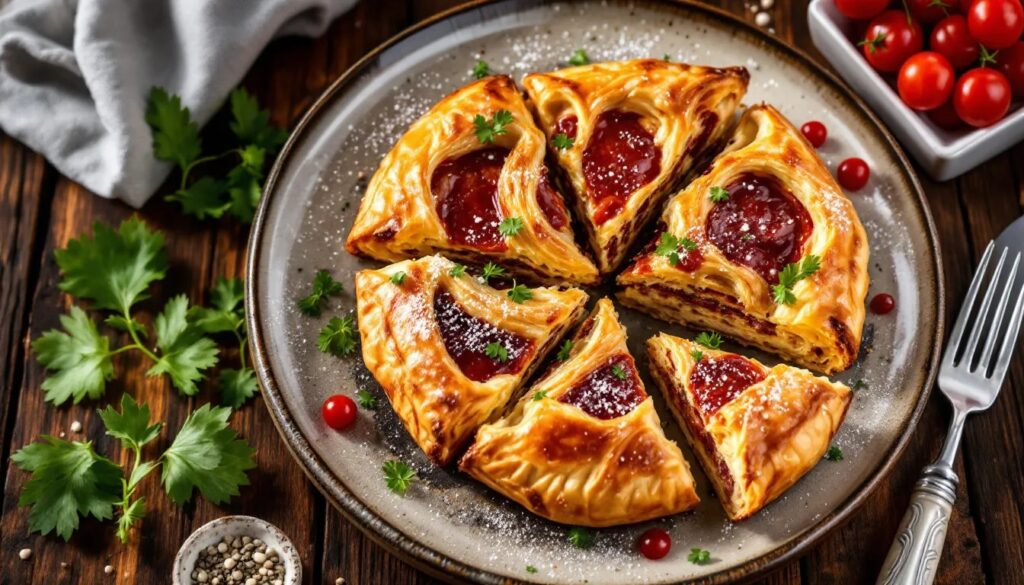
The mere mention of ‘Danish Pastry’ conjures images of golden-brown layers, glistening with glaze, perhaps studded with fruit or a creamy filling. It speaks of leisurely mornings, rich coffee, and the comforting embrace of a Northern European ‘hygge’ moment. Yet, the story of this beloved confection is far more complex and nomadic than its name suggests. Far from being a purely Danish invention, the pastry Danes call ‘Wienerbrød’—or ‘Viennese bread’—reveals a captivating tale of culinary migration, labor disputes, and the intricate dance of global ingredients.
Our journey begins not in Copenhagen, but in Vienna, Austria, in the mid-19th century. During a bakers’ strike in Denmark in 1850, Austrian bakers were brought in as replacement workers. With them, they carried the knowledge of a sophisticated baking technique: the creation of a rich, yeast-leavened dough laminated with butter. This meticulous process, involving multiple folds and rolls, traps butter between layers of dough, which then expand in the heat of the oven to create the pastry’s signature ethereal flakiness. The Danes, captivated by this ‘new’ Viennese bread, quickly adopted and adapted the technique, making it their own with distinctive fillings and shapes, thereby cementing its place in their national culinary identity, despite its foreign roots.
The core ingredients themselves tell a story of millennia-spanning trade and agricultural innovation. The all-purpose flour, a fundamental component, derives from wheat, a grain first domesticated in the Fertile Crescent around 10,000 BCE, its cultivation spreading westward through ancient trade routes and migrations, eventually becoming a staple across Europe. The rich butter, essential for lamination, speaks to centuries of European dairy farming traditions, a product of pastoralism deeply ingrained in temperate climates. Sugar, the sweetener that balances the pastry’s richness, offers a glimpse into global networks: originally from sugarcane in Southeast Asia, it traversed the Silk and Spice Routes, brought to Europe by Arab traders, and later fueled colonial expansion and the rise of the sugar beet industry. Even the humble yeast, the microscopic leavener, echoes ancient practices of fermentation, refined over centuries from wild strains to commercial varieties.
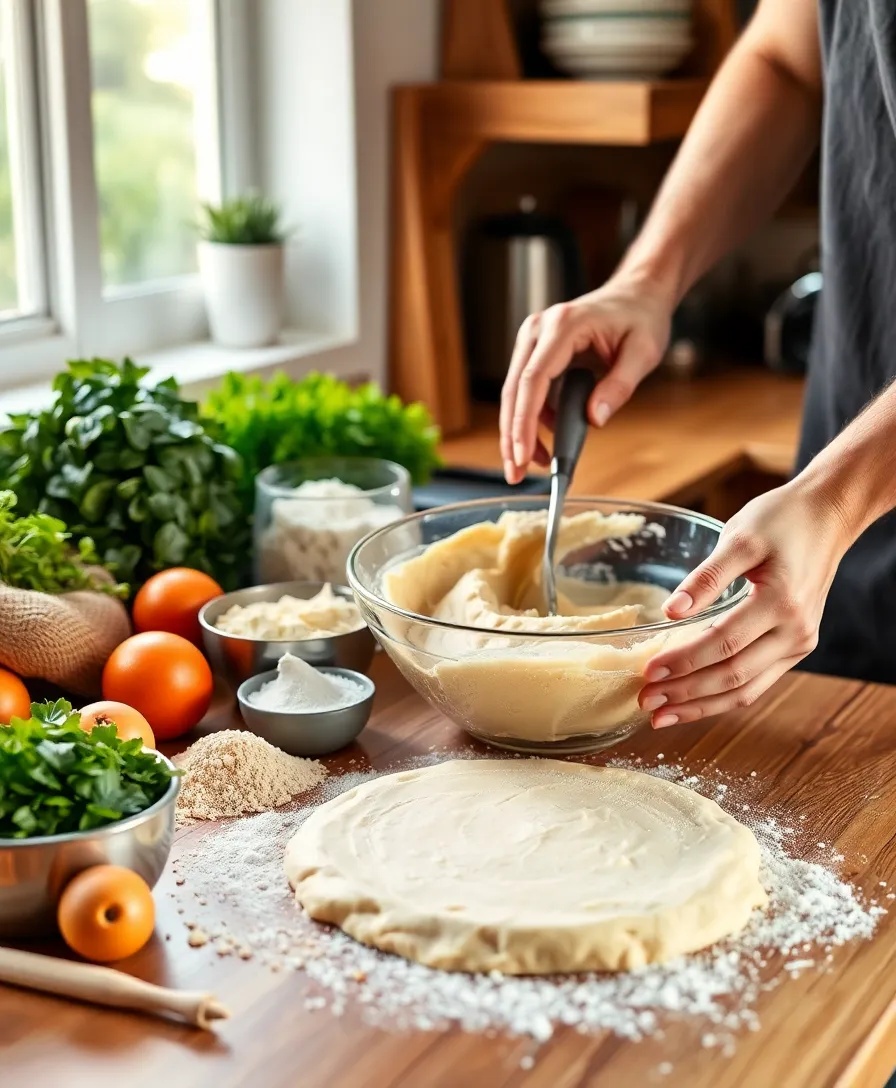
Preparing a Danish Pastry at home is a labor of love, a meditative practice that honors this rich history. The key lies in patience and temperature control. Keep your butter cold and firm, and your dough chilled between folds. Each ‘turn’ or fold is not just a step in a recipe; it’s a testament to the artisan’s dedication, an echo of the Austrian bakers who brought their craft across borders. While the base recipe might omit explicit spices, many Danish pastry fillings embrace flavors like cardamom, vanilla, or cinnamon – spices themselves originating from distant lands and traversing similar ancient trade routes. The result is more than just a sweet treat; it’s a bite of history, a cultural ambassador, and a testament to how ingredients, techniques, and people migrate, enriching the culinary landscape of the world one flaky, buttery layer at a time.
DANISH PASTRY
Embark on a culinary journey with this exquisite Danish Pastry, a testament to time-honored techniques culminating in a symphony of delicate, golden layers. Each bite unveils a tender, buttery crumb, offering a taste of artisanal European baking right within your own kitchen. This recipe promises a truly rewarding experience, perfect for transforming any breakfast into a special occasion or gracing your dessert table with an air of sophisticated indulgence.
Ingredients
-
1½
cups
butter
cold -
4
cups
all-purpose flour -
2
pkg.
dry yeast -
¼
cup
warm water -
1/3
cup
sugar -
1
cup
milk -
1
egg
beaten
Instructions
-
Begin by preparing the butter block. Cube 1½ cups of butter, then gently incorporate it with ½ cup of the designated flour quantity. Transfer this mixture onto a sheet of parchment paper and skillfully roll it into a precise 12 x 6-inch rectangle. Refrigerate until impeccably firm.
-
For the dough, initiate by hydrating 2 packages of active dry yeast in ¼ cup of comfortably warm water within a spacious mixing bowl, allowing it to bloom.
-
To the activated yeast, introduce 1/3 cup of granulated sugar, 1 cup of whole milk, and one lightly whisked egg, stirring until well combined.
-
Gradually incorporate 2 cups from the remaining flour supply, mixing thoroughly until a cohesive, shaggy dough begins to form.
-
Next, add the final 1½ cups of flour. Continue to beat the mixture diligently until the dough develops a wonderfully smooth, pliant, and elastic texture.
-
Gently transfer the prepared dough onto a lightly dusted work surface. Roll it out evenly into a substantial 14-inch square.
-
Position the impeccably chilled butter block squarely onto one half of the dough. Carefully fold the other half of the dough over the butter, then meticulously pinch and seal all edges to completely enclose the butter. Place the dough in the refrigerator to chill for a minimum of 30 minutes.
-
Initiate the first ‘turn’ of the dough. Retrieve the chilled dough and carefully roll it into a 12 x 14-inch rectangle. Execute a classic ‘letter fold’ by bringing one-third of the dough over the center, then folding the remaining third over to meet it. Gently roll the folded dough to relax it slightly. Repeat this precise folding and rolling procedure two additional times. Should the butter become overly soft or begin to seep during any stage, return the dough to the refrigerator to chill thoroughly before proceeding. Following the final fold and roll, achieve a uniform thickness of 1/8 inch across the entire dough.
-
Now, unleash your creativity! Shape and fill the delicate pastry dough according to your desired design (refer to the notes section for inspiring suggestions).
-
Arrange the beautifully shaped pastries onto a baking sheet, allowing ample space between each. Permit them to proof in a warm, draft-free environment for approximately one hour, or until visibly plumped.
-
Preheat your oven to a precise 400°F (200°C). Transfer the proofed pastries to the preheated oven and bake for 10-12 minutes, or until they achieve a magnificent golden-brown hue and puffed perfection.
Recipe Notes
Elevate your Danish creations with an array of exquisite fillings. Consider a vibrant fruit preserve, a rich almond paste, or a decadent sweetened cream cheese for an utterly delightful center. For an effortlessly elegant shape, simply cut the rolled dough into isosceles triangles. Starting from the widest end, gently roll each triangle towards its apex to create a classic croissant-like pastry. Alternatively, cut into squares, dot with filling, and fold opposing corners to the center for a traditional ‘pinwheel’ effect.
Global Heritage Archive
Anthropological & Spice Migration Record
“A refined, sweet pastry often enjoyed for breakfast or ‘fika’ (a coffee break tradition), embodying a rich baking tradition that values technical skill, indulgence, and communal enjoyment.”
🌿 Spice & Botanical Migration
The provided recipe for Danish Pastry, focusing on its fundamental dough, does not explicitly list spices or herbs. However, its core ingredients are powerful indicators of historical migration and global trade. All-purpose flour, primarily from wheat, traces its botanical origins to the Fertile Crescent, spreading through ancient agricultural diffusion into Europe. Sugar, a crucial sweetener, originated from sugarcane in Southeast Asia and India, journeying westward through Arab traders along the Spice Route, eventually becoming a staple through colonial trade and the development of European sugar beet cultivation.
🏺 Historical & Archaeological Record
While the concept of leavened bread, utilizing flour and yeast, stretches back to ancient Egypt around 1500 BCE, the specific culinary technique of creating a laminated dough – where butter is repeatedly folded into dough to create numerous thin layers – is a more recent innovation. The earliest precursors to what we recognize as ‘Danish Pastry’ are often linked to the development of puff pastry (pâte feuilletée) in France, with a clear written record attributed to the baker Claudius Gele in the mid-17th century. This sophisticated layering technique, crucial for the Danish pastry’s distinctive texture, evolved through European baking traditions, reaching its modern form and application in ‘Wienerbrød’ in 19th-century Austria before migrating to Denmark.
💡 Little Known Facts
- Despite its name, Danish Pastry (known as ‘Wienerbrød’ in Denmark) is widely believed to have originated in Vienna, Austria, and was brought to Denmark by Austrian bakers during a strike in 1850.
- The unique, flaky texture of Danish pastry comes from its complex lamination process, where butter is repeatedly folded and rolled into yeast dough, creating hundreds of distinct layers.
📸 Made This Heritage Recipe?
We would love to see how your dish turned out! Send a photo of your culinary creation to [email protected] to be featured in our community gallery.
Leave a review and rate this recipe below!
Curated Literature & Washington DC Downtown Calendar
The Culinary Alchemist: Modern Gastronomy & Flavor Pairing
By LDN Gastronomy Series
Artisanal technique, seasonal sourcing, and kitchen mastery.
Upcoming Downtown Happenings
Live acoustic sessions, gallery receptions, literary salons, and independent trade shows across Washington DC.
