
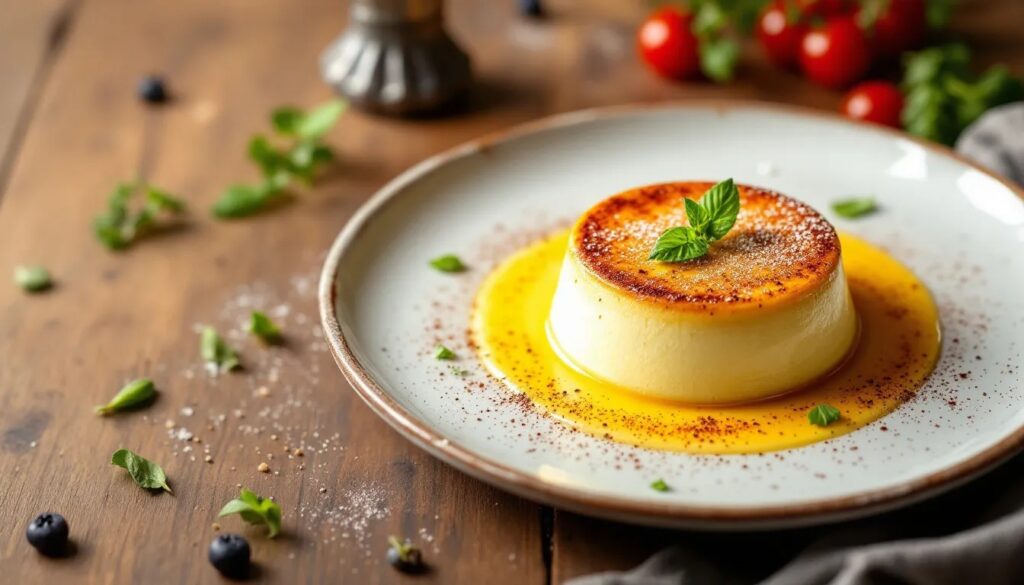
In the grand tapestry of French patisserie, few preparations are as essential, as versatile, or as utterly sublime as Crème Anglaise. Its silken texture, golden hue, and delicate vanilla perfume whisper promises of elegance and indulgence. More than just a simple custard, it is a culinary cornerstone, a testament to the enduring power of classic techniques and the global migrations that shaped its very essence.
The lineage of Crème Anglaise stretches back much further than its French designation might suggest. Its primordial ancestors can be found in the kitchens of ancient Rome, where egg-and-milk concoctions known as *patina* hinted at the future of custards. Throughout the Middle Ages, variations of baked custards and flans graced European tables, evolving with regional ingredients and preferences. Yet, it was the French culinary tradition, with its meticulous focus on refinement and technique, that elevated these humble beginnings into the celebrated Crème Anglaise we know today.
The name itself, “English Cream,” often sparks curiosity. Why would such a quintessential French creation bear an English moniker? Culinary historians largely agree that the ‘Anglaise’ refers not to its origin in England, but rather to its characteristic consistency: a pourable, flowing sauce, in contrast to the more set, firmer custards like crème brûlée or crème caramel. It’s also plausible that it was named for its traditional role accompanying English-style puddings, which were popular in aristocratic French circles.
The ingredients of Crème Anglaise tell a fascinating story of global trade and cultural exchange. The lush richness of half-and-half and milk, combined with the emulsifying magic of egg yolks, speak to the agricultural abundance of European dairylands. But it is vanilla, the aromatic soul of the cream, that embarks on the most epic journey. Native to the tropical forests of Mesoamerica, vanilla was first cultivated by the Totonac people of Mexico. It traversed the Atlantic with Spanish conquistadors, captivating European palates. For centuries, its propagation was challenging, until a groundbreaking discovery in the 19th century on the French colonial island of Réunion by a young slave named Edmond Albius, who perfected hand-pollination, unleashing vanilla’s cultivation across the Indian Ocean and embedding it deeply into French culinary identity. Similarly, sugar, originating from New Guinea, traveled through ancient trade routes across Asia and the Middle East before becoming a European luxury and later, a driving force behind global colonial expansion.
Crafting the perfect Crème Anglaise is an exercise in patience and precision. The gentle warming of the milk and cream, infused with the scraped seeds and pod of a vanilla bean, is followed by the delicate process of tempering the egg yolks with sugar. This gradual marriage of hot liquid to egg prevents curdling, ensuring a silky-smooth base. The mixture is then returned to low heat, stirred continuously, until it coats the back of a spoon – the famous ‘nappe’ stage. Overcooking is the cardinal sin, transforming the luxurious cream into scrambled eggs. A splash of brandy at the end adds a subtle warmth and complexity, a final flourish from European distillation traditions.
From serving as a velvety bed for *île flottante* to forming the base of the most exquisite ice creams and Bavarian creams, Crème Anglaise remains an indispensable element of the dessert repertoire. Its simplicity belies a profound depth, a testament to the fact that sometimes, the most elegant creations arise from the harmonious union of a few, perfectly chosen ingredients and time-honored techniques. Master this foundational cream, and you unlock a universe of dessert possibilities.
Creme Anglaise
Behold the timeless allure of Crème Anglaise, a quintessential French custard sauce that transcends mere accompaniment, acting as a sublime orchestrator of dessert experiences. Its ethereal, silken embrace and whisper of pure vanilla are designed to elevate, to transform the ordinary into the extraordinary. Whether gracing a vibrant summer berry tart or lending its opulent charm to a decadent chocolate creation, this sauce delivers an unparalleled depth of delicate sweetness and velvety luxury, making every spoonful an ode to refined indulgence.
Ingredients
-
1½
cups
half-and-half
None -
6
Tablespoons
sugar
None -
1½
cups
milk
None -
1
vanilla bean
split lengthwise and scraped -
4
large
egg yolks
None -
2
Tablespoons
brandy
None
Instructions
-
Begin by uniting the half-and-half, milk, granulated sugar, and the fragrant scraped vanilla bean (along with its precious pod) within a robust medium saucepan. Gently heat this exquisite fusion over medium flame, coaxing the sugar into complete dissolution with continuous, tender agitation. Once the blend reaches a gentle simmer, withdraw it from the heat source and allow the vanilla to infuse profoundly for 15 to 20 minutes. Subsequently, retrieve and discard the spent vanilla pod.
-
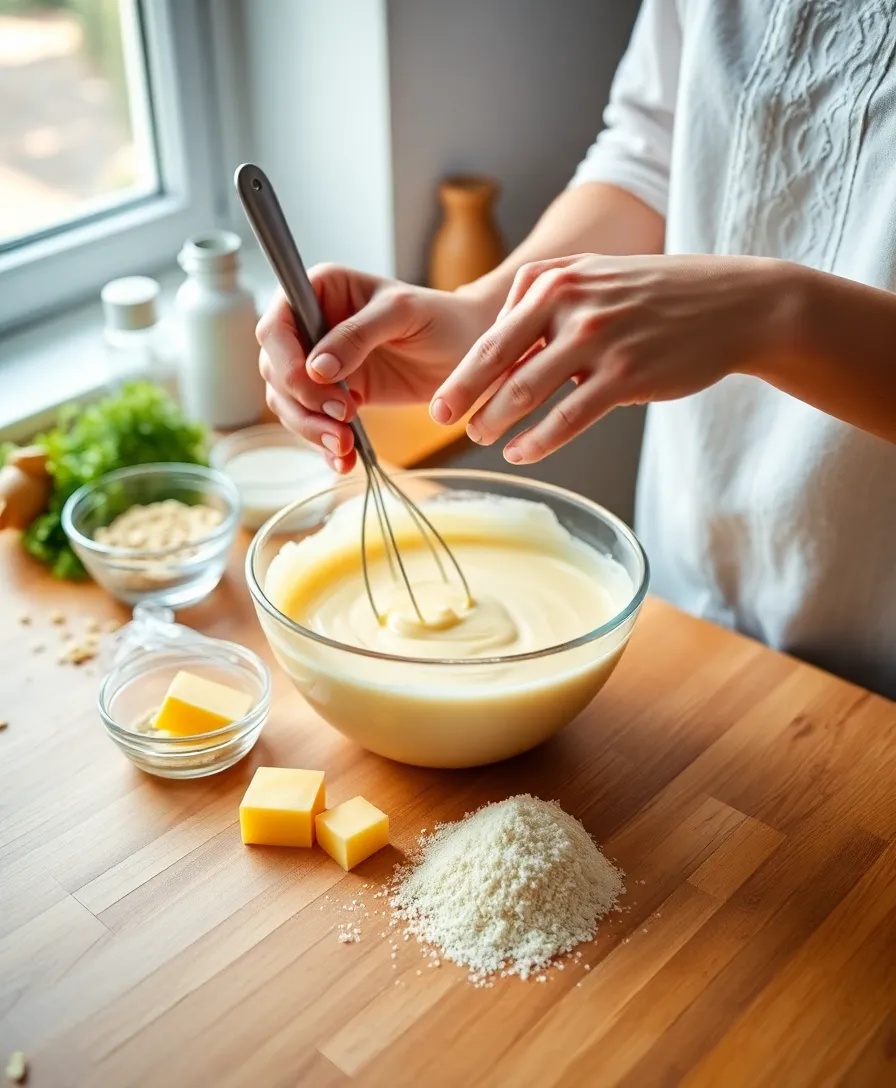
Concurrently, in a separate, spacious mixing bowl, vigorously aerate the egg yolks until their hue brightens and their texture achieves a luscious, pale creaminess.
-
Initiate the delicate art of tempering: gradually introduce approximately half of the warmed dairy mixture into the whisked yolks, incorporating it slowly and steadily to prevent any coagulation of the eggs.
-
Carefully return the now-tempered egg yolk blend to the saucepan, rejoining it with the residual dairy infusion.
-
Restore the saucepan to a gentle, medium-low heat. With unwavering attention, stir the developing custard continuously using a wooden spoon or heat-resistant spatula until it reaches a velvety thickness that gracefully clings to the back of the spoon (aiming for an internal temperature between 170-175°F / 77-79°C). Exercise utmost caution: never allow the mixture to boil, as this will irrevocably compromise its delicate structure and result in curdling.
-
Promptly remove the saucepan from the heat, then artfully fold in the brandy, if utilizing, to introduce an additional layer of sophisticated warmth.
-
For an impeccably smooth and pristine finish, pass the nascent Crème Anglaise through a fine-mesh sieve into a meticulously clean receiving bowl, ensuring the removal of any minuscule imperfections or textural inconsistencies.
-
Present this culinary masterpiece either gently warmed or exquisitely chilled. To safeguard its silken surface from developing an undesirable film, elegantly press a sheet of plastic wrap directly onto the custard’s surface until ready for serving.
Recipe Notes
Mastery of Crème Anglaise hinges upon the time-honored technique of tempering egg yolks, a crucial step diligently outlined within these instructions to ensure the impeccable, silken texture characteristic of this revered French classic. Adherence to these precise culinary practices guarantees a consistently sublime result, a testament to the art of fine patisserie.
Global Heritage Archive
Anthropological & Spice Migration Record
“A sophisticated and refined dessert tradition, emphasizing delicate textures, balanced flavors, and precise techniques, often serving as a versatile foundational element for numerous other elaborate pastries and confections.”
🌿 Spice & Botanical Migration
The star spice, vanilla, originates from the Totonac people of Mesoamerica (modern-day Mexico), where it was cultivated for centuries. Spanish conquistadors introduced it to Europe in the 16th century, but its cultivation remained challenging due to its reliance on specific pollinators. It wasn’t until the 19th century that Edmond Albius, a 12-year-old slave on Réunion Island, discovered a hand-pollination method, enabling its widespread cultivation in French colonial territories like Réunion and Madagascar, thus making it a staple in European, particularly French, patisserie.
🏺 Historical & Archaeological Record
The earliest forms of egg-and-dairy custards can be traced back to ancient Roman cuisine, where dishes like *patina* (a type of savory or sweet custard) were prepared using eggs, milk, and sweeteners. Medieval European cookbooks, such as the 14th-century *Le Viandier de Taillevent*, feature various *croustades* or *flans* which represent baked custards, demonstrating the long-standing use of these core ingredients and techniques across the continent, preceding the codified Crème Anglaise by centuries.
💡 Little Known Facts
- The term “Crème Anglaise” (English cream) is often debated, but most culinary historians agree it refers to its characteristic smooth, pourable consistency, distinguishing it from set custards like crème brûlée or flan. It may also have been named for its traditional accompaniment to “English-style” puddings.
- Crème Anglaise is not merely a sauce; it is the fundamental base from which many other classic French desserts are derived, including French vanilla ice cream, various mousses, Bavarian cream (bavarois), and crème chiboust.
📸 Made This Heritage Recipe?
We would love to see how your dish turned out! Send a photo of your culinary creation to [email protected] to be featured in our community gallery.
Leave a review and rate this recipe below!
Curated Literature & Washington DC Downtown Calendar
The Culinary Alchemist: Modern Gastronomy & Flavor Pairing
By LDN Gastronomy Series
Artisanal technique, seasonal sourcing, and kitchen mastery.
Upcoming Downtown Happenings
Live acoustic sessions, gallery receptions, literary salons, and independent trade shows across Washington DC.
