
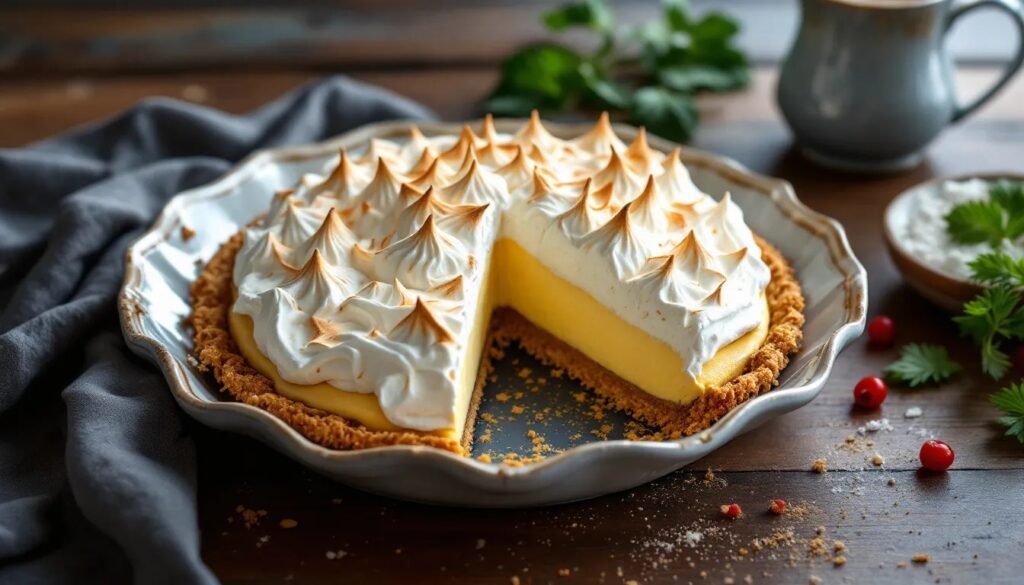
Few desserts command attention quite like a perfectly crafted Cream Meringue Pie. Its towering, golden-kissed cloud of meringue, perched atop a shimmering, tart-sweet filling encased in a flaky, buttery crust, is more than just a treat—it’s a testament to culinary artistry and a deeply comforting slice of history. This iconic dessert, while boasting European ancestral techniques, found its true voice and definitive form within the vibrant kitchens of 19th-century America, evolving into the beloved classic we cherish today.
The story of the Cream Meringue Pie begins with a transatlantic journey, not of a single ingredient, but of ideas. The humble ‘pie,’ a savory or sweet filling baked in a pastry case, has roots stretching back to ancient Egypt and Rome, refined in medieval Europe, particularly England. Meringue, the ethereal topping of whipped egg whites and sugar, is said to have originated in 17th-century Switzerland or Italy, perfected in French royal courts. But it was in the nascent United States, a melting pot of European culinary traditions and agricultural abundance, that these elements converged to create something uniquely American. The convenience of readily available wheat flour, rich dairy from burgeoning farms for butter, and increasing access to refined sugar from the Caribbean plantations laid the groundwork.
The defining ‘pureed mixture’ at the heart of many Cream Meringue Pies, often lemon, tells its own global tale. Lemons, botanical treasures native to Southeast Asia, embarked on an epic journey across continents, traveling through Persia and the Middle East, gracing Mediterranean tables by antiquity, and finally sailing to the New World with European explorers. This vibrant citrus, with its exhilarating tang, became the perfect counterpoint to the sweet, airy meringue, providing balance and brightness. The very structure of the pie itself—an open-faced, single-crust creation—became a canvas for showcasing the ingenuity of American home bakers. The inclusion of vegetable shortening alongside butter in the crust, a practice popularized in the early 20th century, epitomizes an American pragmatism, aiming for the flakiest, most tender texture possible.
Crafting this masterpiece at home is a rewarding endeavor. Start with a truly cold, flaky pie crust; the secret lies in keeping your butter and shortening frigid and working quickly to prevent gluten development. For the filling, whisk egg yolks, sugar, and your chosen pureed fruit (lemon being the classic) with precision over gentle heat until it thickens to a luscious cream. Finally, the meringue: stable, glossy peaks achieved by patiently whipping egg whites with sugar and a touch of cream of tartar, then artfully spread and lightly browned in a hot oven to achieve that signature golden glow and marshmallowy interior. This dessert, a symphony of textures and flavors, is more than just a recipe; it’s a culinary heritage, a celebration of history, and a testament to the enduring power of a truly magnificent pie.
Cream Meringue Pie
Presenting a timeless masterpiece of the dessert repertoire, this Cream Meringue Pie is an exquisite union of textures and flavors. A sumptuously smooth, intensely rich filling finds its perfect home within a flaky, golden Pate Brisee crust. This decadent foundation is then magnificently crowned with an ethereal cloud of meringue, lightly toasted to a warm, inviting hue. Each slice offers a nostalgic embrace of homemade goodness, elevating any occasion from intimate family dinners to grand celebrations with its undeniable grace and comforting sophistication.
Ingredients
-
1½
cups
all-purpose flour -
¾
stick (6 Tablespoons)
cold unsalted butter
cut into bits -
2
Tablespoons
cold vegetable shortening -
½
teaspoon
salt -
3
Tablespoons
ice water -
(missing)
yolks mixture
initial ingredients for this mixture are not specified on this page -
(missing)
pureed mixture
initial ingredients for this mixture are not specified on this page -
(missing)
butter
for filling -
(missing)
egg whites -
(missing)
sugar
for meringue -
(missing)
cream of tartar
for meringue -
pinch
salt
for meringue
Instructions
-
Once the prepared mixture for the filling has rested, covered, for 4 minutes, proceed by carefully transferring it to a high-speed blender. Process until the mixture achieves a perfectly smooth consistency. Then, pass this pureed blend through a fine-mesh sieve to ensure an utterly silken texture, discarding any solids.
-
Next, carefully incorporate the strained puree into your waiting egg yolk base. Place the combined mixture over a moderate heat, bringing it to a gentle boil while continuously whisking to prevent any scorching. Continue to cook, maintaining vigilant whisking, for precisely 3 minutes.
-
Remove the pan from the heat immediately. Introduce the specified amount of butter, stirring gently until it has fully melted and is seamlessly integrated. Allow this rich filling to cool completely, undisturbed, until it has set to a desirable consistency. Once thoroughly chilled, lavishly spread the velvety filling into your meticulously prepared Pate Brisee shell. Return the pie to the refrigerator to cool completely and set firm.
-
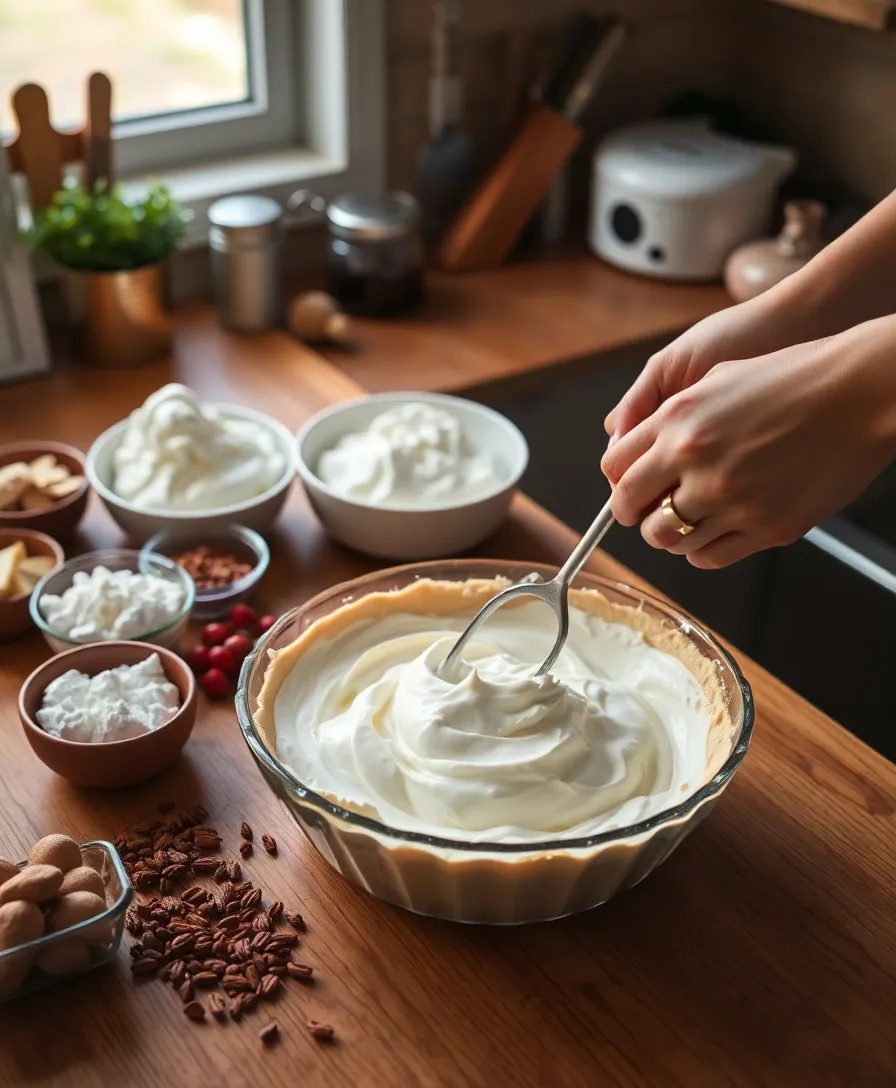
For the Meringue: In a scrupulously clean, heatproof bowl, combine the fresh egg whites, granulated sugar, cream of tartar, and a whisper of salt. Position this bowl over a saucepan containing gently simmering water, ensuring the bottom of the bowl does not make contact with the liquid. Whisk continuously until the sugar crystals are entirely dissolved and the mixture feels warm to the touch.
-
Promptly remove the bowl from the heat. Employing an electric mixer fitted with a whisk attachment, beat the warm egg white mixture vigorously on high speed until it transforms into magnificent, glossy peaks that stand firm and tall when the beaters are lifted.
-
Assembly & Baking: With delicate precision, artfully spoon the ethereal meringue over the thoroughly chilled filling, carefully spreading it to create a grand, cloud-like dome that fully encases the custard beneath, extending gracefully to the edges of the crust.
-
Transfer the pie to the middle rack of a preheated 350°F (175°C) oven. Bake for approximately 8 to 10 minutes, or until the meringue achieves a breathtaking, light golden-brown finish, indicating a perfect toast.
-
Serving: For an unparalleled experience of flavor and texture, allow the pie to come to a comfortable room temperature before elegantly slicing and serving.
Recipe Notes
This particular recipe segment builds upon foundational preparations, implying an initial mixture for the filling has already been created and certain ingredient quantities (specifically for the main filling components like egg whites, sugar, cream of tartar, and butter) are detailed in a preceding section. The instructions commence at a point where this initial filling mixture is ready for refinement. Notably, the components required for the Pate Brisee crust are comprehensively listed within the full ingredient roster.
Global Heritage Archive
Anthropological & Spice Migration Record
“This dish embodies the ingenuity and resourcefulness of American home baking, often found as a centerpiece dessert at family gatherings, church potlucks, and special occasions, showcasing a blend of European techniques with accessible ingredients.”
🌿 Spice & Botanical Migration
The tartness, likely from citrus (such as lemon, a common ‘pureed mixture’ for this pie), traces its botanical origin to Southeast Asia (e.g., Assam region of India). It migrated west via ancient trade routes through Persia and the Middle East, reaching the Mediterranean by Roman times, and was subsequently introduced to the Americas by European explorers during the Columbian Exchange. Sugar, originating from sugarcane in New Guinea, was refined in India and spread globally by Arab traders, eventually reaching Europe and then the Americas, fundamentally altering dessert landscapes worldwide.
🏺 Historical & Archaeological Record
The concept of enclosed fillings within pastry shells (proto-pies) can be traced back to ancient Egypt and Rome. Recipes for whipped egg whites (early meringue forms) appeared in European cookbooks by the 17th century, notably in French and Swiss culinary texts. The specific written record for a ‘Lemon Meringue Pie’—combining a citrus custard, pie crust, and meringue topping—is largely an American development, with early versions appearing in cookbooks like Eliza Leslie’s ‘Seventy-Five Receipts for Pastry, Cakes, and Sweetmeats’ published in 1828 in Philadelphia, marking its solidification as a distinct dish in the early 19th-century United States.
💡 Little Known Facts
- While meringue itself dates back to 17th-century Europe, the specific combination of a fruit curd (like lemon) in a pie shell topped with a dramatic, baked meringue cloud is widely considered an American invention, gaining widespread popularity in the 19th century.
- The inclusion of both butter and vegetable shortening in the pie crust is a distinct American baking technique, developed to achieve superior flakiness, tenderness, and stability, particularly after the widespread availability of hydrogenated vegetable shortenings in the early 20th century.
📸 Made This Heritage Recipe?
We would love to see how your dish turned out! Send a photo of your culinary creation to [email protected] to be featured in our community gallery.
Leave a review and rate this recipe below!
Curated Literature & Washington DC Downtown Calendar
The Culinary Alchemist: Modern Gastronomy & Flavor Pairing
By LDN Gastronomy Series
Artisanal technique, seasonal sourcing, and kitchen mastery.
Upcoming Downtown Happenings
Live acoustic sessions, gallery receptions, literary salons, and independent trade shows across Washington DC.
