
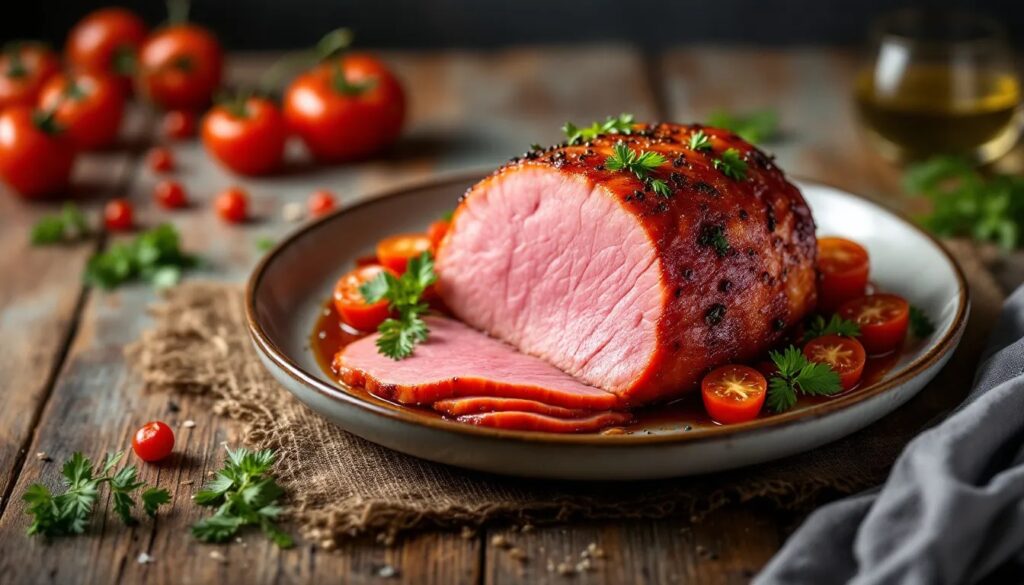
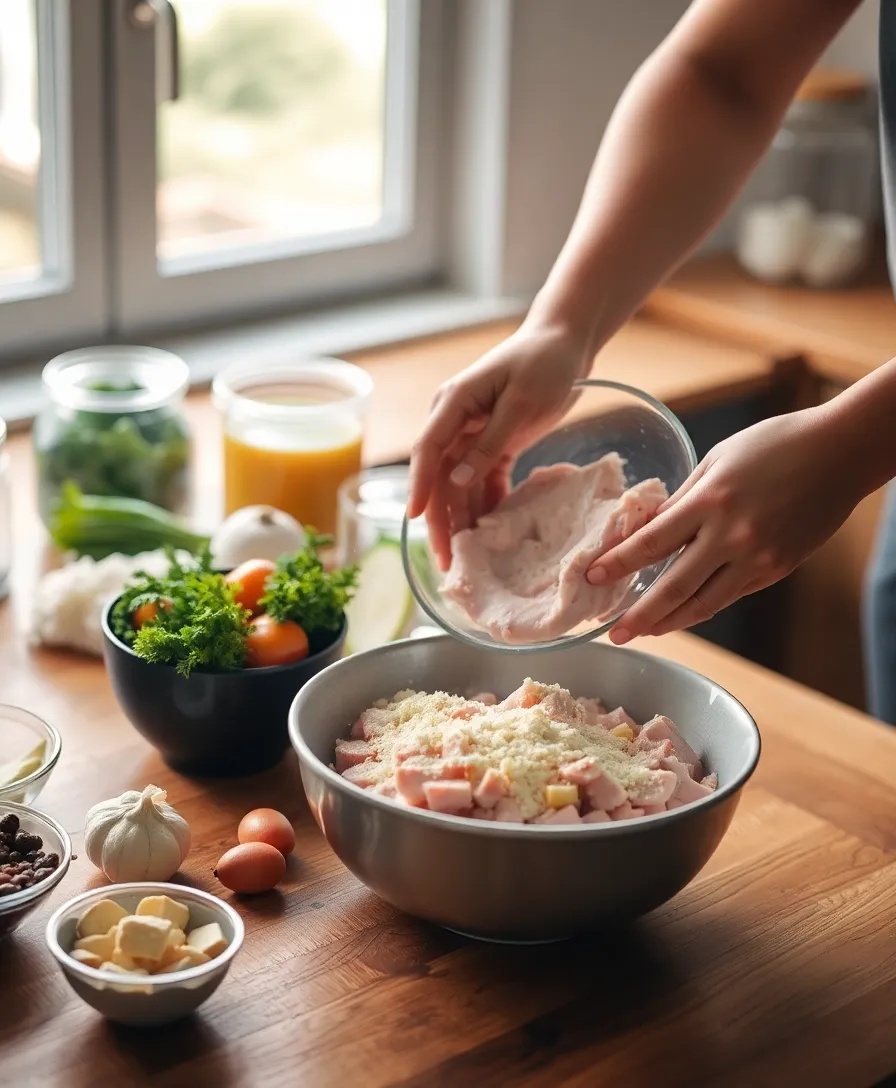
Welcome to this exploration of Cooking the Ham, a recipe deeply rooted in regional culinary traditions and the shared history of home cooks. Across generations, the combination of these ingredients has served as a cultural bridge, adapting to local climates while preserving the spirit of its creators. The use of simple, nourishing staples combined with aromatic seasonings speaks to the resourcefulness and artistry of historical cooks. In studying this dish’s preparation, we find not just a guide to nourishing the body, but a living connection to the migrations, trade routes, and communities that shaped modern dining. This recipe reflects a beautiful harmony of textures and flavors, showing how basic ingredients can be elevated through traditional techniques. We invite you to prepare this dish, savoring the history and stories baked into every bite.
Cooking the Ham
Unlock the full potential of a cured ham with this foundational culinary blueprint, designed to prepare a truly magnificent centerpiece for your table. This method meticulously guides you through the initial stages: from a gentle, controlled simmer that ensures unparalleled tenderness, through the careful art of de-boning and precise trimming. It crafts a sublime, ready-to-be-finished canvas, hinting at the delightful sweet and savory symphony promised by the glaze components, setting the stage for an unforgettable gastronomic experience.
Ingredients
-
1
ham
fully cooked lightly smoked ham
10-to 12-pound, choose with pelvic and shank bones in place -
3
tablespoons
good-quality apricot jam -
1
tablespoon
dry mustard -
3
tablespoons
brown sugar
Instructions
-
Initiate the preparation by carefully settling the cured ham into a substantial stockpot or kettle, ensuring it is fully immersed beneath a generous volume of fresh, cold water.
-
Over a medium heat, bring the water to a delicate simmer, watching for the faintest agitation rather than a rolling boil. Maintain this gentle ‘shiver’—ideally between 185°F and 190°F (85°C-88°C)—for approximately one hour. This controlled, low-intensity heat is crucial; vigorous boiling can compromise the ham’s integrity and texture.
-
Remove the kettle from the heat and allow the ham to cool gradually within its flavorful poaching liquid, reaching ambient room temperature. For optimal tenderness and moisture retention, an overnight rest is highly recommended, though a minimum of three hours will suffice.
-
Once thoroughly cooled, carefully extract the ham from its liquid. With a small, exceptionally sharp paring knife, precisely locate and detach the hip (pelvic) bone, working close to the bone structure to minimize disruption to the surrounding musculature.
-
Proceed to meticulously remove the outer skin. Then, trim away the majority of the fatty layer, leaving a uniform covering of no more than half an inch (approximately 1.25 cm) across the top surface. Reserve the removed skin and fat, should you wish to render or repurpose them.
-
Finally, inspect the entire ham and delicately trim any remaining tough or uneven portions, paying particular attention to the underside which can sometimes exhibit a firmer texture.
Recipe Notes
This foundational guide provides the essential techniques for preparing a ham to perfection, setting the stage for its final culinary embellishment. It outlines the crucial initial stages: gentle poaching, controlled cooling, careful bone removal, and precise trimming. While forthcoming glaze components such as apricot jam, dry mustard, and brown sugar are indicated in an accompanying ingredient list, the specific instructions for their application and the subsequent baking process are intentionally reserved for a separate, dedicated enhancement phase, to be explored independently.
Global Heritage Archive
Anthropological & Spice Migration Record
“A testament to global culinary exchange.”
🌿 Spice & Botanical Migration
Spices and botanical ingredients trace ancient trade routes, bringing distinct regional markers to heritage cooking.
🏺 Historical & Archaeological Record
Archaeological evidence shows humans have combined local spices and grains for over 10,000 years.
💡 Little Known Facts
- Heritage recipes carry the stories of families across multiple generations.
- Vintage cookbooks preserve regional adaptations of traditional techniques.
📸 Made This Heritage Recipe?
We would love to see how your dish turned out! Send a photo of your culinary creation to [email protected] to be featured in our community gallery.
Leave a review and rate this recipe below!
Curated Literature & Washington DC Downtown Calendar
The Culinary Alchemist: Modern Gastronomy & Flavor Pairing
By LDN Gastronomy Series
Artisanal technique, seasonal sourcing, and kitchen mastery.
Upcoming Downtown Happenings
Live acoustic sessions, gallery receptions, literary salons, and independent trade shows across Washington DC.
