
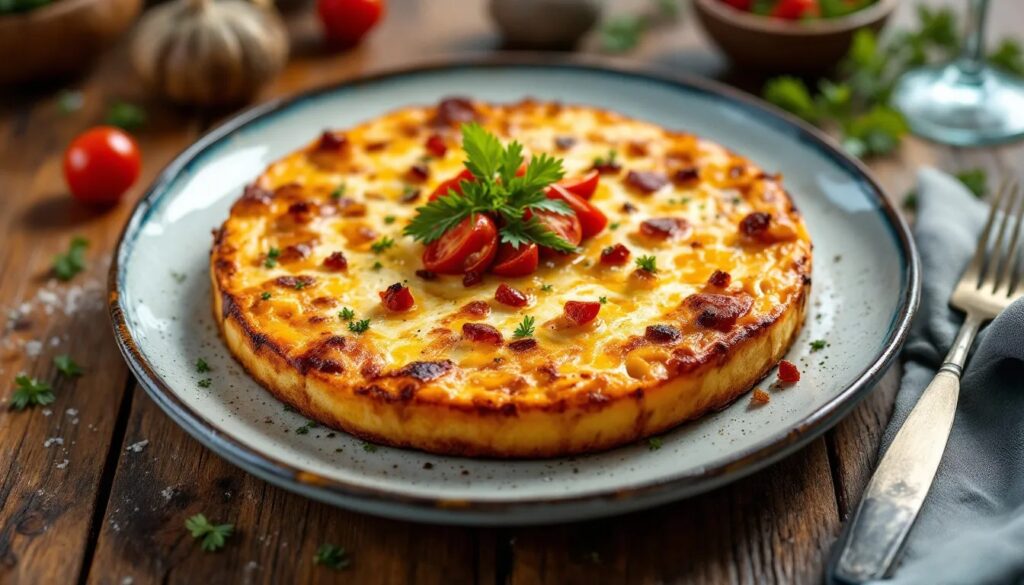
At its heart, Clafouti is deceptively straightforward: a creamy, flan-like batter poured over ripe cherries and baked until golden and set. Yet, within this simplicity lies a world of historical and cultural narrative. The foundational ingredients – eggs, flour, milk, and sugar – represent the bedrock of European peasant cooking, staples that have sustained communities for centuries. The cherries themselves, native to parts of Europe and Western Asia, were spread across the continent by the Romans, embedding themselves deeply into the agricultural and culinary landscape of France long before Clafouti’s conception.
The addition of rum, however, whispers tales of global migration and colonial ambition. Originally a byproduct of the burgeoning sugar cane plantations in the Caribbean during the 17th century, rum became a pivotal commodity in the transatlantic trade. Its journey from the slave-labor fields of the New World to the kitchens of Europe illustrates the intricate web of global commerce that shaped not only economies but also palates. The subtle warmth and complex notes that rum imparts to the Clafouti batter are a direct echo of this rich, often fraught, history.
Sugar, too, has a remarkable migration story. From its botanical origins in New Guinea, sugarcane traveled to India, then Persia, and finally reached Europe via Arab traders and Crusaders. Once a luxury item, the establishment of vast sugar plantations in the Americas made it widely accessible, transforming European desserts. Confectioners’ sugar, used for dusting, is simply a finely milled and sifted version, symbolizing the refinement of this once exotic ingredient.
Traditionally, Clafouti is made with unpitted cherries. This seemingly minor detail is, in fact, crucial: the cherry pits release a delicate, almond-like essence into the custard during baking, imparting a unique depth of flavor. While modern cooks often pit the cherries for convenience, embracing this traditional method offers an authentic taste experience. The preparation itself is forgiving: a quick whisk of the batter, an artful scattering of fruit, and a gentle bake transform these humble components into a dessert that is at once comforting and sophisticated. Serve Clafouti warm, perhaps with a dollop of crème fraîche or a light dusting of confectioners’ sugar, and you’re not just enjoying a dessert; you’re tasting a piece of history, a culmination of centuries of culinary evolution and global exchange.
CLAFOUTI
Evoking the unpretentious elegance of a bygone era, this Clafouti whispers tales of intimate gatherings and sun-drenched brunch tables. A quintessential French country dessert, it features a generous scattering of ripe cherries, lovingly cradled within a tender, golden-baked custard that perfectly marries the comforting appeal of a soufflé with the satisfying richness of a crêpe. A subtle caress of aged rum infuses the batter with a sophisticated warmth, transforming this simple yet sublime creation into a truly memorable indulgence, ideal for moments both quietly cherished and grandly celebrated.
Ingredients
-
3
eggs -
½
cup
sugar -
1
cup
flour -
1
cup
milk -
2
Tablespoons
rum
optional -
1
can
cherries
or any other fruit; if canned, likely drained -
confectioners’ sugar
for sprinkling
Instructions
-
In a substantial mixing bowl, gently whisk the eggs until just broken. Gradually incorporate the granulated sugar, all-purpose flour, fresh milk, and the splash of rum, continuing to whisk until a silky, lump-free batter is impeccably smooth and fully combined.
-
Liberally coat the interior of a deep, 9-inch square baking dish with softened butter, ensuring an even and thorough layer.
-
Arrange your chosen ripe cherries (or alternative seasonal fruit) uniformly across the base of the meticulously prepared baking dish.
-
Delicately pour the prepared velvety batter over the fruit, allowing it to settle evenly and envelop the fruit pieces.
-
Carefully transfer the dish to a preheated oven set precisely at 400°F (200°C) and bake for approximately 40 minutes, or until the Clafouti’s surface achieves a magnificent golden-brown hue and the center exhibits a gentle, quivering set.
-
Prior to its grand presentation, elegantly dust the warm Clafouti with a delicate veil of confectioners’ sugar for an exquisite finishing touch.
Recipe Notes
For those who prefer a non-alcoholic rendition, the rum may be gracefully omitted without any detriment to the dessert’s delightful character. This remarkably adaptable recipe warmly embraces an array of seasonal stone fruits or luscious berries, allowing for creative culinary exploration beyond cherries.
Global Heritage Archive
Anthropological & Spice Migration Record
“A quintessential rustic French dessert that celebrates the simplicity of local fruit enveloped in a creamy, pancake-like batter, traditionally enjoyed seasonally.”
🌿 Spice & Botanical Migration
The sugar in Clafouti, originally from sugarcane in New Guinea, journeyed through India, Persia, and the Arab world, reaching Europe via the Crusades and Moorish Spain. Its widespread availability for dishes like Clafouti was solidified by colonial plantations in the Caribbean and Americas, fueled by enslaved labor. Rum, a byproduct of this vast sugar industry and its molasses, originated in 17th-century Caribbean plantations, becoming a key commodity in the triangular trade and reflecting France’s colonial ties and global commerce.
🏺 Historical & Archaeological Record
While the term ‘Clafoutis’ only appeared in print in the 19th century, the culinary technique of baking fruit in a batter or custard has much older roots. Early forms of baked fruit custards and tarts can be traced to medieval European cookbooks, such as the 14th-century French ‘Le Viandier de Taillevent,’ which describes various fruit-filled ‘flans’ and ‘tartelettes’ representing the ancestral predecessors of this genre.
💡 Little Known Facts
- Traditionally, Clafouti is made with unpitted cherries; the pits release a subtle almond-like flavor into the custard during baking, enhancing the overall taste.
- While Clafouti specifically refers to the cherry version, a similar baked fruit dessert made with other fruits like apples, plums, or pears is often called a ‘Flognarde’ or ‘Clafoutis aux pommes/poires’ to differentiate it.
📸 Made This Heritage Recipe?
We would love to see how your dish turned out! Send a photo of your culinary creation to [email protected] to be featured in our community gallery.
Leave a review and rate this recipe below!
Curated Literature & Washington DC Downtown Calendar
The Culinary Alchemist: Modern Gastronomy & Flavor Pairing
By LDN Gastronomy Series
Artisanal technique, seasonal sourcing, and kitchen mastery.
Upcoming Downtown Happenings
Live acoustic sessions, gallery receptions, literary salons, and independent trade shows across Washington DC.
