
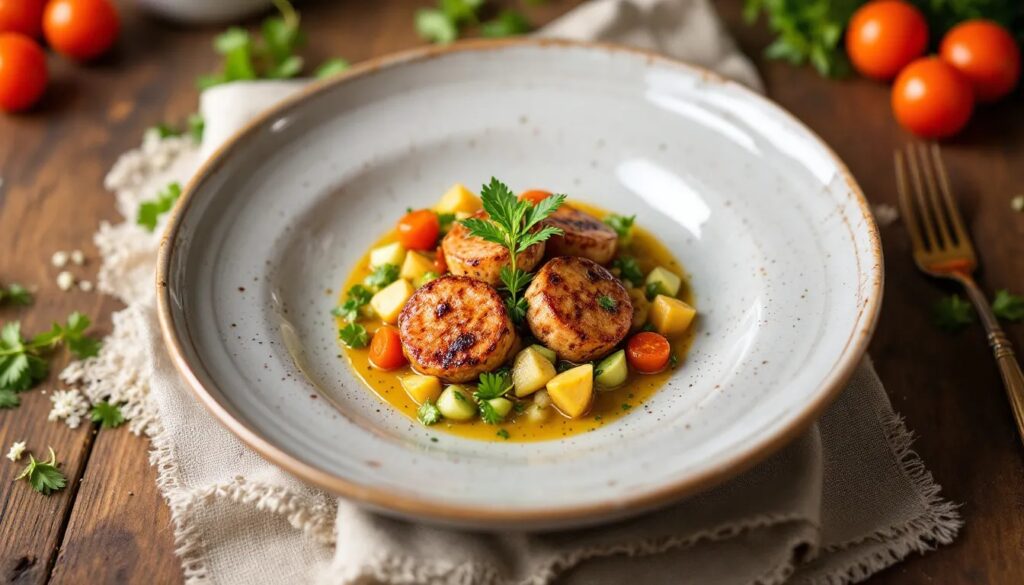
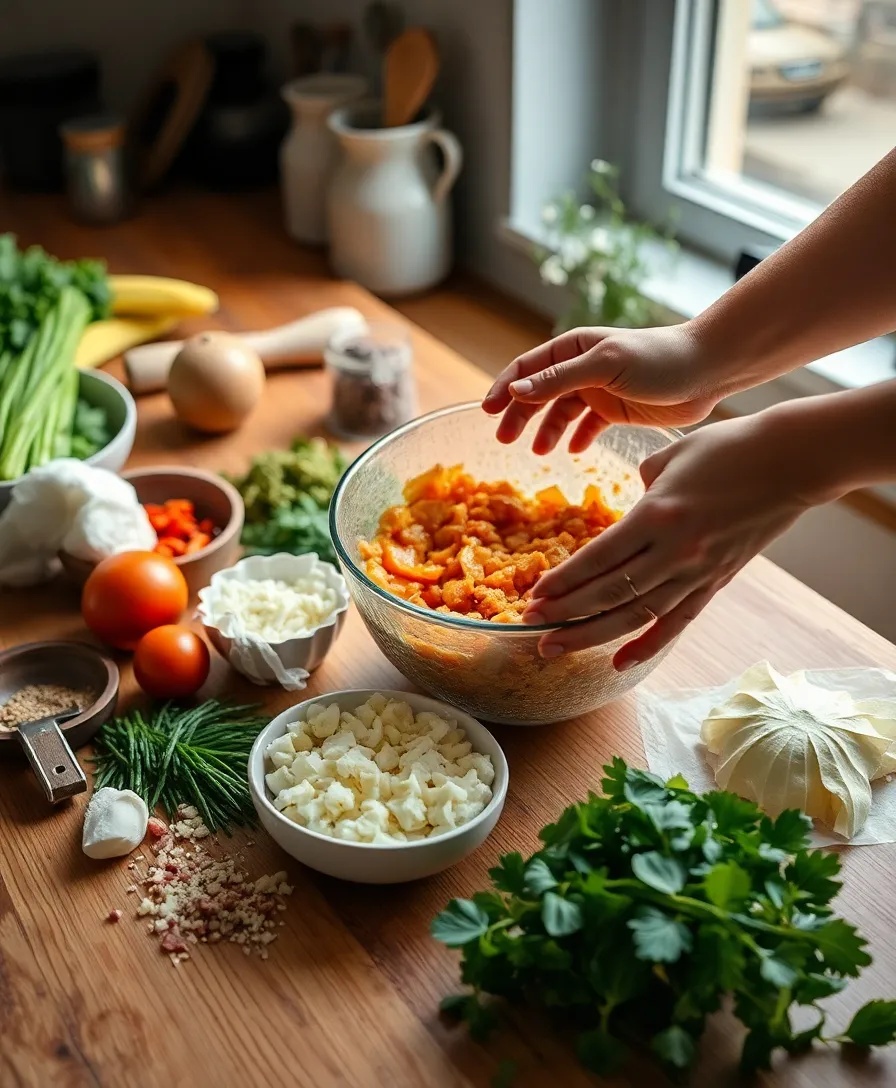
The whisper of “Choulibiac” itself conjures a culinary odyssey, a tantalizing dance between two grand gastronomic traditions. It’s a name that rolls off the tongue with a certain mystique, hinting at something familiar yet utterly unique. On one hand, “Chou” immediately evokes the elegance and precision of French patisserie – specifically, the delicate, airy choux pastry, a marvel of leavened dough. On the other, “libiac” is an undeniable echo of the Russian *kulebiak*, a magnificent, multi-layered fish pie, often the centerpiece of festive tables and the pride of Russian culinary heritage. This recipe, then, is not merely a dish; it’s a diplomatic summit of flavors, a testament to how ingredients and techniques transcend borders to create something new and extraordinary.
Imagine the grand kitchens of 19th-century Europe, where French chefs were the undisputed masters, their influence permeating the courts and aristocratic homes from St. Petersburg to Vienna. It was in this fertile ground of cultural exchange that dishes like “Choulibiac” likely took root. Russian noble families, enamored with French culinary sophistication, often employed French chefs, who, in turn, adapted local ingredients and traditional dishes to their own refined sensibilities. The robust, hearty *kulebiak*, traditionally encased in brioche or puff pastry and layered with salmon, rice, hard-boiled eggs, and mushrooms, found itself re-imagined through a distinctly French lens.
The inclusion of choux pastry, a hallmark of French invention dating back to the 16th century, transforms the *kulebiak*’s rustic charm into an exercise in culinary finesse. Instead of a solid dough crust, the “Choulibiac” might present its delicate fish filling – here, halibut and sole, chosen for their fine texture and mild flavor – within the ethereal embrace of choux, or perhaps use a giant crêpe as a tender inner wrapper, echoing the traditional layering but with a lighter touch. Heavy cream, another cornerstone of French gastronomy, enriches the delicate fish and mushroom filling, binding it with a velvety smooth texture. The subtle warmth of nutmeg and the clean bite of white pepper, both spices with ancient tales of global migration along the Silk and Spice Routes, elevate the dish, adding layers of sophisticated flavor without overwhelming the star ingredients. A splash of Port or Madeira adds a final, complex note, deglazing the shallots and mushrooms, infusing the sauce with a sweet, woody depth – a technique perfected in European kitchens.
Preparing a “Choulibiac” is an act of culinary reverence. It demands patience and an appreciation for precision. Achieving the perfect choux pastry—crisp on the outside, hollow and airy within—is an art form, a dance of butter, flour, eggs, and water. The giant crêpe, if used as an internal layer, requires a deft hand with a crêpe pan. The fish, carefully poached or pan-seared, must remain flaky and moist. The mushroom and shallot duxelles, infused with fortified wine, provides an umami-rich counterpoint. Each component is a chapter in a larger story, building towards a harmonious whole.
This dish is more than just a recipe; it’s a living archive of culinary history, a delicious chronicle of cultural fusion. It speaks to the ingenuity of chefs who could translate traditional concepts across culinary languages, creating new traditions in the process. For the home cook, “Choulibiac” offers a chance to explore these rich historical currents, to master classical techniques, and to present a dish that is both deeply comforting and exquisitely elegant. It’s an invitation to savor not just the flavors, but the stories woven into every delicate bite.
Choulibiac
Embark on a culinary journey with our Choulibiac, a masterful creation destined to be the crowning glory of any refined gathering. This exquisite savory pastry orchestrates a symphony of textures and tastes: a silken fish mousse, delicate layers of flaky fillets, and an intensely rich mushroom duxelles, all gracefully enrobed within a tender crêpe, then embraced by a golden, airy choux pastry shell. More than a dish, it is a testament to classic French-inspired artistry, promising an epicurean delight that is both visually stunning and profoundly satisfying.
Ingredients
-
unspecified
amount
Choux pastry
Assumed to be pre-made; 1/2 cup used for mousse, 1/2 cup for decoration, and an additional 1/8 inch layer for covering -
1
Giant crepe
Assumed to be pre-made -
unspecified
Butter
for buttering baking sheet -
1 1/2
pound
Skinless and boneless halibut
or more sole fillets (for mousse) -
unspecified
amount
Sole fillets
for layering within the Choulibiac structure -
1
cup
Heavy cream
chilled -
1/2
teaspoon
Salt
for mousse (plus additional for seasoning duxelles and fish juices) -
several grinds
White pepper
for mousse (plus additional for seasoning duxelles) -
big pinch
Ground nutmeg -
10
ounces
Mushrooms -
2
Tablespoons
Butter
for duxelles -
unspecified
amount
Shallots
reserved; quantity not specified in recipe -
3
Tablespoons
Port or Madeira
Instructions
-
Set aside a precise half-cup portion of the freshly prepared choux pastry, designated for the delicate fish mousse. Ensure the remaining pastry is kept perfectly pliable by covering it and maintaining it in a warm water bath.
-
Place the reserved half-cup of choux pastry over a bed of ice to thoroughly chill it, preparing it for incorporation into the mousse.
-
Begin by dicing the halibut (or a single sole fillet, if utilizing sole for the mousse component). Transfer the diced fish into a food processor alongside the chilled half-cup choux paste, three-quarters cup of cold heavy cream, half a teaspoon of fine sea salt, several fresh turns of white pepper, and a generous pinch of freshly grated nutmeg. Process these ingredients into an impeccably smooth, fine paste. Should the mixture exhibit excessive stiffness, gradually incorporate additional chilled cream, a dribble at a time, until the mousse achieves a perfectly spreadable consistency that firmly holds its form. Cover and chill thoroughly in the refrigerator.
-
Cleanse and meticulously trim the mushrooms. Finely mince them, either by hand or using a food processor, aiming for pieces approximately one-eighth of an inch in size. Crucially, press out and discard any excess moisture from the minced mushrooms. In a hot frying pan, melt two tablespoons of butter and add the prepared shallots along with the minced mushrooms. Sauté for four to five minutes, stirring consistently, until the mushroom pieces begin to separate and release their aroma. Lightly season with salt and freshly ground pepper. Introduce three tablespoons of Port or Madeira, then bring to a rapid boil, reducing the liquid until the mixture is completely dry.
-
Position the grand crêpe, browned side facing downwards, onto a lightly buttered baking sheet. Carefully trim away any hardened or uneven edges of the crêpe to ensure a pristine base.
-
Evenly spread one-third of the prepared fish mousse in a precise rectangle, approximately twelve inches in length and five inches in width, centered along the crêpe.
-
Artfully arrange half of the sole fillets over the fish mousse, allowing them to slightly overlap for a seamless presentation. Follow this with an even layer of half the mushroom duxelles, spread meticulously over the fillets.
-
Proceed to layer the remaining sole fillets, mirroring the previous arrangement, then top with the balance of the mushroom duxelles.
-
Incorporate any accumulated fish seasoning juices (from the fillets themselves or prior cooking) into the remaining fish mousse, gently beating to combine. Carefully spread this final mousse layer over the top and all sides of the entire assembled fish structure, completely encasing it.
-
Gently fold the ends and sides of the crêpe upwards, enveloping the fish structure. Trim the crêpe corners as necessary for a neat wrap, ensuring only a one-inch border of crêpe remains visible on top.
-
Set aside half a cup of the prepared choux pastry for subsequent decorative elements. Employing a flexible blade spatula, frequently dipped in cold water to prevent sticking, delicately spread an even one-eighth inch layer of the choux pastry over the entire surface of the wrapped structure, completely obscuring the crêpe.
-
Create four small, precise openings, each one-eighth inch in diameter and half an inch deep, in the lower section of each corner of the pastry-encased creation, angling them slightly towards the center. Carefully insert small funnels, fashioned from buttered foil, into these apertures. These will serve as crucial vents, allowing any accumulating juices to drain efficiently during the baking process.
Recipe Notes
This culinary endeavor relies on several foundational components. It is presumed that the ‘Choux Pastry’ and ‘Giant Crêpe’ have been meticulously prepared in advance, as their respective recipes are not detailed herein. Please note that specific quantities for the ‘reserved shallots’ and ‘sole fillets (for layering)’ are left to the chef’s discretion or are detailed in preceding sections of the broader recipe collection. While precise oven temperature and baking duration are not stipulated here, a general guideline for this style of pastry-enrobed preparation involves preheating your oven to between 375-400°F (190-200°C). Bake for an estimated 30-45 minutes, or until the choux pastry achieves a magnificent golden-brown hue and is beautifully puffed, indicating perfect doneness. The term ‘fish seasoning juices’ refers to any flavorful liquids that may accumulate from the salting or initial preparation of the sole fillets, adding depth to the final mousse.
Global Heritage Archive
Anthropological & Spice Migration Record
“A sophisticated culinary tradition that elevates and fuses diverse European gastronomic elements, emphasizing technical precision and rich flavors.”
🌿 Spice & Botanical Migration
Nutmeg, originating from the Banda Islands (part of modern Indonesia), journeyed westward along ancient Spice Routes, first to Arab traders, then to European powers like the Portuguese and Dutch, becoming a staple in European savory and sweet dishes by the Middle Ages. White pepper, derived from the same peppercorn plant as black pepper but processed differently, traces its origins to the Malabar Coast of India and followed similar trade routes, highly valued in European kitchens for its flavor and discreet color in delicate sauces.
🏺 Historical & Archaeological Record
The foundational techniques for ‘Choulibiac’ have diverse origins: choux pastry was developed in France by the mid-16th century by Catherine de’ Medici’s chef, Pantanelli (later refined by Popelini). The concept of a layered savory pie, similar to a Kulebiak, has roots in medieval European culinary practices, with specific Russian Kulebiak recipes documented from the 17th century onwards.
💡 Little Known Facts
- Traditional Russian Kulebiak often features salmon or sturgeon, rice or buckwheat, and hard-boiled eggs, encased in a brioche or puff pastry dough.
- While choux pastry is famous for sweet applications like éclairs and profiteroles, its origins can be traced to savory gougères, highlighting its versatile nature in French cuisine.
📸 Made This Heritage Recipe?
We would love to see how your dish turned out! Send a photo of your culinary creation to [email protected] to be featured in our community gallery.
Leave a review and rate this recipe below!
Curated Literature & Washington DC Downtown Calendar
The Culinary Alchemist: Modern Gastronomy & Flavor Pairing
By LDN Gastronomy Series
Artisanal technique, seasonal sourcing, and kitchen mastery.
Upcoming Downtown Happenings
Live acoustic sessions, gallery receptions, literary salons, and independent trade shows across Washington DC.
