
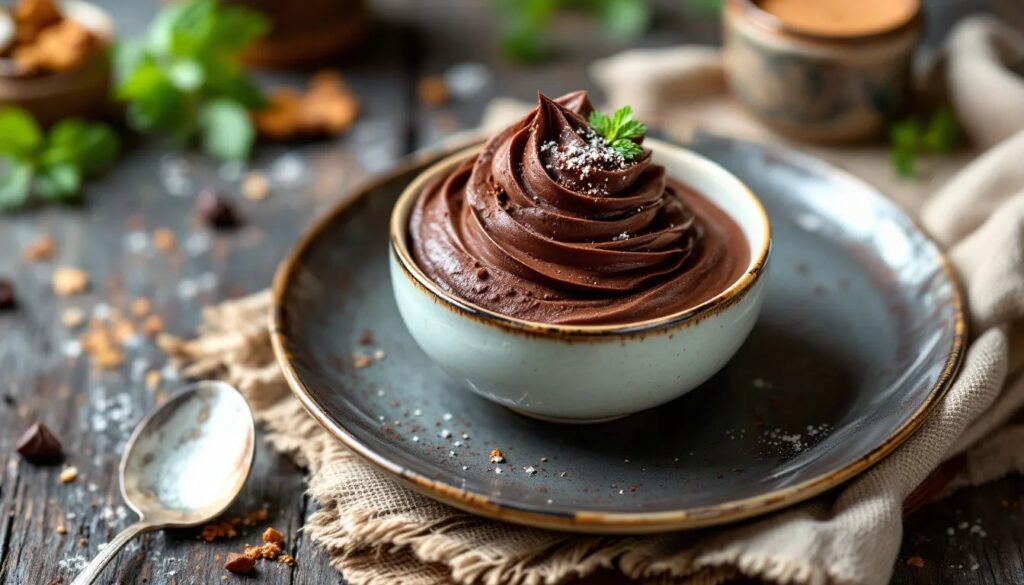
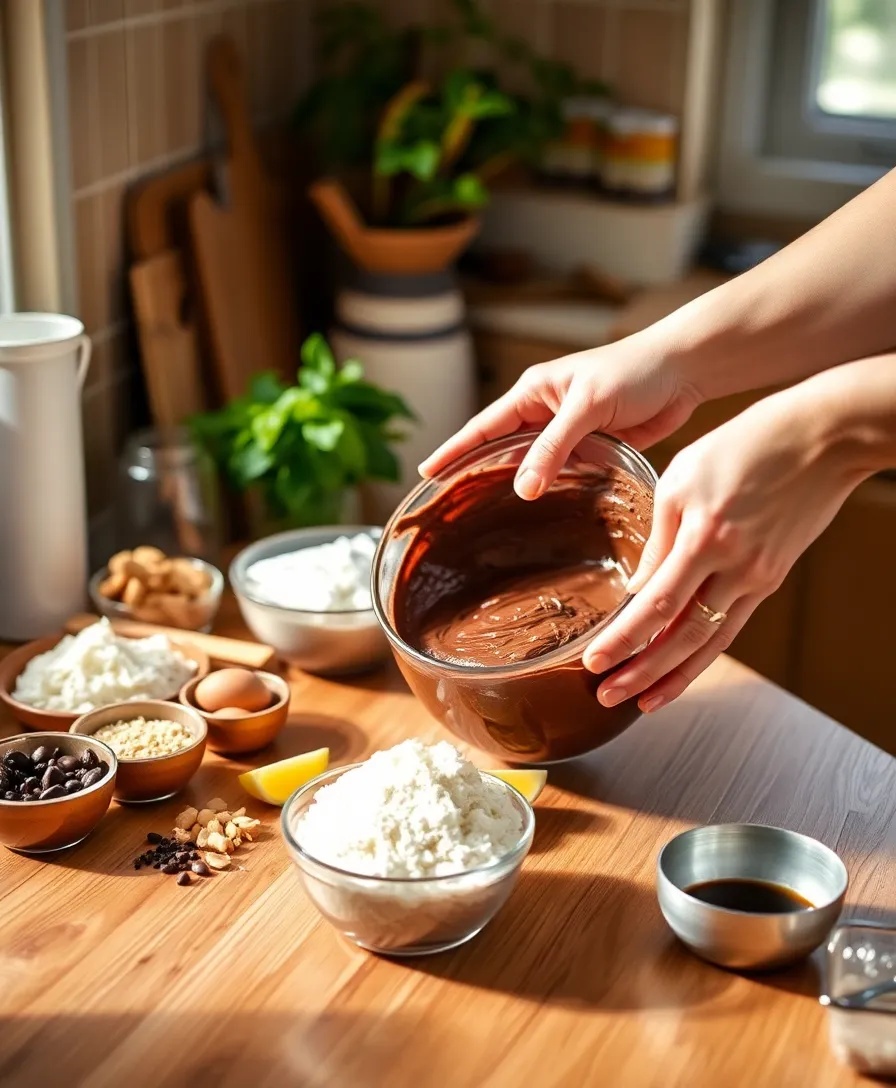
Imagine the hush that falls over a dining room as a magnificent chocolate soufflé makes its grand entrance. A monument of culinary artistry, it quivers slightly with the faintest tremor, a testament to its ethereal lightness. Its crust, a delicate caramel embrace, yields to an interior of molten chocolate richness, airy as a dream, yet intensely flavored. This is not merely a dessert; it is an experience, a triumph of technique and a delicious convergence of global histories.
The soufflé, a quintessential French creation, finds its roots in the elaborate kitchens of 18th-century France. Its name, derived from the French verb ‘souffler’ – to puff or to blow – perfectly encapsulates its defining characteristic: the dramatic rise. Early versions, often savory, appeared in cookbooks like Vincent La Chapelle’s 1742 “Le Cuisinier Moderne.” It was in the hands of culinary masters like Antonin Carême in the early 19th century that the soufflé was elevated to an art form, its principles perfected through meticulous attention to detail and a profound understanding of ingredients.
But a chocolate soufflé tells an even deeper, more compelling story, one that spans continents and centuries. The star ingredient, chocolate, is a gift from the ancient civilizations of Mesoamerica. For millennia, cacao was cultivated by the Olmecs, Mayans, and Aztecs, who revered it as a sacred drink, a currency, and a symbol of life. Its journey to Europe began with the Columbian Exchange in the 16th century, when Spanish conquistadors brought the bitter bean back to Spain. Initially consumed as a medicinal or aristocratic drink, it was the European ingenuity, primarily French, that began to experiment with its culinary potential, transforming it into the sweet confection we know today.
This transformation, however, would have been incomplete without another globally significant ingredient: sugar. Originating in New Guinea, sugarcane spread through India and the Arab world, eventually reaching Europe. The insatiable European demand for sugar, particularly from the 17th century onwards, fueled the brutal transatlantic slave trade, establishing vast plantations in the Caribbean and Americas. The marriage of cacao with this ‘white gold’ truly democratized chocolate, making it palatable to a wider audience and paving the way for desserts like our magnificent soufflé.
Crafting a chocolate soufflé is an act of culinary reverence, a dance between precision and patience. It begins with a rich, velvety base – often a béchamel or crème pâtissière infused with unsweetened chocolate. The magic truly happens with the careful incorporation of stiffly beaten egg whites, folded in gently to retain their airy structure. These trapped air bubbles are what cause the soufflé to rise dramatically in the oven, creating that signature puffy texture. Key kitchen tips include ensuring your egg whites are perfectly separated from their yolks and beaten to firm peaks, preparing your soufflé dish meticulously with butter and sugar to aid its ascent, and resisting the urge to open the oven door during baking. The result is a fragile masterpiece, a delicate balance of rich flavor and gravity-defying lightness, a true testament to humanity’s capacity to weave global ingredients into a singular, unforgettable experience. It’s a dish that, in its essence, embodies the refinement of French gastronomy and the interconnectedness of our culinary world.
CHOCOLATE SOUFFLE
Step into a realm of culinary artistry with this exquisite Chocolate Soufflé, a dessert that perfectly encapsulates the refined elegance cherished in American kitchens of the mid-20th century. This isn’t just a dessert; it’s a magnificent symphony where the deep allure of melted chocolate dances harmoniously with a velvety, classic roux and the ethereal lightness of meticulously aerated egg whites. The result is a breathtaking, cloud-like confection, promising an unforgettable crescendo to any gourmet repast. Banish all apprehension; the reward is a lofty, chocolate-infused whisper on the palate, a testament to sophisticated indulgence.
Ingredients
-
3
Tablespoons
butter -
3
Tablespoons
flour -
1½
cups
milk
hot -
1
cup
sugar -
5
eggs
separated -
2
extra
egg whites -
4
ounces
unsweetened chocolate
melted -
sugar
for sprinkling soufflé dish
Instructions
-
Initiate the process by gently liquefying the butter in a saucepan positioned over medium heat.
-
Introduce the flour into the melted butter, whisking continually until thoroughly amalgamated, then allow to cook for approximately one to two minutes.
-
Gradually stream in the warmed milk, whisking continuously until the mixture achieves a perfectly uniform, silken consistency.
-
Incorporate the granulated sugar and continue to cook for an additional two to three minutes. The resulting base should be remarkably thick yet impeccably smooth.
-
Remove the saucepan from the heat source and vigorously beat the mixture for several minutes to facilitate its cooling.
-
One by one, thoroughly incorporate the separated egg yolks into the cooled base, ensuring complete integration.
-
Fold in the melted chocolate until it is uniformly blended throughout the mixture.
-
In a separate, pristine bowl, whip the egg whites (comprising five from the separated yolks plus two additional) until they achieve firm, unyielding peaks.
-
With the utmost care, delicately fold the aerated egg whites into the chocolate base using a spatula, employing an ‘over and under’ motion. Exercise restraint to avoid deflating the whites; a few streaks are preferable to overmixing.
-
Prepare your soufflé dish by generously coating its interior with butter, then dusting it thoroughly with granulated sugar, rotating to ensure an even adherence and tapping out any excess.
-
Gently pour the prepared soufflé mixture into the buttered and sugared dish. Bake in a preheated 375°F (190°C) oven for a duration of 55 minutes, or slightly longer if necessary.
-
It is imperative to refrain from opening the oven door for the initial 45 minutes of baking to preserve the soufflé’s delicate rise.
Recipe Notes
Discern the soufflé’s perfect readiness by its impressive ascent to, or gracefully above, the rim of any encircling collar (should one be employed). A subtle, almost imperceptible line of retraction from the collar’s edge is a characteristic indicator of its flawless completion.
Global Heritage Archive
Anthropological & Spice Migration Record
“A sophisticated and precise culinary culture emphasizing refined techniques, elegant presentation, and the elevation of simple ingredients into exquisite dishes.”
🌿 Spice & Botanical Migration
The defining ‘spice’ in this recipe, unsweetened chocolate, originates from Mesoamerica, where cacao was cultivated by Olmecs, Mayans, and Aztecs for millennia, often consumed as a bitter, sacred drink. It was introduced to Europe via the Columbian Exchange in the 16th century, primarily by the Spanish, and subsequently sweetened with sugar. Sugar, originally from New Guinea, traveled via the Spice Route through India and the Arab world to Europe, with its mass production for European consumption exploding through transatlantic trade and colonial plantations in the Americas, often employing enslaved labor.
🏺 Historical & Archaeological Record
The oldest archaeological evidence for the use of cacao, the primary ingredient in chocolate, dates back to 1900 BC in Mesoamerica (Olmec civilization). The earliest written record of a recipe explicitly named ‘soufflé’ appears in Vincent La Chapelle’s 1742 cookbook, “Le Cuisinier Moderne,” though a chocolate version emerged later in the late 18th to early 19th century.
💡 Little Known Facts
- The word ‘soufflé’ comes from the French verb ‘souffler’, meaning ‘to blow’ or ‘to puff’. The earliest known recipe for a dish explicitly called ‘soufflé’ appeared in Vincent La Chapelle’s 1742 cookbook, “Le Cuisinier Moderne”, although it was a savory version.
- While Antonin Carême popularized many French culinary classics, it was Antoine Beauvilliers, another prominent chef of the early 19th century, whose 1814 cookbook “L’Art du Cuisinier” is sometimes credited with featuring one of the earliest published recipes specifically for a chocolate souffle.
📸 Made This Heritage Recipe?
We would love to see how your dish turned out! Send a photo of your culinary creation to [email protected] to be featured in our community gallery.
Leave a review and rate this recipe below!
Curated Literature & Washington DC Downtown Calendar
The Culinary Alchemist: Modern Gastronomy & Flavor Pairing
By LDN Gastronomy Series
Artisanal technique, seasonal sourcing, and kitchen mastery.
Upcoming Downtown Happenings
Live acoustic sessions, gallery receptions, literary salons, and independent trade shows across Washington DC.
