
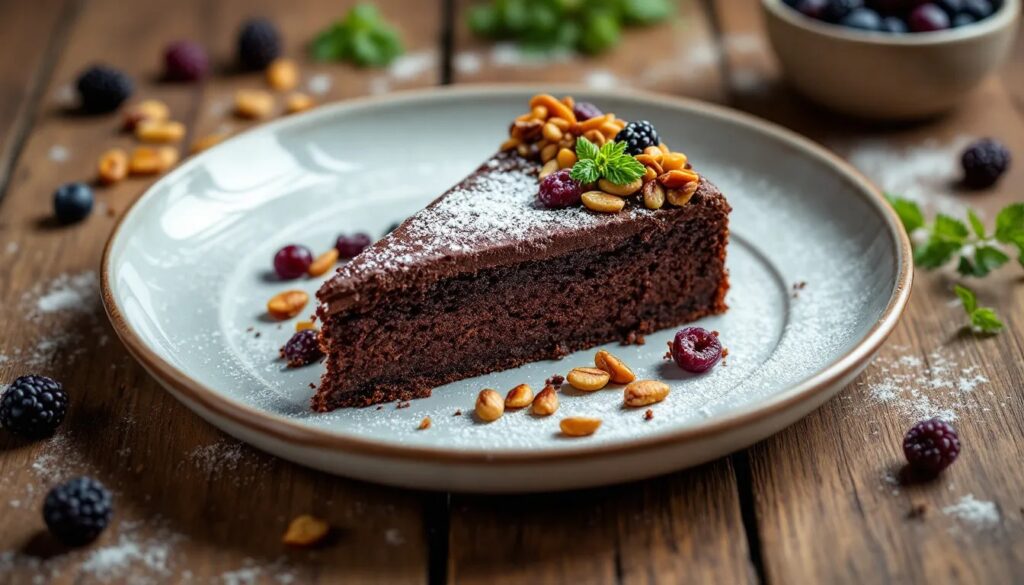
In the annals of gastronomy, some creations transcend mere sustenance to become edible narratives of culture, trade, and human ingenuity. The “Chocolate, Prune and Cognac Cake” is precisely such a confection – a decadent testament to French culinary finesse, intricately weaving together global flavors with deep European roots. This cake is not merely a dessert; it is a profound culinary artifact, offering a taste of history in every luscious bite.
At its heart lies the prune, the humble dried plum, whose journey through European culinary history is long and storied. While plums are native to various parts of the world, dried prunes have been a staple in European pantries for centuries, particularly in France, where the prunes of Agen are legendary for their tender sweetness. The marriage of prunes with Cognac, a brandy meticulously distilled in the eponymous region of France, is a classic pairing. Cognac infuses the prunes and the cake with its complex notes of dried fruit, vanilla, and oak, transforming them into something utterly sublime. This is where French culinary philosophy shines brightest: the art of elevating simple, quality ingredients through precise technique and judicious use of spirits.
But the narrative deepens with the inclusion of chocolate. Originating in the ancient Mesoamerican civilizations of the Olmecs, Mayans, and Aztecs, chocolate arrived in Europe via the Columbian Exchange in the 16th century. Initially a bitter drink, it gradually transformed into the sweet confection we know today, becoming an indispensable part of European, especially French, patisserie by the 18th and 19th centuries. The semisweet chocolate in this recipe, alongside a hint of instant coffee powder to deepen its robust flavor, speaks to this integration, showcasing how global treasures became cornerstones of national cuisines.
Cinnamon, originating from the ancient spice routes of Sri Lanka and Southeast Asia, and allspice, discovered in the Caribbean, further enrich this cake’s tapestry. Their warm, aromatic profiles are not merely flavor enhancers; they are echoes of centuries of global trade and cultural exchange, demonstrating how distant lands converged on European plates. The use of staples like unbleached flour, fresh eggs, unsalted butter, and cream of tartar, all speak to the precision and quality inherent in French baking. The cream of tartar, specifically, hints at the elegant technique of whipping egg whites to achieve a delicate crumb, a hallmark of sophisticated cake structures.
When preparing this historical delight, embrace the quality of your ingredients. Opt for plump, moist prunes and a good quality Cognac. Allow the prunes ample time to macerate, absorbing every nuanced note of the brandy. When folding in the egg whites, be gentle; their airy structure is key to the cake’s tender texture. And most importantly, allow the cake to rest after baking. Like a fine wine, its flavors will meld and deepen overnight, transforming into a harmonious symphony of chocolate, fruit, and spirit. This cake is more than a recipe; it’s a journey through time, a celebration of heritage, and a testament to the enduring power of food to tell stories.
CHOCOLATE, PRUNE AND COGNAC CAKE
Embark on a culinary journey with a dessert that whispers tales of timeless indulgence and refined taste. This exquisite Chocolate, Prune, and Cognac Cake masterfully blends the intense allure of dark chocolate with the luscious, fruit-forward sweetness of steeped prunes, all uplifted by the warm, aromatic embrace of fine Cognac. Each tender slice delivers a symphony of complex flavors, offering a sophisticated counterpoint to its reassuringly classic character. An unforgettable centerpiece for any celebration, its distinguished presence is matched only by the comforting depth of its profile, making every occasion feel truly exceptional.
Ingredients
-
3/4
pound
soft-pack pitted prunes
cut into raisin-size pieces -
1/3
cup
Cognac or brandy -
3
Tablespoons
sugar -
9
ounces
semisweet chocolate
coarsely chopped -
5
Tablespoons
Cognac -
2
teaspoons
instant coffee powder -
14
Tablespoons
unsalted butter
1 3/4 sticks, cut into Tablespoons -
14
Tablespoons
unbleached flour -
3/4
cup
sugar -
1
teaspoon
cinnamon -
5
large
eggs
separated, at room temperature -
1/2
teaspoon
ground allspice -
Pinch
of
salt -
Pinch
of
cream of tartar -
1/4
cup
sugar
for egg whites -
6
Tablespoons
whipping cream
for glaze -
4 1/2
ounces
semisweet chocolate
finely chopped, for glaze -
3
Tablespoons
Cognac
for glaze
Instructions
-
In a small saucepan, bring together the dried prunes, 1/3 cup of Cognac (or an equivalent fine brandy), and 3 tablespoons of granulated sugar. Gently heat the mixture to a low simmer, ensuring continuous stirring. Once it reaches a simmer, remove the pan from the heat source, cover, and allow the prunes to infuse and soften for a minimum of two hours.
-
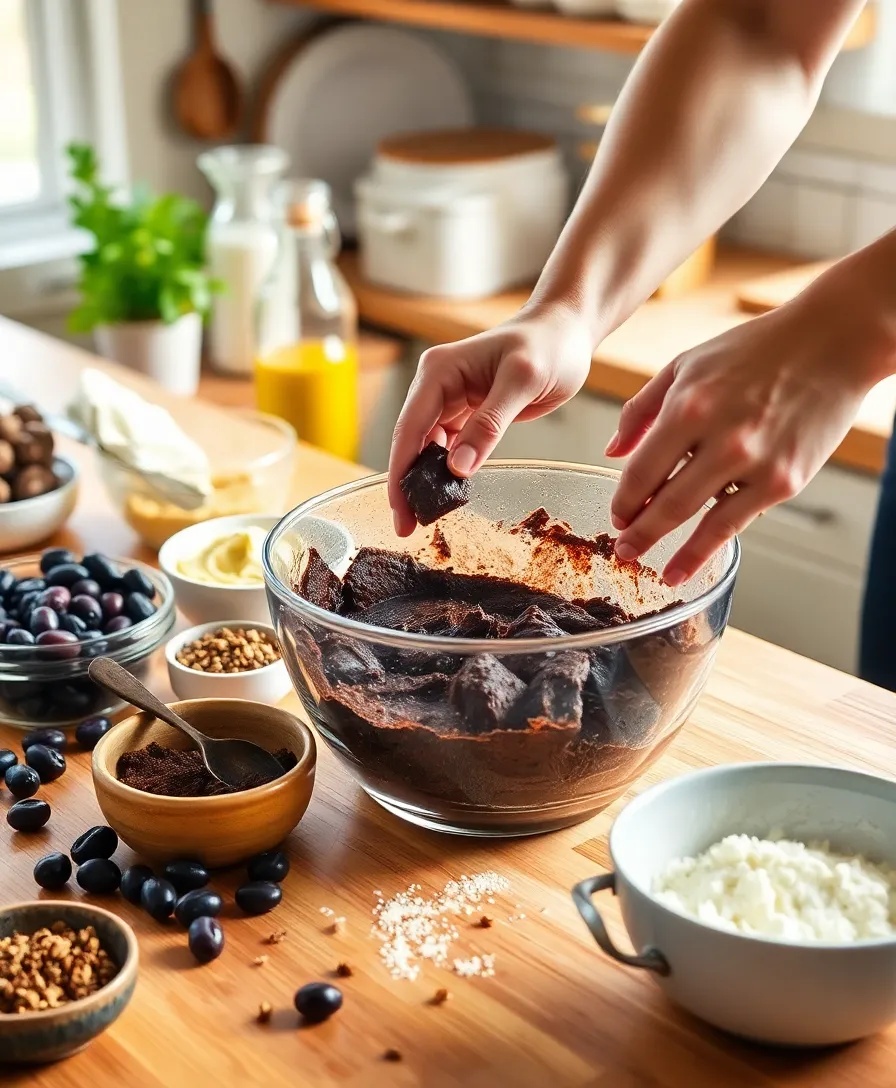
Over very gentle heat, or using a double boiler, slowly melt the 9 ounces of coarsely chopped semisweet chocolate along with 5 tablespoons of Cognac and the instant coffee powder, stirring periodically until smooth. Gradually incorporate the butter, one tablespoon at a time, whisking until fully emulsified and glossy.
-
Into the warm chocolate mixture, carefully blend the 3/4 cup of granulated sugar, all-purpose flour, ground cinnamon, and allspice until just combined. Next, thoroughly incorporate the egg yolks until the mixture is uniform. Set aside to cool slightly.
-
Adjust your oven rack to the middle position and preheat to 350°F (175°C). Prepare an 8 to 10 cup Kugelhopf or Bundt pan by generously buttering its interior surfaces, then lightly dusting with flour, tapping out any excess.
-
Using a stand mixer fitted with the whisk attachment, or a hand mixer, beat the egg whites with the salt and cream of tartar until they reach a soft peak stage. Gradually add the remaining 1/4 cup of granulated sugar, one tablespoon at a time, continuing to beat until the whites are nearly stiff but retain a slight sheen and are not dry.
-
Lightly whisk the cooled chocolate base to ensure its pliability. Delicately fold in half of the prepared beaten egg whites until just incorporated, then gently fold in the remaining whites, taking care to preserve their volume. Finally, carefully fold in the steeped prunes.
-
Pour the finished batter into your meticulously prepared pan. Bake for approximately 1 hour, or until the cake’s center feels firm when gently pressed and a skewer or cake tester inserted into the middle emerges with only a few moist crumbs attached.
-
Allow the cake to rest in its pan for 25 minutes before carefully inverting it onto a wire cooling rack. Permit it to cool completely to room temperature.
-
For optimal flavor and texture development, wrap the cooled cake tightly in plastic wrap and let it stand at room temperature overnight.
-
To prepare the opulent glaze: In a small saucepan, bring 6 tablespoons of whipping cream to a gentle simmer. Remove from the heat immediately. Add the 4 1/2 ounces of finely chopped semisweet chocolate and 3 tablespoons of Cognac, stirring continuously until the mixture is silken and entirely smooth.
Recipe Notes
This exquisite cake offers versatility in serving: enjoy it at a luxurious room temperature or gently warmed. Enhance the experience further with a dollop of freshly whipped cream, a spoonful of crème fraîche, or alongside a delicate crème anglaise for an unparalleled dessert presentation.
Global Heritage Archive
Anthropological & Spice Migration Record
“A sophisticated culinary culture renowned for its precise techniques, emphasis on quality ingredients, and rich tradition of patisserie and confectionery, often incorporating spirits and fruits.”
🌿 Spice & Botanical Migration
Cinnamon, native to Sri Lanka and Southeast Asia, journeyed to Europe via ancient trade routes, becoming a cherished spice in medieval and modern European baking. Allspice, indigenous to the Caribbean, arrived in Europe following the Columbian Exchange in the 16th century, finding a place in various European cuisines. Coffee, originating in Ethiopia, spread globally through trade, with its powdered form later enhancing chocolate’s depth in modern European desserts.
🏺 Historical & Archaeological Record
The concept of rich, leavened cakes incorporating fruits and spirits evolved significantly in European patisserie from the 17th to 19th centuries. While specific archaeological evidence for this exact ‘Chocolate, Prune and Cognac Cake’ is contemporary, the oldest written records of similar sophisticated cakes using butter, eggs, sugar, flour, and integrated luxury ingredients like chocolate (which arrived in Europe in the 16th century) can be found in French culinary texts from the late 18th and 19th centuries, epitomized by chefs like Marie-Antoine Carême.
💡 Little Known Facts
- The prunes from Agen in southwestern France are so esteemed for their plumpness and flavor that their cultivation and drying methods are protected by a PGI (Protected Geographical Indication) status.
- Cognac, a specific type of brandy, has been integrated into French culinary arts since at least the 18th century, not merely as a digestif but as a key ingredient for deepening flavors in sauces, marinades, and particularly rich desserts.
📸 Made This Heritage Recipe?
We would love to see how your dish turned out! Send a photo of your culinary creation to [email protected] to be featured in our community gallery.
Leave a review and rate this recipe below!
Curated Literature & Washington DC Downtown Calendar
The Culinary Alchemist: Modern Gastronomy & Flavor Pairing
By LDN Gastronomy Series
Artisanal technique, seasonal sourcing, and kitchen mastery.
Upcoming Downtown Happenings
Live acoustic sessions, gallery receptions, literary salons, and independent trade shows across Washington DC.
