
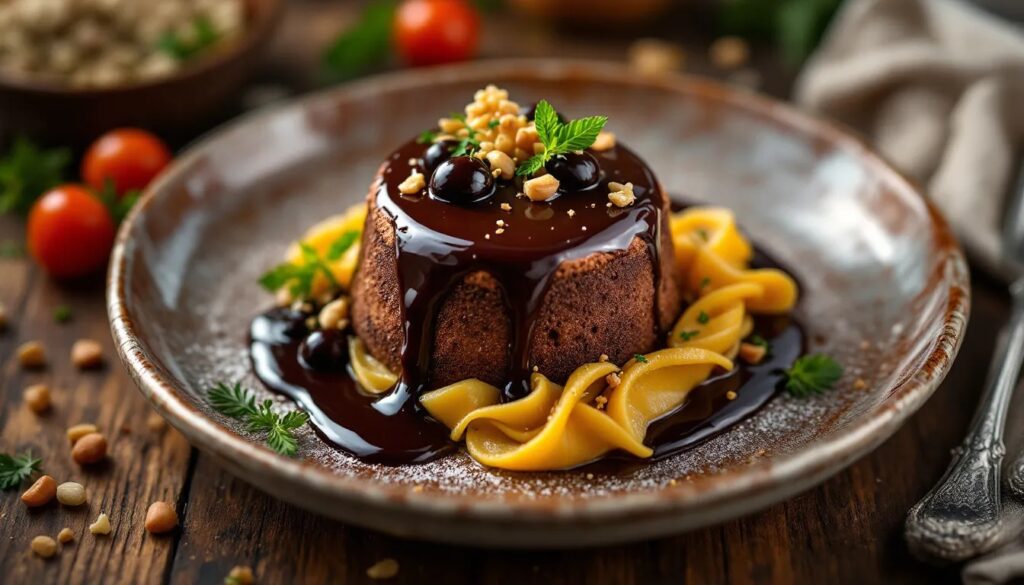
In the sprawling tapestry of culinary history, few ingredients possess the captivating allure and profound journey of chocolate. From its mystical origins as a sacred drink of Mesoamerican royalty to its ubiquitous presence in modern dessert parlors, chocolate’s evolution mirrors the very currents of human exploration and innovation. Our deceptively simple ‘Chocolate Glaze’ recipe, a luscious veil of bittersweet beauty, embodies this incredible odyssey, bringing together threads from ancient civilizations, European dairying traditions, and American ingenuity.
The story begins millennia ago in the heart of Mesoamerica. Here, the Olmec, Maya, and Aztec peoples revered cacao—the ‘food of the gods’—as a source of spiritual power and sustenance. They painstakingly harvested the pods, fermented and ground the beans, creating a frothy, often bitter beverage infused with chili peppers and other spices. It was a far cry from the sweet, solid chocolate we know today, consumed primarily by elites in ceremonial contexts.
The Columbian Exchange, that pivotal moment of transatlantic interaction in the 16th century, brought cacao to Europe. Initially, it remained a beverage, albeit sweetened with sugar (another global traveler from Southeast Asia). It took centuries for European ingenuity to transform this exotic import. The 19th century was chocolate’s renaissance, witnessing the invention of the hydraulic press to separate cocoa butter from solids, leading to cocoa powder and, crucially, solid eating chocolate bars. This innovation, pioneered by Dutch, English, and Swiss chocolatiers, made chocolate available for baking and confectionery, laying the groundwork for glazes and ganaches.
Alongside chocolate’s grand narrative, butter, the second pillar of our glaze, tells its own ancient story. A staple of European dairy cultures for millennia, butter represents richness, emulsification, and unparalleled flavor. Its presence in this recipe is a testament to the sophisticated pastry traditions that developed across Europe, particularly in France, where butter is king. Unsalted butter, specifically, allows for precise flavor control, a hallmark of refined baking.
Finally, the addition of light corn syrup is where our glaze anchors itself firmly in American culinary modernity. While corn itself is another gift from the Americas to the world, corn syrup is a relatively recent, industrialized product, gaining prominence in the late 19th and early 20th centuries. Its role in this glaze is not merely as a sweetener; it’s a structural marvel. Corn syrup helps prevent the sugar in the chocolate from crystallizing, ensuring a perpetually smooth, glossy, and pliable finish. It’s the secret to that mirror-like sheen and delectable tenderness that elevates a simple cake or pastry into an object of desire.
To achieve culinary perfection with this glaze, remember a few key tips: always use high-quality chocolate, as its flavor forms the backbone of your glaze. Melt the ingredients gently over a double boiler or in short bursts in the microwave, stirring until just smooth—overheating can cause the chocolate to seize or become grainy. The precise temperature at which you pour it over your dessert is critical: too hot, and it will run off; too cool, and it won’t spread evenly. A glaze around 90-95°F (32-35°C) is often ideal for a perfect flow and set. This chocolate glaze is more than just a topping; it’s a delicious historical record, a testament to global exchange, and a celebration of human ingenuity, all brought to life with a few simple ingredients and careful technique.
Chocolate Glaze
Unveil the secret to a sublime confectionary finish with this exquisite chocolate glaze. A timeless staple, this deeply flavorful coating transcends the ordinary, imparting a sophisticated sheen and profound bittersweet character to everything from celebratory tortes and delicate pastries to humble artisanal biscuits. Crafted with a harmonious blend of rich chocolate, velvety butter, and a touch of luminous corn syrup, it guarantees an utterly captivating, mirror-like surface and an unforgettable taste.
Ingredients
-
7
ounces
bittersweet, or semi-sweet chocolate
chopped -
9
Tablespoons
unsalted butter -
2
Tablespoons
light corn syrup
Instructions
-
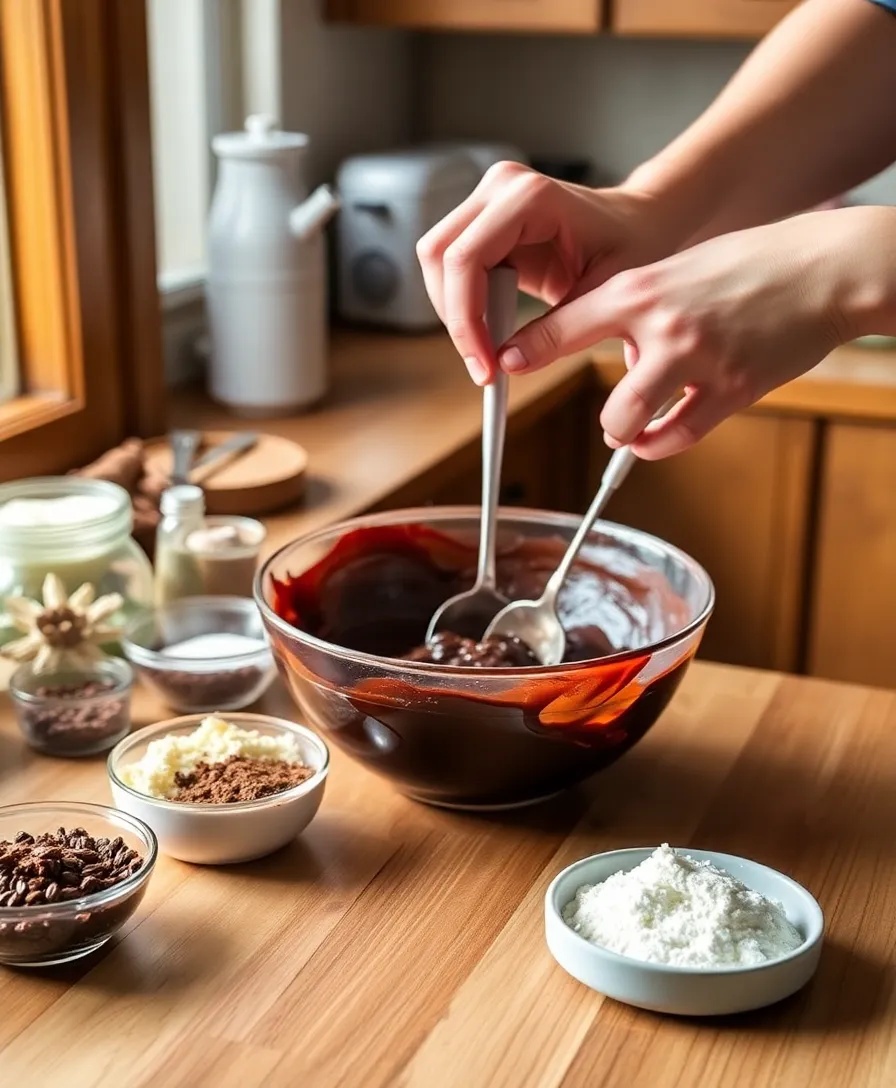
Gently combine the chocolate, unsalted butter, and light corn syrup in a small saucepan. Warm over exceptionally low heat, stirring continuously, until the mixture achieves a perfectly homogeneous, liquid consistency.
-
Remove from heat and allow the mixture to temper, cooling gradually until it reaches a comfortably warm (lukewarm) temperature, no longer hot to the touch.
-
Carefully spoon or pour approximately half a cup of the prepared glaze over your chilled coffee mousse, employing a small offset spatula or the back of a spoon to create an even, lustrous layer.
Recipe Notes
The specified application of a half-cup portion over coffee mousse implies this glaze is ideally suited for enriching a specific accompanying recipe, such as a layered dessert or individual plated components. However, its versatility extends beyond, making it an exceptional embellishment for a myriad of confections.
Global Heritage Archive
Anthropological & Spice Migration Record
“A modern culinary culture valuing both traditional rich flavors and efficient techniques, with chocolate widely celebrated as a versatile dessert ingredient.”
🌿 Spice & Botanical Migration
Cacao, the botanical source of chocolate, originated in the Amazon basin and was cultivated for millennia across Mesoamerica, consumed primarily as a bitter, spiced drink. The Columbian Exchange introduced cacao to Europe in the 16th century, where it was slowly transformed into sweetened beverages and later, through 19th-century industrialization, into solid confectionery, making its way into Western desserts like this glaze.
🏺 Historical & Archaeological Record
The oldest archaeological evidence of cacao consumption dates back to 5,500 years ago in present-day Ecuador, discovered in ceramic vessels. However, the specific ‘chocolate glaze’ recipe, using solid chocolate, butter, and corn syrup, emerged in Western cookbooks primarily from the late 19th and early 20th centuries, following the widespread availability of industrially produced chocolate and processed sweeteners.
💡 Little Known Facts
- The use of corn syrup in glazes, particularly in American baking, helps prevent sugar crystallization, ensuring a smooth, glossy finish that stays soft.
- While cacao originated in Mesoamerica, solid chocolate, a prerequisite for this glaze, was industrialized in Europe in the mid-19th century, with J.S. Fry & Sons creating the first ‘eating bar’ in 1847.
📸 Made This Heritage Recipe?
We would love to see how your dish turned out! Send a photo of your culinary creation to [email protected] to be featured in our community gallery.
Leave a review and rate this recipe below!
Curated Literature & Washington DC Downtown Calendar
The Culinary Alchemist: Modern Gastronomy & Flavor Pairing
By LDN Gastronomy Series
Artisanal technique, seasonal sourcing, and kitchen mastery.
Upcoming Downtown Happenings
Live acoustic sessions, gallery receptions, literary salons, and independent trade shows across Washington DC.
