
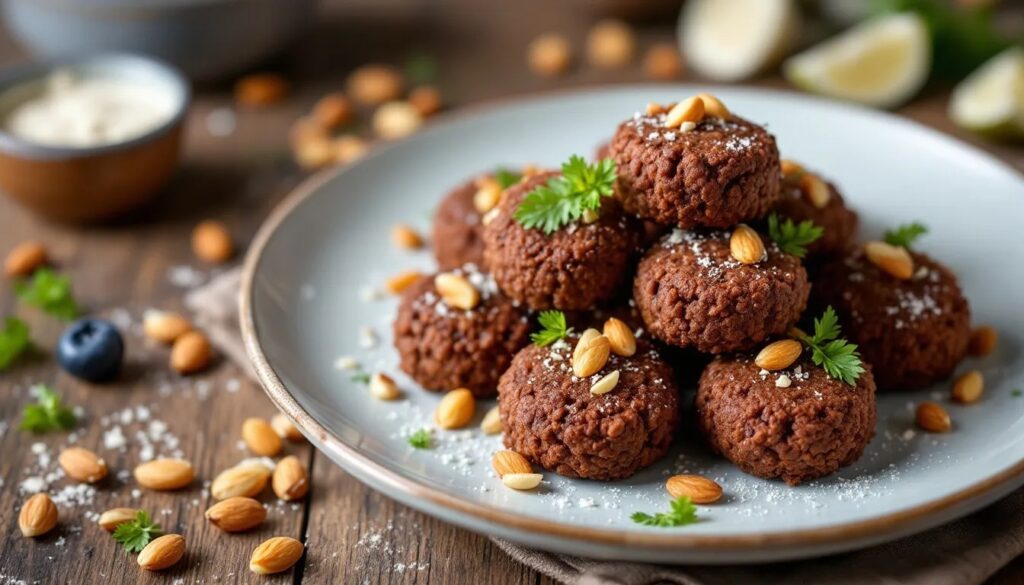
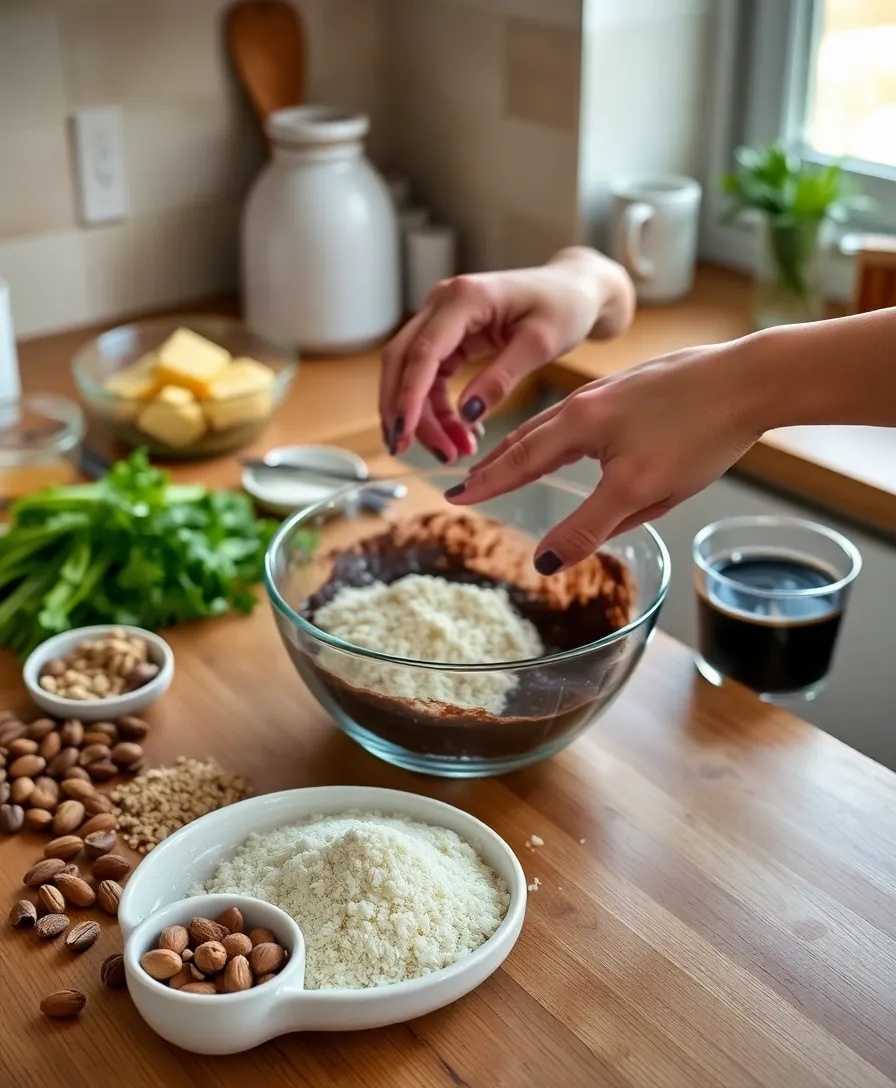
Step into a world where history’s most coveted ingredients converge, transforming into a symphony of flavors and textures in the form of Chocolate Almond Croquettes. This is not merely a recipe; it’s a journey through time, a testament to culinary ingenuity, and a celebration of human migration interwoven with the threads of gastronomic innovation. These exquisite bite-sized confections, rich with toasted almonds and deep chocolate, are a hallmark of sophisticated European *pasticceria*, echoing traditions that prize precision, balance, and pure indulgence.
Our story begins with the almond, a nut whose journey from the sun-drenched orchards of Central Asia and the Middle East to the Mediterranean coastlines is as ancient as civilization itself. Carried by merchants and conquerors, almonds quickly became a beloved ingredient in Roman and Greek kitchens, eventually forming the backbone of countless European sweets, from the delicate marzipan to the crunchy *amaretti*. In this recipe, blanched and toasted almonds provide a foundational nuttiness and a delightful crunch, a textural counterpoint to the silken chocolate.
Then, there is chocolate, a marvel that embarked on an even more dramatic voyage. Indigenous to the lush rainforests of Mesoamerica, cacao was revered by the Olmecs, Mayans, and Aztecs for millennia, consumed as a sacred, bitter beverage. It was Spanish conquistadors who introduced cacao to Europe, where it was transformed, sweetened, and eventually industrialized. The mention of “Dutch process cocoa powder” in our recipe is a precise historical marker. Invented by Coenraad Johannes van Houten in the Netherlands in 1828, this process reduces chocolate’s acidity, resulting in a darker, milder, and more soluble powder – a revolution that paved the way for modern chocolate confections like these croquettes. Paired with semisweet and unsweetened chocolate, it builds a complex, nuanced chocolate profile.
But the magic doesn’t stop there. The subtle hint of almond liqueur and the audacious depth of instant espresso powder speak volumes about the recipe’s probable Italian lineage or strong European influence. Almond liqueur, like Italy’s famous Amaretto, adds an aromatic warmth, while espresso, an Italian innovation of the late 19th century, deepens the chocolate’s character, transforming it into something truly sublime. These ingredients are not mere flavorings; they are cultural touchstones, symbols of a culinary tradition that masterfully marries complementary tastes.
Traditional preparation involves careful tempering and shaping, often seen in the meticulous world of Italian *pasticceria*. The croquettes typically feature a dense, chewy, almond-infused interior, often held together with egg whites and sugar, akin to a macaroon or a rich *biscotto*. This core is then enrobed or infused with a luxurious chocolate mixture, sometimes incorporating egg yolks and butter for ultimate richness. While the name “croquette” often conjures images of savory fried items, in the sweet context, it refers to small, formed, often firm confections, sometimes baked or simply chilled and cut, designed for an elegant bite.
For the home cook, patience is key. Ensuring your almonds are perfectly toasted coaxes out their maximum flavor. When working with chocolate, gentle melting over a double boiler prevents scorching and ensures a smooth, glossy finish. The precise combination of cream of tartar, particularly in the egg white component, helps stabilize the meringue, creating a crisp yet chewy texture for the croquette’s base. And don’t shy away from quality ingredients; the rich butter, premium chocolate, and a good almond liqueur will elevate your croquettes from mere dessert to an unforgettable culinary experience. These Chocolate Almond Croquettes are more than a sweet treat; they are a delicious artifact, a delectable narrative of global exchange, refined tastes, and enduring passion for the art of food.
CHOCOLATE ALMOND CROQUETTES
Step into a world of refined French patisserie with these elegant chocolate almond croquettes. Each bite offers a captivating interplay of textures and tastes, starting with ethereal, crisp Dacquoise — delicate almond meringues expertly piped and baked to perfection. These light discs are then united with a sumptuous, silken chocolate praline buttercream, a truly decadent filling. A final flourish of house-made praline powder bestows an irresistible, subtle crunch, elevating this harmonious pairing of rich cocoa and toasted almond into a truly memorable dessert experience.
Ingredients
-
1 ¼
cups
sugar
for Praline Powder -
1
cup
toasted blanched almonds
for Praline Powder -
¼
teaspoon
cream of tartar
for Praline Powder -
3
egg whites
room temperature, for Dacquoise -
1
teaspoon
vanilla
for Dacquoise -
1
teaspoon
almond extract
for Dacquoise -
1/8
teaspoon
cream of tartar
for Dacquoise (unit assumed) -
1/8
teaspoon
salt
for Dacquoise (unit assumed) -
¾
cup
sugar
for Dacquoise -
¼
cup
blanched almonds
ground, for Dacquoise -
2
Tablespoons
Dutch process cocoa powder
sifted, for Dacquoise -
1
Tablespoon
cornstarch
sifted, for Dacquoise -
3
sticks
unsalted butter
cut into ¼-inch pieces, room temperature, for Chocolate Praline Buttercream -
5
ounces
semisweet or bittersweet chocolate
coarsely chopped, for Chocolate Praline Buttercream -
3
ounces
unsweetened chocolate
coarsely chopped, for Chocolate Praline Buttercream -
¼
cup
water
for Chocolate Praline Buttercream -
3
Tablespoons
almond liqueur
for Chocolate Praline Buttercream -
1
Tablespoon
instant espresso powder
for Chocolate Praline Buttercream -
3
egg yolks
room temperature, for Chocolate Praline Buttercream -
1 ¼
cups
sugar
for Chocolate Praline Buttercream -
¼
teaspoon
cream of tartar
for Chocolate Praline Buttercream
Instructions
-
**Crafting the Praline Powder:**
-
1. Prepare a jelly roll pan by delicately brushing its surface with a thin film of vegetable oil.
-
2. In a robust, medium-sized saucepan, combine the 1 ¼ cups sugar and ¼ teaspoon cream of tartar. Place over low heat, stirring consistently until the mixture transforms into a rich, deep caramel brown.
-
3. Swiftly incorporate the 1 cup toasted blanched almonds into the molten caramel using a whisk.
-
4. Without delay, pour the hot praline mixture evenly onto the prepared pan.
-
5. Allow the praline to cool and solidify completely at room temperature.
-
6. Once fully firm, gently shatter the praline into smaller, manageable fragments.
-
7. Transfer these fragments into a food processor or high-speed blender and pulse until a fine, uniform powder is achieved. (This exquisite component may be prepared in advance.)
-
**Crafting the Dacquoise:**
-
1. Initiate oven preheating to 325°F.
-
2. Prepare two baking sheets by lightly greasing them and dusting with a fine coating of flour.
-
3. Using 3-inch, 2-inch, and 1-inch biscuit cutters, meticulously trace 12 circles of each size onto the prepared sheets, totaling 24 guides.
-
4. In the spacious bowl of a stand mixer, unite the 3 room-temperature egg whites, 1 teaspoon vanilla extract, 1 teaspoon almond extract, 1/8 teaspoon cream of tartar, and 1/8 teaspoon salt.
-
5. Begin whipping at a medium speed until the mixture develops into soft, billowy peaks.
-
6. Gradually introduce ½ cup of the ¾ cup sugar, continuing to beat without interruption until the meringue achieves a stiff, glossy, and firm consistency.
-
7. In a separate, smaller vessel, whisk together the ground almonds, cocoa, cornstarch, and the remaining ¼ cup sugar.
-
8. Delicately fold this almond-cocoa mixture into the prepared meringue until just combined, taking care not to deflate the volume.
-
9. Transfer the dacquoise batter into a pastry bag fitted with a No. 6 or 5 tip.
-
10. Carefully pipe the meringue onto the delineated circles on the baking sheets, starting from the center and spiraling outward to fill each guide.
-
11. Bake for approximately 25 to 30 minutes, or until the dacquoise is exquisitely crisp and firm to the touch.
-
12. With utmost care, gently detach the warm dacquoise discs from the baking sheets.
-
13. Transfer them to a wire rack to cool completely. (These delicate meringues may be prepared in advance to streamline your final assembly.)
-
**Crafting the Chocolate Praline Buttercream:**
-
1. In the bowl of a stand mixer, or using a hand mixer, cream the 3 sticks of unsalted butter until it achieves a remarkably pale, aerated, and fluffy consistency; set this aside.
-
2. In a heatproof bowl set over a simmering pot of water (or using a double boiler), combine the 5 ounces of coarsely chopped semisweet or bittersweet chocolate, the 3 ounces of coarsely chopped unsweetened chocolate, and the ¼ cup of water.
-
*Please Note: The subsequent steps for completing this exquisite Chocolate Praline Buttercream, and for the final assembly of the croquettes, are not present in the provided recipe documentation.*
Recipe Notes
Kindly note that the complete methodology for concluding the Chocolate Praline Buttercream, as well as the detailed directives for the ultimate assembly of these Chocolate Almond Croquettes, are regrettably absent from the current recipe transcription. For clarity, the 1/8 measurements for cream of tartar and salt are understood to be teaspoons. The specified oven temperature of 325° is confirmed as Fahrenheit. This intricate recipe, composed of distinct, elegant components, is ideally suited for phased preparation; many elements can be skillfully crafted in advance, allowing for a more serene and enjoyable final assembly process.
Global Heritage Archive
Anthropological & Spice Migration Record
“A sophisticated culinary culture rooted in the art of *pasticceria*, characterized by meticulous preparation, the harmonious blending of rich flavors like chocolate, nuts, and coffee, and a deep appreciation for elegant, bite-sized confections.”
🌿 Spice & Botanical Migration
Almonds, originating in Central Asia and the Middle East, traveled via ancient trade routes to the Mediterranean, becoming a cornerstone of European confectionery. Cocoa, indigenous to Mesoamerica, was brought to Spain by conquistadors and spread throughout Europe, with Dutch processing in the 19th century revolutionizing its use in solid chocolate and powder. Vanilla, native to Mesoamerica, was introduced to Europe by the Spanish, though its widespread cultivation outside its native region only became successful in the 19th century. Coffee, the source of espresso, originated in Ethiopia, spread through the Arab world, and was introduced to Europe by the Ottoman Empire, with espresso itself being a late 19th-century Italian innovation. Sugar, from sugarcane native to New Guinea, journeyed through Asia to the Middle East and Europe, with its large-scale cultivation in the Americas profoundly impacting global economies and culinary practices.
🏺 Historical & Archaeological Record
The earliest archaeological evidence of cacao consumption dates back to 1900 BC in Puerto Escondido, Honduras, where residues of cacao were found in ancient pottery. Almond-based confections, often incorporating honey, can be traced back to ancient Roman and Greek culinary traditions, with medieval European texts also describing similar marzipan-like sweets. While “croquettes” as a specific confectionery term are more modern, the concept of small, molded or formed sweet pastries using nuts and sweeteners is rooted in medieval European bakeries.
💡 Little Known Facts
- The term “croquette” for a sweet item, often baked or chilled and cut rather than fried, represents a linguistic and culinary adaptation from its more common savory counterpart, pointing to a specific European confectionary style.
- The recipe’s sophisticated use of Dutch process cocoa powder, a 19th-century innovation, alongside instant espresso powder and almond liqueur, pinpoints its development to a post-Industrial Revolution era when globally sourced ingredients and refined processing methods became widely accessible to confectioners.
- The dual inclusion of cream of tartar – once for egg whites and again with egg yolks – highlights a precise technical approach to achieving specific textures and consistencies, often employed in advanced patisserie for stabilizing meringues and controlling sugar crystallization.
📸 Made This Heritage Recipe?
We would love to see how your dish turned out! Send a photo of your culinary creation to [email protected] to be featured in our community gallery.
Leave a review and rate this recipe below!
Curated Literature & Washington DC Downtown Calendar
The Culinary Alchemist: Modern Gastronomy & Flavor Pairing
By LDN Gastronomy Series
Artisanal technique, seasonal sourcing, and kitchen mastery.
Upcoming Downtown Happenings
Live acoustic sessions, gallery receptions, literary salons, and independent trade shows across Washington DC.
