
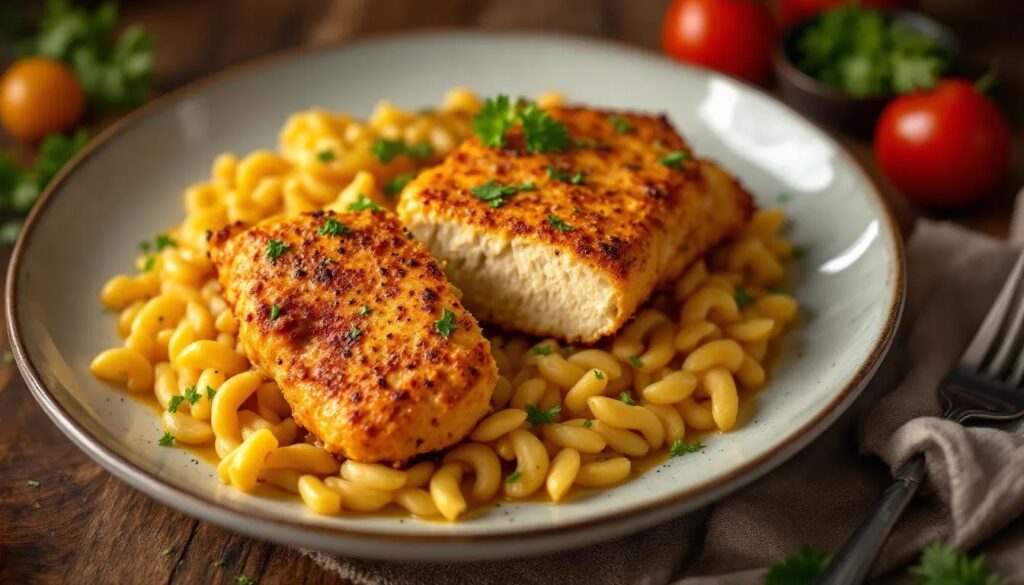
The dish, despite its evocative name, likely did not spring directly from Kyiv’s kitchens in antiquity. Culinary historians often trace its lineage back to the *côtelette de volaille*, a French creation of pounded, butter-stuffed chicken, which made its way to the Russian Empire in the 19th century, becoming popular in Moscow and St. Petersburg. Some accounts suggest a version known as ‘Mikhailovsky cutlets’ predated the ‘Kiev’ moniker. It wasn’t until the early 20th century, and particularly after its introduction to American diners in the mid-century, that ‘Chicken Kiev’ firmly took root as the universally recognized name, solidifying its association with the Ukrainian capital. Its meteoric rise in popularity saw it gracing menus of upscale restaurants, banquets, and even becoming a sophisticated choice for airline meals, cementing its status as a symbol of mid-century gourmet dining.
Traditional preparation is an art form, a dance of precision and temperature control. It begins with boneless, skinless chicken breasts, carefully pounded thin to create an even canvas. The heart of the dish is the firm, chilled butter, often seasoned with fresh dill, parsley, or as in this recipe, rosemary and garlic salt, along with salt and pepper. This herbed butter is rolled into a log and tucked into the chicken, which is then meticulously folded and shaped to completely encase the butter. The next critical step is the breading: a dredge in seasoned flour, a dip in beaten egg, and a final coating of light, dry breadcrumbs. Often, a double breading is employed to create an impenetrable seal, crucial to preventing the butter from escaping during cooking.
The global journey of its key ingredients tells its own tale of migration. Black pepper, originating from the Malabar Coast of India, embarked on ancient spice routes, becoming a prized commodity that shaped empires and trade networks for millennia. Garlic, with its roots in Central Asia, spread west to the Mediterranean and beyond, becoming a foundational flavor in countless cuisines. Rosemary, a fragrant herb native to the Mediterranean basin, found its way across Europe through Roman influence and monastic cultivation, establishing itself as a cherished partner to roasted meats and poultry. The butter itself speaks to the dairy-rich traditions of European agriculture, transformed into a luxurious ingredient by French culinary techniques. This dish, therefore, is a confluence of global flavors channeled through sophisticated European cooking methods.
For the home cook, mastering Chicken Kiev requires patience and a few insider tips. Always use very cold, firm butter for the filling – some chefs even freeze the butter log beforehand. Pounding the chicken evenly ensures even cooking and a consistent seal. After breading, a brief chill in the refrigerator or even freezer for 15-30 minutes helps the coating adhere firmly and prevents butter leakage. Fry the cutlets in hot fat (around 350-375°F or 175-190°C) until golden brown, then often finish them in a moderate oven to ensure the chicken is cooked through without burning the exterior. The ultimate reward is a crispy shell that, when cut, releases a fragrant gush of melted butter, a spectacular and delicious testament to its rich history and global appeal.
CHICKEN KIEV
Embark on a culinary journey with Chicken Kiev, an iconic entrée that masterfully blends rustic charm with sophisticated execution. This dish, celebrated in grand dining rooms and cherished in home kitchens across Eastern Europe, promises an exquisite sensory experience. Imagine a golden, impossibly crisp exterior yielding to tender, succulent poultry that encases a surprise of molten, aromatic herb-infused butter. It’s an indulgence of textures and flavors, transforming simple ingredients into a dish of timeless elegance, perfect for a memorable dinner or a special occasion.
Ingredients
-
6
medium-size
chicken breasts -
6
Tablespoons
firm butter
or a little more -
as needed
salt -
as needed
pepper -
as needed
garlic salt -
as needed
light dry bread crumbs -
pinch
rosemary -
2
large
eggs
beaten and combined with 1 Tablespoon water -
as needed
fat
for deep frying
Instructions
-
Begin by preparing the chicken breasts. Place each one between two sheets of parchment paper or plastic wrap. Using a meat mallet or rolling pin, gently yet firmly pound each breast to an even thickness of about 1/4 to 1/3 inch (0.6 to 0.8 cm), ensuring the meat is uniformly thin without tearing.
-
Next, craft the heart of the dish: the compound butter. In a small bowl, thoroughly combine softened unsalted butter with finely minced garlic and fresh herbs (such as dill, parsley, or chives). Season this mixture judiciously with salt and freshly ground black pepper. Shape the seasoned butter into small, elongated cylinders, roughly 1/2 inch (1.2 cm) in diameter, and chill them until firm.
-
Retrieve the flattened chicken breasts. Place one chilled butter cylinder onto one end of each chicken piece. Carefully roll the chicken tightly around the butter, tucking in the sides as you go, to form a neat, secure parcel. This meticulous sealing is crucial to prevent the butter from escaping during cooking.
-
Prepare a three-stage breading station: one shallow dish with all-purpose flour seasoned with salt and pepper, a second with whisked eggs, and a third with fine breadcrumbs. First, dredge each chicken roll in the seasoned flour, shaking off any excess. Then, dip it into the beaten egg, allowing any extra to drip away. Finally, roll it generously in the breadcrumbs, pressing gently to ensure a complete and even coating. For an extra crisp crust, you may double-bread by repeating the egg and breadcrumb steps.
-
Place the breaded chicken rolls on a plate and refrigerate them for at least 30 minutes. This step helps the breading adhere firmly and prevents the butter from melting out prematurely during frying.
-
Heat a neutral oil (like canola or vegetable oil) in a deep, heavy-bottomed pot or Dutch oven to an ideal temperature of 350-375°F (175-190°C). Carefully lower the chilled chicken pieces into the hot oil, ensuring not to overcrowd the pan. Fry until the exterior is a deep, golden brown and the internal temperature reaches 165°F (74°C), typically 8-10 minutes, turning occasionally for uniform cooking and coloring. If necessary, a brief finish in a preheated oven (375°F/190°C) can ensure the chicken is cooked through without over-browning the crust.
Recipe Notes
Achieving the perfect Chicken Kiev hinges on a few key details. Firstly, ensure your chicken breasts are pounded to an even thickness for consistent cooking. Secondly, the tightness and security of your roll are paramount to containing that luscious, melting butter center; a brief chill before frying helps solidify the roll and prevents premature butter leakage. For an exceptionally crisp coating, consider a double breading or chilling the breaded chicken for an hour or more. Always use a thermometer to confirm the chicken reaches a safe internal temperature of 165°F (74°C). Serve immediately to experience the full drama of the molten butter.
Global Heritage Archive
Anthropological & Spice Migration Record
“A celebratory, sophisticated dish often associated with formal dining, reflecting a fusion of French culinary techniques with Eastern European ingredients and tastes.”
🌿 Spice & Botanical Migration
Pepper (Piper nigrum), native to India’s Malabar Coast, journeyed along ancient Spice Routes, becoming a global seasoning. Garlic (Allium sativum), originating in Central Asia, spread worldwide millennia ago, foundational to many cuisines. Rosemary (Salvia rosmarinus), indigenous to the Mediterranean, was disseminated across Europe by Romans and monastic gardens. The presence of these widely traded ingredients highlights centuries of established international trade networks enriching European culinary traditions.
🏺 Historical & Archaeological Record
While the specific ‘Chicken Kiev’ recipe is a modern creation, the technique of stuffing meat and frying it has ancient precursors. The Roman cookbook Apicius (4th century CE) details various stuffed and fried meat preparations. The concept of the breaded and fried ‘cutlet’ itself is a European culinary development, evolving from dishes like German *Schnitzel* and French *côtelette* from the 17th-18th centuries.
💡 Little Known Facts
- The dish likely originated from a similar French dish known as *côtelette de volaille*, which made its way to Russia in the 19th century, rather than being an ancient Ukrainian recipe.
- During the mid-20th century, Chicken Kiev became an upscale restaurant sensation and a staple of airline cuisine in the United States, symbolizing luxury and international flair.
📸 Made This Heritage Recipe?
We would love to see how your dish turned out! Send a photo of your culinary creation to [email protected] to be featured in our community gallery.
Leave a review and rate this recipe below!
Curated Literature & Washington DC Downtown Calendar
The Culinary Alchemist: Modern Gastronomy & Flavor Pairing
By LDN Gastronomy Series
Artisanal technique, seasonal sourcing, and kitchen mastery.
Upcoming Downtown Happenings
Live acoustic sessions, gallery receptions, literary salons, and independent trade shows across Washington DC.
