
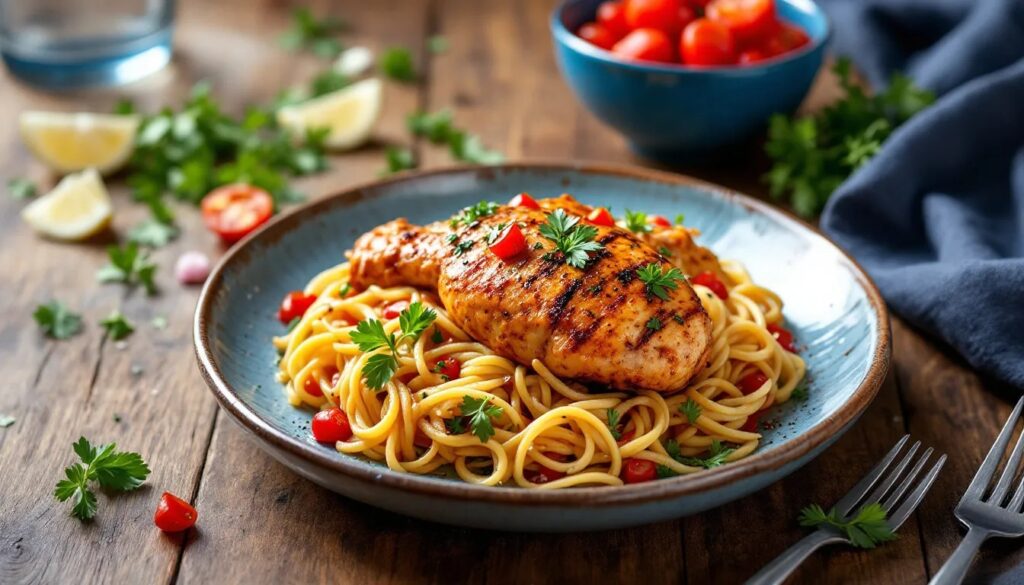
At its heart, “Chicken a la Blue” represents a fascinating culinary dialogue between continents. The very name, “A la Blue,” playfully hints at its European inspirations, borrowing the French “à la” (meaning “in the style of” or “with”) to herald its star ingredient: blue cheese. This venerable dairy product, with its distinctive pungent notes, boasts a history stretching back millennia across Europe, from the caves of Roquefort in France to the valleys of Gorgonzola in Italy. Its inclusion here grounds the dish in a rich, ancient tradition, while its pairing with chicken, a universal protein, speaks to an accessible, everyday luxury.
Yet, this dish is quintessentially American in its execution and context. The call for “oleo or butter” is a poignant historical marker. Oleomargarine, initially a butter substitute born of necessity during wartime rationing and subsequent economic shifts, became a staple in many American households, embodying thrift and practicality without sacrificing flavor. The appearance of “frozen spinach” further places “Chicken a la Blue” firmly in the era of convenience foods, a revolution that empowered home cooks with quicker preparation times and year-round access to produce.
Delving deeper, the ingredients reveal a tapestry of global migration. Paprika, lending its warm hue and subtle sweetness, journeyed from the Americas with Christopher Columbus, eventually becoming a cornerstone of Central European cuisine, particularly in Hungary, before making its way into American pantries. Lemon juice, a bright counterpoint to the richness of the cheese and sauce, traces its origins to Asia, arriving in the Mediterranean via Arab trade routes centuries ago. These seemingly commonplace items are silent narrators of vast historical movements, connecting diverse cultures through the simple act of cooking.
Preparing “Chicken a la Blue” is an exercise in balancing flavors and textures. The technique typically involves pan-searing chicken breasts to a golden perfection, building a foundational roux with flour and butter (or oleo), then deglazing with dry white wine to capture every savory morsel. The addition of chicken broth and the assertive blue cheese creates a luscious, aromatic sauce that clings beautifully to the tender chicken. To achieve the perfect consistency, ensure your roux is cooked long enough to eliminate any raw flour taste, and whisk vigorously as you incorporate liquids to prevent lumps. For a modern twist, consider crumbling a higher-quality artisanal blue cheese at the very end to maximize its distinct flavor profile. Serve this masterpiece alongside a simple rice pilaf or crusty bread to soak up every drop of its enchanting sauce, and you’ll find yourself savoring more than just a meal – you’ll be tasting a slice of culinary history, thoughtfully prepared for the contemporary table.
CHICKEN A LA BLUE
Imagine a timeless classic, a dish that whispers tales of elegant home entertaining from a bygone era. Our “Chicken A La Blue” is a refined homage to mid-century culinary charm, presenting succulent chicken breasts meticulously prepared and generously filled. Each tender parcel cradles a piquant, savory blend of creamy blue cheese, gently wilted spinach, and aromatic, softened onion. Bathed in a delicate, golden-hued reduction of white wine and savory chicken broth, then baked to a burnished perfection, this dish transcends the everyday. It’s an enduring masterpiece, promising to transform any family dinner or special gathering into a truly memorable occasion, a testament to the sophisticated appeal of thoughtful, heritage cooking.
Ingredients
-
4
oz
blue cheese
crumbled -
2
tbsp
chopped onion
None -
1/2
cup
soft bread crumbs
None -
2
tsp
lemon juice
None -
3/4
cup
chicken broth or bouillon
None -
1/2
tsp
salt
None -
6
None
chicken breast halves
None -
1/4
cup
oleo or butter
None -
10
oz
frozen spinach
thawed/drained -
3
tbsp
all-purpose flour
for dredging -
1/4
cup
dry white wine
None -
None
None
paprika
None
Instructions
-
Begin by gently flattening each chicken breast to an even 1/4-inch thickness, creating uniform cutlets suitable for rolling.
-
In a medium skillet, melt 2 tablespoons of the specified fat over medium heat. Add the finely diced onion and cook, stirring occasionally, until it becomes translucent and tender-sweet, about 5-7 minutes.
-
Introduce the fresh spinach to the softened onions, wilting it gently until its moisture has evaporated, leaving behind a concentrated flavor. This should take just a few minutes.
-
Take the skillet off the heat. Incorporate the bread crumbs, crumbled blue cheese, and a splash of fresh lemon juice into the spinach-onion mixture, blending thoroughly to create a cohesive and flavorful stuffing.
-
Evenly distribute approximately 1/4 cup of the prepared stuffing onto the center of each flattened chicken cutlet.
-
Carefully fold the sides of each chicken piece inward, then roll it tightly from one end to the other. Secure each roulade snugly with kitchen twine or small skewers to maintain its shape during cooking.
-
Lightly dredge the secured chicken roulades in 3 tablespoons of flour, ensuring an even coating. In the same skillet, melt the remaining 2 tablespoons of fat over medium-high heat and sear the floured chicken until beautifully golden brown on all sides, about 3-4 minutes per side.
-
Transfer the seared chicken roulades to an 11 x 7 x 1 1/2-inch casserole dish, arranging them in a single layer.
-
Return the skillet to the heat. Deglaze the pan by adding the chicken broth, white wine, and a pinch of salt to the flavorful drippings, stirring to release any browned bits from the bottom. Bring the liquid to a gentle simmer, then carefully pour this aromatic sauce over the chicken in the casserole dish.
-
Cover the casserole dish tightly with a lid or foil and bake in a preheated oven at 350°F (175°C) for 35 minutes.
-
Remove the cover, dust the tops of the chicken roulades with a vibrant sprinkle of paprika, and return to the oven for an additional 10-15 minutes, or until the chicken is thoroughly cooked, exquisitely tender, and the internal temperature reaches 165°F (74°C).
-
Upon removal from the oven, gently stir the pan juices to combine all the delicious flavors. For a thicker sauce, whisk together 1 tablespoon of flour with 1 tablespoon of cold water to form a smooth slurry. Gradually whisk this slurry into the hot pan juices in the casserole dish, stirring constantly until the sauce reaches your desired consistency.
-
Present the “Chicken A La Blue” by spooning the rich, flavorful pan sauce generously over each succulent roulade.
Recipe Notes
This timeless recipe is a cherished contribution from Jan Barber. The term ‘oleo,’ a charming nod to mid-century American culinary practices, refers to margarine – a popular and versatile fat frequently employed in home kitchens of that era. Contemporary cooks are welcome to substitute with unsalted butter for a richer profile, or maintain tradition with margarine, depending on preference.
Global Heritage Archive
Anthropological & Spice Migration Record
“A dish reflecting post-WWII American ingenuity in combining accessible ingredients for comforting, weeknight meals, often with a nod to European culinary traditions.”
🌿 Spice & Botanical Migration
Paprika, a key flavoring and coloring agent, traces its botanical origins to the *Capsicum annuum* pepper, native to the Americas. It was introduced to Europe following the Columbian Exchange in the 16th century, eventually becoming a defining spice in Central European cuisines like Hungarian, before migrating into American pantries. Lemon, providing a bright acidic counterpoint, originated in Asia and arrived in the Mediterranean via ancient trade routes, subsequently spreading across Europe.
🏺 Historical & Archaeological Record
The oldest written record of a recipe for a complex, sauced meat dish, conceptually similar to this preparation, is found in *Apicius*, a Roman cookbook dating to the 4th century CE. While its sauces differed from modern roux-based techniques, it demonstrates the ancient lineage of elaborately prepared, sauced poultry or meat dishes.
💡 Little Known Facts
- The inclusion of “oleo or butter” reflects the widespread use of margarine in post-WWII America, a more affordable and readily available fat during periods of rationing and economic shifts.
- The use of “frozen spinach” is a strong indicator of the dish’s mid-20th century origins, coinciding with the popularization of convenience foods that streamlined meal preparation for the booming American home kitchen.
📸 Made This Heritage Recipe?
We would love to see how your dish turned out! Send a photo of your culinary creation to [email protected] to be featured in our community gallery.
Leave a review and rate this recipe below!
Curated Literature & Washington DC Downtown Calendar
The Culinary Alchemist: Modern Gastronomy & Flavor Pairing
By LDN Gastronomy Series
Artisanal technique, seasonal sourcing, and kitchen mastery.
Upcoming Downtown Happenings
Live acoustic sessions, gallery receptions, literary salons, and independent trade shows across Washington DC.
