
In the grand tapestry of culinary history, some dishes emerge not from ancient hearths or royal banquets, but from a delightful confluence of practicality, popular culture, and an enduring human desire for both simplicity and flavor. Such is the story of “Celery Boats with Gruyere Pesto” – a recipe that, at first glance, might seem unassuming, yet offers a fascinating journey through global palates, historical migrations, and the inventive spirit of the American kitchen.
The very concept of a “celery boat” is a uniquely American invention, blossoming into popularity in the mid-20th century. Far from being an ancient tradition, these crisp, verdant vessels filled with an array of concoctions—most famously peanut butter and raisins, affectionately known as “ants on a log”—became a staple of children’s parties, school lunchboxes, and a burgeoning health-conscious movement. They represented a playful, accessible way to incorporate vegetables into daily diets, transforming a humble stalk into an edible container for creative fillings. This simple format became a blank canvas, eagerly awaiting culinary reinterpretation.
Enter the pesto. The very word evokes the sun-drenched hills of Liguria, Italy, home to the iconic *Pesto alla Genovese*. Its ancestry, however, stretches further back, to ancient Roman times and the *moretum*, a robust, pounded cheese and herb paste that flavored the meals of antiquity. Pesto, derived from the Italian “pestare” (to pound), is a testament to the enduring appeal of fresh ingredients, meticulously ground to release their aromatic essence. While traditionally featuring basil, pine nuts, garlic, Parmigiano-Reggiano, and olive oil, the beauty of pesto lies in its adaptability. This specific recipe daringly substitutes the classic Italian cheeses for Gruyere, a nutty, assertive cheese hailing from the alpine pastures of Switzerland. This substitution is not a deviation but an evolution, a testament to how culinary traditions travel and transform, absorbing local ingredients and preferences along the way.
The ingredients themselves tell stories of global migration. Basil, the vibrant green heart of this pesto, did not originate in Italy but in India and Central Asia, embarking on an epic westward journey along ancient trade routes to eventually become an indispensable herb in Mediterranean cuisine. Pine nuts, meanwhile, are indigenous to the Mediterranean basin, their buttery texture and delicate flavor cherished for millennia. Olive oil, the liquid gold that binds the pesto, is equally steeped in ancient history, its cultivation and use spreading with the empires of Greece and Rome. Gruyere cheese, with its distinct flavor profile, speaks to the precision and heritage of European cheesemaking, now a beloved staple far beyond Swiss borders.
This recipe, therefore, is a culinary anthropologist’s dream. It’s a modern American dish that respectfully yet playfully appropriates and reinterprets ancient European flavors. The celery boat provides a contemporary, healthy, and convenient delivery system for a pesto that bridges Italian tradition with Swiss character, all within a uniquely American context of innovation and adaptation.
For the home cook, “Celery Boats with Gruyere Pesto” offers a refreshing departure from the ordinary. To truly elevate this dish, focus on the quality of your ingredients: fresh, vibrant basil, good quality Gruyere, and a robust, fruity olive oil. Toasting the pine nuts lightly before adding them to the pesto will deepen their flavor. While a traditional mortar and pestle yields the most authentic texture, a food processor makes quick work of the task, just be careful not to over-process, aiming for a rustic, slightly chunky consistency rather than a smooth paste. Serve immediately to enjoy the crispness of the celery and the aromatic burst of the pesto. This dish is more than just a snack; it’s a bite-sized celebration of history, migration, and the endless possibilities of the kitchen.
CELERY BOATS WITH GRUYERE PESTO
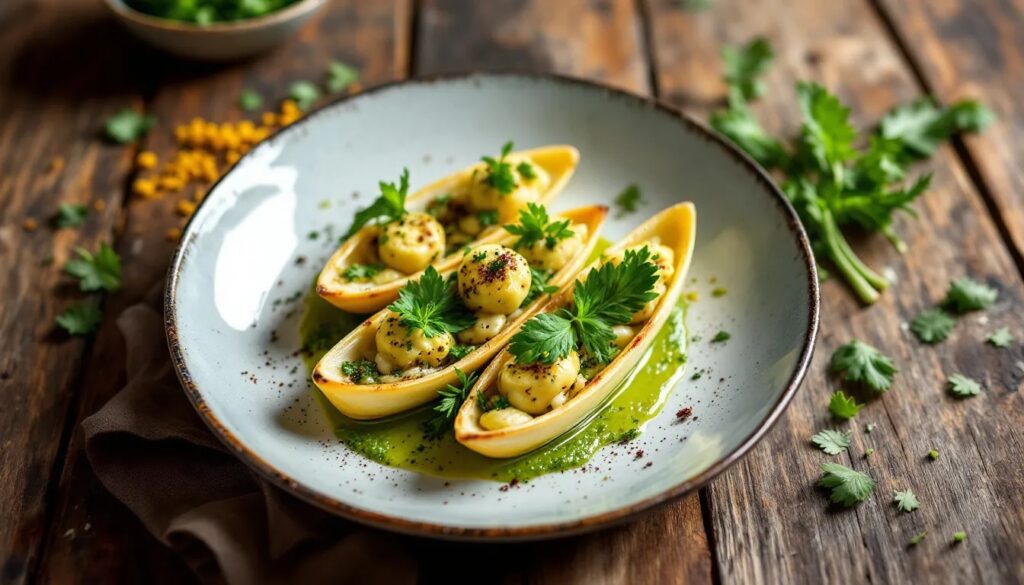
Step back in time to an era of refined appetites with this impeccably crisp appetizer, a refreshing take on a timeless classic. Emerald-green celery stalks are transformed into elegant vessels, generously cradling a vivacious homemade pesto crafted from fragrant fresh basil, sun-kissed pine nuts, and the bright tang of white-wine vinegar. The star of the show, Gruyère cheese, is not only folded into the creamy emulsion but also elegantly julienned, lending both a nutty depth and a sophisticated texture to each no-cook bite. A perfect harmony of freshness and rich flavor, ideal for a chic soirée or a delightful midday indulgence.
Ingredients
-
1
bunch
celery
separated into ribs -
1/2
pound
Gruyere cheese -
3
Tablespoons
pine nuts -
1/2
cup
fresh basil leaves
packed -
2
Tablespoons
white-wine vinegar -
1/3
cup
olive oil
Instructions
-
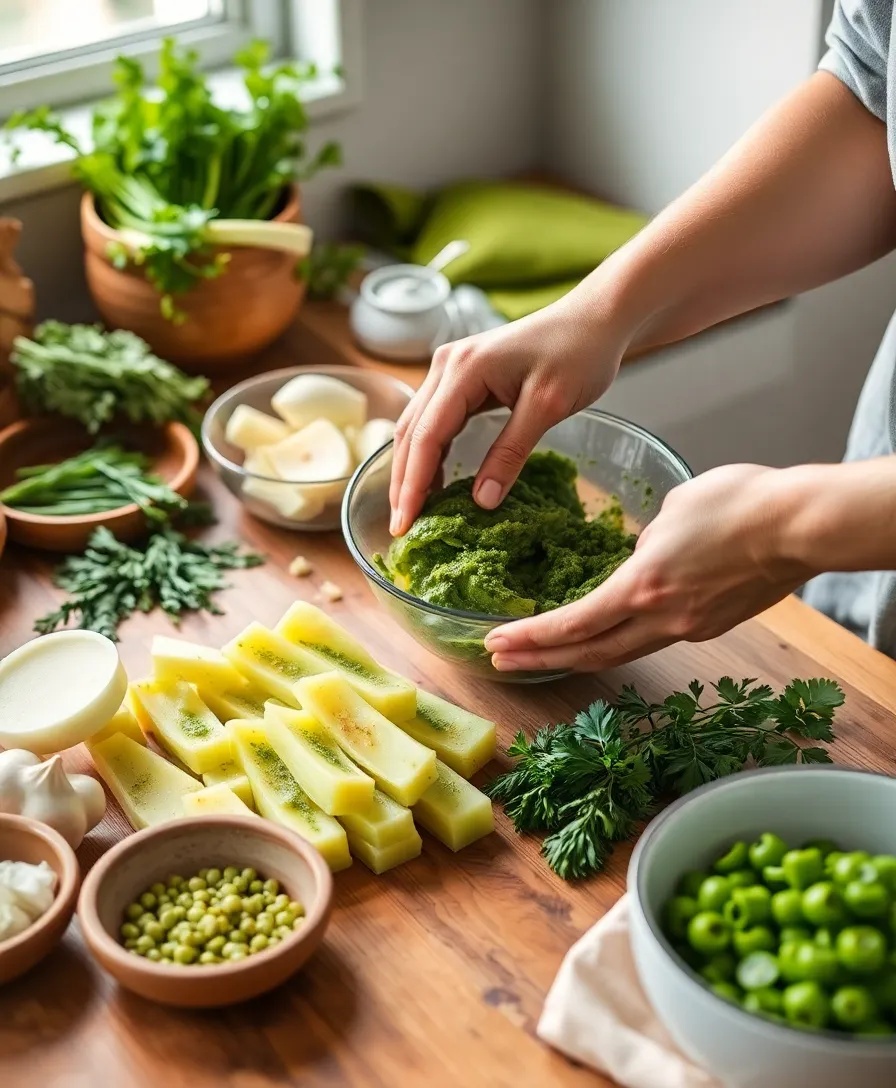
Begin by preparing the Gruyère: precisely slice six ounces of the cheese into delicate one-inch julienne strips. Reserve these for later. With the remaining two ounces, finely grate the cheese.
-
Transfer the finely grated Gruyère and the pine nuts into the bowl of a food processor. Pulse the ingredients until they are thoroughly combined and possess a finely milled, uniform consistency.
-
Add the vibrant fresh basil leaves and the white-wine vinegar to the food processor. Continue to blend, periodically scraping down the sides of the bowl, until the mixture transforms into a rich, aromatic paste.
-
With the food processor motor continuously running, gradually introduce the olive oil in a slow, steady stream. Process until the pesto achieves a beautifully smooth, thick, and fully emulsified texture.
-
In a separate mixing bowl, gently fold the reserved julienned Gruyère into the prepared pesto, ensuring every piece is sumptuously coated. Artfully spoon this exquisite filling into your prepped celery boats, ready to present.
Recipe Notes
For the most satisfying textural experience, assemble these delightful boats just before serving to preserve the celery’s signature crispness. A subtle flourish of freshly cracked black pepper or a diminutive basil leaf can elevate the visual appeal. This elegant, no-fuss offering is a stellar choice for effortless entertaining or a sophisticated snack. Ensure your celery stalks are meticulously washed and thoroughly patted dry prior to filling to prevent any dilution of flavor.
Global Heritage Archive
Anthropological & Spice Migration Record
“This dish embodies a modern American culinary culture that innovatively combines classic European flavors and ingredients into approachable, often health-conscious, snack or appetizer formats, reflecting a playful adaptation of global traditions.”
🌿 Spice & Botanical Migration
Basil, the aromatic heart of this pesto, originated in India and Central Asia, journeying westward along ancient trade routes like the Spice Road to the Mediterranean, where it became integral to Italian cuisine. Pine nuts are indigenous to the Mediterranean basin, and olive oil’s cultivation spread across the region with ancient Greek and Roman civilizations, integrating these core ingredients into European culinary traditions long before their American reinterpretation.
🏺 Historical & Archaeological Record
The foundational technique of creating a pounded sauce, exemplified by pesto, traces its roots to ancient Roman cuisine with the condiment *moretum*, described in texts from the 1st century CE. While the basil-specific *Pesto alla Genovese* was documented in Liguria, Italy, in 1863, the concept of combining fresh herbs, nuts, and cheese into a vibrant paste is an ancient culinary practice.
💡 Little Known Facts
- The ‘celery boat’ format, most famously with peanut butter and raisins (‘ants on a log’), became a beloved American children’s snack in the mid-20th century, often associated with healthy eating trends.
- While ‘pesto’ traditionally refers to Pesto alla Genovese made with basil, pine nuts, garlic, Parmesan/Pecorino, and olive oil, culinary creativity has led to countless adaptations, making this Gruyere pesto a testament to the versatility and global influence of the original concept.
📸 Made This Heritage Recipe?
We would love to see how your dish turned out! Send a photo of your culinary creation to [email protected] to be featured in our community gallery.
Leave a review and rate this recipe below!
Curated Literature & Washington DC Downtown Calendar
The Culinary Alchemist: Modern Gastronomy & Flavor Pairing
By LDN Gastronomy Series
Artisanal technique, seasonal sourcing, and kitchen mastery.
Upcoming Downtown Happenings
Live acoustic sessions, gallery receptions, literary salons, and independent trade shows across Washington DC.
