
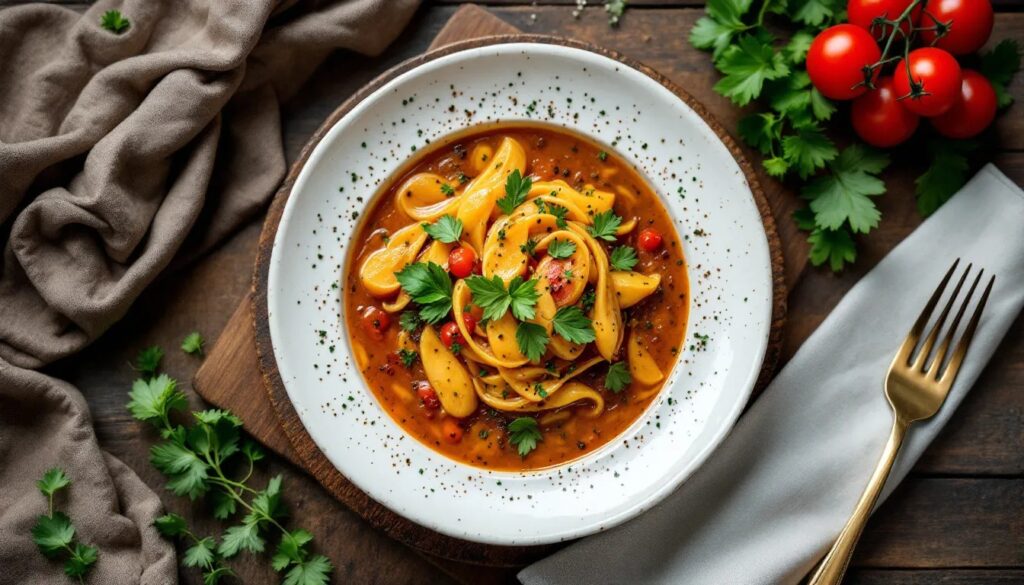
At its heart, Bouillabaisse began as a humble fisherman’s stew. After a long day at sea, the fishermen would return to shore with their catch, keeping the prized, marketable fish for sale and reserving the less desirable, bony, or ‘ugly’ rockfish – the scorpionfish, gurnard, and conger eel – to cook for themselves. Simmered in a cauldron with olive oil, a splash of wine, water, and the wild herbs that carpeted the Provençal hillsides, it was a practical, nourishing meal, a testament to ingenuity and respect for every part of the catch. The name itself, *bouillir* (to boil) and *abaisser* (to reduce heat), describes its essential two-step cooking process: a fierce, rolling boil to emulsify the flavors, followed by a gentle simmer to coax out the soul of the sea.
But Bouillabaisse, as we know it today, is a testament to more than just local tradition; it’s a living map of human migration and cultural exchange. The bedrock of olive oil, indigenous to the Mediterranean, speaks of millennia of cultivation. The aromatic bouquet of savory, thyme, and rosemary are the fragrant voices of the Provençal landscape, herbs that have seasoned dishes here since time immemorial. Yet, interwoven with these native elements are threads of global discovery. The golden hue of saffron, so vital to its color and subtle aroma, whispers tales of ancient trade routes stretching to Persia. Anise, with its faint licorice note, hints at influences from the Eastern Mediterranean. And the fiery kick of hot red peppers (found prominently in the accompanying rouille), a staple brought from the Americas by the Columbian Exchange, demonstrates how even the most regional dishes eagerly embraced new tastes, integrating them seamlessly into a seemingly unchanging culinary landscape.
Preparing an authentic Bouillabaisse is an act of culinary reverence. It begins with the stock, the very essence, crafted from robust fish bones, heads, and tougher fish, simmered patiently with onions, celery, and tomatoes until deeply flavorful. This concentrated stock is then strained, forming the golden-red elixir upon which the entire dish rests. Next, the delicate, tender-fleshed fish – sole, snapper, John Dory – are added, not all at once, but in stages, respecting their individual cooking times, ensuring each flake remains perfectly tender. The traditional service is a ritual: the broth first, ladled into bowls over garlic-rubbed croutons spread with pungent rouille (a fiery, saffron-infused garlic mayonnaise), followed by the fish, served separately.
For the home cook, embracing the spirit of Bouillabaisse means prioritizing fresh, quality ingredients. Don’t shy away from using fish heads and bones for the stock; they are the key to its unparalleled depth. Layer your fish additions, ensuring no delicate fillet is overcooked. And, if time allows, make your own rouille; its vibrant heat and creamy texture are indispensable. Bouillabaisse is more than just a meal; it’s an invitation to connect with history, geography, and the timeless artistry of a dish that truly tastes of the sea and the sun.
BOUILLABAISE
Transport your palate to the sun-kissed shores of the Mediterranean with this foundational Bouillabaisse blueprint. This venerable French classic, a symphony of oceanic flavors harmonized with fragrant Provençal herbs and a meticulously crafted fish essence, sets the stage for an extraordinary gastronomic experience. While this guide masterfully lays the groundwork for the core components – a robust stock, perfectly prepped fish, and the piquant, optional Rouille – it serves as the essential prelude to a truly unforgettable, grand seafood feast.
Ingredients
-
2
Tablespoons
olive oil
for Fish Stock -
2
Tablespoons
butter
for Fish Stock -
2
carrots
chopped, for Fish Stock -
1
Tablespoon each
fresh savory, thyme, and rosemary
OR ½ teaspoon each if dried, for Fish Stock -
3
parsley sprigs
for Fish Stock -
2
cups
dry white wine
for Fish Stock -
2
onions
chopped, for Fish Stock -
2
celery stalks
chopped, for Fish Stock -
1
bay leaf
for Fish Stock -
2
quarts
water
for Fish Stock -
2 or 3
pounds
raw sole or flounder bones and heads
for Fish Stock -
1
pound
eel
for The Fish -
2
pounds
strongly flavored fish
such as mackerel, sea bass, cod, haddock, for The Fish -
2
pounds
delicate, tender fleshed fish
such as sole, flounder, whiting, mullet or red snapper, for The Fish -
Unspecified
Salt
freshly ground, for Marinade -
Unspecified
black and white pepper
freshly ground, for Marinade -
1
Tablespoon
anise liqueur
for Marinade -
1
teaspoon
ground saffron
for Marinade -
½
teaspoon each
ground thyme, savory and rosemary
for Marinade -
¼
cup
olive oil
for Marinade -
Unspecified
Hot red peppers
if dried, soak in cold water for few hours; for La Rouille (Optional) -
6
cloves
garlic
for La Rouille (Optional) -
A little
olive oil
if you wish; for La Rouille (Optional) -
Unspecified
fish liver
cod liver would do well, or any fish liver you can find; for La Rouille (Optional) -
Few
pieces
potato
from the bouillabaisse (implies potatoes should be in the main stew, though not listed); for La Rouille (Optional) -
About 1
cup
bouillabaisse stock
or enough to give the rouille the consistency of heavy cream; for La Rouille (Optional)
Instructions
-
In a substantial enamelware pot, gently warm the olive oil before introducing the finely prepared carrots, onions, and celery. Incorporate the fresh savory, thyme, rosemary, fragrant parsley sprigs, and a solitary bay leaf, allowing them to soften delicately without acquiring any color.
-
Eschew any seasoning with salt or pepper during this preliminary phase.
-
Once the aromatic vegetables have achieved their tender state, introduce the precise blend of water and dry white wine to the pot.
-
Next, carefully place the raw sole or flounder fish bones and heads into the liquid. Bring the concoction to a vigorous boil, then maintain an elevated heat for precisely 20 minutes to extract maximum flavor.
-
Pass the entire contents through a fine-mesh sieve, ensuring a clear, pristine stock, which should then be set aside for later use.
-
Begin by expertly slicing the assorted fish – including the robust eel, other assertively flavored varieties, and delicate, tender-fleshed specimens – into uniform 2-inch thick medallions.
-
Carefully arrange the precisely cut fish pieces within a deep china dish, ready for their aromatic infusion.
-
In a separate, clean vessel, meticulously whisk together the freshly milled salt, both black and white pepper, the intriguing anise liqueur, a whisper of ground saffron, and the aromatic ground thyme, savory, and rosemary. Gradually emulsify with the olive oil to forge a cohesive marinade.
-
Lavishly coat the prepared fish with this aromatic marinade, ensuring every surface is thoroughly enveloped. Transfer the dish to a cool environment for a minimum of one hour, gently turning the pieces periodically to promote even absorption.
-
Should you opt for dried hot red peppers, initiate their rehydration by submerging them in cold water several hours prior to commencing preparation.
-
In a robust mortar, vigorously pound together the rehydrated hot red peppers (if utilizing) and the six cloves of garlic until a homogeneous paste is achieved.
-
A small measure of olive oil may be incorporated into this fiery paste, if desired, to further enhance its texture and flavor.
-
Combine the delicate fish liver – ideally cod liver or any suitable alternative – with a few reserved pieces of cooked potato, mashing them together until smooth.
-
Gradually, with continuous whisking, incorporate approximately one cup of the reserved bouillabaisse stock, or sufficient liquid to achieve a rich, luxurious consistency akin to heavy cream.
-
For an impeccably smooth finish, strain the entire Rouille mixture through a fine sieve before serving.
Recipe Notes
This detailed preparatory guide for Bouillabaisse focuses exclusively on crafting its foundational elements: the pristine fish stock, the artfully marinated seafood, and the distinctive, optional Rouille accompaniment. It is important to note that the subsequent, crucial steps for assembling and cooking the complete Bouillabaisse stew – combining the prepared fish, stock, and other essential ingredients – are not elaborated upon herein. Culinary professionals and home chefs are advised to consult a comprehensive Bouillabaisse recipe for the final cooking protocol. The incidental reference to ‘potato from the bouillabaisse’ within the Rouille section suggests the inclusion of potatoes in the complete stew, a common practice, though they are not itemized among the primary fish components outlined in this specific preparation.
Global Heritage Archive
Anthropological & Spice Migration Record
“Provençal culinary culture is characterized by its reliance on fresh, local seafood, olive oil, and aromatic herbs, reflecting the sun-drenched landscape and maritime traditions.”
🌿 Spice & Botanical Migration
The spice profile of Bouillabaisse is a fascinating blend of indigenous Mediterranean flora and ingredients introduced through millennia of trade. Herbs like thyme, rosemary, savory, parsley, and bay leaf are all native to the Mediterranean basin, flourishing in its climate and forming the aromatic backbone of Provençal cuisine. Saffron, originating from Persia and the Middle East, arrived through ancient trade routes across the Silk Road, becoming a prized ingredient for its color and flavor. Anise, with roots in the Eastern Mediterranean, also traveled west, influencing regional liqueurs and dishes. Perhaps the most significant indicator of migration is the presence of hot red peppers (often in the accompanying rouille), a staple brought from the Americas via the Columbian Exchange, which quickly integrated into European culinary traditions, showcasing the dish’s historical connection to global exchange.
🏺 Historical & Archaeological Record
The concept of a rich fish stew, often prepared by coastal communities, dates back to antiquity. Archaeological evidence and written records from ancient Greece and Rome describe similar preparations. The Greek *kakavia* (a fish stew cooked over an open fire, often with seawater) and various Roman fish preparations found in texts like Apicius’s *De re coquinaria* represent some of the earliest documented precursors to dishes like Bouillabaisse, indicating a tradition of coastal fish cookery stretching back over two millennia in the Mediterranean.
💡 Little Known Facts
- The name “Bouillabaisse” comes from the Provençal words *bolhir* (to boil) and *abaissar* (to reduce heat, simmer), describing the two essential stages of its preparation: a furious boil, then a gentle simmer.
- Authentic Bouillabaisse from Marseille traditionally dictates the use of at least four specific types of fish, including scorpionfish (rascasse), gurnard, and conger eel, served separately from the broth with croutons and rouille.
📸 Made This Heritage Recipe?
We would love to see how your dish turned out! Send a photo of your culinary creation to [email protected] to be featured in our community gallery.
Leave a review and rate this recipe below!
Curated Literature & Washington DC Downtown Calendar
The Culinary Alchemist: Modern Gastronomy & Flavor Pairing
By LDN Gastronomy Series
Artisanal technique, seasonal sourcing, and kitchen mastery.
Upcoming Downtown Happenings
Live acoustic sessions, gallery receptions, literary salons, and independent trade shows across Washington DC.
