
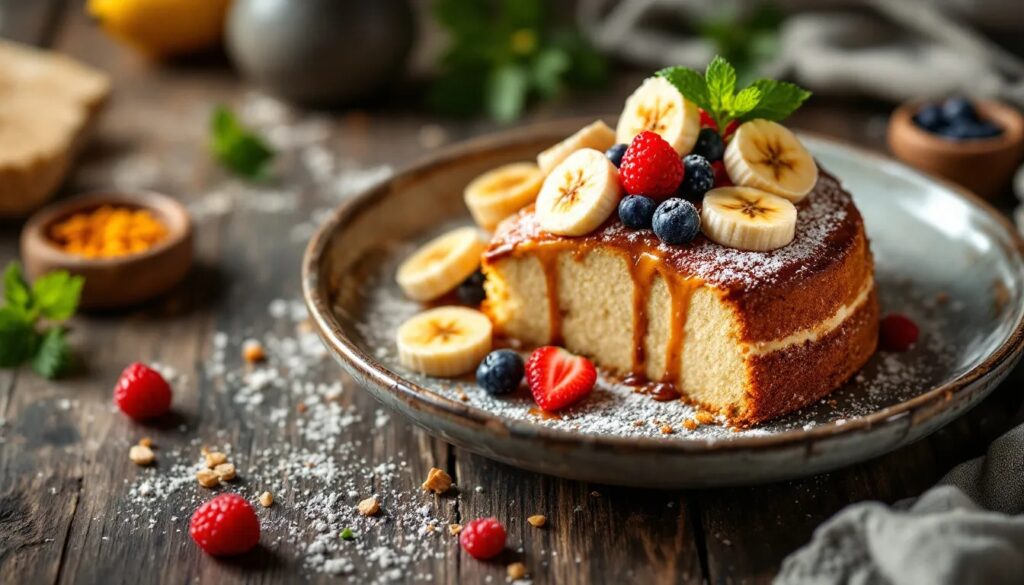
The genesis of this beloved cake lies, of course, with the iconic Banana Split itself, a confection born in 1904 in Latrobe, Pennsylvania, courtesy of soda jerk David Strickler. His simple yet inspired combination of bananas, ice cream, sauces, and toppings quickly became a nationwide sensation, a staple of soda fountains and diners. As the 20th century progressed, and American kitchens adapted to new lifestyles, the idea of translating favorite desserts into easier, often no-bake, forms took hold. This is where the Banana Split Cake truly finds its stride.
The post-World War II era saw a cultural shift towards convenience and efficiency in the home, a movement profoundly reflected in the culinary landscape. The rise of packaged goods and ready-made ingredients revolutionized home baking. The graham cracker, initially conceived as a health food by Sylvester Graham in the 19th century, found new life as the perfect crumbly, buttery crust for countless desserts. And then came Cool Whip in 1966, a whipped topping that liberated home cooks from the labor-intensive process of whipping cream, becoming a ubiquitous symbol of effortless elegance in American desserts. These ingredients, once disparate, coalesced into the Banana Split Cake, epitomizing the era’s embrace of delicious simplicity.
Beyond its American roots, the ingredients themselves tell a fascinating story of global migration. The banana, a tropical fruit central to this cake’s identity, originated in Southeast Asia, journeying across continents through ancient trade networks, eventually finding its way to the Americas via the Columbian Exchange. Pineapple, another key fruit, hails from South America, its thorny crown a symbol of hospitality that traveled the world, eventually becoming a widely cultivated and canned commodity. Even sugar, the sweet foundation of the cake, embarked on an epic voyage from New Guinea, through India and the Middle East, ultimately shaping global trade and colonial economies. These journeys highlight how diverse botanical origins converge to create uniquely American flavors.
Crafting this cake is an act of culinary comfort. Start with a firm graham cracker crust, a canvas for the layers to come. The butter, sugar, and pineapple mixture forms a rich, sweet foundation, followed by slices of fresh, ripe banana—the true heart of the dessert. A generous cloud of Cool Whip provides a light, airy counterpoint, while the crowning glory of chopped nuts and cherries adds texture and a vibrant pop of color. The secret to its success, as with many icebox cakes, lies in patient chilling. Allowing the cake to set for several hours, or even overnight, ensures the flavors meld beautifully and the layers firm up to perfection. For a contemporary twist, consider toasting the nuts for an intensified flavor, or drizzling with a touch of chocolate or caramel sauce before serving. The Banana Split Cake isn’t just a dessert; it’s a edible timeline, a comforting embrace, and a testament to the enduring power of American homestyle cooking.
BANANA SPLIT CAKE
Indulge in a nostalgic confection that harks back to the golden age of soda fountains, reimagined as a sophisticated, no-bake delight. This captivating creation features a rich, buttery graham cracker foundation, generously enrobing a silken, aerated cream filling. It’s then crowned with vibrant layers of sun-kissed pineapple and freshly sliced, ripe bananas, all beneath a cloud of ethereal whipped topping. A final flourish of crunchy, toasted nuts and jewel-toned maraschino cherries completes this opulent tribute to a beloved classic, promising a symphony of textures and flavors in every decadent slice.
Ingredients
-
1
stick
butter or margarine -
2
cups
graham cracker crumbs -
2
sticks
butter or margarine
for filling -
2
cups
sifted confectioner’s sugar -
1
cup
crushed pineapple
drained -
4 or 5
bananas
sliced -
1
large container
Cool Whip
8 oz -
1/2
cup
chopped nuts -
1/2
cup
chopped cherries
Instructions
-
In a generously sized bowl, thoroughly combine your softened butter or margarine with the finely crushed graham cracker crumbs.
-
Evenly press this prepared mixture firmly into the base of a 13x9x2-inch baking pan, establishing a compact and sturdy crust.
-
To prepare the luscious filling, vigorously cream together the remaining butter or margarine with the sifted confectioner’s sugar in a stand mixer for a full fifteen minutes, ensuring the mixture becomes light, fluffy, and voluminous.
-
With gentle care, spread this exquisite, aerated filling uniformly across the chilled graham cracker crust, creating an impeccable layer.
-
Proceed to meticulously arrange the subsequent layers over the filling in the following sequence: first, a stratum of well-drained crushed pineapple, followed by an artful display of thinly sliced bananas, and finally, a generous blanket of whipped topping.
-
Conclude by elegantly scattering the chopped nuts and vibrant chopped cherries across the uppermost layer, creating a visually appealing and texturally dynamic finish.
-
Allow this magnificent dessert to set and firm by refrigerating it overnight, ensuring optimal flavor development and structural integrity.
-
Maintain consistent refrigeration until the moment of serving to preserve its exquisite chilled texture and fresh appeal.
Recipe Notes
For the most sublime experience, ensure the cake is thoroughly chilled, allowing its distinct layers to meld and solidify beautifully before slicing. This enhances both the texture and the harmonious blend of flavors.
Global Heritage Archive
Anthropological & Spice Migration Record
“A quintessential American comfort dessert, often found at potlucks, family gatherings, and community events, reflecting a post-WWII embrace of convenience foods and nostalgic flavors.”
🌿 Spice & Botanical Migration
The primary botanical ingredients in this dish—banana, pineapple, and sugar—journeyed across vast distances to converge in this American dessert. Bananas originated in Southeast Asia, spreading via ancient trade routes to Africa and then, through the Columbian Exchange, to the Americas. Pineapples, indigenous to South America, also traveled globally via the Columbian Exchange, becoming a symbol of hospitality and later a major crop in places like Hawaii. Sugar, derived from sugarcane first cultivated in New Guinea, was disseminated through Indian and Arab trade routes to Europe, eventually fueling the transatlantic slave trade to supply the burgeoning demand in the Americas.
🏺 Historical & Archaeological Record
While the specific ‘Banana Split Cake’ as a no-bake, layered dessert is a mid-20th century American invention, the concept of ‘icebox cakes’ or ‘refrigerator cakes’ emerged in the United States in the early 20th century, popularized by companies like Nabisco promoting their wafer cookies for crusts. Older antecedents of layered desserts, such as English trifles and charlottes, date back to European culinary traditions as early as the 16th-18th centuries.
💡 Little Known Facts
- The original Banana Split, the dessert that inspired this cake, was invented in 1904 by David Strickler, a 23-year-old soda jerk at Tassel Pharmacy in Latrobe, Pennsylvania.
- Cool Whip, a key convenience ingredient in this no-bake cake, was introduced by General Foods in 1966 and quickly became a revolutionary staple in American kitchens, making elaborate desserts accessible to home cooks.
📸 Made This Heritage Recipe?
We would love to see how your dish turned out! Send a photo of your culinary creation to [email protected] to be featured in our community gallery.
Leave a review and rate this recipe below!
Curated Literature & Washington DC Downtown Calendar
The Culinary Alchemist: Modern Gastronomy & Flavor Pairing
By LDN Gastronomy Series
Artisanal technique, seasonal sourcing, and kitchen mastery.
Upcoming Downtown Happenings
Live acoustic sessions, gallery receptions, literary salons, and independent trade shows across Washington DC.
