
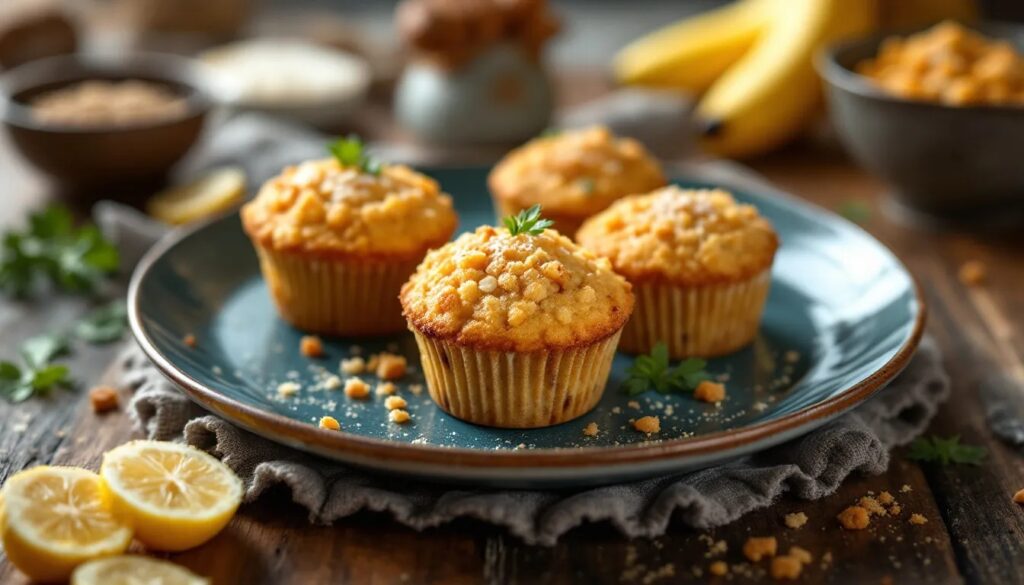
Our story begins not in an American kitchen, but in the lush jungles of Southeast Asia, the original home of the banana. From there, this versatile fruit embarked on an epic journey, carried by traders and colonizers across the Indian Ocean to Africa, and much later, by Portuguese and Spanish explorers to the Americas. By the late 19th and early 20th centuries, thanks to improved refrigeration and shipping, bananas became an affordable, common fruit in American markets. Yet, it was the economic hardships of the Great Depression in the 1930s that truly cemented the banana’s place in American baking lore. Frugal home cooks, loath to waste expensive, overripe fruit, discovered that these soft, sweet bananas were ideal for quick breads, lending unparalleled moisture and natural sweetness – a culinary philosophy of ‘waste not, want not’ that endures to this day.
Beyond the banana itself, the very structure of the muffin speaks volumes about American culinary evolution. Prior to the 19th century, most leavened baked goods relied on yeast. However, the advent of chemical leaveners – baking soda and then baking powder – revolutionized home baking. These innovations made ‘quick breads’ possible, allowing home cooks to whip up a batch of muffins or loaves in a fraction of the time, without the lengthy proofing required for yeast. This convenience perfectly aligned with the burgeoning pace of American life, making muffins a staple of domestic comfort and efficiency.
The crumb topping, or streusel, adds another layer to this dish’s narrative. While often associated with German or Central European baking, where it has roots stretching back centuries, the streusel found a new home and identity in the American kitchen. Its delightful textural contrast – a buttery, sweet crunch atop a soft muffin – became a beloved characteristic, further enriching the sensory experience. And then there’s cinnamon, a spice that itself journeyed across continents and oceans from its origins in Sri Lanka and Southeast Asia, becoming a cherished flavor in Western desserts, its warm, aromatic embrace completing the muffin’s comforting profile.
Crafting these muffins is an act of connecting with this rich history. For the perfect bake, remember a few key tips: use very ripe bananas (the spottier, the better) for maximum sweetness and moisture. Avoid overmixing the batter; a few lumps are perfectly acceptable and ensure a tender crumb. And don’t skimp on the crumb topping – it’s an essential part of the experience. The Banana Crumb Muffin is more than just a recipe; it’s a living artifact, a delicious document of global trade, human ingenuity, and the enduring power of food to tell stories.
BANANA CRUMB MUFFINS
Awaken your senses with a culinary embrace that whispers of simpler times and cherished gatherings. These Banana Crumb Muffins transcend the ordinary, offering a symphony of textures and flavors. Each bite unveils a supremely moist, golden crumb, infused with the sun-kissed sweetness of perfectly ripened bananas. Crowned with a lavish, buttery streusel that melts delightfully on the palate, these muffins are more than just a pastry; they’re an invitation to slow down, savor, and create new memories. Ideal for a leisurely morning, an elegant brunch spread, or a comforting afternoon indulgence, they promise a moment of pure bliss.
Ingredients
-
1½
cups
all-purpose flour
None -
1
tsp
baking powder
None -
3
large
ripe bananas
mashed -
1
None
egg
lightly beaten -
1/3
cup
butter or margarine
melted -
1
tsp
baking soda
None -
1/2
tsp
salt
None -
¾
cup
sugar
None -
1/3
cup
packed brown sugar
for topping -
1/8
tsp
ground cinnamon
for topping -
1
tbsp
all-purpose flour
for topping -
1
tbsp
butter or margarine
for topping
Instructions
-
Into a generously sized mixing bowl, sift or whisk together the all-purpose flour, baking powder, baking soda, and salt, ensuring even distribution.
-
In a distinct, separate vessel, gently incorporate the mashed ripe bananas, granulated sugar, the lightly whisked egg, and the luscious melted butter or margarine, stirring until thoroughly combined.
-
Delicately fold the banana-infused liquid mixture into the dry flour blend. Mix only until the ingredients are just moistened, taking extreme care not to overmix, which can lead to a tough texture.
-
Distribute the batter evenly among greased or paper-lined muffin cavities, filling each approximately three-quarters of the way to the top.
-
To prepare the exquisite crumb topping, meld together the packed brown sugar, fragrant ground cinnamon, and all-purpose flour in a small bowl. Introduce the chilled butter or margarine, cutting it in with a pastry blender or your fingertips until a delightful, coarse crumble forms.
-
Lavishly scatter the prepared streusel mixture over the surface of each unbaked muffin.
-
Transfer to a preheated oven set at 375 degrees Fahrenheit and bake for 18 to 20 minutes, or until a wooden skewer inserted into the heart of a muffin emerges without clinging crumbs.
-
Allow the muffins to settle in their pan for a full 10 minutes before gently transferring them to a wire cooling rack to achieve complete coolness.
Recipe Notes
From our culinary archives, this exceptional recipe captures the very essence of heirloom baking. It’s a testament to the enduring appeal of simple, high-quality ingredients transformed into an unforgettable indulgence. We encourage you to make it your own, a new tradition for your family and friends to cherish.
Global Heritage Archive
Anthropological & Spice Migration Record
“A culinary culture characterized by resourceful home baking, often adapting European traditions with New World ingredients and emphasizing convenience, comfort, and the utilization of overripe produce.”
🌿 Spice & Botanical Migration
Cinnamon, originating from the bark of trees in Sri Lanka (Ceylon cinnamon) and Southeast Asia (Cassia cinnamon), traveled along ancient spice routes, reaching the Middle East and Europe millennia ago. Its warm, sweet notes became a staple in Western baking, harmonizing perfectly with fruits like apples and bananas, eventually becoming a quintessential flavor in American desserts and quick breads like these muffins.
🏺 Historical & Archaeological Record
While the concept of baked goods combining fruit, flour, and fat is ancient and globally pervasive, the specific genre of chemically-leavened ‘quick breads’ – a category muffins fall into – truly flourished in 19th-century America. The oldest written recipes clearly demonstrating the use of chemical leaveners like baking soda and baking powder for leavening a sweet, fruit-laced quick bread akin to a muffin typically appear in American cookbooks from the mid-to-late 19th century, with specific ‘banana bread’ or ‘banana muffin’ recipes becoming common in the 1930s, often attributed to the economic necessity of the Great Depression to utilize overripe fruit.
💡 Little Known Facts
- The widespread popularity of banana bread and muffins in American households is often attributed to the Great Depression of the 1930s, as a resourceful way to use up expensive overripe bananas that would otherwise be discarded.
- The modern ‘muffin’ (a quick bread leavened with baking powder or soda) developed distinctively in the United States during the 19th century, differentiating itself from the flatter, yeast-leavened English muffin.
📸 Made This Heritage Recipe?
We would love to see how your dish turned out! Send a photo of your culinary creation to [email protected] to be featured in our community gallery.
Leave a review and rate this recipe below!
Curated Literature & Washington DC Downtown Calendar
The Culinary Alchemist: Modern Gastronomy & Flavor Pairing
By LDN Gastronomy Series
Artisanal technique, seasonal sourcing, and kitchen mastery.
Upcoming Downtown Happenings
Live acoustic sessions, gallery receptions, literary salons, and independent trade shows across Washington DC.
