
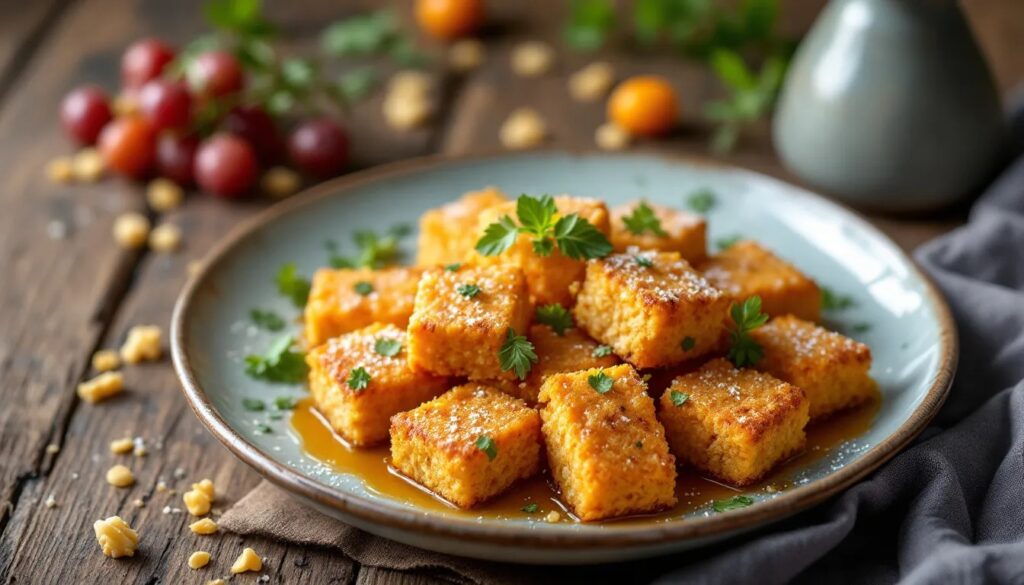
The journey of the scone itself is rooted in the misty, rugged landscapes of Scotland. While the modern scone, light and fluffy thanks to chemical leavening, is a relatively recent innovation of the Victorian era, its ancestors were far older. Early ‘scones’ were often closer to flat, round griddle-baked breads known as bannocks, made with oats or barley and cooked over an open fire. These humble breads nourished communities for generations, evolving slowly until the mid-19th century, when the widespread availability of baking powder revolutionized home baking, transforming the dense bannock into the tender, quick-bake scone we adore today.
But the story of these Apricot Scones is also a tale of distant lands and intrepid traders. Take the apricots, for instance. These jewel-toned fruits began their remarkable journey in the high mountains of Central Asia, specifically around the Tian Shan range bordering China and Kyrgyzstan. From there, they traveled westward along the ancient Silk Road, cherished for their sweetness and their ability to be dried and preserved, making them invaluable for long journeys. They eventually reached Persia, the Roman Empire, and then spread throughout the Mediterranean before becoming a beloved ingredient across Europe. Each dried apricot in your scone carries the echo of caravans, bustling bazaars, and countless hands that cultivated and transported them.
Similarly, the bright, aromatic lemon peel, lending its characteristic zest, embarked on its own odyssey. Native to the foothills of the Himalayas in Northeast India, lemons were introduced to the Middle East by Arab traders and subsequently brought to Southern Europe during the early Middle Ages. Its pungent oil and refreshing acidity quickly found a place in both sweet and savory dishes, its peel becoming a favored addition to light pastries and cakes.
Crafting these scones is an exercise in gentle precision. The secret to their tender crumb lies in minimal handling and keeping ingredients cold. Gently rub the butter into the flour, stir in the sugar, baking powder, salt, and rehydrated dried apricots. Introduce the cream and melted butter with a light hand, just until a shaggy dough forms. Overworking the dough develops gluten, leading to tough scones. Pat or lightly roll the dough and use a sharp cutter, pressing straight down without twisting, which can seal the edges and inhibit rise. A quick brush with milk or an egg wash ensures a golden, inviting crust. Serve them warm, straight from the oven, and savor not just a delightful pastry, but a bite of history, a testament to culinary ingenuity and the interconnectedness of our global pantry. These Apricot Scones are more than a recipe; they are a narrative on a plate, linking the home kitchen to ancient trade routes and distant origins.
APRICOT SCONES
Unveil a moment of pure culinary delight with these exquisite Apricot Scones, a testament to comforting traditions re-imagined for the modern palate. Each tender crumb cradles the sun-kissed sweetness of ripe apricots, beautifully contrasted by the vibrant, fragrant whisper of fresh lemon zest. Lavishly brushed with melted butter and crowned with a delicate sugar glaze, these golden-hued pastries offer a sophisticated embrace, perfect alongside a steaming cup of artisan coffee or a fragrant afternoon tea.
Ingredients
-
2
cups
all-purpose flour -
1/4 cup + 2 tbsp
sugar -
1 tbsp + 1 tsp
lemon peel
freshly grated -
1
tbsp
baking powder -
1/2
tsp
salt -
3/4
cups
dried apricots
chopped, 4 1/2 oz -
1/2
cup
whipping cream -
3
tbsp
melted butter
or Imperial margarine
Instructions
-
In a generously sized mixing bowl, meticulously whisk together the flour, a quarter cup of granulated sugar, the baking powder, and a pinch of salt, ensuring an even distribution.
-
Gently fold in the finely chopped apricots and the fragrant tablespoon of lemon zest until evenly dispersed throughout the dry mixture.
-
Introduce the whipping cream, mixing with a gentle hand until the ingredients just coalesce into a soft, shaggy dough. Avoid overworking.
-
Transfer the nascent dough onto a lightly dusted work surface. With delicate movements, knead it briefly—just enough to bring it together into a cohesive mass.
-
Carefully pat the dough into a perfectly circular disc, approximately ten inches in diameter and half an inch in uniform thickness.
-
In a separate, smaller receptacle, combine the remaining two tablespoons of granulated sugar with the final teaspoon of vibrant lemon zest, stirring to meld.
-
With a pastry brush, generously apply the melted butter across the entire surface of the dough disc. Subsequently, evenly sprinkle the prepared sugar and lemon zest mixture over the buttered top, creating a radiant finish.
-
Using a sharp knife or a dough cutter, meticulously slice the round into twelve (or more, depending on desired size) uniform wedges.
-
Transfer the wedges to a preheated oven at 425°F (220°C) and bake for approximately fifteen minutes, or until they achieve a delicate, light golden-brown perfection.
Recipe Notes
A culinary gem, this recipe is shared with us from the esteemed collection of Marilyn Long, whose dedication to classic baking is evident in every perfectly crafted scone.
Global Heritage Archive
Anthropological & Spice Migration Record
“A cornerstone of British afternoon tea, representing a tradition of hospitality, comfort, and simple elegance.”
🌿 Spice & Botanical Migration
The dried apricots in this recipe trace a remarkable journey from their botanical origins in Central Asia (specifically the Tian Shan mountains) westward along the ancient Silk Road, reaching Persia, the Mediterranean, and eventually Europe. The lemon peel, providing its characteristic zest, hails from Northeast India, spreading through the Middle East via Arab trade routes before becoming a staple in European cuisine, both ingredients illustrating centuries of global culinary exchange.
🏺 Historical & Archaeological Record
The direct ancestors of scones, such as simple griddle breads and bannocks, have roots in medieval Scotland, with literary references to ‘scones’ appearing as early as the 16th century. However, the light, fluffy scone we recognize today, relying on chemical leavening, largely developed after the mid-19th century with the widespread availability of baking powder.
💡 Little Known Facts
- The word ‘scone’ is believed to originate from either the Dutch ‘schoonbrood’ (beautiful bread) or the Middle Scots ‘sgonn’ (a shapeless mass of bread), or perhaps from the ancient Scottish coronation Stone of Scone.
- Early scones were traditionally made with oats, cooked on a griddle, and were much larger and denser, more akin to a bannock, before the advent of chemical leaveners allowed for lighter, quicker-to-bake versions.
📸 Made This Heritage Recipe?
We would love to see how your dish turned out! Send a photo of your culinary creation to [email protected] to be featured in our community gallery.
Leave a review and rate this recipe below!
Curated Literature & Washington DC Downtown Calendar
The Culinary Alchemist: Modern Gastronomy & Flavor Pairing
By LDN Gastronomy Series
Artisanal technique, seasonal sourcing, and kitchen mastery.
Upcoming Downtown Happenings
Live acoustic sessions, gallery receptions, literary salons, and independent trade shows across Washington DC.
