
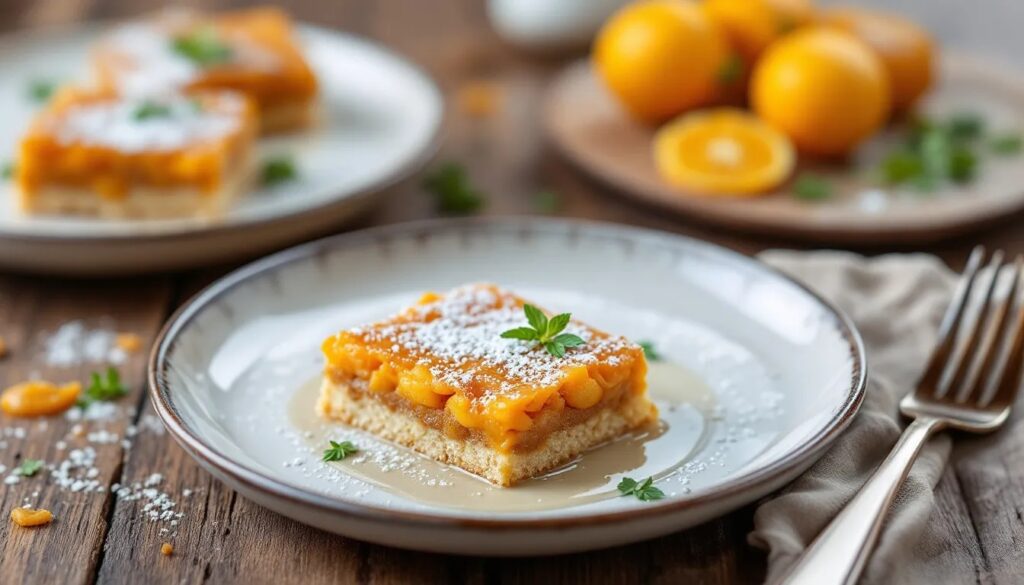
The humble apricot bar, with its golden crust, chewy fruit filling, and crunchy nut topping, is more than just a sweet treat; it’s a delectable chronicle of culinary innovation, global trade, and the heartwarming evolution of American home baking. This inviting dessert, often found nestled on potluck tables or packed into school lunchboxes, embodies a uniquely American spirit of practicality and communal joy, yet its ingredients whisper tales of journeys spanning continents and millennia.
At its heart, the apricot bar owes its existence to the apricot itself, a fruit whose odyssey began in the sun-drenched valleys of Central Asia, likely China. Carried westward along the ancient Silk Road, apricots arrived in the Mediterranean and eventually Europe, cherished for their sweetness and versatility. Drying them, an ancient preservation technique, allowed their vibrant flavor to endure, making them a pantry staple capable of crossing vast distances and seasons. When these fruits made their way to the New World, they seamlessly integrated into emerging culinary traditions, particularly in baking, where their tart-sweet profile offered a delightful contrast to rich doughs.
The choice of nuts—walnuts or pecans—further illuminates this dish’s diverse heritage. Walnuts, a venerable nut, trace their lineage back to ancient Persia, spreading through Roman trade routes across Europe and beyond. Pecans, however, are distinctively American, native to the fertile river valleys of North America, especially the Mississippi region. Their inclusion here speaks to a regional pride and the inventive embrace of indigenous ingredients, particularly prominent in Southern American baking. This transatlantic confluence of nuts, one ancient and global, the other native and regional, grounds the apricot bar firmly in a narrative of culinary fusion.
The very structure of the apricot bar, a sturdy, sliceable sheet, alongside key leavening agents like baking powder and fats such as shortening, heralds the dawn of modern American baking. Baking powder, a mid-19th-century marvel, democratized baking, allowing quick breads and cakes to rise without the lengthy fermentation of yeast. Shortening, particularly hydrogenated vegetable shortening introduced in the early 20th century, offered a shelf-stable, economical alternative to butter and lard, revolutionizing texture and extending the reach of home baking. Brown sugar, with its molasses notes, and vanilla, a flavor powerhouse from Mesoamerica, further enrich the narrative, connecting this simple bar to the vast networks of colonial trade and the Columbian Exchange that reshaped global palates.
Preparing apricot bars is an act of comforting domesticity, a testament to the enduring appeal of homemade treats. The beauty lies in their forgiving nature and the straightforward method: a crumbly base and topping sandwiching a luscious apricot-nut filling. For the best results, ensure your dried apricots are plump; a quick soak in warm water can revive them if they feel too firm. Don’t overbake; the bars should be golden at the edges but still slightly soft in the center, firming up as they cool. Patience is key—allowing them to cool completely before slicing ensures clean, perfect squares that hold their shape.
Ultimately, the apricot bar is a delicious microcosm of history. It’s a testament to human ingenuity in food preservation, the expansive reach of trade routes, and the creative adaptation of ingredients across cultures. Each bite offers a taste of global history, folded into a comforting American classic, proving that sometimes, the simplest desserts tell the most profound stories.
APRICOT BARS
Transport your palate to a realm of comforting elegance with these exquisite Apricot Bars. Each golden square is a testament to timeless indulgence, featuring luscious, sun-kissed apricot pieces nestled within a rich, velvety crumb base that simply melts in your mouth. Crowned with a delicate snowfall of confectioners’ sugar, these bars offer a symphony of textures and a sun-drenched sweetness, promising a moment of pure, unadulterated bliss with every bite. An elevated classic, perfect for any discerning occasion.
Ingredients
-
2/3
cup
shortening
None -
3
large
eggs
None -
1
teaspoon
baking powder
None -
2
cups
flour
None -
1/4
cup
apricots
cut size of raisins -
1/2
cup
chopped walnuts or pecans
None -
2 1/2
cups
brown sugar
None -
1
teaspoon
vanilla
None -
1 1/2
teaspoon
salt
None
Instructions
-
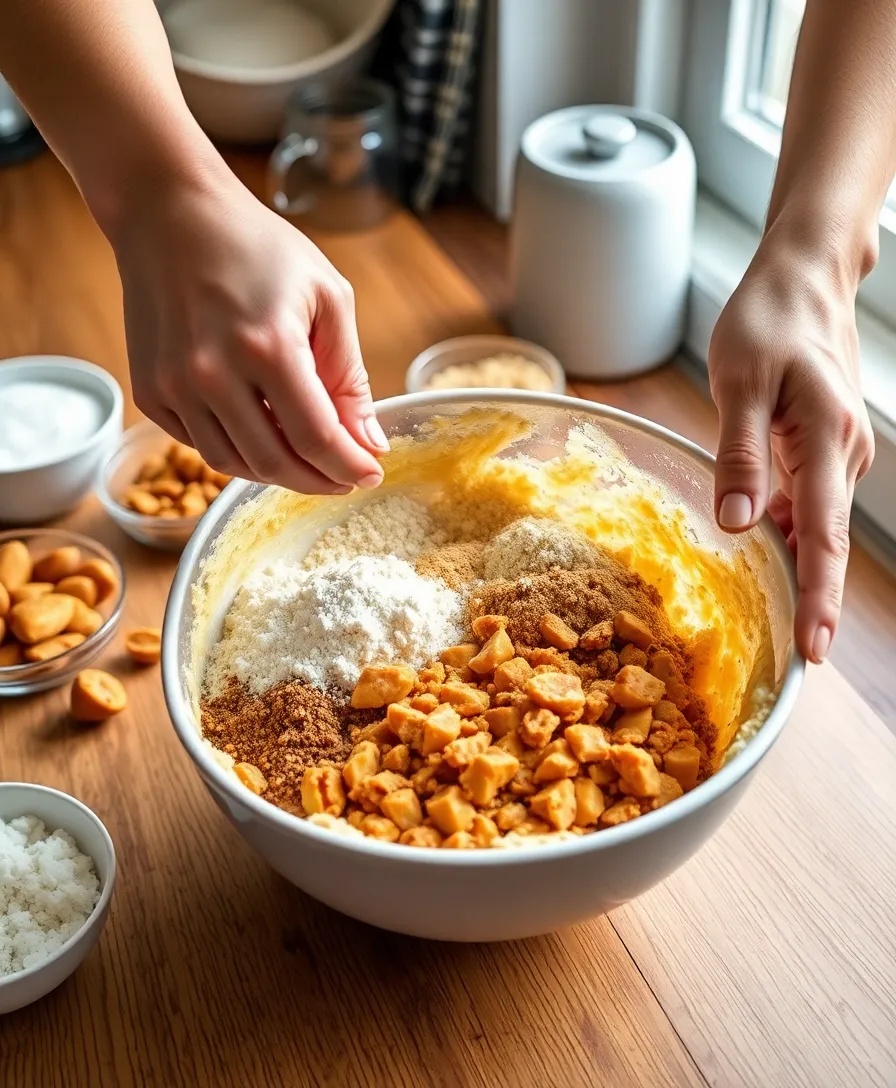
In a spacious mixing bowl, meticulously combine the shortening and brown sugar, creaming them together until the mixture achieves a light, fluffy, and homogenous consistency.
-
Introduce the eggs one at a time, incorporating each thoroughly into the mixture. After each addition, continue to beat vigorously for two to three minutes, ensuring complete emulsification and aeration.
-
Gently fold in the vanilla extract. Subsequently, gradually incorporate the sifted flour, baking powder, and salt into the wet ingredients, mixing carefully until a silken, uniform batter forms, taking care not to overmix.
-
Delicately fold in the chopped walnuts or pecans, distributing them evenly throughout the batter to ensure a delightful crunch in every bite.
-
Prepare a 10×14 inch baking mold by thoroughly greasing and lightly flouring its interior. Transfer the prepared batter into this mold, spreading it meticulously to create an even layer.
-
Preheat your oven to 400°F (200°C). Carefully place the mold into the preheated oven and bake for approximately 20 minutes, or until the center is delicately puffed, the top acquires a beautiful golden-brown hue, and the edges appear set.
-
Allow the baked confection to cool completely within the mold on a wire rack. Once fully cooled, elegantly slice into uniform bars and, just before presentation, generously dust or gently roll each piece in confectioners’ sugar for a pristine finish.
Recipe Notes
For an elevated sensory experience, these Apricot Bars are best enjoyed at room temperature, allowing their delicate flavors to fully bloom. Consider a light sprinkle of finely grated orange zest over the confectioners’ sugar just before serving to introduce a bright, aromatic counterpoint. Should you wish to store them, an airtight container will preserve their exquisite tenderness for up to three days, though their allure is often too strong to last that long.
Global Heritage Archive
Anthropological & Spice Migration Record
“A vibrant home-baking culture that values practicality, community sharing, and the innovative use of both ancient and modern ingredients to create comforting, transportable desserts.”
🌿 Spice & Botanical Migration
Vanilla, originating from Mesoamerica (modern-day Mexico), was first introduced to Europe by Spanish conquistadors in the 16th century. Its global spread and widespread use in baking, as seen in Apricot Bars, exemplify the culinary impact of the Columbian Exchange, integrating New World flavors into global gastronomy.
🏺 Historical & Archaeological Record
The oldest archaeological evidence for baked goods incorporating fruits and nuts can be traced back to ancient Mesopotamia and Egypt, with records suggesting early forms of sweet breads and cakes around 1500 BCE. While not ‘bars’ or using chemical leavening, these demonstrate the long human tradition of combining grains, sweeteners, and nutritious additions in baked forms. The specific ‘bar’ format with chemical leavening emerged in the late 19th/early 20th century in American cookbooks.
💡 Little Known Facts
- The “bar” dessert format, easy to cut and serve, gained widespread popularity in American home baking during the early 20th century, coinciding with the rise of general-purpose cookbooks and women’s magazines promoting convenient recipes.
- Pecans, a key ingredient choice, are the only major tree nut native to North America, cultivated extensively in the Southern United States, cementing this dessert’s regional American ties when pecans are chosen over walnuts.
📸 Made This Heritage Recipe?
We would love to see how your dish turned out! Send a photo of your culinary creation to [email protected] to be featured in our community gallery.
Leave a review and rate this recipe below!
Curated Literature & Washington DC Downtown Calendar
The Culinary Alchemist: Modern Gastronomy & Flavor Pairing
By LDN Gastronomy Series
Artisanal technique, seasonal sourcing, and kitchen mastery.
Upcoming Downtown Happenings
Live acoustic sessions, gallery receptions, literary salons, and independent trade shows across Washington DC.
