
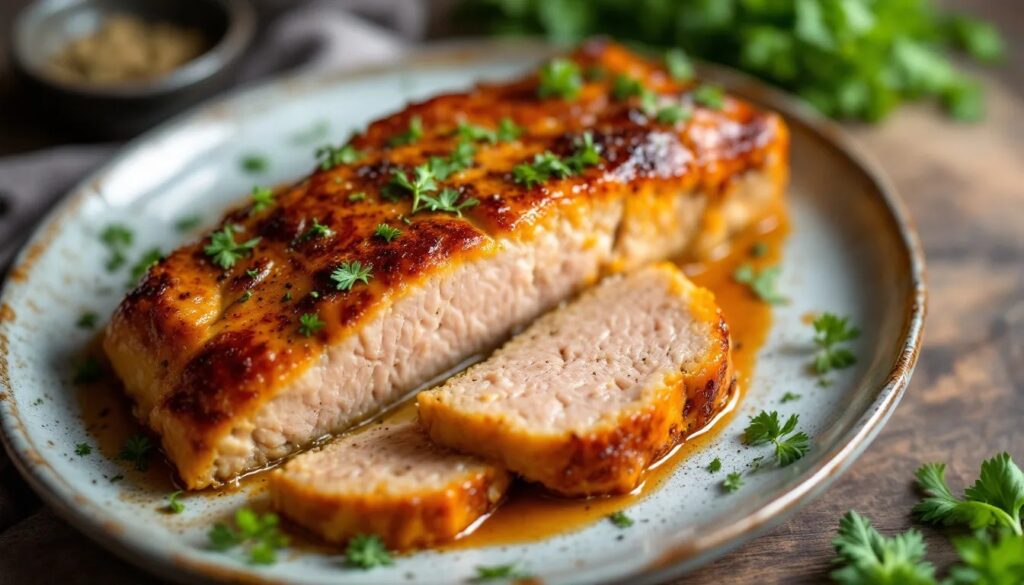

The Tuna Fish Loaf: a dish whose very name evokes a certain mid-century culinary austerity, a testament to resourcefulness born from necessity, yet enduring in its humble comfort. For the modern palate, it might seem a relic, perhaps even an anomaly, but within its unassuming framework lies a rich tapestry of history, global migration, and the unwavering spirit of the American kitchen.
Our story begins not with the tuna itself, but with its vessel: the can. Before the turn of the 20th century, tuna was a regional delicacy, primarily enjoyed by coastal communities. However, following the overfishing of sardines and a subsequent scarcity of salmon after World War I, canneries in California turned their attention to the abundant albacore tuna. Marketed ingeniously as ‘chicken of the sea’ to appeal to landlocked consumers, canned tuna rapidly ascended to staple status. It was affordable, shelf-stable, and versatile, perfectly poised for an era that prized practicality above all else.
The advent of the Great Depression and World War II cemented the tuna fish loaf’s place in American culinary lore. During these lean times, every ingredient counted. Meat, especially premium cuts, was either scarce or prohibitively expensive. The genius of the loaf lay in its ability to stretch a modest amount of protein — in this case, a humble can of tuna — by combining it with economical fillers like stale bread, eggs, and milk. These ingredients, staples in virtually every household, transformed a simple can of fish into a hearty, family-sized meal. Community cookbooks from this era are rife with variations, each a small act of culinary defiance against hardship, a promise of warmth and sustenance.
Beyond its American context, the ingredients themselves tell a global tale of migration. Tuna, a migratory pelagic fish, symbolizes vast ocean currents and the globalized fishing industries that emerged to harness them. Eggs, a universal binding agent, represent millennia of poultry domestication across continents. Wheat, the basis for bread, traces its origins to the Fertile Crescent, spreading across the globe through successive agricultural revolutions and trade routes. Milk, fundamental to dairy cultures, similarly follows the migration of pastoralists and their herds. Even the salt and pepper, seemingly minor players, are profound indicators: salt, a necessity for life, has been mined and traded since prehistory, defining ancient economies; black pepper, originating in India, powered the legendary Spice Routes, connecting distant civilizations and shaping the course of global commerce.
Traditional preparation is elegantly simple: flake the drained tuna, combine it with crumbled bread (often soaked in milk to soften), beaten eggs, and seasonings. Some recipes call for finely diced onion or celery for added texture and flavor. The mixture is then gently pressed into a loaf pan and baked until golden and set. The key is not to overmix, which can make the loaf tough, and to ensure the tuna is thoroughly drained to prevent a watery result. Often served with a creamy white sauce or a simple tomato sauce, it transforms into a complete and comforting meal. Today, the tuna fish loaf might not grace the covers of glossy food magazines, but it remains a cherished emblem of resilience, ingenuity, and the enduring power of a humble dish to nourish both body and soul.
TUNA FISH LOAF
Journey back to a time when culinary resourcefulness yielded profoundly satisfying results with our elevated Tuna Loaf. This timeless creation, a staple of classic American kitchens, transforms humble ingredients into an unexpectedly elegant centerpiece. Flaky, savory tuna is artfully blended with a delicate binder—either freshly prepared mashed potato for silken richness or milk-infused artisanal bread for tender crumb—then bound with farm-fresh eggs and seasoned to perfection. Baked to a glorious golden hue, each slice delivers a harmonious blend of textures and tastes, promising a comforting yet refined experience. Best enjoyed with a velvety, house-made sauce, it’s a testament to the enduring charm of understated gourmet.
Ingredients
-
1
large can
tuna
500 grs, with juice -
4
None
eggs
yolks and whites separated -
2
slices
bread
or 1 mashed potato (choice) -
1
glass
milk
None -
None
None
Salt & pepper
to taste
Instructions
-
Should your preference lean towards bread, immerse the slices completely in the milk until softened. If opting for the mashed potato variation, ensure your potatoes are already prepared to a smooth, creamy consistency.
-
Gently transfer the contents of the tuna can, inclusive of its natural juices, into a generously sized mixing bowl.
-
Employing the tines of a fork, meticulously flake the tuna into smaller, more manageable segments.
-
Incorporate the gently whisked egg yolks, along with the measured salt and freshly ground pepper, into the flaked tuna, stirring to combine.
-
For the bread-based version, thoroughly mash the milk-soaked bread and introduce it to the tuna blend. Alternatively, if utilizing mashed potato, fold the prepared potato directly into the mixture.
-
Carefully fold the stiffly whipped egg whites into the combined ingredients, ensuring not to deflate their airy volume as you gently integrate them.
-
Spoon the meticulously prepared mixture into a baking mold that has been thoroughly greased to prevent sticking.
-
Bake in a preheated oven at 350°F (175°C) for approximately 30 minutes, or until the loaf achieves a beautiful golden-brown exterior and is firm to the touch.
-
Present this elegant loaf alongside a velvety, complementary white sauce for an enhanced dining experience.
Recipe Notes
To truly elevate this comforting classic, a thoughtfully prepared white sauce is essential. A classic Béchamel, infused with a hint of nutmeg, or a light Mornay sauce, would provide a sublime counterpoint to the savory loaf. Consider garnishing with fresh dill or chives for an added layer of freshness and visual appeal.
Global Heritage Archive
Anthropological & Spice Migration Record
“A dish emblematic of resourceful, budget-conscious American home cooking, often found in community cookbooks and family meals from the early to mid-20th century.”
🌿 Spice & Botanical Migration
The primary spice, black pepper (*Piper nigrum*), originated on the Malabar Coast of India. Its global journey began centuries ago, becoming a cornerstone of the ancient Spice Routes that connected the Indian subcontinent to the Middle East, Europe, and eventually the Americas through colonial trade and exploration, making it a ubiquitous seasoning in Western cuisine. Salt, while not a spice, is an essential mineral sourced globally, its trade routes dating back to prehistory, foundational to both human diet and food preservation.
🏺 Historical & Archaeological Record
The oldest conceptual ancestor to a ‘loaf’ or ‘patty’ involving ground ingredients bound together and baked can be traced to ancient Roman cuisine. Recipes in Apicius’s *De re culinaria* (4th-5th century CE) describe preparing minced meats with various binders and spices, foreshadowing the structural technique used in modern loaves.
💡 Little Known Facts
- Canned tuna rose to prominence in the United States after World War I, primarily marketed as ‘chicken of the sea’ following overfishing of sardines and rising salmon prices.
- Loaf dishes, including this tuna variant, became kitchen staples during the Great Depression and World War II, serving as an economical way to extend protein sources with readily available fillers like bread and milk.
📸 Made This Heritage Recipe?
We would love to see how your dish turned out! Send a photo of your culinary creation to [email protected] to be featured in our community gallery.
Leave a review and rate this recipe below!
Curated Literature & Washington DC Downtown Calendar
The Culinary Alchemist: Modern Gastronomy & Flavor Pairing
By LDN Gastronomy Series
Artisanal technique, seasonal sourcing, and kitchen mastery.
Upcoming Downtown Happenings
Live acoustic sessions, gallery receptions, literary salons, and independent trade shows across Washington DC.
