
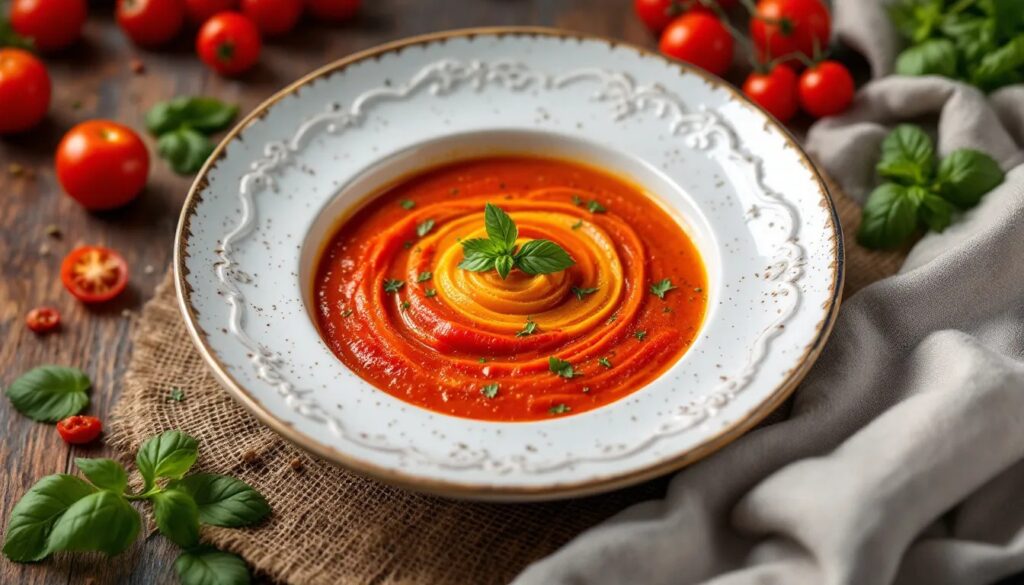
The story of the tomato, the undeniable star of this coulis, is perhaps one of the most compelling migration tales in gastronomic history. Originating in the Andean regions of South America, this vibrant fruit was initially met with suspicion in Europe after its arrival post-Columbian Exchange in the 16th century. For nearly two centuries, it languished as an ornamental curiosity, often deemed poisonous due to its botanical kinship with deadly nightshades. It was in the sun-drenched climes of Southern Italy, particularly Naples, that the tomato finally shed its villainous reputation, embracing its destiny as a culinary icon. By the 18th century, it had permeated Italian cuisine, forever altering the landscape of sauces and stews, paving the way for the quintessential Italian tomato sauce.
Joining the tomato in this culinary journey are ingredients whose histories stretch back millennia. Olive oil, liquid gold of the Mediterranean, has been a staple of the region for over 6,000 years, connecting modern Italian tables to ancient Phoenician and Roman civilizations. Its presence in this coulis is not merely for fat, but for its fruity, peppery complexity, acting as a crucial unifier of flavors. Garlic, too, boasts an ancient lineage, believed to have originated in Central Asia before spreading through the Middle East and across Europe via ancient trade routes, its pungent aroma now indispensable to countless cuisines globally, and certainly to the vibrancy of our coulis.
Then there is balsamic vinegar, a jewel from the Emilia-Romagna region of Italy. Unlike its wine-vinegar cousins, traditional balsamic is crafted from cooked grape must and aged for years, often decades, in a series of wooden barrels. Its complex, sweet-sour depth adds a layer of sophistication, a historical counterpoint to the fresh brightness of the tomato. Finally, the cayenne pepper, another emissary from the New World, injects a lively heat. While *peperoncino* (chili pepper) has long been a part of Southern Italian cooking, its presence here is a testament to the global embrace of capsaicin-rich peppers, adding a modern zest to a fundamentally traditional profile.
Traditional preparation of such a coulis emphasizes purity and respect for ingredients. It begins with ripe, succulent tomatoes, often peeled and deseeded to ensure a silky texture. Slow simmering allows the flavors to meld and deepen, transforming simple produce into a rich, concentrated essence. A gentle hand with the garlic prevents bitterness, while a drizzle of quality olive oil after cooking preserves its delicate aromas. The balsamic is added judiciously, balancing acidity with sweetness, never overpowering the tomato’s natural charm.
In your own kitchen, selecting the finest, ripest tomatoes is paramount – think Roma, San Marzano, or even luscious heirloom varieties. Don’t shy away from adding a touch of fresh basil or oregano if you desire an herbaceous lift. This coulis is incredibly versatile: slather it on bruschetta, toss it with fresh pasta, use it as a base for hearty soups, or simply enjoy it with a crusty piece of bread. It’s more than just a sauce; it’s a living document of culinary history, a testament to how ingredients travel, adapt, and transform, forever enriching our tables and our understanding of the interconnected world.
Tomato Coulis
Imagine the sun-drenched fields of Italy, captured in a spoonful. This exquisite Tomato Coulis is a testament to the power of pure, unadulterated flavor, meticulously crafted from the ripest summer tomatoes. A whisper of aged balsamic vinegar lends a sophisticated tang, while fresh garlic and a delicate spark of cayenne awaken the palate. Effortlessly transformed into a silken emulsion, this luminous ruby elixir is a culinary marvel, promising to elevate everything from delicate seafood preparations to robust grilled fare with its vibrant simplicity and profound depth. It’s not just a sauce; it’s an essence, a concentrated burst of Mediterranean vitality.
Ingredients
-
3
medium
tomatoes
peeled, seeded and chopped -
2
Tablespoons
balsamic vinegar -
3
Tablespoons
olive oil -
1
Tablespoon
chopped garlic -
Salt
to taste -
white pepper
to taste -
Pinch
cayenne pepper
Instructions
-
Gently introduce all specified ingredients into a generously sized skillet or saucepan.
-
Over a medium-high flame, bring the mixture to a vigorous, rolling boil.
-
Immediately reduce the heat to a low setting, allowing the coulis to gracefully simmer for approximately five minutes, ensuring a gentle stir periodically to prevent adherence and encourage even flavor development.
-
Permit the coulis to cool completely to room temperature before transferring it to a high-speed blender. Process until the mixture achieves an utterly smooth, uniform, and velvety consistency.
Recipe Notes
This splendid coulis serves as an exquisite crowning touch, providing a bright, acidic counterpoint and a burst of fresh flavor to a myriad of dishes. While it perfectly complements the delicate ‘Crab and Zucchini Crêpes’ featured within our collection, its versatility extends far beyond. Consider it an indispensable accompaniment to seared scallops, grilled chicken breast, roasted vegetables, or as a vibrant base for a sophisticated bruschetta. Its clean profile and balanced acidity render it a true kitchen essential for elevating everyday meals into gourmet experiences.
Global Heritage Archive
Anthropological & Spice Migration Record
“A culinary culture deeply rooted in fresh, high-quality local produce, emphasizing robust, balanced flavors, and the art of transforming simple ingredients into complex experiences, often serving as a foundation for many dishes.”
🌿 Spice & Botanical Migration
The heart of this coulis showcases a remarkable journey of ingredients. Tomatoes and cayenne pepper trace their botanical origins to the Americas, traversing the Atlantic via the Columbian Exchange to enrich European palates from the 16th century onwards. Olive oil and garlic, foundational pillars of Mediterranean cuisine, have ancient roots in the Middle East and Central Asia respectively, their diffusion facilitated by millennia of trade routes across land and sea, establishing them firmly in Italian culinary traditions long before the arrival of New World produce.
🏺 Historical & Archaeological Record
The earliest known domestication of tomatoes is traced to pre-Columbian Mesoamerica, with archaeological evidence of their consumption dating back to at least 700 AD in Mexico. Olive oil production, a cornerstone of this recipe, finds its genesis in the Near East, with evidence of ancient olive presses in the Levant from around 6,000-8,000 years ago. Written records describing a ‘black vinegar’ akin to balsamic date to the 11th century in Modena, Italy, while garlic use extends back over 6,000 years in Central Asia.
💡 Little Known Facts
- Tomatoes were initially viewed with suspicion in Europe, considered poisonous nightshades, and were primarily grown as ornamental plants for centuries before being widely adopted culinarily.
- Authentic Traditional Balsamic Vinegar (Aceto Balsamico Tradizionale) undergoes a meticulous aging process in a series of different wooden barrels for a minimum of 12 years, often much longer, resembling a solera system.
📸 Made This Heritage Recipe?
We would love to see how your dish turned out! Send a photo of your culinary creation to [email protected] to be featured in our community gallery.
Leave a review and rate this recipe below!
Curated Literature & Washington DC Downtown Calendar
The Culinary Alchemist: Modern Gastronomy & Flavor Pairing
By LDN Gastronomy Series
Artisanal technique, seasonal sourcing, and kitchen mastery.
Upcoming Downtown Happenings
Live acoustic sessions, gallery receptions, literary salons, and independent trade shows across Washington DC.
