
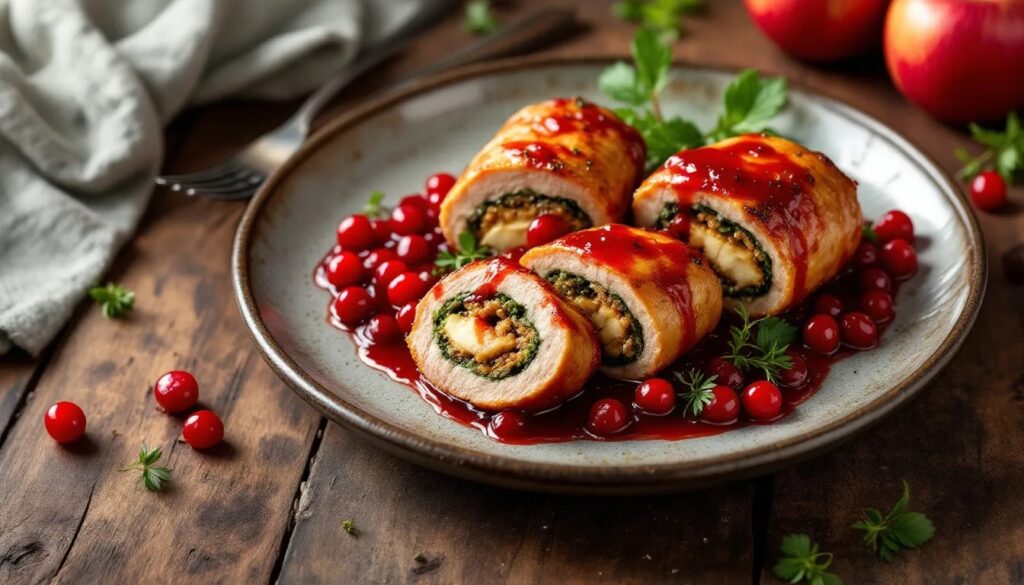
Yet, a deeper dive into its accompanying sauce reveals a distinct North American accent. While apples have ancient Eurasian roots, becoming a staple across Europe and eventually the Americas, it’s the humble cranberry that firmly anchors this dish to the New World. Native to North America, cranberries were a vital food source, medicine, and dye for Indigenous peoples for millennia before European settlers arrived. Their tart vibrancy, particularly when paired with pork or game, became a hallmark of North American autumnal and festive tables. This fusion of French culinary elegance with indigenous North American bounty speaks volumes about the early colonial kitchens of regions like Quebec, where French settlers adapted their traditions to the new landscape, creating a distinct French-Canadian culinary identity.
This recipe, therefore, embodies a rich dialogue between continents. Black pepper, originating from India, journeyed across ancient Spice Routes to grace European tables, eventually crossing the Atlantic. Parsley, a Mediterranean herb, followed a similar trajectory of spread through Roman expansion. Even the pork or veal tenderloins, while staples of European agriculture, found new culinary expressions when paired with ingredients like the North American cranberry. For the home cook, precision is key: pound the meat uniformly thin, don’t overstuff, and secure rolls well. Searing the paupiettes beforehand develops a rich crust, and deglazing the pan with cider captures all the flavorful browned bits for your sauce. Resting the finished meat allows juices to redistribute, ensuring every bite is moist and flavorful. This dish is not just a meal; it’s an edible map of history and a celebration of cross-cultural exchange.
Stuffed Tenderloins or Paupiettes with Apple-Cranberry Sauce
Embark on a culinary journey with this refined dish, transforming humble cuts into an extraordinary centerpiece. Lean tenderloins are meticulously prepared, generously filled with a savory stuffing, then gently rolled and braised to succulent perfection. The accompanying sauce is a symphony of flavors, where the rich, complex pan drippings are elevated by the bright, tangy notes of apples and cranberries, creating a truly unforgettable sweet-and-savory experience. This elegant creation promises to captivate palates and leave a lasting impression.
Ingredients
-
6
paupiettes or small pork/veal tenderloins -
As needed
prepared stuffing -
As needed
wooden toothpicks or kitchen string
for securing -
As needed
butter -
As needed
white onions -
As needed
cider
enough to simmer paupiettes -
As needed
broth
such as turkey broth -
As needed
cornstarch
mixed with a little cold liquid for thickening -
As needed
apple slices
drained well -
As needed
dried cranberries -
To taste
salt and pepper -
As needed
fresh parsley sprigs
minced and for garnish
Instructions
-
Evenly portion the prepared filling onto the central area of each tenderloin piece. From the narrower ends, carefully roll each tenderloin inward, fully encasing the stuffing within.
-
Firmly fasten each filled tenderloin with a wooden skewer or culinary string, gently pressing the seams to ensure the stuffing remains sealed inside.
-
Warm the butter in a spacious skillet over medium-high heat until its foam dissipates. Introduce the prepared paupiettes and sliced white onions to the skillet, turning occasionally, and sear for 8 to 10 minutes until the meat is beautifully golden-brown on all sides.
-
Pour the cider into the skillet, bringing the liquid to a robust boil. Reduce the heat, cover the skillet, and allow the mixture to gently simmer for 12 to 15 minutes, or until the tenderloins achieve a desirable tenderness.
-
Carefully transfer the cooked paupiettes to a serving platter. Remove the securing skewers or string, then loosely cover the platter to keep the meat warm while you prepare the sauce.
-
Introduce the broth (such as turkey broth) to the same skillet and bring it to a rolling boil. Whisk in the cornstarch slurry, continuing to stir constantly until the sauce returns to a boil and visibly thickens.
-
Incorporate the well-drained apple slices and dried cranberries into the simmering sauce. Continue to cook, stirring gently, for an additional 3 to 5 minutes, allowing the fruit to thoroughly warm through.
-
Finish the sauce by stirring in the fresh minced parsley, then season meticulously with salt and freshly ground black pepper to achieve your desired flavor profile.
-
Ladle the vibrant finished sauce generously around the prepared paupiettes on the platter. Conclude with a scattering of fresh parsley sprigs for an elegant presentation.
Global Heritage Archive
Anthropological & Spice Migration Record
“A vibrant culinary tradition that masterfully marries classic French techniques with the abundant indigenous ingredients of North America.”
🌿 Spice & Botanical Migration
Black pepper, a ubiquitous seasoning, originated from the Malabar Coast of India, traveling west via ancient trade routes to become a staple in European kitchens. Parsley, native to the Mediterranean region, was spread across Europe and subsequently to the Americas by Roman and later European colonists, integrating into various culinary traditions.
🏺 Historical & Archaeological Record
While the specific term ‘paupiette’ emerged in French cuisine around the 18th century, the foundational technique of stuffing or rolling meat around other ingredients has much older roots. Ancient Roman cookbooks like Apicius (4th-5th century CE) feature recipes for spiced meat mixtures encased or rolled, conceptually predating the paupiette.
💡 Little Known Facts
- The term ‘paupiette’ is derived from the French ‘paupiette’ (meaning eyelid), possibly referring to the way the thin slice of meat is rolled or folded, akin to a closed eye.
- Indigenous North Americans used cranberries not only as food but also as medicine, dye, and a preservative; they were a key ingredient in ‘pemmican’, a nutritious, long-lasting food made from dried meat, fat, and berries.
📸 Made This Heritage Recipe?
We would love to see how your dish turned out! Send a photo of your culinary creation to [email protected] to be featured in our community gallery.
Leave a review and rate this recipe below!
Curated Literature & Washington DC Downtown Calendar
The Culinary Alchemist: Modern Gastronomy & Flavor Pairing
By LDN Gastronomy Series
Artisanal technique, seasonal sourcing, and kitchen mastery.
Upcoming Downtown Happenings
Live acoustic sessions, gallery receptions, literary salons, and independent trade shows across Washington DC.
