
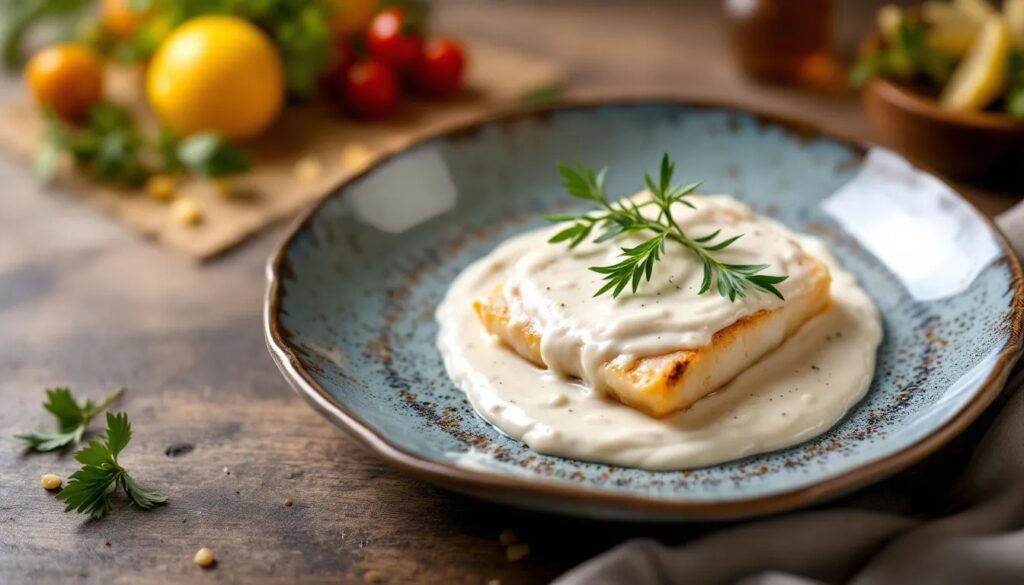
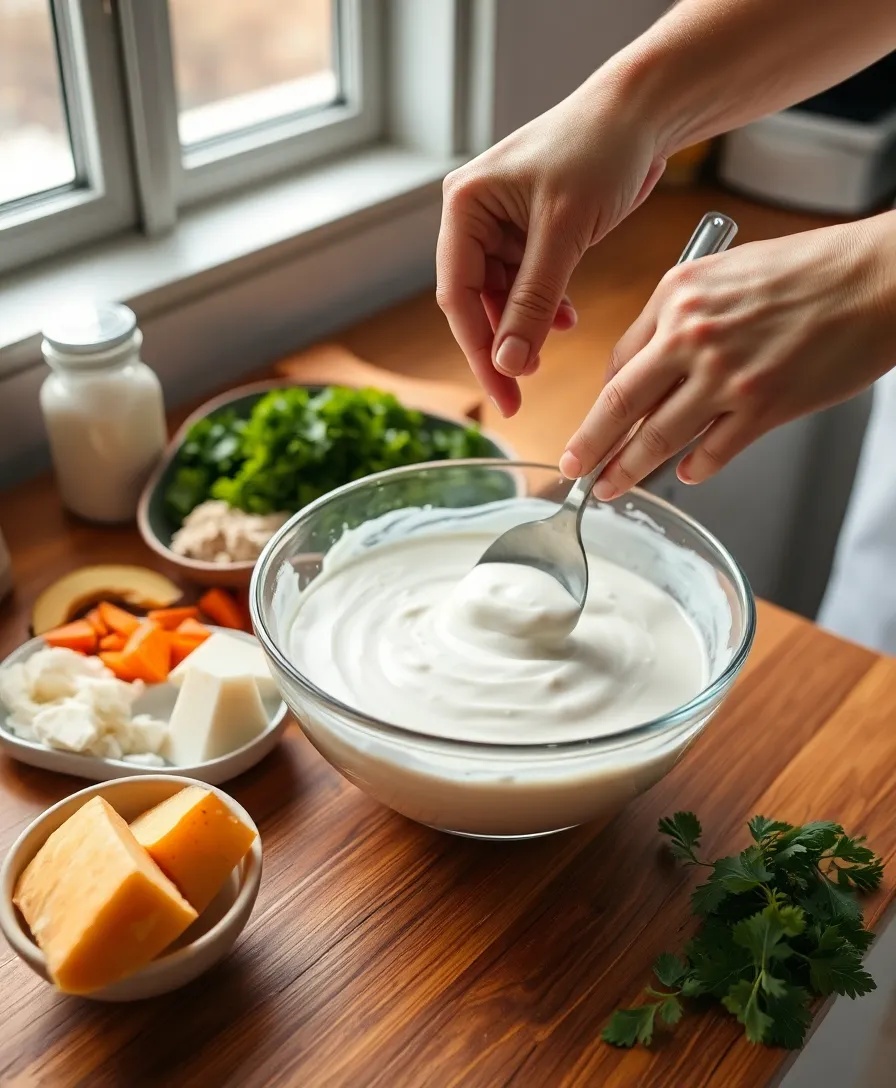
In the grand tapestry of European gastronomy, certain dishes stand as testaments to the continuous interplay of regional ingredients and refined techniques. The ‘Sour Cream Sauce for Fish’ is one such culinary artifact, a sophisticated symphony that sings of both the pastoral heartland of Europe and the meticulous kitchens of classical France. It’s a sauce that transcends mere condiment status, offering a rich narrative of culinary evolution, migration, and the pursuit of perfect balance.
At its core, this sauce marries the robust, comforting dairy traditions of Central, Eastern, and Northern Europe with the precise, elegant methods of French haute cuisine. The presence of sour cream and horseradish immediately conjures images of hearty meals from the Slavic steppes to the Germanic forests, where these ingredients have long been staples, valued for their sharp piquancy and ability to cut through richness. Sour cream, with its tangy depth, offers a creamy canvas, while horseradish brings a fiery, earthy punch, a flavor profile deeply ingrained in the culinary identities of regions where long, cold winters necessitated strong, vibrant foods.
Yet, this seemingly rustic foundation is elevated by distinct French touches. The inclusion of ‘mousse cooking juices’ is the first unmistakable clue, betraying a kitchen where no flavor is wasted, where every drop of a delicate fish mousse’s essence is carefully preserved and reduced to intensify the sauce. This practice of creating flavorful ‘fonds’ (stocks or reductions) is a hallmark of French saucery, a craft refined over centuries by chefs like Carême and Escoffier. The use of egg yolks for emulsification speaks to a deep understanding of culinary chemistry, transforming disparate liquids into a silky, cohesive whole. Dijon-type mustard, another French icon, adds an essential tangy counterpoint and aids in the emulsification, while a whisper of white pepper contributes a subtle, clean heat without altering the sauce’s pristine color.
The global journey of these ingredients is equally compelling. Horseradish, *Armoracia rusticana*, is thought to have originated in Southeastern Europe or Western Asia, spreading across the continent through trade and migration. Mustard, from the ancient Mediterranean and Asian worlds, found its pinnacle of refinement in the French city of Dijon. Lemon, originating in the foothills of the Himalayas, traveled westward via the Silk Road and Arab traders, becoming indispensable in Mediterranean and European cooking for its bright acidity. And black (and thus white) pepper, the king of spices, made its arduous journey from the Malabar Coast of India, gracing European tables since antiquity.
Crafting this sauce at home is an exercise in patience and precision. Begin with high-quality, fresh ingredients: a good, full-fat sour cream, freshly grated horseradish for maximum pungency, and the precious juices from your fish mousse (or a rich fish stock as a substitute if mousse isn’t on the menu). The key lies in creating a stable emulsion. Gently temper the egg yolks with a little warm liquid before incorporating them into the warmed sour cream and juices, whisking constantly over a bain-marie to prevent curdling. The goal is a velvety texture, thick enough to cling to your fish, yet delicate enough not to overwhelm it. A squeeze of fresh lemon juice at the end brightens the entire composition, balancing the richness of the cream and the heat of the horseradish. This sauce is a magnificent accompaniment to poached or pan-seared white fish, offering a nuanced depth that speaks to a rich culinary heritage, a reminder that the best dishes are often conversations between cultures.
Sour Cream Sauce for Fish
A testament to culinary elegance, this vibrant sour cream sauce offers a bright, piquant counterpoint to the delicate nuances of fine fish preparations. Infused with the spirited zest of lemon, the subtle bite of Dijon, and a whisper of horseradish, it transforms everything from a simple pan-seared fillet to an intricate terrine or mousse into an elevated epicurean experience. It’s the swift, sophisticated touch that truly brightens the plate.
Ingredients
-
The
None
mousse cooking juices
up to 4 Tablespoons -
1
cup
sour cream -
2
None
egg yolks
optional, for color -
½
cup
heavy cream -
1½
teaspoon
Dijon-type mustard -
1
teaspoon
horseradish
more or less -
drops of
None
lemon juice -
to taste
None
salt -
to taste
None
white pepper
Instructions
-
Should your cooking juices from the mousse exceed four tablespoons, gently simmer them over medium heat until they have beautifully reduced and concentrated to precisely that volume.
-
Transfer the rich, reduced juices to a medium mixing bowl. Gradually whisk in two to three tablespoons of the sour cream, incorporating it smoothly alongside the optional egg yolks, creating a uniform, silken base.
-
Carefully fold in the remaining sour cream and the luscious heavy cream, stirring until the mixture achieves a harmonious, creamy consistency.
-
Calibrate the flavor profile with careful additions of freshly grated horseradish, piquant Dijon mustard, a squeeze of bright lemon juice, and a pinch each of sea salt and freshly cracked black pepper, adjusting to your discerning palate.
Recipe Notes
A word to the wise: the beauty of this sauce lies in its ability to complement, not conquer, the delicate flavors of your chosen fish. Season judiciously to ensure it enhances the subtle essence of the dish, particularly when paired with the nuanced profile of a Scallop and Salmon Layered Mousse Terrine. It is, after all, a bespoke creation designed for just such an exquisite culinary partnership.
Global Heritage Archive
Anthropological & Spice Migration Record
“A sophisticated European culinary culture, epitomized by classical French techniques, that expertly balances rich dairy and piquant flavors to complement delicate preparations like fish.”
🌿 Spice & Botanical Migration
Horseradish, native to Southeastern Europe and Western Asia, spread throughout the European continent over centuries. Mustard, cultivated since ancient times across the Mediterranean and Asia, saw its ‘Dijon-type’ variety codified in France. White pepper, a dried berry of the *Piper nigrum* vine, originated in South India and reached Europe via the ancient Spice Routes. Lemon, believed to have originated in the Assam region of India or Northern Myanmar, traveled west through the Middle East and Mediterranean via Arab trade routes.
🏺 Historical & Archaeological Record
While dairy-based sauces and piquant flavorings have ancient roots, the oldest written records of sophisticated emulsified sauces, particularly those using egg yolks for binding and incorporating reduced cooking juices, trace back to 17th-18th century French culinary literature. Their definitive codification, outlining precise techniques for ‘mother sauces’ and their derivatives, can be found in foundational works like Marie-Antoine Carême’s *L’Art de la cuisine française au XIXe siècle* (early 19th century) and Auguste Escoffier’s *Le Guide Culinaire* (1903).
💡 Little Known Facts
- The practice of meticulously saving and reducing ‘cooking juices’ (fonds) from preparations like fish mousse is a cornerstone of classical French haute cuisine, ensuring no flavor is wasted and elevating a sauce to new depths.
- While horseradish is strongly associated with Central and Eastern European cuisines, it has also been a traditional ingredient in French sauces, notably ‘Sauce Raifort’, often paired with beef or strong-flavored fish.
📸 Made This Heritage Recipe?
We would love to see how your dish turned out! Send a photo of your culinary creation to [email protected] to be featured in our community gallery.
Leave a review and rate this recipe below!
Curated Literature & Washington DC Downtown Calendar
The Culinary Alchemist: Modern Gastronomy & Flavor Pairing
By LDN Gastronomy Series
Artisanal technique, seasonal sourcing, and kitchen mastery.
Upcoming Downtown Happenings
Live acoustic sessions, gallery receptions, literary salons, and independent trade shows across Washington DC.
