
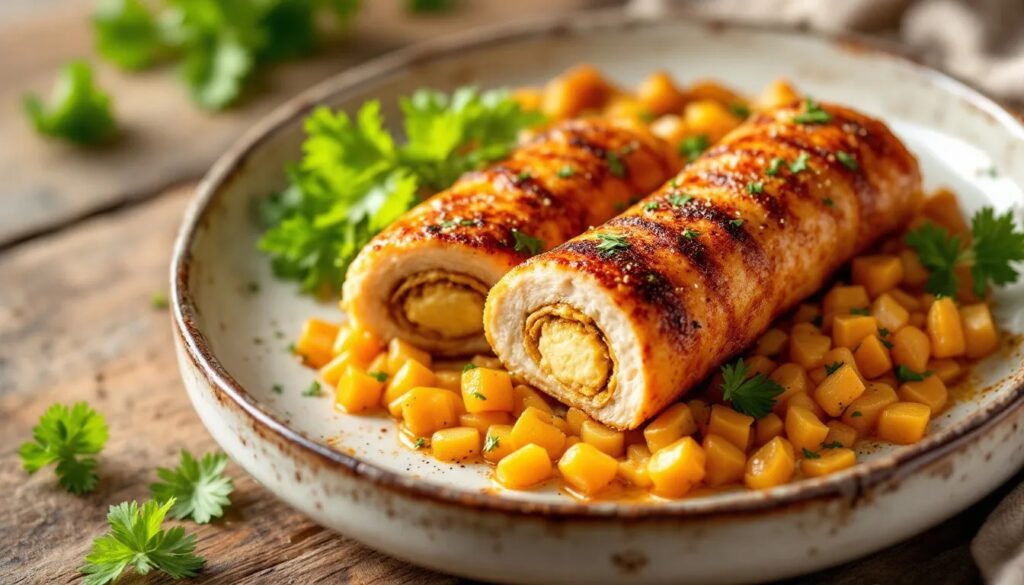
To uncover its history is to traverse the opulent dining halls of 19th-century Europe. While its precise origins are shrouded in delightful dispute—claimed by French chefs, Russian imperial kitchens, and ultimately embraced by Ukrainian culinary heritage—Chicken Kyiv undeniably emerged from a fusion of sophisticated French haute cuisine techniques and the rich palettes of Eastern European aristocracy. The concept of *côtelettes de volaille*, or delicate chicken cutlets, was perfected by French culinary masters. These techniques migrated eastward, influencing the burgeoning culinary scenes in cities like St. Petersburg and, of course, Kyiv. The innovation of stuffing a pounded chicken breast with a generous knob of seasoned, chilled butter, then breading and frying it to a perfect crisp, transformed a simple cutlet into a showstopper—a dish synonymous with luxury, skill, and an unforgettable sensory experience. It was a dish that became a diplomatic tool, a restaurant staple, and eventually, a symbol of Ukrainian national pride, traveling across continents and finding ardent fans from New York to London.
The ingredients themselves tell a story of global migration and culinary convergence. Chicken, a universally adaptable protein, serves as the canvas. Butter, the luxurious heart of the dish, speaks to a rich dairy culture prevalent across Europe, transforming from a simple farm product into a culinary emulsifier and flavor carrier. The breading—eggs and bread crumbs—is a testament to ancient preservation and textural enhancement techniques, yielding that coveted golden crunch. And then, the spices: black pepper, a cornerstone of global trade, journeyed from the Malabar Coast of India along ancient sea routes to grace European tables. Rosemary, with its fragrant, piney notes, is a true native of the Mediterranean, its culinary use spread by the Roman Empire and cherished in European kitchens for millennia. Garlic, a robust and aromatic staple, traces its origins back to Central Asia, migrating across continents to become an essential flavor base in almost every cuisine imaginable. These seemingly simple ingredients, united in this dish, paint a vivid picture of interconnected culinary worlds.
For the home cook, recreating this marvel, or these “Simulated Drumsticks,” is a rewarding endeavor. The secret lies in precision. Begin by pounding the chicken breasts thin and evenly—this ensures consistent cooking and ease of rolling. The spiced butter, the very soul of the dish, must be well-chilled, ideally frozen, into logs before being encased. This prevents it from leaking out during the initial cooking phase, ensuring that dramatic molten release when cut. A double-breading technique, first in flour, then egg, then breadcrumbs (and repeating the egg/breadcrumb step), creates an impenetrable seal and an exquisitely crisp crust. Deep frying initially sets the crust and achieves that golden hue, after which a brief finish in the oven can ensure the chicken is cooked through without burning the exterior. The result is more than just a meal; it’s a taste of history, a symphony of textures, and a testament to the enduring power of culinary ingenuity to delight and transport.
Simulated Drumsticks (Spiced Butter Stuffed Chicken Rolls)
Journey back to an era of refined home entertaining with these exquisite ‘Simulated Drumsticks.’ More than just a dish, they’re a culinary illusion designed to delight. Succulent chicken breasts are masterfully prepared – meticulously deboned, then gently flattened – before enfolding a luscious core of aromatic, seasoned butter. Each parcel undergoes a precise triple-breading ritual, ensuring a supremely crisp, golden-hued exterior upon deep-frying. The result is a captivating main course, perfect for an intimate supper or an impressive soirée, promising a memorable experience with every bite.
Ingredients
-
1/2
cup
butter
1 stick, for stuffing -
to taste
none
mixed spices
for butter; not specified, use your preference (e.g., paprika, garlic powder, herbs) -
6
none
chicken breasts
bone-in, to be deboned -
to taste
none
salt -
to taste
none
pepper -
to taste
none
garlic salt -
to taste
none
rosemary -
as needed
none
dry bread crumbs -
2
none
eggs
beaten, for breading -
as needed
none
deep hot fat
for frying
Instructions
-
Craft the Aromatic Butter Core: In a small bowl, harmonize the softened butter with your bespoke blend of spices. Portion this seasoned butter into six equal segments, then chill them in the refrigerator or freezer until solidified and resolute.
-
Prepare the Chicken Fillets: Meticulously prepare each chicken breast, ensuring it is completely deboned. Place each fillet between two sheets of parchment paper or plastic wrap and gently pound with a meat mallet to achieve an even thickness of approximately 1/4 to 1/2 inch.
-
Season with Precision: Delicately season both sides of each flattened chicken breast with a fine dispersion of salt, freshly cracked pepper, garlic powder, and dried rosemary, ensuring a harmonious base flavor.
-
Encase and Sculpt: Nestled in the center of each seasoned chicken fillet, place one piece of the firm, chilled spiced butter. Carefully yet firmly roll the chicken around the butter, meticulously sculpting it into the evocative form of a drumstick.
-
Master the Triple Breading: Gently compress each formed chicken roll to secure its shape. Initiate the breading process by completely coating it in dry breadcrumbs. Proceed with the first immersion into beaten egg, followed by a second generous coating of breadcrumbs. Dip once more into the egg, and finally, encase it in a third, ample layer of breadcrumbs, creating a robust, crisping mantle.
-
Allow to Temper and Set: Permit the fully breaded chicken rolls to rest at room temperature for 20 to 30 minutes. During this period, turn them intermittently to encourage uniform drying of the surface, which is crucial for optimal crispness.
-
Achieve Golden Perfection: Just prior to presenting, heat your chosen deep fat to a precise 300°F (150°C). Carefully submerge the chicken rolls into the hot fat. Fry for approximately 10 minutes, rigorously monitoring the fat temperature to ensure it consistently remains within the optimal crisping range of 275°F to 300°F (135°C to 150°C), avoiding any upward deviation.
-
Present with Panache: Adorn one end of each exquisitely fried chicken roll with a decorative frilled toothpick, providing both charm and utility. Serve these culinary delights expeditiously, immediately after cooking, to savor their peak flavor and texture.
Recipe Notes
The heart of this recipe lies in the spiced butter. While the specific blend is left to your culinary discretion, we encourage experimenting with savory herbs such as thyme, sage, or tarragon, complemented by warming spices like a pinch of smoked paprika, white pepper, or a touch of finely minced shallot. The frilled toothpick serves not only as an elegant, vintage-inspired garnish but also as a practical handle for enjoying these delightful morsels with ease.
Global Heritage Archive
Anthropological & Spice Migration Record
“A dish embodying a sophisticated culinary tradition, born from European aristocratic kitchens and adapted into a beloved national symbol, often prepared for special occasions and fine dining.”
🌿 Spice & Botanical Migration
Black pepper, originating from India’s Malabar Coast, traveled to Europe via the ancient Spice Routes. Rosemary is indigenous to the Mediterranean, its use spreading with Roman influence across Europe. Garlic, an ancient staple from Central Asia, was disseminated globally through early trade and agricultural expansion, becoming a cornerstone of many cuisines.
🏺 Historical & Archaeological Record
While recipes for stuffed poultry exist in ancient texts like Apicius (1st-4th century CE Roman cookbook), the specific technique of butter-stuffed, breaded, and fried chicken breasts, as seen in “Chicken Kyiv,” emerged in European haute cuisine of the 19th century, building upon earlier French culinary innovations for cutlets (côtelettes) and roulades.
💡 Little Known Facts
- The exact origin of Chicken Kyiv is hotly debated, with claims from France, Russia, and Ukraine, reflecting the intertwined culinary histories of 19th-century European imperial courts.
- During the Soviet era, Chicken Kyiv became a symbol of culinary refinement and was a popular export, featuring prominently on Aeroflot menus and in international hotels.
📸 Made This Heritage Recipe?
We would love to see how your dish turned out! Send a photo of your culinary creation to [email protected] to be featured in our community gallery.
Leave a review and rate this recipe below!
Curated Literature & Washington DC Downtown Calendar
The Culinary Alchemist: Modern Gastronomy & Flavor Pairing
By LDN Gastronomy Series
Artisanal technique, seasonal sourcing, and kitchen mastery.
Upcoming Downtown Happenings
Live acoustic sessions, gallery receptions, literary salons, and independent trade shows across Washington DC.
