
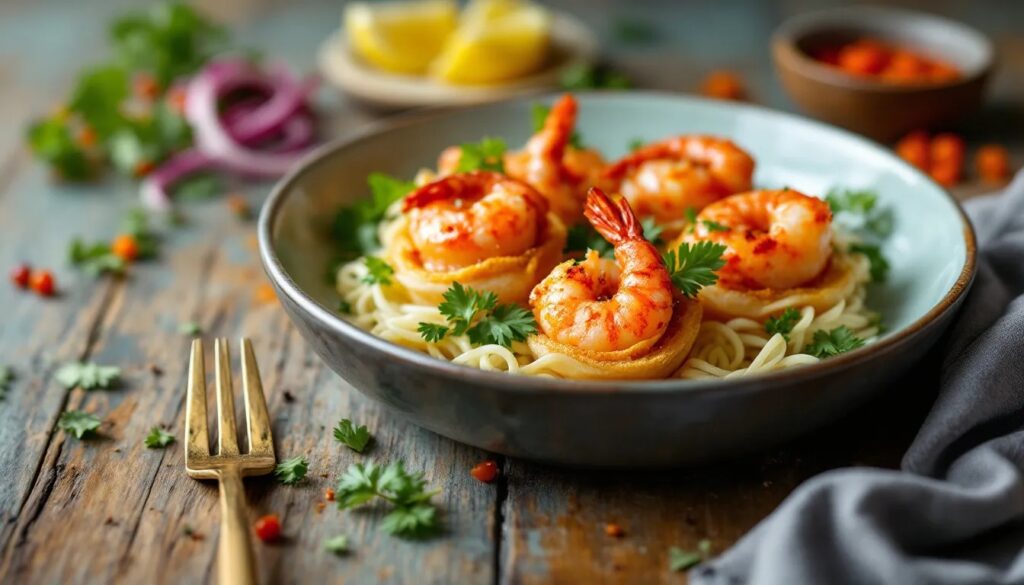
The very word “canapé,” derived from the French word for “couch,” hints at its sophisticated European origins. Just as one might recline gracefully on a sofa, the delectable garnishes of a canapé rest elegantly upon their bread base. This particular iteration, featuring creamy shrimp, butter, lemon, and the savory depths of tomato and anchovy paste, speaks volumes about a particular era: mid-20th century America. It was a time when post-war prosperity allowed for increased entertaining, and home cooks eagerly embraced “continental” flair, often reinterpreting French elegance through an accessible, American lens. The miniature muffin tins, a tell-tale sign of home convenience and uniformity, were pressed into service, creating perfectly portioned, appealing bites that epitomized the era’s desire for effortless sophistication.
While seemingly humble, the ingredients themselves chart ambitious global journeys. Consider the bright tang of lemon, a fruit whose ancestral roots lie in the humid climes of Northeast India, traveling westwards through ancient trade routes, embraced by Persian, Arab, and Mediterranean cultures before becoming ubiquitous in European kitchens. The vibrant flush of tomato paste, however, tells a different tale of exploration and adaptation. Native to the Andean highlands of South America, the tomato made its transatlantic voyage with the Columbian Exchange, initially viewed with suspicion in Europe before evolving into an indispensable cornerstone of Italian and French cuisine, eventually lending its concentrated umami to dishes like these canapés. Even the humble anchovy paste, a potent source of savory depth, harks back to ancient Mediterranean traditions, echoing the Roman ‘garum’ and providing a flavor bridge across millennia.
Preparing these shrimp canapés today is not just a culinary act; it’s a quiet nod to a past era of entertaining. To perfect them, start with impeccably fresh shrimp, gently poached to retain their tender sweetness. The key to the creamy base lies in softening the butter and ensuring your cream is at room temperature for a smooth emulsion. A touch of lemon juice cuts through the richness, while the tomato and anchovy pastes provide a foundational umami that elevates the entire profile. Don’t shy away from seasoning—a pinch of white pepper or a whisper of cayenne can add a nuanced warmth. For the toast rounds, thinly sliced bread, lightly toasted and cut with a cookie cutter, provides the ideal crisp, yet yielding, base. A final sprig of dill or a tiny caper can add a visual flourish, transforming a simple bite into a miniature work of art. These aren’t just appetizers; they are edible time capsules, offering a delicious taste of history and the enduring allure of well-crafted hospitality.
SHRIMP CANAPES
Imagine a sophisticated soirée, where every detail whispers elegance. These exquisite shrimp canapés are the quintessential bite, designed to captivate and delight your guests. At their heart lies a luxuriously smooth spread, a masterful emulsion of succulent cooked shrimp, silken butter, the bright zest of lemon, a whisper of piquant tomato, and the subtle depth of anchovy. This irresistible pâté is artfully formed within delicate miniature molds, each cradling a tender shrimp half as its foundation, then elegantly presented atop crisp, golden toast points. A true testament to refined entertaining, these morsels promise a memorable culinary experience.
Ingredients
-
½
pound
shrimp
cooked, shelled, de-veined -
1
stick
butter
softened, cut into bits -
3
Tablespoons
heavy cream -
1
Tablespoon
lemon juice -
2
teaspoons
tomato paste -
1
teaspoon
anchovy paste -
12
small
shrimp
cooked, shelled, halved lengthwise, de-veined, for tin base -
24
miniature muffin tins
1¼ inch, well-buttered -
24
toast rounds
cut with a 1½ inch-round fluted cutter
Instructions
-
Into the bowl of a high-speed food processor, equipped with a sharp steel blade, introduce the cooked, peeled, and deveined shrimp along with the softened butter (cut into smaller pieces for optimal blending), heavy cream, fresh lemon juice, concentrated tomato paste, and anchovy paste. Process these components meticulously until the mixture achieves a perfectly uniform, velvety consistency.
-
Ensure you have prepared the twelve small shrimp, each cooked, fully shelled, meticulously deveined, and carefully bisected lengthwise.
-
Lubricate twenty-four miniature muffin cups, each approximately 1¼ inches in diameter, thoroughly with butter. Delicately place a single half-shrimp into the very bottom of each buttered cavity.
-
Evenly distribute the prepared shrimp puree among the individual muffin cups, ensuring each is filled to approximately three-quarters of its capacity.
-
Gently smooth the surface of the puree in each tin for a pristine finish. Cover the filled tins securely and refrigerate them for a minimum of three hours to allow the canapés to firm up completely.
-
Employ a 1½-inch fluted round cutter to carefully stamp out twenty-four decorative rounds from your preferred bread. Lightly toast these bread rounds until they are crisp and golden.
-
Once thoroughly chilled, meticulously unmold each shrimp canapé by inverting the tins, carefully placing each delicate shrimp form onto a prepared toasted bread round for presentation.
Recipe Notes
For an unparalleled tasting experience, ensure these delicate canapés are served impeccably chilled, straight from refrigeration. This recipe is an ideal choice for advance preparation, as the molds can be crafted and chilled up to 24 hours prior to your event, allowing for seamless entertaining. To elevate their visual charm, consider a final flourish of a delicate fresh dill sprig or a single microgreen atop each canapé just before presenting. The success of the puree’s silken texture hinges on using truly softened, pliable butter.
Global Heritage Archive
Anthropological & Spice Migration Record
“A culinary culture of home entertaining and convenience, blending European sophistication with American practicality for social gatherings.”
🌿 Spice & Botanical Migration
While this recipe features few traditional ‘spices,’ its key flavor components trace significant global journeys. Lemon, originating in Northeast India, spread through the Middle East and Mediterranean via ancient trade routes. The tomato, crucial for the paste, is native to the Andean regions of South America and arrived in Europe through the Columbian Exchange, later becoming fundamental to Western cuisine.
🏺 Historical & Archaeological Record
The practice of serving small, savory bites on bread can be traced back to antiquity, with Roman ‘gustatio’ often featuring varied appetizers. However, the specific culinary term ‘canapé’ for a decorative, open-faced appetizer on a small bread base emerged in French culinary literature in the late 18th to early 19th century, solidifying its place in formal entertaining.
💡 Little Known Facts
- The term “canapé” literally translates to “couch” in French, referring to the way the garnish “sits” on the bread base, much like someone sitting on a sofa.
- The popularity of canapés in the United States surged significantly in the post-World War II era, aligning with the rise of the cocktail party as a quintessential form of social entertainment.
📸 Made This Heritage Recipe?
We would love to see how your dish turned out! Send a photo of your culinary creation to [email protected] to be featured in our community gallery.
Leave a review and rate this recipe below!
Curated Literature & Washington DC Downtown Calendar
The Culinary Alchemist: Modern Gastronomy & Flavor Pairing
By LDN Gastronomy Series
Artisanal technique, seasonal sourcing, and kitchen mastery.
Upcoming Downtown Happenings
Live acoustic sessions, gallery receptions, literary salons, and independent trade shows across Washington DC.
