
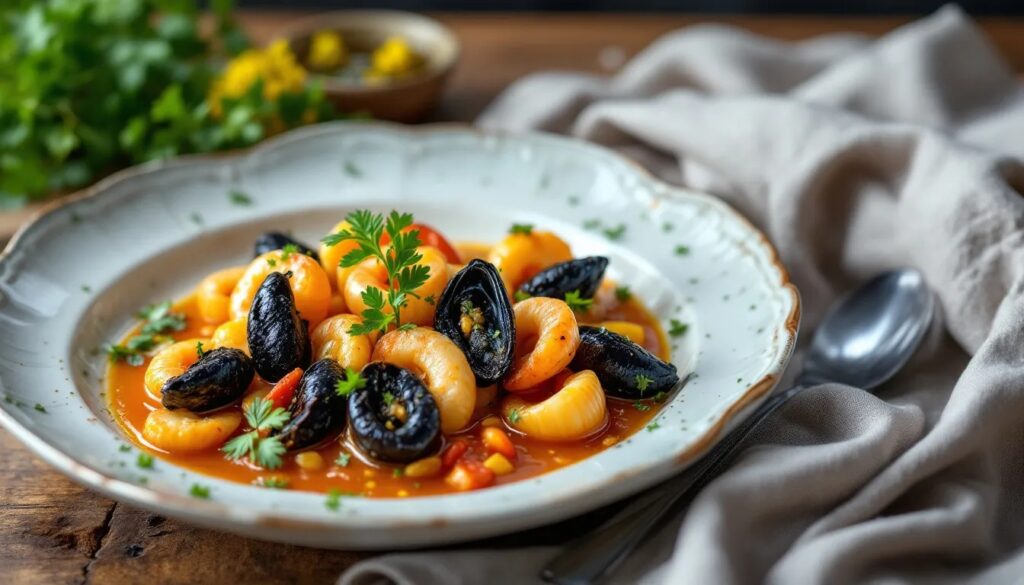
The aroma of the sea, sun-drenched herbs, and the whisper of ancient trade routes converge in a single, magnificent bowl: Bouillabaisse. More than just a soup, this iconic French seafood stew is a liquid chronicle of the Mediterranean coast, a testament to the ingenuity of fishermen, and a vibrant canvas for global culinary exchange. Its origins are humble, born on the shores of Marseille, where local fishermen would cook their unsellable ‘rockfish’ – the bony, less appealing catches – in a pot with seawater, olive oil, and whatever wild herbs grew nearby. This simple, hearty meal, designed to sustain them after a long day at sea, eventually evolved into the refined dish we celebrate today.
The transformation from a fisherman’s sustenance to a revered culinary masterpiece is a fascinating journey. As trade routes expanded, so too did the palette of available ingredients. Olive oil, the golden liquid heart of Mediterranean cuisine, has been pressed from olives in the region for millennia, its rich, fruity notes foundational to the stew. Leeks, a staple vegetable since ancient Egypt, lend their delicate sweetness. However, the true migration story unfolds with the arrival of New World ingredients. The vibrant red peppers, succulent ripe tomatoes, and earthy potatoes – all native to the Americas – were introduced to Europe after the Columbian Exchange. Initially met with suspicion, they gradually found their way into Mediterranean kitchens, their bright flavors and textures becoming indispensable to dishes like Bouillabaisse, adding depth, color, and acidity that would have been unimaginable to the stew’s early creators. The subtle bitterness of chopped dried orange rind, an aromatic touch, speaks to the earlier Arab introductions of citrus from Asia, integrating exotic flavors into local traditions.
Preparing a true Bouillabaisse is a ritual of patience and passion. The choice of fish is paramount; traditionally, a mélange of at least three different strongly flavored, firm-fleshed fish is used, often including scorpionfish, sea robin, and conger eel, though lobsters and other shellfish are now often included for luxury. A good fish stock, intensely flavored, is the backbone. The technique is deceptively simple: sauté aromatics like leeks in olive oil, add tomatoes and fish, then ‘bouillir’ (boil vigorously) for a short burst to emulsify the flavors, followed by ‘abaisser’ (simmer gently) to cook the fish without breaking it down. For a truly authentic experience, serve the rich, saffron-infused broth first with grilled stale bread and a dollop of fiery rouille, followed by the perfectly cooked fish. This separation of elements is not just tradition; it allows appreciation of each component’s unique contribution. When crafting your own, don’t skimp on quality olive oil, use fresh, seasonal produce, and source the freshest fish available. The result will be more than a meal; it will be a culinary voyage through history, a taste of the Mediterranean sun, and a testament to the enduring power of food to connect cultures across continents and centuries.
Seafood Bouillabaisse
Experience the opulent depths of this exceptional seafood stew, a culinary marvel that pays homage to the grand traditions of French bouillabaisse, infused with a distinct, timeless charm. Featuring tender, succulent lobster and select, flavorful fish, slowly melded with the gentle sweetness of aromatic leeks, sun-ripened tomatoes, and a whisper of dried orange zest, this magnificent creation promises a symphony of rich flavors, ideal for an unforgettable gathering.
Ingredients
-
1/3
cup
red peppers
or canned pimientos -
3
units
lobsters
1 to 1 1/2 pounds each -
5
Tablespoons
olive oil -
3
units
leeks -
4
units
ripe tomatoes -
3
units
potatoes
optional -
to taste
Salt -
to taste
freshly ground black pepper -
1/2
teaspoon
chopped dried orange rind -
as needed
strongly flavored fish
unspecified amount -
as needed
fish marinade
unspecified amount -
as needed
hot fish stock
unspecified amount -
as needed
boiling water
to cover fish -
as needed
stale bread
for serving
Instructions
-
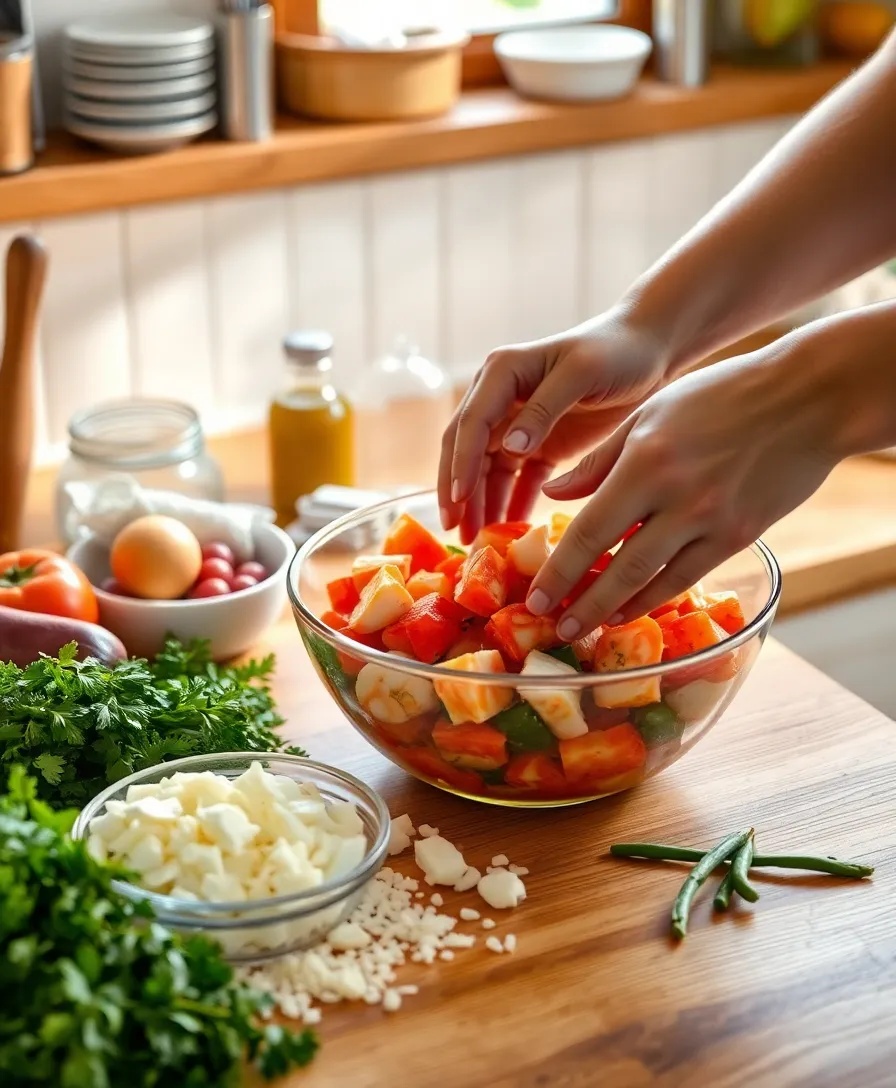
Begin by meticulously preparing your ingredients. Julienne the leeks into elegant thin strips or finely slice them. For the tomatoes, carefully peel, seed, and drain them before chopping finely, or process them through a food mill for a smooth consistency. Finally, halve the lobsters lengthwise with precision.
-
In a substantial enamelware pot, warm 2 tablespoons of the olive oil over medium heat. Introduce the prepared leeks and sauté, stirring continuously with a wooden spoon, until they achieve a delicate, barely golden hue. Should you choose to include potatoes, add them at this juncture and cook briefly.
-
Transfer to a very large skillet and heat the remaining 3 tablespoons of olive oil. Place the halved lobsters into the hot oil and sear until their shells transform into a vibrant crimson. Cover the skillet and allow them to gently simmer for 10 minutes over the lowest possible heat.
-
Return to the enamelware pot. To the softened leeks (and potatoes, if utilized), artfully arrange the strongly flavored fish, pour in its accompanying marinade, and nestle in the partially cooked lobster halves along with any precious accumulated juices. Ladle in the hot fish stock, then add sufficient boiling water to completely immerse the fish.
-
Delicately season the nascent stew with a light touch of salt and freshly ground pepper. Introduce the fragrant dried orange rind and the prepared ripe tomatoes, ensuring they are well dispersed.
-
Elevate the heat to bring the stew to a rolling boil. Allow it to cook, uncovered, at this high temperature for 5 minutes. Incorporate any remaining fish, if not previously added, and continue boiling for an additional 10 minutes to ensure full flavor development.
-
Following the prescribed 15 minutes of cooking, gently test the thicker portions of the fish and any potatoes (if included) to confirm they are exquisitely tender and thoroughly cooked.
-
Pour a small measure of the simmering fish stock into the skillet previously used for the lobsters. Swirl vigorously to deglaze the pan, capturing all the rich, caramelized residues. Integrate this highly flavorful liquid into your bouillabaisse, enriching its depth.
-
For a traditional presentation, line the base of a warmed soup tureen with generous slices of rustic, stale bread. Ladle the bouillabaisse into the tureen and serve immediately. As an alternative, you may artfully arrange the fish portions into individual warmed soup bowls, then pour the aromatic broth into the tureen, offering each guest an additional bowl for the broth.
Recipe Notes
This interpretation of classic bouillabaisse hails from a vintage culinary compendium, hinting at its eclectic charm with a title that might conjure images of ‘Burnt Toast and Other Epicurean Delights.’ True to its heritage, this recipe champions intuition and improvisation, allowing the discerning chef to select ‘strongly flavored fish,’ ‘fish marinade,’ and ‘hot fish stock’ in amounts that resonate with personal taste and the bounty of available ingredients. The time-honored practice of lining your serving vessel with stale bread is not merely tradition; it’s a testament to savoring every last, richly flavored drop of this magnificent broth.
Global Heritage Archive
Anthropological & Spice Migration Record
“A celebrated and rustic seafood stew from the French Mediterranean coast, born from fishermen’s daily catch and elevated to a sophisticated culinary icon.”
🌿 Spice & Botanical Migration
Black pepper, originating from the Malabar Coast of India, traveled west along the ancient Spice Routes, becoming a prized commodity in Europe by Roman times. Oranges, whose dried rind is used here, trace their botanical roots to Southeast Asia and were introduced to the Mediterranean by Arab traders in the early Middle Ages. The ‘red peppers’ (likely bell peppers or a mild chili), ripe tomatoes, and potatoes are all New World crops, testament to the profound culinary impact of the Columbian Exchange, integrating into Mediterranean cuisine from the 16th century onwards.
🏺 Historical & Archaeological Record
While the exact ‘Bouillabaisse’ recipe is relatively recent, the concept of a fish stew cooked in a cauldron dates back to antiquity in coastal Mediterranean cities. Evidence of fish consumption and basic pottery for boiling liquids suggests similar preparations were made by the Greeks in Massalia (modern-day Marseille) around 600 BC, and by the Romans throughout their empire.
💡 Little Known Facts
- The name ‘Bouillabaisse’ comes from the Provençal Occitan words ‘bolhir’ (to boil) and ‘abaissar’ (to reduce heat, simmer), describing the two-stage cooking process.
- Traditional Bouillabaisse dictates a specific serving ritual: the broth is served first, often with croutons and rouille, followed by the various fish cut into pieces.
📸 Made This Heritage Recipe?
We would love to see how your dish turned out! Send a photo of your culinary creation to [email protected] to be featured in our community gallery.
Leave a review and rate this recipe below!
Curated Literature & Washington DC Downtown Calendar
The Culinary Alchemist: Modern Gastronomy & Flavor Pairing
By LDN Gastronomy Series
Artisanal technique, seasonal sourcing, and kitchen mastery.
Upcoming Downtown Happenings
Live acoustic sessions, gallery receptions, literary salons, and independent trade shows across Washington DC.
