
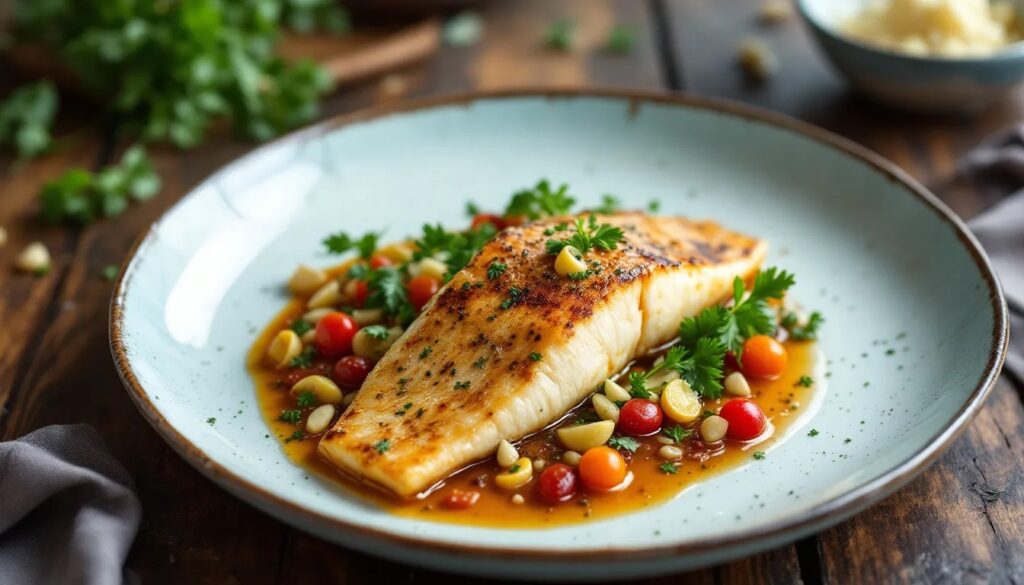
At its heart, this dish is quintessentially French. The delicate sole fillet, a prized fish in European cuisine, is treated with the utmost respect—carefully rolled around a flavorful stuffing, then gently poached in a white wine and butter sauce. This technique, known as *paupiette* or *roulade*, is a hallmark of classical French cooking, emphasizing elegance, precision, and the art of transforming simple ingredients into a sublime experience. The use of shallots, fresh herbs like parsley and chives, and the foundational richness of unsalted butter and dry white wine are all pillars of French culinary tradition, creating a bedrock of familiar comfort and sophisticated taste.
However, the plot thickens with the crab meat filling and the inclusion of minced pimiento. The concept of a rich, savory crab stuffing, particularly one featuring ‘lump crab meat’ and the subtle sweetness of pimiento, speaks volumes of culinary influences beyond continental France. This element is strongly reminiscent of American Southern and Gulf Coast cuisines, where crab cakes, stuffed shrimp, and other crab-centric preparations are not merely dishes but cultural institutions. The pimiento, a sweet red pepper native to the Americas, further solidifies this New World connection, a direct result of the Columbian Exchange that reshaped global pantries centuries ago. It’s here that the dish transcends its singular identity, becoming a delicious conversation between two distinct culinary worlds.
Then, the final, decisive French signature arrives: a touch of Ricard, the iconic anise-flavored liqueur from Marseille. This addition, whether subtle or pronounced, infuses the sauce with a distinctive herbal warmth and a hint of licorice, instantly transporting the diner to the sun-drenched cafés of Provence. Ricard, a form of pastis, is more than just an ingredient; it’s a cultural marker, a taste of the Mediterranean lifestyle, and its presence firmly roots this sophisticated creation within the bounds of French culinary innovation.
For the ambitious home cook, mastering this dish is a rewarding endeavor. Start with impeccably fresh sole fillets and high-quality lump crab meat. The secret to a perfect roll lies in not overfilling the fillets; a gentle, even thickness ensures they cook uniformly. When preparing the sauce, take care to deglaze the pan with the dry white wine and lime juice, scraping up all the savory bits, before whisking in the cold butter in small pieces for a velvety, emulsified finish. The Ricard should be added judiciously, allowing its fragrant essence to permeate without overwhelming the delicate flavors of the sole and crab.
In essence, “Rolled Sole Fillets with Crab Meat Filling” is not just a recipe; it’s a historical document on a plate. It’s a celebration of French culinary artistry, a nod to the robust flavors of American seafood traditions, and a testament to the continuous, beautiful exchange of ingredients and ideas across continents. Prepare it not just as a meal, but as an edible journey through culinary history.
ROLLED SOLE FILLETS WITH CRAB MEAT FILLING
Embark on a culinary journey with these exquisite Sole Roulades, a timeless classic reimagined for the modern gourmet. Delicate fillets of sole are artfully encased around a sumptuous, savory crab meat filling, a harmonious blend of tender crustacean and aromatic herbs. Each elegant roulade is then sumptuously bathed in a bright, zesty lime butter sauce, its vibrant tang perfectly complementing the rich seafood. Served atop a bed of tender, perfectly wilted spinach, this dish is a testament to sophisticated flavors and refined presentation, ideal for impressing guests at a dinner party or elevating a cherished family gathering into a special occasion. It’s an homage to an era of gracious dining, where comfort met elegance in perfect culinary balance.
Ingredients
-
1/4
cup
shallots
chopped -
1
garlic clove
minced -
1
Tablespoon
unsalted butter -
1/4
cup
crustless fresh bread cubes
1/2 inch -
1/2
cup
white fish stock or clam juice -
1/4
cup
minced pimiento
drained -
1 1/2
pound
lump crab meat -
1/2
teaspoon
dried thyme
crumbled -
2
Tablespoons
fresh parsley
minced -
6
sole fillets
six-ounce -
2
Tablespoons
fresh chives
snipped -
2
pounds
spinach
coarse stems discarded and leaves washed and drained -
12
cooked crab claws
for garnish, if desired -
2
Tablespoons
shallots
minced for Lime Butter Sauce -
1
teaspoon
grated lime rind
for Lime Butter Sauce -
1/4
cup
fresh lime juice
for Lime Butter Sauce -
1/4
cup
dry white wine
for Lime Butter Sauce -
1
stick
unsalted butter
cut into pieces, for Lime Butter Sauce -
White pepper
to taste, for Lime Butter Sauce -
1
teaspoon
Ricard or other anise flavored liqueur
or to taste, for Lime Butter Sauce -
Salt and pepper
to taste
Instructions
-
In a substantial skillet, melt the tablespoon of unsalted butter over medium heat. Introduce the finely diced shallots and minced garlic, sautéing gently until the shallots become translucent and emit a fragrant aroma, taking care not to brown them. Remove from heat and set aside to cool slightly.
-
Place the bread cubes into a medium bowl. Pour the fish stock or clam juice over them, ensuring they are well-moistened. Allow to steep for approximately two minutes, then delicately squeeze out any excess liquid, reserving the softened bread.
-
In a separate, larger mixing bowl, combine the prepared softened bread, the cooled shallot-garlic mixture, the pristine crabmeat, finely diced pimiento, fresh chopped parsley, snipped chives, dried thyme, and season generously with salt and freshly ground pepper to taste. Mix all components thoroughly yet gently, ensuring a cohesive and well-distributed stuffing.
-
Lay the six sole fillets flat on a clean surface, positioning them skin-side down with the narrower end oriented towards you. Divide the crab meat stuffing uniformly among the fillets. Carefully spoon a portion onto the broader end of each fillet, then meticulously roll each one into a neat spiral, securing the filling within.
-
Individually enfold each rolled fillet within a piece of aluminum foil, sealing the ends to create a secure packet. Gently place the foil-wrapped sole roulades into a pan containing simmering (not boiling) water. Poach for ten minutes, ensuring the water maintains a gentle simmer throughout.
-
While the sole poaches, commence the preparation of the Lime Butter Sauce: In a small saucepan, combine the minced shallots, finely grated lime rind, freshly squeezed lime juice, and dry white wine. Bring the mixture to a gentle simmer over medium heat and allow it to reduce slightly, concentrating the flavors.
-
Gradually incorporate the unsalted butter, cut into small pieces, whisking continuously until the sauce achieves a luscious, emulsified consistency. Season with white pepper to taste. Should you desire, stir in the teaspoon of Ricard or another anise-flavored liqueur for an intriguing aromatic nuance.
-
In a spacious kettle, introduce the two pounds of fresh spinach. Utilizing only the residual water clinging to the leaves after washing, cover the kettle and cook for two to three minutes, or until the spinach has just wilted. Promptly drain the spinach thoroughly to remove any excess liquid.
-
Artfully arrange equal portions of the drained, wilted spinach onto six individual serving plates. Carefully unwrap each sole roulade and place it elegantly, spiral side up, atop the spinach bed.
-
Generously nap each sole fillet with the warm, zesty lime butter sauce. For an added touch of grandeur, garnish each plate with two cooked crab claws, if desired.
Recipe Notes
To elevate the presentation and add a magnificent flourish, consider adorning each plate with a pair of cooked crab claws. For those seeking an intriguing aromatic nuance, a teaspoon of Ricard or a comparable anise-flavored liqueur can be stirred into the lime butter sauce just before serving, lending a subtle depth and complexity to the overall flavor profile.
Global Heritage Archive
Anthropological & Spice Migration Record
“This dish embodies a sophisticated culinary culture that marries classical French technique with rich, flavorful seafood preparations, often served for elegant occasions or fine dining.”
🌿 Spice & Botanical Migration
The recipe showcases a fascinating journey of ingredients: shallots, garlic, thyme, and parsley originate from the Mediterranean basin, spreading across Europe through ancient trade routes. White pepper hails from Southeast Asia, making its way to European tables via the historic Spice Routes. Most notably, the pimiento, a sweet red pepper, is a New World ingredient introduced to Europe through the Columbian Exchange, indicating a transatlantic culinary dialogue in this dish.
🏺 Historical & Archaeological Record
While the exact ‘rolled sole fillet’ preparation is a more modern culinary refinement (likely 17th-19th century European haute cuisine), the practice of stuffing fish for cooking can be traced back to ancient Roman times, with recipes for ‘stuffed fish’ appearing in Apicius’s ‘De re coquinaria,’ circa 4th century CE. The filleting of fish and combining seafood with aromatic stuffings has been a continuous culinary evolution.
💡 Little Known Facts
- The technique of rolling fish fillets (paupiettes or roulades) is a classic French culinary method, designed to create an elegant presentation and ensure even cooking with a flavorful stuffing.
- Ricard, the anise-flavored liqueur, is a traditional French pastis invented in Marseille in 1932. Its inclusion firmly grounds the dish in French gastronomy, particularly that of the South, where pastis is a beloved aperitif and cooking ingredient.
📸 Made This Heritage Recipe?
We would love to see how your dish turned out! Send a photo of your culinary creation to [email protected] to be featured in our community gallery.
Leave a review and rate this recipe below!
Curated Literature & Washington DC Downtown Calendar
The Culinary Alchemist: Modern Gastronomy & Flavor Pairing
By LDN Gastronomy Series
Artisanal technique, seasonal sourcing, and kitchen mastery.
Upcoming Downtown Happenings
Live acoustic sessions, gallery receptions, literary salons, and independent trade shows across Washington DC.
