
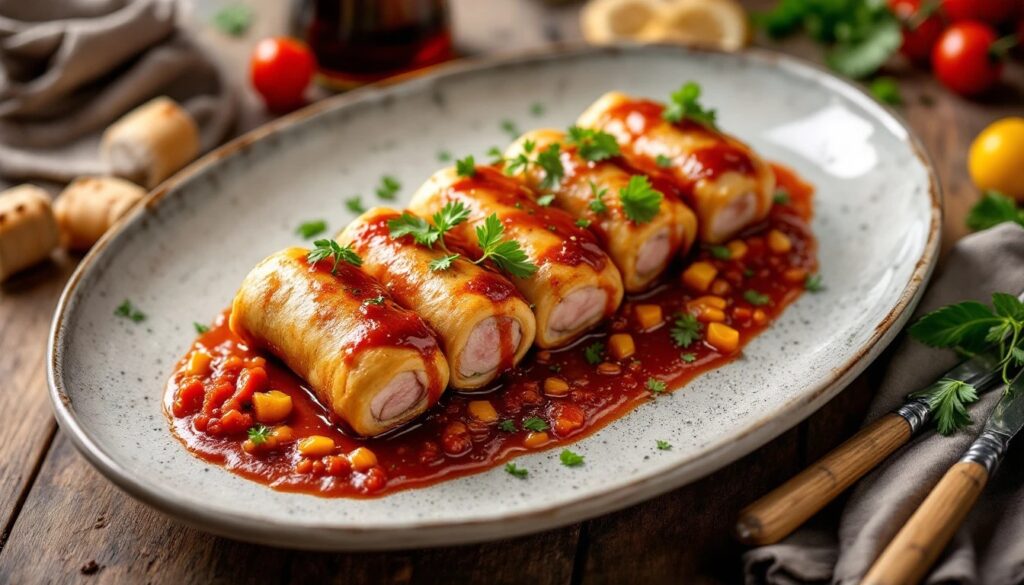

Imagine the comforting aroma of slowly braising meat, rich with the tang of ripe tomatoes and the earthy perfume of herbs, wafting from a sun-drenched kitchen. This is the essence of “Pork Rolls with Wine and Tomato Reduction,” a dish that transcends mere sustenance, embodying centuries of culinary evolution, migration, and the deep-seated human desire for nourishing, flavorful food. While the name might sound formal, its spirit is pure rustic comfort, a testament to the ingenuity and resourcefulness of Italian home cooking, particularly from the country’s vibrant southern regions.
At its heart, this dish is an “involtino,” an Italian term meaning “little bundle” or “roll.” This culinary technique, born of necessity and creativity, dates back through generations, a clever way to transform less noble cuts of meat into something tender and extraordinary. Thin slices of pork, pounded to an even submission, become canvases for simple yet profound fillings—perhaps a whisper of cheese, a scattering of breadcrumbs, and a generous sprig of fresh parsley. Rolled tightly and seared to a golden perfection, these bundles are then destined for a slow, loving simmer.
But the true magic, the vibrant pulse of this dish, lies in its sauce: a rich, garnet-hued reduction of wine and tomatoes. The history of these key ingredients tells a fascinating tale of global migration. Tomatoes, the undisputed superstar, were originally exotic fruits from the Andes, brought to Europe by Spanish conquistadors after the Columbian Exchange. For over a century, these “golden apples” (pomodoro) were viewed with suspicion, cultivated only for their ornamental beauty, their lineage to the nightshade family raising fears of toxicity. It was in the fertile lands of Southern Italy, particularly around Naples, that they first found their culinary destiny in the late 17th and 18th centuries, forever changing Italian cuisine. Paired with wine, an ancient libation with roots in the Caucasus and spread across the Mediterranean by Greeks and Romans, the reduction transforms into a complex, savory elixir, tenderizing the pork and infusing every bite with depth.
Adding to this tapestry of flavors are the humble yet essential onion and the bright, verdant fresh parsley. Onions, believed to originate in Central Asia, have been a foundational aromatic in nearly every cuisine for millennia, traveling alongside migrating populations. Parsley, native to the Mediterranean, has adorned dishes and offered medicinal properties since antiquity, its fresh, peppery notes cutting through the richness of the sauce. Even black pepper, a seemingly universal seasoning, hails from the Malabar Coast of India, its journey to European tables a testament to the enduring power of the Spice Routes.
Preparing this dish is a meditative act. Choose a tender cut of pork, like loin or tenderloin, for best results. Pounding the meat thinly ensures even cooking and a delightful texture. Don’t rush the searing; a good browning builds the initial layer of flavor through the Maillard reaction. And for the reduction, allow it ample time to simmer, letting the flavors meld and deepen, transforming into a velvety, luscious sauce. This isn’t just a meal; it’s a culinary journey on a plate, a story told through ingredients that have traversed continents and generations. Serve it with a hearty pasta, creamy polenta, or simply crusty bread to soak up every last drop of its historical deliciousness. It’s a dish that reminds us that food, in its purest form, is a living archive of human movement, adaptation, and enduring creativity.
Pork Rolls with Wine and Tomato Reduction
A testament to culinary alchemy, these exquisite pork rolls are gently coaxed to perfection within a profound wine reduction, gracefully infused with the sweetness of ripe tomatoes and aromatic onions. This venerable technique elevates humble components into an unforgettable symphony of flavors, ideal for intimate family gatherings or sophisticated soirées, embodying the timeless artistry of artisanal kitchen wisdom.
Ingredients
- Varies N/A Pork rolls Quantities not specified, assumed pre-prepared
- Varies N/A Wine Enough to reduce by half, type not specified
- Varies N/A Tomatoes Type and quantity not specified
- To taste N/A Salt
- To taste N/A Pepper
- Varies N/A Onion Quantity not specified, cooked with pork and tomatoes
- Varies N/A Fresh parsley Chopped, for garnish
Instructions
-
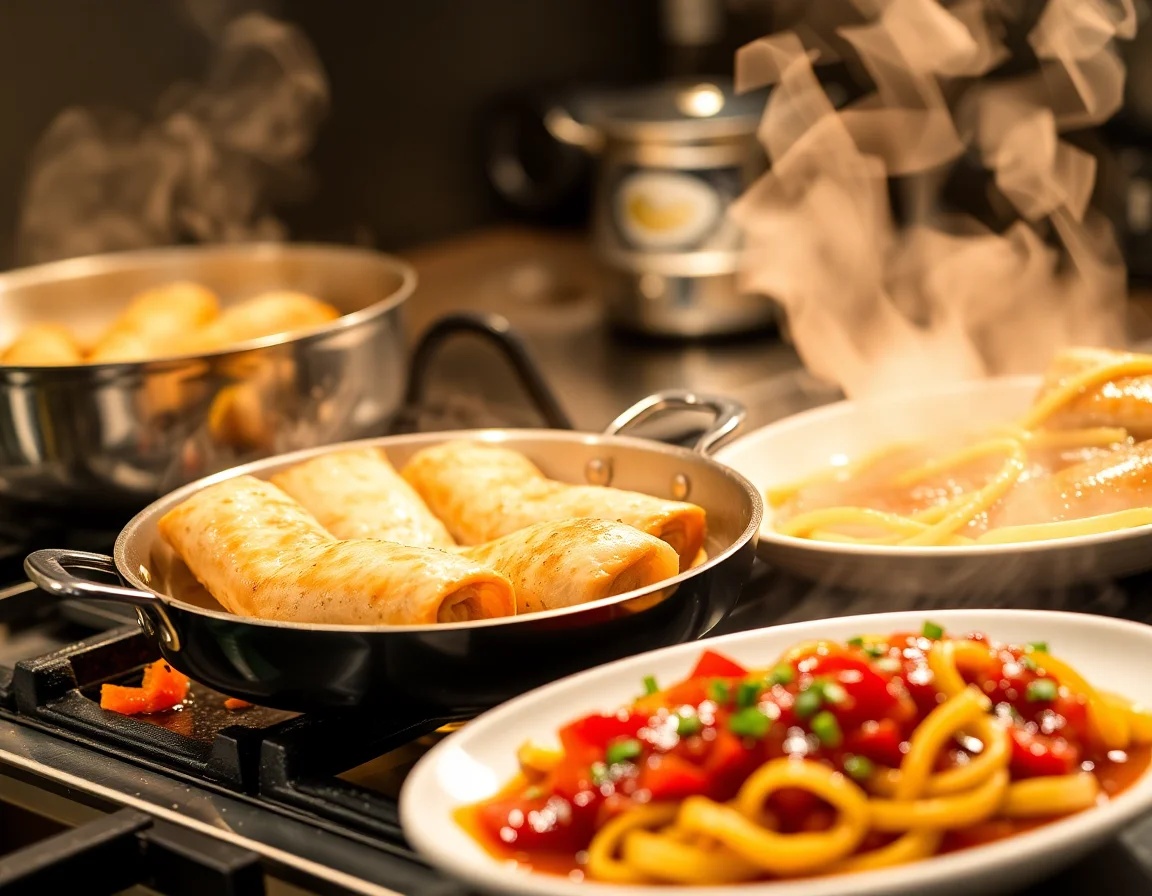
Carefully nestle the prepared pork rolls back into the skillet, allowing them to gently warm and caramelize for approximately five minutes, ensuring even browning by turning them periodically.
-
Pour in the wine, bringing the liquid to a vigorous boil. Continue this rapid reduction until its volume is visibly halved, a process that typically takes around five minutes, concentrating its essence.
-
Lower the heat to a gentle simmer, then cover the skillet securely. Allow the rolls to meld with the developing sauce for a further ninety seconds.
-
Incorporate the tomatoes into the pan, then season the mixture judiciously with a pinch of sea salt and freshly ground black pepper to taste.
-
Re-cover the skillet and continue to cook until the pork rolls reach optimal tenderness, indicated by a skewer or fork sliding effortlessly in and out of the meat – typically achieved in approximately ten minutes.
-
Carefully lift the succulent pork rolls, tender tomatoes, and softened onions from the skillet and arrange them artfully on a warmed serving platter, reserving the exquisite pan juices.
-
Return the remaining pan juices to a high heat, bringing them to a rolling boil. Continue to reduce this liquid until it achieves a thickened, syrupy consistency, approximately ½ cup in volume.
-
Drizzle the intensely flavorful reduction generously over the prepared pork rolls, garnish elegantly with a scattering of fresh parsley, and present immediately.
Recipe Notes
This refined recipe focuses exclusively on the braising and finishing stages of pork rolls, assuming they have been previously prepared and assembled. Please note that specific quantities for the pork, wine, tomatoes, and onions are intentionally left flexible to accommodate varying batch sizes and personal preferences, and the initial preparation of the rolls themselves is beyond the scope of this particular instruction set.
Global Heritage Archive
Anthropological & Spice Migration Record
“A culinary culture deeply rooted in agricultural abundance, characterized by robust flavors, slow cooking, and the artful use of local produce, often centered around family meals.”
🌿 Spice & Botanical Migration
Black pepper, native to the Malabar Coast of India, embarked on a millennia-long journey via the ancient Spice Routes, reaching the Roman Empire and eventually becoming a staple seasoning across Europe. Onions, believed to originate in Central Asia, spread globally through ancient trade networks, establishing themselves as a foundational aromatic. Parsley is indigenous to the central and eastern Mediterranean region, cultivated by Greeks and Romans for both culinary and medicinal purposes. Tomatoes, a New World fruit from the Andes, were brought to Europe by the Spanish after the Columbian Exchange, profoundly transforming Mediterranean cuisine from the 17th century onwards.
🏺 Historical & Archaeological Record
While the general technique of stuffing and rolling meat has ancient precursors (e.g., Roman recipes in Apicius from the 4th century CE), the specific combination of pork rolls braised in a wine and tomato reduction firmly places this dish’s written history post-Columbian Exchange. The earliest documented use of tomatoes in European cooking appears in Italian texts from the late 17th century, notably Antonio Latini’s ‘Lo Scalco alla Moderna’ (1692), which includes a ‘Salsa di Pomadoro’. The full integration of tomatoes into meat preparations like ‘involtini’ (or ‘bracioli’ in Southern Italy) with wine reductions solidified throughout the 18th and 19th centuries, becoming a hallmark of regional Italian cuisine.
💡 Little Known Facts
- The concept of ‘involtini’ (Italian for ‘little bundles’ or ‘rolls’) historically originated as a resourceful way for peasants to utilize less expensive cuts of meat, stretching them into satisfying meals.
- When tomatoes were first introduced to Europe from the Americas, they were widely regarded with suspicion as being poisonous due to their botanical relation to deadly nightshades, and were primarily grown for ornamental purposes for over a century before being embraced culinarily.
📸 Made This Heritage Recipe?
We would love to see how your dish turned out! Send a photo of your culinary creation to [email protected] to be featured in our community gallery.
Leave a review and rate this recipe below!
Curated Literature & Washington DC Downtown Calendar
The Culinary Alchemist: Modern Gastronomy & Flavor Pairing
By LDN Gastronomy Series
Artisanal technique, seasonal sourcing, and kitchen mastery.
Upcoming Downtown Happenings
Live acoustic sessions, gallery receptions, literary salons, and independent trade shows across Washington DC.
