
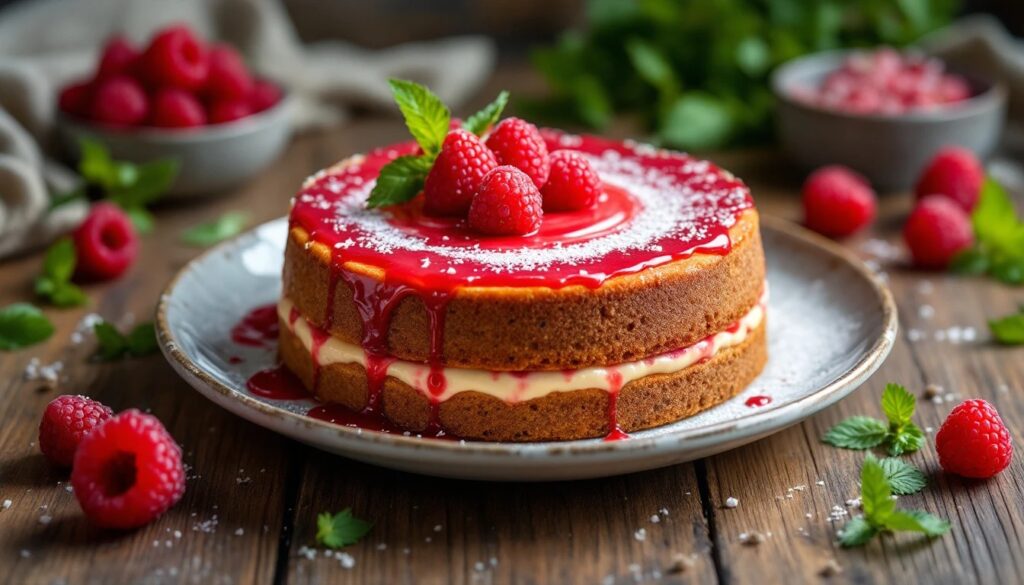

Imagine a pastry that whispers tales of ancient fields and bustling European bakeries, a confection that marries the earthiness of tiny seeds with the bright burst of summer fruit. This is the essence of the Poppy Seed Raspberry Cake, a dish that, while seemingly straightforward, carries a rich tapestry of history, migration, and culinary tradition within its moist crumbs. At its heart lies the humble poppy seed, an ingredient far older and more globally traveled than many realize.
The poppy (Papaver somniferum) itself is a testament to human ingenuity and agricultural heritage, with its origins tracing back to the Eastern Mediterranean and Asia Minor. From these ancient lands, its cultivation spread across Europe in the Neolithic era, its tiny seeds finding their way into breads, porridges, and eventually, the glorious cakes and pastries that define Central and Eastern European baking. For millennia, poppy seeds have been more than just a foodstuff; they have been symbols of fertility, prosperity, and even peace, often adorning tables during festive occasions like Christmas Eve or Purim in Ashkenazi Jewish traditions, believed to bring good fortune.
The distinctive character of this particular cake is further shaped by the inclusion of sour cream. This cultured dairy product is a cornerstone of Central and Eastern European cuisines, revered for its ability to lend unparalleled moisture, a delicate tang, and a rich crumb to baked goods. It’s the secret behind many beloved cakes, adding a complexity that butter alone cannot achieve, balancing the sweetness and providing a counterpoint to the dense, nutty poppy seed filling.
Then there are the raspberries, jewels of the summer garden, native to Europe and Asia. Their vibrant color and tart-sweet flavor cut through the richness of the cake, offering a refreshing contrast. The note to use “semi-frozen” raspberries is a practical tip, often employed to prevent the delicate fruit from completely collapsing into the batter, preserving their form and ensuring pockets of juicy goodness throughout the cake. This thoughtful integration of fruit speaks to a culinary philosophy that values both seasonality and careful preparation.
The subtle perfume of vanilla, though now ubiquitous, represents another fascinating chapter in culinary migration. Hailing from the distant shores of Mesoamerica, specifically among the Totonac people of present-day Mexico, vanilla was introduced to Europe by Spanish conquistadors in the 16th century. For centuries, it remained an exotic luxury, its cultivation outside its native habitat proving challenging. It wasn’t until the 19th century, with the development of hand-pollination techniques, that vanilla became more widely available, forever transforming global confectionery with its warm, aromatic embrace.
Preparing this cake is an act of historical homage. To truly bring out the poppy seeds’ flavor and texture, many traditional recipes call for them to be soaked or even ground before incorporation, releasing their full, nutty potential. The key to a tender cake lies in using room temperature ingredients and avoiding overmixing the batter, which can develop the gluten too much, leading to a tough crumb. Gently folding in the semi-frozen raspberries ensures they retain their structure, scattering their ruby brilliance throughout the golden cake.
This Poppy Seed Raspberry Cake is more than just a dessert; it is a delicious narrative, a bridge connecting ancient agricultural practices with modern palates, tracing the journey of ingredients across continents and through cultures. It’s a comforting slice of heritage, inviting you to savor each bite and reflect on the intricate dance of history, tradition, and flavor that culminates in such a delightful culinary creation. A perfect balance of earthy, tart, and sweet, it promises a moment of pure, unadulterated pleasure, rooted deeply in the heart of European baking traditions.
POPPY SEED RASPBERRY CAKE
This delightful Poppy Seed Raspberry Cake, a timeless treat from a cherished church cookbook, brings together the delightful crunch of poppy seeds with the bright, tart burst of raspberries. Moistened with sour cream, this cake promises a tender crumb and a beautifully balanced flavor, perfect for any special gathering or afternoon tea.
Ingredients
- 1 1/2 sticks butter soft
- 2 cups sugar
- 3 eggs
- 1 tsp vanilla extract
- 2 3/4 cups all-purpose flour
- 1/2 tsp baking soda
- 1/2 tsp salt
- 1 cup sour cream
- 3 tbsp poppy seeds
- 1 bag semi-frozen raspberries
Instructions
-
In a large bowl, cream together the soft butter, sugar, and eggs until light and fluffy.
-
Stir in the vanilla extract.
-
In a separate medium bowl, whisk together the all-purpose flour, baking soda, and salt.
-
Gradually add the dry ingredients to the wet mixture alternately with the sour cream, beginning and ending with the dry ingredients, mixing until just combined after each addition.
-
Gently fold in the poppy seeds and semi-frozen raspberries.
-
Pour the batter into an oiled and floured Bundt pan.
-
Bake at 350°F (175°C) for 1 hour.
Recipe Notes
Recipe submitted by Jan Barber.
Global Heritage Archive
Anthropological & Spice Migration Record
“A culinary culture deeply rooted in rich, often fruit- or nut-filled pastries and cakes, reflecting centuries of tradition, celebration, and the resourceful use of local and introduced ingredients like poppy seeds and cultured dairy.”
🌿 Spice & Botanical Migration
The star ingredient, poppy seeds (Papaver somniferum), are native to the Eastern Mediterranean and Asia Minor, spreading throughout Europe in ancient times where their culinary use became deeply embedded, particularly in Central and Eastern European baking. Vanilla (Vanilla planifolia), on the other hand, embarked on a much later journey, originating in Mesoamerica and introduced to Europe via the Columbian Exchange in the 16th century, eventually becoming a global flavoring staple.
🏺 Historical & Archaeological Record
The earliest archaeological evidence of poppy seed cultivation dates back to the Neolithic period in Europe, with findings from Swiss lake dwellings around 3800-3500 BCE. While rudimentary cakes existed in antiquity, the development of refined, leavened cakes using specific ingredients like butter, sugar, and eggs, characteristic of this recipe, largely emerged in European baking from the late medieval period onwards, with baking soda becoming common in the 19th century.
💡 Little Known Facts
- Poppy seeds, beyond their culinary use, were historically valued for their oil and medicinal properties; the Sumerians referred to them as the “joy plant” around 3000 BCE due to their narcotic alkaloids.
- In many Central and Eastern European cultures, poppy seed pastries are traditional during winter holidays like Christmas Eve or New Year’s, often symbolizing good fortune and abundance for the coming year.
Historical Locality Cartographic Map — Mestizo Media Archive
📸 Made This Heritage Recipe?
We would love to see how your dish turned out! Send a photo of your culinary creation to [email protected] to be featured in our community gallery.
Leave a review and rate this recipe below!
Curated Literature & Washington DC Downtown Calendar
The Culinary Alchemist: Modern Gastronomy & Flavor Pairing
By LDN Gastronomy Series
Artisanal technique, seasonal sourcing, and kitchen mastery.
Upcoming Downtown Happenings
Live acoustic sessions, gallery receptions, literary salons, and independent trade shows across Washington DC.
