
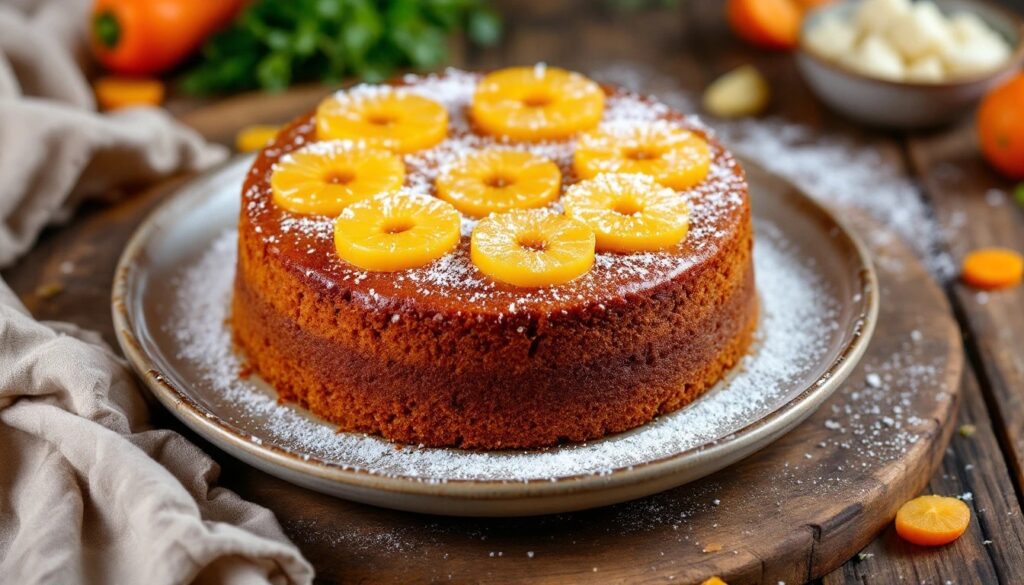

The humble carrot, a root vegetable often relegated to savory stews or crisp salads, undergoes a magnificent transformation in the world of confectionery, culminating in the beloved Pineapple Carrot Cake. This isn’t just a dessert; it’s a testament to culinary ingenuity, global trade, and the ever-evolving palate of humanity. Its rich, moist crumb, studded with vibrant orange shreds, crunchy walnuts, sweet pineapple, and fragrant coconut, tells a story far grander than its simple appearance suggests.
The lineage of carrot cake winds its way back to medieval Europe, a time when sugar was a luxury. Clever cooks, facing sweetening challenges, turned to readily available root vegetables like carrots, whose natural sugars provided a much-needed sweetness to puddings and tarts. These early iterations bore little resemblance to the cake we know today, but they laid the foundational concept of the carrot as a dessert ingredient. Fast forward centuries, and the carrot cake re-emerged, particularly gaining traction in America during World War II, when rationing made sugar scarce once more and recipes utilizing alternative sweeteners flourished. Its meteoric rise in popularity in the 1970s cemented its status as a quintessential American comfort food, a staple at potlucks, bakeries, and family gatherings.
But the true magic, and indeed the fascinating migration story, lies in its supporting cast. The inclusion of pineapple and coconut immediately transports this cake from its European roots to the sun-drenched tropics. Pineapple, indigenous to the Amazon basin, journeyed across the Atlantic with Columbus, becoming a symbol of hospitality and luxury in colonial America before canned versions made it a household staple. Flaked coconut, derived from the versatile palm tree native to Southeast Asia, mirrors a similar transoceanic journey, its dried form making it accessible far from its equatorial origins. And then there are the spices: cinnamon from the forests of Sri Lanka, nutmeg from the tiny Banda Islands, and vanilla from the Mesoamerican rainforests. Each embarked on epic voyages along ancient spice routes and through the Columbian Exchange, their potent aromas bridging continents and centuries, arriving in our kitchens to infuse this cake with warmth and complexity.
Crafting the perfect Pineapple Carrot Cake is an act of gentle alchemy. The shredded carrots lend not just sweetness but also an incredible moistness, preventing the cake from drying out. The walnuts add a delightful textural contrast, while the pineapple contributes a tangy brightness that cuts through the richness. When preparing, remember a few key kitchen tips: ensure your carrots are finely shredded for even distribution and moisture, and thoroughly drain your crushed pineapple to prevent the cake from becoming too wet. Don’t overmix the batter; combine the wet and dry ingredients just until moistened to ensure a tender crumb. And a final, crucial step – allow the cake to cool completely before applying any frosting, should you choose to add a classic cream cheese topping, to prevent a melted, messy affair. This Pineapple Carrot Cake is more than just a recipe; it’s a celebration of global flavors, historical ingenuity, and the timeless joy of baking.
PINEAPPLE CARROT CAKE
Unveil a culinary treasure that transcends the ordinary: a Pineapple Carrot Cake. This exquisite creation masterfully marries the sun-drenched sweetness of crushed pineapple with the earthy depth of freshly grated carrots, all enrobed in a tender, moist crumb. Each bite is a textural symphony, punctuated by the delightful crunch of walnuts and the tropical whisper of shredded coconut. It's a confection designed to captivate, offering an elevated dessert experience perfect for sophisticated gatherings or an indulgent moment of personal solace.
Ingredients
- 2 cups flour None
- 1 teaspoon baking powder None
- 2 teaspoon cinnamon None
- 1½ cups sugar None
- 3 eggs None
- 2 cups shredded carrots None
- 1 cup chopped walnuts None
- 2 teaspoons baking soda None
- 1 teaspoon salt None
- ¼ teaspoon nutmeg None
- 1 cup vegetable oil None
- 1 teaspoon vanilla None
- 1 cup flaked coconut None
- 1 can (8¼ oz.) crushed pineapple drained
Instructions
-
Prepare a 13x9x2-inch baking pan by thoroughly coating its interior surface with a thin layer of grease, then lightly dusting it with flour, ensuring full coverage.
-
In a substantial mixing bowl, meticulously combine and sift together the all-purpose flour, baking soda, baking powder, fine salt, and your selection of aromatic spices, guaranteeing aeration and an even blend.
-
Proceed to sequentially incorporate the granulated sugar, vegetable oil, large eggs, and pure vanilla extract into the dry ingredient mixture. Employ a sturdy wooden spoon to gently beat the components until a unified, velvety batter materializes.
-
Carefully fold in the grated carrots, shredded coconut, finely chopped walnuts, and crushed pineapple, ensuring these flavorful additions are uniformly dispersed throughout the batter.
-
Transfer the prepared batter into the awaiting baking pan and bake in an oven preheated to 350°F (175°C) for approximately 45 minutes, or until a wooden skewer inserted into the cake's center emerges free of wet batter.
Global Heritage Archive
Anthropological & Spice Migration Record
“A comforting, celebratory dessert reflecting American home baking traditions, often associated with gatherings, holidays, and a cultural appreciation for incorporating fruits and nuts into baked goods.”
🌿 Spice & Botanical Migration
Cinnamon, originating from Sri Lanka and Southeast Asia, traveled along ancient Silk and Spice Routes for millennia, reaching the Mediterranean and Europe. Nutmeg, native to the remote Banda Islands of Indonesia, was a highly coveted spice that fueled fierce colonial trade rivalries. Vanilla, a fruit of an orchid indigenous to Mesoamerica, was introduced to the rest of the world via the Columbian Exchange, becoming a global flavoring agent. These diverse spices, each with a rich history of exploration and trade, converged to define the flavor profile of this globally inspired cake.
🏺 Historical & Archaeological Record
While the modern carrot cake is a relatively recent invention (largely 20th century), the concept of using carrots in sweet baked goods or puddings can be traced back to medieval Europe. One of the earliest known recipes resembling a carrot pudding is found in a 16th-century French cookbook, predating the use of modern leavening agents.
💡 Little Known Facts
- Carrots were used as a sweetener in medieval European puddings and cakes long before refined sugar became widely available and affordable, showcasing their historical role beyond just a vegetable.
- The modern American carrot cake, with its distinct spices, nuts, and often cream cheese frosting, experienced a massive surge in popularity in the United States during the 1970s, becoming a staple on restaurant menus and in home kitchens.
Historical Locality Cartographic Map — Mestizo Media Archive
📸 Made This Heritage Recipe?
We would love to see how your dish turned out! Send a photo of your culinary creation to [email protected] to be featured in our community gallery.
Leave a review and rate this recipe below!
Curated Literature & Washington DC Downtown Calendar
The Culinary Alchemist: Modern Gastronomy & Flavor Pairing
By LDN Gastronomy Series
Artisanal technique, seasonal sourcing, and kitchen mastery.
Upcoming Downtown Happenings
Live acoustic sessions, gallery receptions, literary salons, and independent trade shows across Washington DC.
