
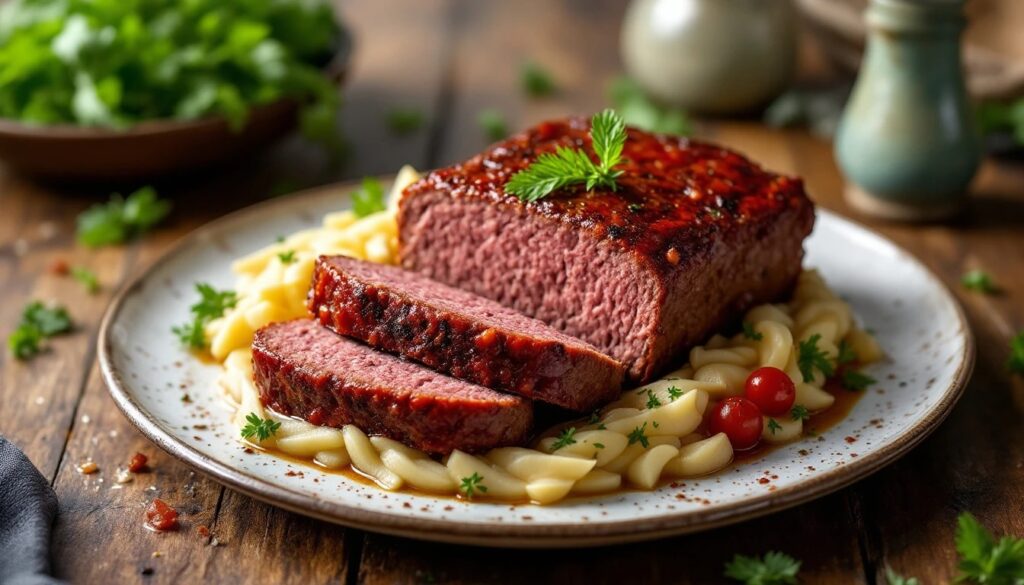
“OSTRICH MEAT LOAF (HOT), PATE (COLD)” – The very title of this recipe is a culinary riddle, a fascinating collision of the familiar and the exotic that perfectly encapsulates a distinct moment in American gastronomic history. At first glance, the humble meatloaf, a quintessential emblem of American comfort food, stands proudly alongside the surprising inclusion of ostrich, a majestic bird more commonly associated with African savannas than suburban dinner tables. But delve deeper, and this intriguing recipe reveals itself as a delicious artifact, speaking volumes about ingenuity, economic realities, and a budding adventurousness in the American kitchen.
The history of meatloaf in America is deeply entwined with the nation’s narrative of pragmatism and resourcefulness. While ground meat preparations have European antecedents dating back to medieval “haslets” and forcemeats, the modern meatloaf, baked as a cohesive loaf and often glazed, truly found its stride in the United States. Its golden age began in the late 19th century and solidified during the Great Depression. Home cooks, striving to stretch limited resources, discovered that binding less expensive cuts of ground meat with ingredients like breadcrumbs (or, as seen here, Quaker Oats), eggs, and milk, could create a substantial, satisfying, and flavorful meal. It was economical, adaptable, and could feed a family with hearty sustenance. The sweet-tangy glaze, often a simple concoction of ketchup, brown sugar, and mustard, became an iconic signature, adding a layer of irresistible caramelized flavor that perfectly complemented the savory interior.
The introduction of ostrich meat, however, shifts this narrative from pure practicality to one of culinary exploration. Ostrich farming, while centuries old in South Africa for feathers, saw a niche resurgence in other parts of the world, including the United States, in the late 20th century. Marketed as a lean, red meat alternative, low in fat and cholesterol, it appealed to health-conscious consumers and adventurous chefs alike. Its inclusion here, alongside more conventional ground turkey and sausage, suggests a cook unafraid to experiment, perhaps responding to the availability of new ingredients or seeking to elevate a classic dish with an exotic twist for a special occasion. The lean nature of ostrich is cleverly balanced by the addition of ground turkey and sausage, ensuring a moist and flavorful loaf, preventing the exotic meat from drying out during baking.
The symphony of spices and condiments further paints a vivid picture of global culinary connections. Worcestershire Sauce, a cornerstone of Anglo-American savory cooking, carries whispers of British colonial trade with India, its complex flavor profile built on tamarind, anchovies, and a medley of exotic spices. Horseradish, a pungent root with deep roots in Eastern European and Germanic cuisines, adds a fiery kick, a nod to broader European influences in American cookery. Nutmeg, hailing from the distant Banda Islands, completes the warm, aromatic embrace, a spice that fueled empires and drove ancient trade routes across oceans. Even catsup, while now quintessentially American, has a complex lineage tracing back to Southeast Asian fermented fish sauces, transforming over centuries into the tomato-based condiment we know and love. And Quaker Oats, a symbol of American industrial food production, serves not just as a binder but as a testament to the convenience and availability of processed foods in the average American pantry.
The dual designation “Pate (COLD)” is perhaps the most intriguing aspect. It speaks to a desire for versatility and refinement. A meatloaf, humble in its hot incarnation, transforms into an elegant, sliceable terrine when cooled and served cold, perfect for luncheons, picnics, or as part of a charcuterie board. This adaptability showcases a sophisticated approach to home cooking, where one preparation could serve multiple purposes, offering both comforting warmth and sophisticated coolness depending on the occasion.
For those attempting this fascinating recipe today, consider blending the meats carefully to ensure even distribution. Given ostrich’s leanness, don’t skimp on the ground sausage or turkey, as they contribute essential moisture and fat. When baking, a gentle hand with the oven temperature will prevent drying. And for the pate, patience is key: allow it to cool completely and chill thoroughly before slicing for the best texture and flavor. This Ostrich Meat Loaf, in all its hot and cold glory, is more than just a meal; it’s a journey through American culinary history, a testament to adaptability, and a delicious conversation starter on any table.
OSTRICH MEAT LOAF (HOT), PATE (COLD)
Journey to a refined culinary landscape with this remarkable Ostrich Meat Loaf, a dish that transcends the ordinary and pays homage to the sophisticated inventiveness of classic American fare. Masterfully crafted from a judicious blend of tender ground ostrich, lean turkey, and savory sausage, it delivers a flavor profile of profound richness and captivating depth. Whether presented warm as a distinguished centerpiece for an intimate dinner, or impeccably chilled and sliced as an elegant pâté for an upscale gathering or an exquisite luncheon, this versatile creation promises an unforgettable gastronomic experience.
Ingredients
- 1 pound ground ostrich Kaune's in Santa Fe by Capitol
- 1 pound ground turkey
- 1 pound ground sausage lean
- 1 whole egg beaten
- 1 cup Quaker oats or crumbled crackers
- 1 whole onion chopped
- ½ - ¾ cup milk
- 3 tablespoons brown sugar
- ¼ cup catsup
- 1 teaspoon dry mustard
- 2 teaspoons salt
- ½ teaspoon pepper
- 2 tablespoons Worcestershire Sauce
- ½ - 1 teaspoon horseradish
- ½ teaspoon nutmeg
Instructions
-
Commence by preheating your oven to an optimal 375°F (190°C).
-
Line a substantial 9 x 13-inch baking pan with heavy-duty aluminum foil, ensuring complete coverage for effortless release.
-
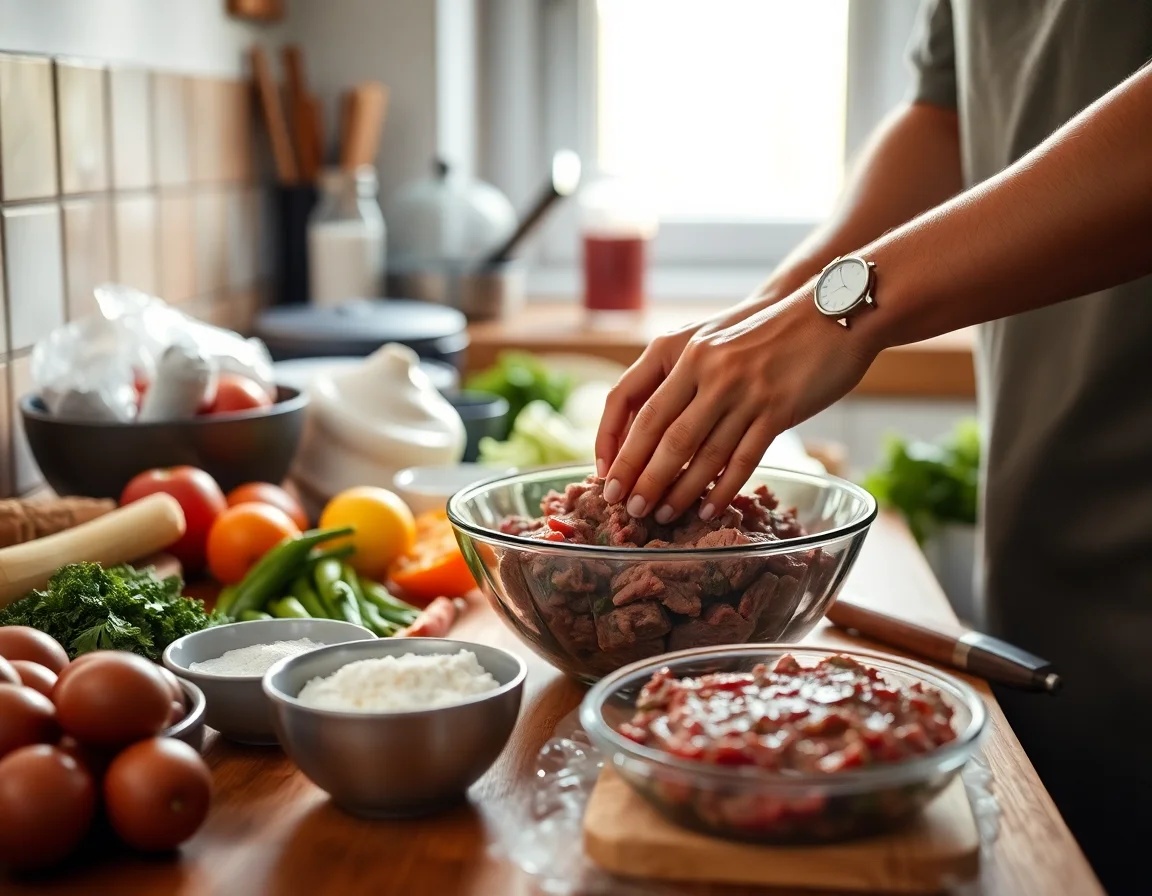
In a generously sized mixing bowl, gently combine the ground ostrich, ground turkey, and lean ground sausage until just incorporated.
-
Within a separate, medium-sized bowl, whisk together the beaten egg, finely crumbled old-fashioned oats (or cracker crumbs), minced onion, fresh milk, rich brown sugar, classic catsup, piquant dry mustard, kosher salt, freshly ground black pepper, robust Worcestershire sauce, zesty prepared horseradish, and a pinch of aromatic nutmeg until thoroughly blended.
-
Carefully introduce the prepared liquid mixture to the combined ground meats, folding gently yet comprehensively until all ingredients are evenly distributed.
-
Divide the meticulously prepared meat mixture into two distinct, equal portions, then artfully sculpt each into a uniform loaf shape.
-
Position the two sculpted loaves crosswise within the prepared baking pan, allowing for even heat circulation.
-
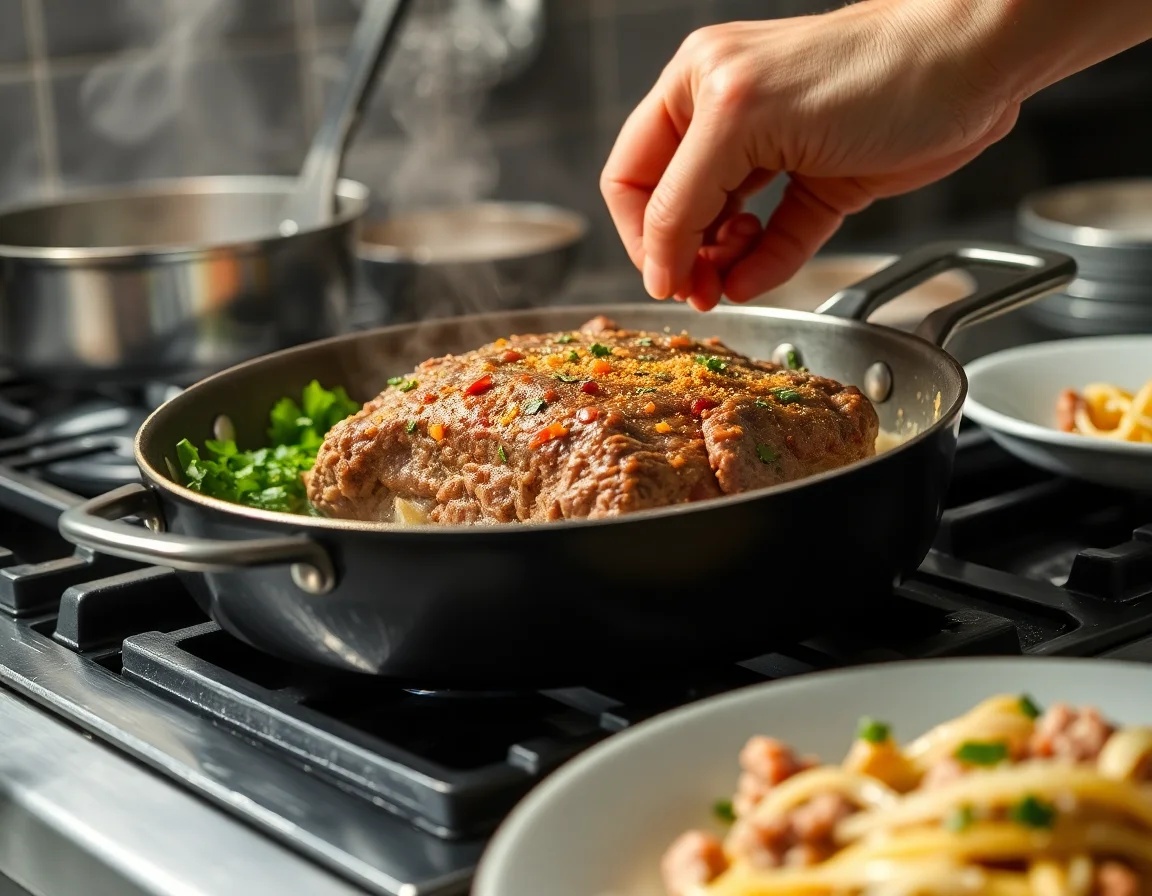
Roast in the preheated oven for approximately 1 hour and 30 minutes, or until the exterior achieves a beautiful golden-brown hue and the interior is fully cooked through, registering an internal temperature of 160°F (71°C).
Recipe Notes
For an exceptional hot presentation, consider serving alongside a vibrant green chili jelly or a piquant artisanal salsa. The seasoning profile can be subtly augmented to align with individual preferences. To achieve the most harmonious texture and flavor integration, it is highly recommended to bring all ingredients to room temperature prior to commencing the mixing process.
Global Heritage Archive
Anthropological & Spice Migration Record
“A culinary culture characterized by comfort food traditions, resourceful adaptation of ingredients, and a willingness to incorporate both traditional and exotic elements.”
🌿 Spice & Botanical Migration
Black pepper (from India) and nutmeg (from Indonesia’s Banda Islands) journeyed global trade routes, including the ancient Spice Routes, to reach Western kitchens. Horseradish, native to Southeast Europe and Western Asia, spread across Europe before arriving in the Americas with immigrants. Worcestershire Sauce, an English creation, embodies global migration with its blend of ingredients like tamarind and anchovies, reflecting British colonial trade connections with South Asia.
🏺 Historical & Archaeological Record
The earliest written records describing dishes of ground meat combined with binders date back to ancient Roman texts like Apicius (4th century CE). These Roman recipes for ‘Minutal’ or other minced meat preparations represent the foundational preparatory technique for this dish type, though the specific ‘meatloaf’ form as a baked loaf largely developed in 19th-century America.
💡 Little Known Facts
- While ground meat dishes have European roots, meatloaf’s distinct form as a baked loaf became an American staple, particularly popularized during the Great Depression era as an economical and versatile family meal.
- Ostrich farming for meat, distinct from its historical use for feathers, saw a resurgence in the late 20th century in the United States, appealing to health-conscious consumers seeking lean red meat alternatives.
Historical Locality Cartographic Map — Mestizo Media Archive
📸 Made This Heritage Recipe?
We would love to see how your dish turned out! Send a photo of your culinary creation to [email protected] to be featured in our community gallery.
Leave a review and rate this recipe below!
Curated Literature & Washington DC Downtown Calendar
The Culinary Alchemist: Modern Gastronomy & Flavor Pairing
By LDN Gastronomy Series
Artisanal technique, seasonal sourcing, and kitchen mastery.
Upcoming Downtown Happenings
Live acoustic sessions, gallery receptions, literary salons, and independent trade shows across Washington DC.
