
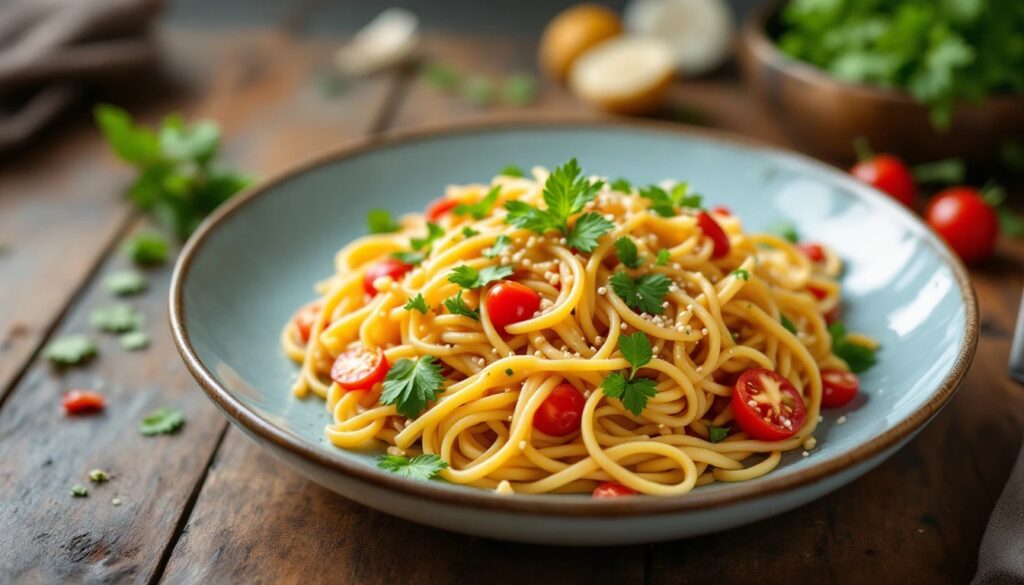
Ah, the ‘Oriental Pasta Salad.’ Just the name itself conjures a culinary time capsule, a snapshot of American kitchens in the mid-to-late 20th century, wrestling with newfound global flavors and the comforting embrace of the familiar. The term “Oriental,” now largely considered passé or even insensitive, speaks volumes about an era when “the East” was a distant, exotic concept, often encountered through a prism of convenience and Western adaptation. This dish isn’t born of ancient Asian traditions, nor is it a purist’s Italian creation; it is, rather, a fascinating culinary artifact of American ingenuity, a potluck superstar that dared to blend tri-color macaroni with mandarin oranges and soy sauce.
At its heart, this salad is a testament to the dynamic interplay of global migration, trade, and cultural curiosity. Consider the humble pasta, its lineage tracing back to Italian culinary genius, or even further, to the ancient noodle traditions of China. Yet, here it is, reborn as a cold salad, a distinctly American innovation beloved at picnics and communal gatherings. Its vibrant tri-color spirals, often a supermarket staple, signal a drive for both visual appeal and ease. Then come the whispers from the East: the crisp, watery crunch of water chestnuts and the vibrant green snap of snow peas, staples of East Asian cuisine, made accessible to American palates through increasingly globalized foodways. The sweetness of mandarin oranges, often plucked from a can, added a bright, tropical counterpoint, a sweet exoticism that perfectly married with the savory depth of soy sauce, a condiment whose origins lie deep in China’s fermented food history.
But the story doesn’t end there. The zest of fresh ginger, a rhizome that traversed ancient Spice Routes from Maritime Southeast Asia to infuse cuisines across continents, provides a pungent warmth. The subtle kick of red pepper (chili), a botanical marvel indigenous to the Americas, which exploded onto global palates after the Columbian Exchange, demonstrates how quickly new ingredients can be assimilated and re-imagined. And the dressing? A captivating dialogue between East and West: the nutty richness of peanut oil, tracing its roots to South America but finding immense popularity in Asian cooking, meeting the sharp acidity of white wine vinegar, a quintessentially European touch, alongside the ubiquitous red onion for a piquant bite.
To truly honor this dish, one must embrace its hybrid nature. When preparing your own “Oriental Pasta Salad,” think about balance: the chewiness of perfectly cooked *al dente* pasta, the refreshing crispness of the vegetables, the juicy pop of the mandarin oranges, and a dressing that harmonizes sweet, salty, tangy, and a touch of heat. Don’t shy away from using fresh snow peas and ginger; their vibrancy elevates the dish beyond its convenient pantry origins. Whisk your dressing until emulsified, allowing the flavors of soy, vinegar, oil, ginger, and chili to truly meld. Let it chill sufficiently – the magic happens as the ingredients commune, deepening their flavors and textures. For an added layer of flavor and texture, consider toasting sesame seeds or adding some grilled chicken or tofu.
This “Oriental Pasta Salad” is more than just a recipe; it’s a living document of culinary evolution, a delicious reminder that food is never static. It reflects human curiosity, our willingness to experiment, and the beautiful, sometimes messy, results of cultures colliding and collaborating on the plate. It’s a dish that, despite its dated moniker, continues to serve up a flavorful slice of history, reminding us that every bite tells a story of journeys, discoveries, and the enduring human desire for something new, yet comforting.
ORIENTAL PASTA SALAD
A captivating culinary echo, this vibrant pasta salad is a masterful interweaving of textures and flavors, paying homage to East Asian-inspired traditions. It elegantly features perfectly al dente tri-color fusilli, delicately crisp water chestnuts, sun-kissed mandarin orange segments, and vibrant, snap-fresh snow peas. Each component is artfully enrobed in a silken, umami-rich emulsion of savory soy and toasted peanut oil, brightened by ginger and white wine vinegar. This extraordinary accompaniment offers a refreshing counterpoint to any meal, transforming a casual gathering into a sophisticated affair, and proving an ideal centerpiece for alfresco dining or a cherished communal feast.
Ingredients
- 4 cups tri-color spiral macaroni cooked
- 1 can sliced water chestnuts 10 oz., drained
- 6 oz snow peas snipped (about 1½ cups)
- 1 can mandarin oranges 11 oz., drained
- 1/4 cup soy sauce
- 2 tablespoons white wine vinegar
- 1/4 cup sliced red onion
- 2 tablespoons peanut oil
- 1 teaspoon fresh ginger grated
- 1/2 cup red pepper diced
Instructions
-
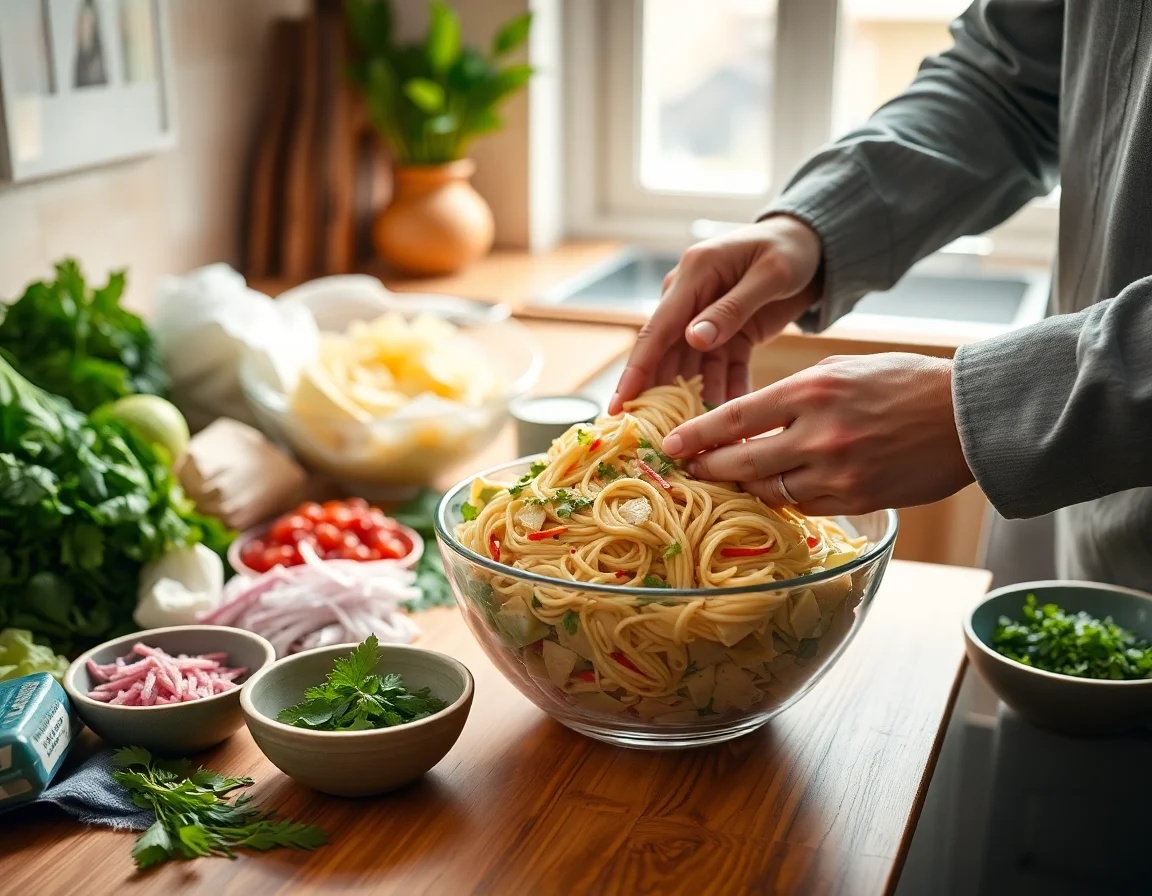
Within a generously sized mixing vessel, artfully bring together the perfectly al dente tri-color spiral macaroni, the meticulously drained, crisp water chestnut slices, the vibrant, freshly snipped snow peas, and the thoroughly drained, sweet mandarin orange segments. To this, introduce the foundational notes of soy sauce, a bright counterpoint of white wine vinegar, the piquant whispers of thinly sliced red onion, the nutty depth of peanut oil, the aromatic zest of freshly grated ginger, and the spirited sparkle of finely diced red pepper. Gently toss until all ingredients are uniformly coated and beautifully integrated.
-
Envelop the vessel securely with a fitting cover or culinary film.
-
Allow the flavors to meld and deepen through refrigeration for a minimum of two hours, or ideally longer, gently rousing the mixture periodically to ensure uniform marination prior to presentation.
Recipe Notes
This cherished recipe hails from the culinary repertoire of Betty Wright, a testament to enduring home cooking. Reflecting the lexicon of its original publication era, the descriptor 'Oriental' was once prevalent. Today, as culinary understanding evolves, we embrace more specific and nuanced terminology to describe the rich tapestry of East Asian culinary traditions that inspire this vibrant dish, honoring its heritage while aligning with contemporary cultural sensitivities.
Global Heritage Archive
Anthropological & Spice Migration Record
“A culinary culture driven by convenience, global curiosity, and the adaptation of perceived foreign flavors into familiar Western formats, popular in communal gatherings and home cooking.”
🌿 Spice & Botanical Migration
This dish serves as a testament to global culinary exchange. Fresh ginger, native to Maritime Southeast Asia, traveled via ancient Spice Routes across Asia and to Europe. Red pepper (chili), originating in the Americas, was introduced to Asia through the Columbian Exchange, rapidly becoming a cornerstone of many cuisines. Soy sauce, an ancient Chinese condiment, and peanut oil, derived from South American peanuts but widely adopted in Asian cooking, exemplify how diverse botanical origins converged to create new flavor profiles far from their sources, especially through Western interpretation.
🏺 Historical & Archaeological Record
Oldest archaeological evidence of noodle-like food (a precursor to pasta) dates back approximately 4,000 years to the Lajia archaeological site in China’s Qinghai province, discovered in 2005. While Roman texts describe “salads” of dressed greens, the specific culinary form of a “pasta salad” as a cold dish of cooked pasta, vegetables, and vinaigrette is a distinctly modern American invention, rising to prominence in the mid-to-late 20th century.
💡 Little Known Facts
- The term “Oriental” in food titles became common in the mid-20th century in Western countries but is now largely considered outdated or offensive due to its colonial connotations.
- Pasta salads, as cold dishes featuring cooked pasta and various ingredients bound by a vinaigrette, gained immense popularity in the United States starting in the 1970s and 80s, becoming a staple for picnics and potlucks.
Historical Locality Cartographic Map — Mestizo Media Archive
📸 Made This Heritage Recipe?
We would love to see how your dish turned out! Send a photo of your culinary creation to [email protected] to be featured in our community gallery.
Leave a review and rate this recipe below!
Curated Literature & Washington DC Downtown Calendar
The Culinary Alchemist: Modern Gastronomy & Flavor Pairing
By LDN Gastronomy Series
Artisanal technique, seasonal sourcing, and kitchen mastery.
Upcoming Downtown Happenings
Live acoustic sessions, gallery receptions, literary salons, and independent trade shows across Washington DC.
