
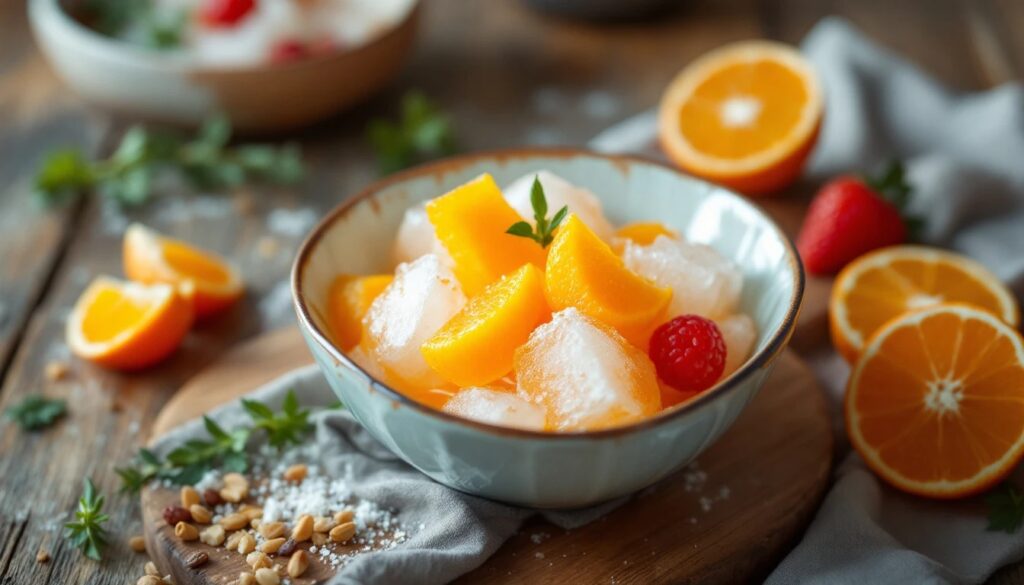
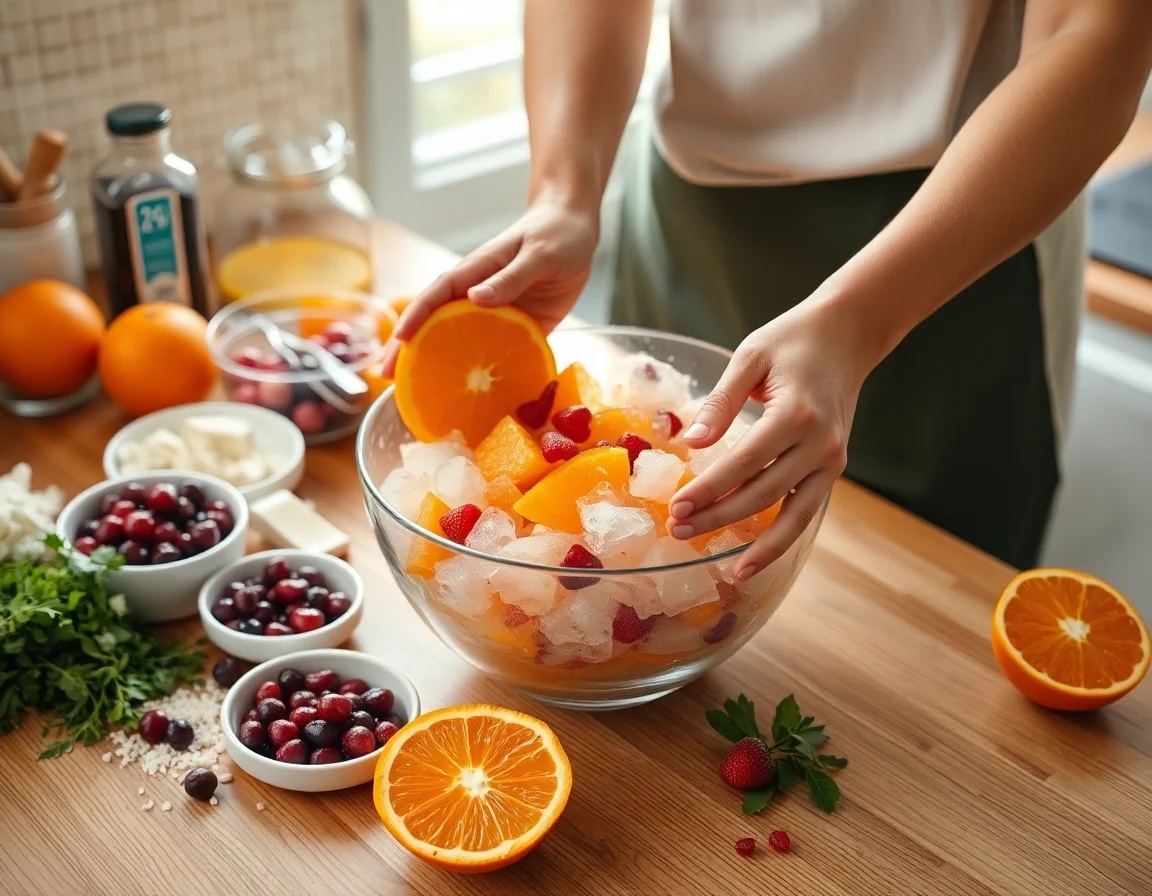
The mere mention of ‘Orange Cranberry Ice’ conjures images of festive tables, shimmering with a jewel-toned dessert that perfectly balances tartness and sweetness. This seemingly simple concoction, with its vibrant hues and refreshing character, is far more than just a chilled treat; it’s a quiet testament to the ingenuity of home cooks, the democratizing power of culinary innovation, and the interwoven threads of global trade that define American cuisine.
At its heart, this dish is a child of the late 19th and early 20th centuries in America, a period when the kitchen was transforming. The introduction of commercially produced, unflavored gelatin powder was a game-changer. What was once the exclusive domain of aristocratic kitchens – painstakingly clarifying and setting aspics and jellies derived from hours of simmering bones and hooves – became accessible to every homemaker. Suddenly, elegant, molded desserts were within reach, ushering in an era of culinary creativity that saw gelatin take center stage in everything from savory aspics to sweet fruit molds. The ‘Ice’ in its name refers not to frozen water, but to its chilled, often slightly firm yet yielding texture, reminiscent of a delicate sorbet, but with the distinct jiggly quality of a jelly.
The ingredients themselves tell a fascinating story of migration and cultural exchange. Cranberries, the indigenous gems of North America, were revered by Native American tribes for centuries before European settlers learned of their culinary and medicinal properties. Their tart robustness became a quintessential flavor of American holiday tables. Oranges and lemons, however, embark on a much longer journey. Originating in the lush landscapes of Southeast Asia, these fragrant citrus fruits traversed ancient trade routes – the Silk Road and maritime spice routes – spreading westward through Persia, the Middle East, and eventually gracing the sun-drenched orchards of the Mediterranean. Christopher Columbus, on his second voyage, played a pivotal role in their transatlantic migration, introducing them to the Americas where they flourished, adding their bright acidity and aromatic zest to countless dishes. Sugar, too, followed a similar trajectory, born in New Guinea, traveling through Asia and the Middle East before becoming a cornerstone of European and American palates, albeit through a dark history of forced labor and colonization.
Preparing this dish is a delightful exercise in simplicity and precision. The key is to ‘bloom’ the gelatin – sprinkling the powder over cold liquid and allowing it to soften and swell before gently dissolving it over heat. This ensures a smooth, lump-free base. The grated orange rind offers an intensified burst of citrus oils, complementing the fresh juices and the cranberries. Balancing the tartness of cranberries and lemon with just the right amount of sugar is crucial, allowing the natural fruit flavors to shine. Once combined, the mixture is carefully poured into a decorative mold, perhaps a Bundt pan or individual ramekins, and chilled until firm. The anticipation of unmolding, revealing a perfectly set, translucent dessert, is part of its charm. For a truly professional finish, a light spray of cooking oil or a brief dip in warm water can assist in the unmolding process. This ‘Orange Cranberry Ice’ is more than just a recipe; it’s a slice of culinary history, a refreshing nod to American ingenuity, and a delicious reminder of the interconnectedness of our global pantry.
ORANGE CRANBERRY ICE
Discover a dessert that evokes the golden glow of sun-drenched orchards and the tart embrace of ruby-red berries. This luminous Cranberry-Orange Sorbet is a sophisticated reinterpretation of a classic, delivering a harmonious symphony of vibrant citrus and intriguing berry notes. Crafted from the freshest oranges and plump cranberries, it offers an effortlessly elegant indulgence. When artfully presented within the charming natural bowls of hollowed orange rinds, it transforms into a breathtaking visual and culinary centerpiece, promising an unforgettable experience for any occasion.
Ingredients
- 6 oranges juice of None
- 2 cups water None
- 2 packages unflavored gelatin None
- 2 teaspoons grated orange rind None
- 1 package (1 lb.) cranberries None
- 2 cups sugar None
- 1/3 cup lemon juice None
Instructions
-
Halve the oranges with precision, carefully extracting one and a half cups of their vibrant juice. Discard the fibrous pulp, setting aside the emptied rinds for later use.
-
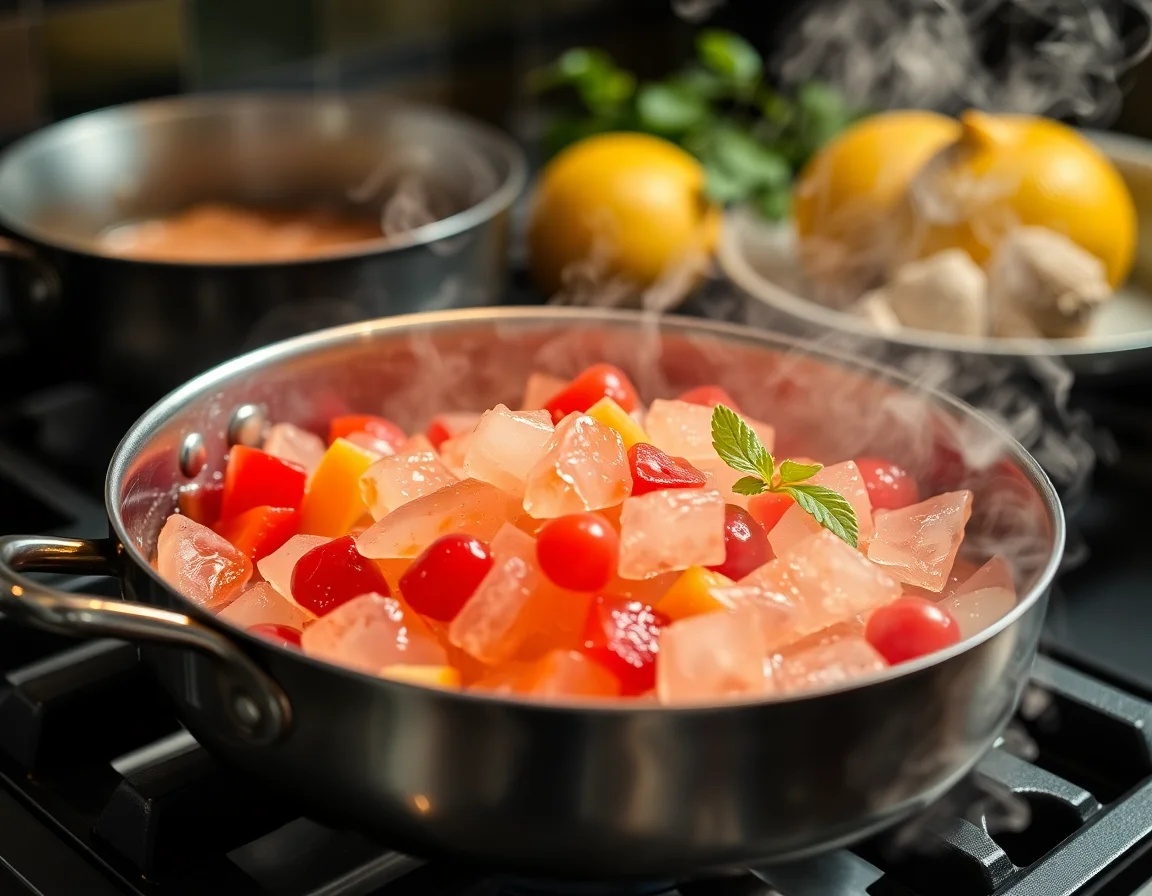
Introduce the cranberries and water into a medium-sized saucepan. Bring to a gentle boil over medium heat, allowing the berries to soften and their skins to burst open. Remove from heat and allow to cool for approximately five minutes.
-
Carefully transfer the cooled cranberry mixture to a blender or food processor and process until a smooth, uniform puree is achieved.
-
Return the cranberry puree to the medium saucepan. Incorporate the granulated sugar, gelatin, and the previously reserved orange rind, stirring well to combine.
-
Place the saucepan over medium heat, continuously stirring the mixture until the gelatin granules have completely dissolved and the sugar has melted into a cohesive liquid.
-
Take the saucepan off the heat. Gently fold in the fresh lemon juice and the previously reserved orange juice until thoroughly incorporated.
-
Carefully pour the prepared mixture into shallow freezer-safe trays. Place in the freezer, stirring every 30-45 minutes with a fork, until the dessert achieves a firm, icy consistency.
-
To prepare the serving vessels, carefully trim a small, flat section from the base of each emptied orange rind, allowing them to stand upright and stable. Preserve these trimmed sections for later adornment.
-
Delicately spoon the frozen sorbet into each prepared orange shell, mounding it attractively.
-
Using a sharp vegetable peeler, artfully pare delicate curls of zest from the reserved orange bases. Crown each individual serving with these vibrant citrus ribbons just before presenting.
Recipe Notes
For an exquisite touch, adorn each chilled serving with elegant curls of fresh orange zest.
Global Heritage Archive
Anthropological & Spice Migration Record
“A testament to early to mid-20th century American domestic science and the popularization of molded gelatin desserts as a simple, elegant addition to family meals and holiday spreads.”
🌿 Spice & Botanical Migration
The cranberries in this recipe are indigenous to North America, forming a foundational ingredient used by Native Americans long before European arrival. Oranges and lemons, conversely, originated in Southeast Asia, migrating westward through ancient trade routes (like the Silk Road) to the Middle East and Mediterranean, before being introduced to the Americas by European explorers during the Columbian Exchange. Sugar, derived from sugarcane, also originated in New Guinea and spread globally via trade, its mass production in the Americas heavily reliant on the forced labor of enslaved people, fundamentally shaping global economies and culinary practices.
🏺 Historical & Archaeological Record
While the concept of gelled foods, particularly aspics, can be traced back to ancient Roman and Egyptian times through archaeological findings of cooking vessels and food remains, the specific preparation of a sweetened fruit jelly using refined gelatin powder as a common household dessert first emerges in written form in 17th-century European cookbooks, gaining significant popularity and widespread adoption in the United States from the late 19th century with the advent of commercial gelatin products.
💡 Little Known Facts
- The rise of commercially packaged gelatin (like Jell-O) in the late 19th and early 20th century significantly democratized elaborate molded desserts, moving them from the realm of aristocratic kitchens to everyday American homes.
- Cranberries are one of only three fruits native to North America (the others being blueberries and Concord grapes) that are commercially cultivated.
Historical Locality Cartographic Map — Mestizo Media Archive
📸 Made This Heritage Recipe?
We would love to see how your dish turned out! Send a photo of your culinary creation to [email protected] to be featured in our community gallery.
Leave a review and rate this recipe below!
Curated Literature & Washington DC Downtown Calendar
The Culinary Alchemist: Modern Gastronomy & Flavor Pairing
By LDN Gastronomy Series
Artisanal technique, seasonal sourcing, and kitchen mastery.
Upcoming Downtown Happenings
Live acoustic sessions, gallery receptions, literary salons, and independent trade shows across Washington DC.
