
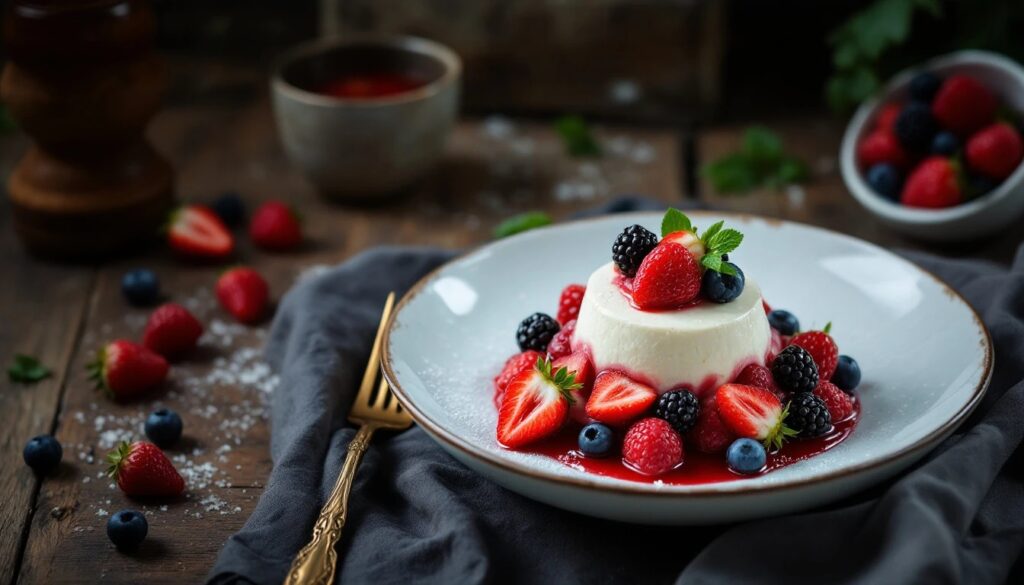
At its heart, this dessert is a masterclass in approachable elegance. The buttery, brown sugar, and nut-laden crumble topping is a direct descendant of the streusel, a German culinary contribution that migrated to North America with European settlers. This streusel, a delightful amalgamation of flour, fat, and sugar, has graced everything from coffee cakes to fruit tarts for centuries. During World War II, when rationing made elaborate pie crusts a challenge, the ‘crumble’ or ‘crisp’ emerged as a brilliant, resourceful alternative in Britain, quickly spreading its popularity across the Atlantic as a simpler, yet equally satisfying, fruit dessert.
The star of the show, of course, is the strawberry. While these ruby jewels now grace tables worldwide, their journey is a fascinating testament to botanical exploration and hybridization. The modern garden strawberry (Fragaria × ananassa) is itself a love child of two American species: *Fragaria virginiana* from the eastern United States and *Fragaria chiloensis* from coastal Chile. French horticulturists in the 18th century meticulously bred these two, yielding the sweet, plump fruit we adore today – a delicious legacy of the Columbian Exchange. Paired with a bright squeeze of lemon, a fruit that traveled from Southeast Asia to the Mediterranean and eventually the New World via ancient trade routes, the strawberries burst with a balanced tartness and sweetness.
The final flourish—the ethereal egg whites and rich cream—speaks to a tradition of elevating simple fruit desserts. Whether whipped into a cloud-like meringue or folded into billows of fresh whipped cream, these elements add a luxurious lightness that contrasts beautifully with the dense, textured crumble and juicy fruit. It’s a reflection of American dessert culture’s fondness for layered textures and contrasting flavors, designed to be both hearty and refined.
Preparing Lois’s Strawberry Dessert is an act of simple devotion. The key lies in the quality of your ingredients: ripe, fragrant strawberries are non-negotiable. For the crumble, ensure your butter is cold and cut into the flour mixture quickly to achieve that desired crumbly texture, preventing a doughy mess. The chopped nuts (pecans or walnuts are quintessential) add a delightful crunch and earthy undertone. Don’t be shy with the lemon juice; it’s the secret to waking up the strawberries’ natural sweetness. Serve it warm from the oven, perhaps with a dollop of vanilla bean ice cream or a generous swirl of freshly whipped cream, and you’ll understand why Lois’s legacy, and dishes like it, continue to nourish both body and soul across generations.
LOIS'S STRAWBERRY DESSERT
A delightful homage to time-honored traditions, this frozen dessert elevates the simple pleasure of ripe strawberries into an extraordinary experience. Crafted from a golden, buttery crust studded with toasted nuts, it forms the perfect foundation for an ethereal, airy strawberry meringue-like filling. Layered with billows of fresh whipped cream and a sprinkle of reserved crunchy crumbs, this elegant confection is a refreshing masterpiece, ideal for gracing any sophisticated gathering.
Ingredients
- 1 cup flour
- 1 cube butter melted (1 cube = 1/2 cup or 8 tablespoons)
- 1/4 cup brown sugar
- 1/2 cup chopped nuts
- 1 cup sugar
- 1 tsp. lemon juice
- 1 10 oz. Pkg strawberries thawed (juice and all)
- 2 egg whites
- 1/2 pint cream whipped (1/2 pint = 1 cup)
Instructions
-
In a substantial mixing bowl, thoroughly combine the all-purpose flour, molten butter, rich brown sugar, and finely chopped nuts until a uniform, crumbly texture is achieved.
-
Evenly press this crust mixture into the base of a 9 x 13 inch baking dish, ensuring a compact layer.
-
Bake in a preheated oven at 350 degrees Fahrenheit for approximately 20 minutes. During baking, periodically stir the crust mixture to encourage even toasting and to break it into desirable crumbly pieces. Allow the crust to cool completely.
-
Once fully cooled, reserve approximately one-third of the toasted crumbs to be used as a final topping.
-
Within a generously sized mixing bowl, introduce the granulated sugar, fresh lemon juice, the entire contents of the thawed 10-ounce package of strawberries (including all juices), and the two egg whites.
-
Employ an electric mixer to beat this mixture on HIGH speed for a full 20 minutes, until it becomes remarkably light, voluminous, and pale pink, forming soft peaks.
-
Very gently, using a spatula, fold in the half-pint of freshly whipped cream, preserving the delicate airiness of the strawberry mixture.
-
Carefully spoon and spread the airy strawberry filling over the cooled, prepared crust in the baking dish, smoothing the top.
-
Evenly sprinkle the remaining reserved toasted crumbs over the surface of the strawberry layer.
-
Place the dessert in the freezer and allow it to solidify completely until firmly set.
-
Serve chilled and savor this exquisite frozen delight.
Recipe Notes
For those referencing vintage culinary texts, a 'cube' of butter often corresponds to approximately 1/2 cup or 8 tablespoons. This splendid dessert achieves its optimal texture and presentation only after a thorough period of freezing prior to serving.
Global Heritage Archive
Anthropological & Spice Migration Record
“A culinary culture emphasizing comforting, approachable desserts often centered around seasonal fruits, shared in community gatherings, and rooted in home-style baking traditions.”
🌿 Spice & Botanical Migration
This recipe, characteristic of Anglo-American home baking, primarily derives its flavor profile from the fresh fruit and rich dairy, rather than aromatic spices. However, the foundational ingredients themselves reflect significant global botanical migration and trade. Strawberries, a key component, are a hybrid of species native to North and South America, their modern garden variety developed in 18th-century France before spreading worldwide, a direct legacy of the Columbian Exchange. Lemon, providing a bright counterpoint, originated in Southeast Asia and traveled west via ancient trade routes to the Middle East and Mediterranean, eventually reaching the Americas. Sugar, once a luxury from sugarcane native to New Guinea, became globally ubiquitous through colonial expansion and the transatlantic slave trade, transforming desserts across continents.
🏺 Historical & Archaeological Record
The direct ‘crumble’ or ‘crisp’ dessert is a relatively modern invention, gaining prominence in the 20th century. However, its foundational technique of baking fruit under a crumbly, sweet topping has older roots. The earliest forms of ‘Streuselkuchen’ (crumb cake), featuring a sweet, buttery crumb topping, can be traced to Silesia (a region now primarily in Poland and Germany) with written records appearing in the 18th century.
💡 Little Known Facts
- The term ‘crumble’ or ‘crisp’ for a baked fruit dessert with a streusel-like topping became widely popular in Britain during World War II, as it required less flour and fat than a traditional pie crust, making it a more economical option during rationing.
- While ‘crumble’ is common in the UK, the term ‘crisp’ is often preferred in the United States, especially in the Northeast and Midwest, for a similar dessert with an oat-inclusive topping.
📸 Made This Heritage Recipe?
We would love to see how your dish turned out! Send a photo of your culinary creation to [email protected] to be featured in our community gallery.
Leave a review and rate this recipe below!
Curated Literature & Washington DC Downtown Calendar
The Culinary Alchemist: Modern Gastronomy & Flavor Pairing
By LDN Gastronomy Series
Artisanal technique, seasonal sourcing, and kitchen mastery.
Upcoming Downtown Happenings
Live acoustic sessions, gallery receptions, literary salons, and independent trade shows across Washington DC.
