
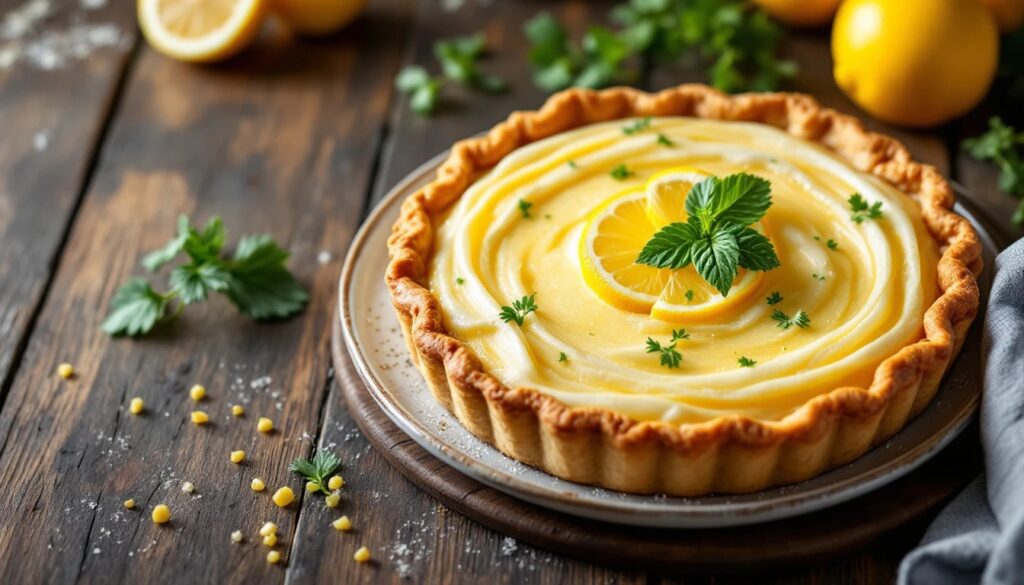

In the annals of American culinary history, few desserts capture the spirit of mid-20th century ingenuity and domestic elegance quite like the Lemon Chiffon Pie. It’s a dish that speaks of sun-drenched picnics, bustling potlucks, and the quiet satisfaction of a perfectly balanced sweet ending. More than just a dessert, it’s a time capsule, embodying a period when home baking was both an art form and a symbol of post-war optimism, when new ingredients and techniques transformed the humble kitchen into a laboratory of delight.
The genesis of the chiffon pie lies with its cake cousin, an invention credited to Harry Baker, a Los Angeles insurance salesman turned Hollywood caterer, who developed his ‘secret recipe’ chiffon cake in 1927. His cake, astonishingly light yet rich, captivated palates for two decades before General Mills bought the recipe and shared it with the world in 1947. This democratization of the ‘chiffon’ technique paved the way for pies to adopt the same ethereal quality. Suddenly, pies weren’t just dense, fruit-laden creations; they could be airy clouds, their fillings dancing on the palate.
The magic of Lemon Chiffon Pie lies in its ingenious construction. A crisp, buttery pie shell cradles a filling that defies gravity. Fresh lemon juice provides the vibrant tang, balanced by sugar. Eggs, separated, play a crucial role: the yolks enrich the custard, while the whites are whipped into stiff, glistening peaks, then gently folded into the lemon base. This meringue-like technique is what imparts the ‘chiffon’ lightness. The final, yet equally vital, element is gelatin, the unsung hero that sets the delicate filling, allowing it to hold its majestic height without collapsing into a puddle. This industrialized ingredient, readily available to home cooks in the 20th century, revolutionized texture in desserts, making such structural marvels accessible.
From a global perspective, the key ingredients tell a fascinating story of migration and trade. Lemons, originating in the foothills of the Himalayas, traveled westward across ancient trade routes, brought to Europe and then the Americas by explorers, becoming a cornerstone of global cuisine. Sugar, with its origins in New Guinea, followed an equally epic journey, shaping economies and cultures worldwide. The combination of these historically rich ingredients, alongside the more modern innovation of commercial gelatin and precise culinary techniques, created a dessert that is both deeply rooted in global history and uniquely American in its popularization.
For those venturing into the creation of this classic, a few kitchen tips can ensure success. Always ‘bloom’ your gelatin properly in cold water before dissolving it gently, ensuring an even set. When folding in the beaten egg whites, do so delicately, preserving as much air as possible to achieve that signature lightness. Patience is also a virtue; allow ample chilling time for the pie to set completely, ensuring clean slices and a truly satisfying experience. The Lemon Chiffon Pie is more than just a dessert; it’s a culinary testament to the power of simple ingredients, innovative techniques, and the enduring human desire for a taste of pure, sunshine-infused joy.
LEMON CHIFFON PIE
Transport your senses to an era of refined simplicity with our exquisite Lemon Chiffon Pie. This culinary marvel, a jewel from America's cherished dessert repertoire, presents an effervescent burst of sun-kissed citrus enfolded within an ethereal, cloud-like filling. Each delicate, vibrant spoonful, cradled in a perfectly crisp crust and crowned with freshly whipped cream, offers a refreshingly light and sophisticated conclusion to any dining experience. It's an enduring testament to the elegant charm of timeless desserts.
Ingredients
- ½ cup sugar
- ½ cup lemon juice
- 4 eggs separated
- 1 package plain gelatin
- ¼ cup cold water
- ¼ cup sugar
- 1 cooked pie shell
- 1 lemon rind of
Instructions
-
In the top of a double boiler, gently combine the freshly squeezed lemon juice, the initial half-cup measure of granulated sugar, and the four egg yolks. Whisk continuously over simmering water until the mixture achieves a rich, spoon-coating consistency, taking care to prevent it from reaching a full boil.
-
Carefully fold in the finely grated lemon rind, ensuring even distribution of its aromatic essence.
-
Meanwhile, in a separate small bowl, sprinkle the powdered gelatin over the cold water, allowing it to bloom and soften for several minutes.
-
Integrate the bloomed gelatin into the warm lemon custard, stirring meticulously until it is completely dissolved and thoroughly incorporated.
-
In a clean, dry bowl, whip the egg whites until they form firm, glossy peaks.
-
Gradually incorporate the remaining quarter-cup of granulated sugar into the whipped egg whites, beating until the mixture is beautifully glossy. Then, with utmost care, gently fold this meringue into the prepared lemon yolk mixture until just combined.
-
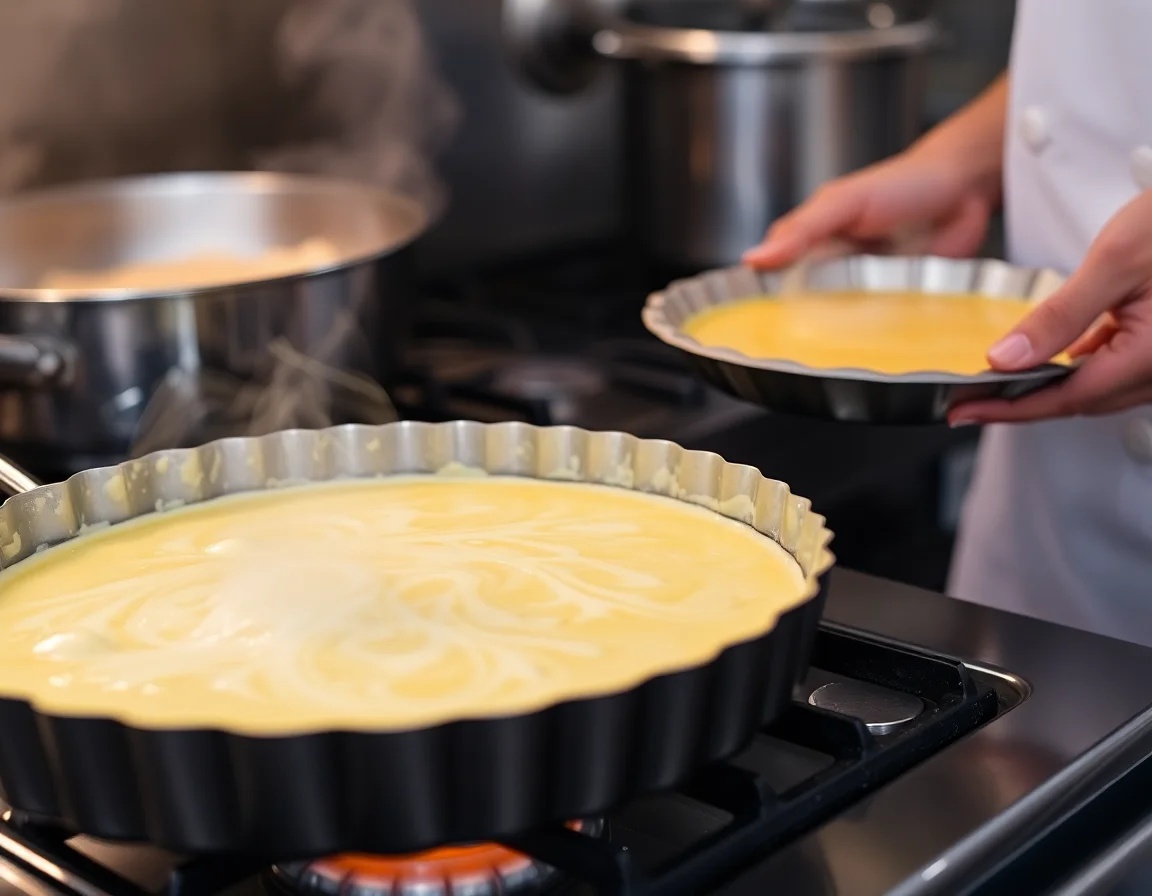
Delicately pour the finished chiffon filling into your pre-baked 9- or 10-inch pie shell, smoothing the surface with a spatula.
-
Transfer the pie to the refrigerator and allow it to chill for a minimum of 4 hours, or ideally overnight, to ensure it sets perfectly.
-
Just prior to serving, lavishly crown the pie with generous dollops of freshly whipped cream, or pipe decoratively as desired.
Recipe Notes
For an unparalleled crust, consider a delicate graham cracker crust to complement the lemon, or a classic shortcrust pastry for a more traditional presentation. Ensure your egg whites are at room temperature before whipping; this allows them to achieve maximum volume and aeration, crucial for that signature cloud-like texture. When incorporating the gelatin, avoid excessive heat after it's dissolved, as this can diminish its setting power. For an extra touch of sophistication, garnish individual slices with a curl of fresh lemon zest or a few vibrant berries alongside the whipped cream.
Global Heritage Archive
Anthropological & Spice Migration Record
“A culinary culture born in mid-20th century America, embracing innovation in home baking, convenience, and the pursuit of light, refreshing desserts for family gatherings and social events.”
🌿 Spice & Botanical Migration
The star flavor of this pie, the lemon, originated in the foothills of the Himalayas in Northeast India, then migrated across Persia and the Mediterranean via ancient Arab trade routes. Its introduction to the Americas by European explorers during the Columbian Exchange profoundly shaped New World cuisine. Sugar, another foundational ingredient, journeyed from its origins in New Guinea through India and the Middle East before becoming a global commodity central to colonial economies and a ubiquitous sweetener.
🏺 Historical & Archaeological Record
While the components of pie crust and lemon-flavored custards date back centuries, the specific technique of a ‘chiffon’ filling—lightened with folded egg whites and set with gelatin—is a distinctly 20th-century American culinary innovation. The earliest written recipes for ‘chiffon pie,’ evolving from the popular chiffon cake, began appearing in American cookbooks and commercial recipe pamphlets in the 1930s and 1940s.
💡 Little Known Facts
- The ‘chiffon’ technique, first applied to cakes by Hollywood caterer Harry Baker in 1927, was a closely guarded secret for two decades before General Mills acquired and popularized the recipe in 1947.
- The characteristic airy texture of chiffon pie is achieved by folding stiffly beaten egg whites (similar to a meringue) into a lemon custard base, then stabilizing the mixture with plain gelatin to hold its lofty structure.
📸 Made This Heritage Recipe?
We would love to see how your dish turned out! Send a photo of your culinary creation to [email protected] to be featured in our community gallery.
Leave a review and rate this recipe below!
Curated Literature & Washington DC Downtown Calendar
The Culinary Alchemist: Modern Gastronomy & Flavor Pairing
By LDN Gastronomy Series
Artisanal technique, seasonal sourcing, and kitchen mastery.
Upcoming Downtown Happenings
Live acoustic sessions, gallery receptions, literary salons, and independent trade shows across Washington DC.
