
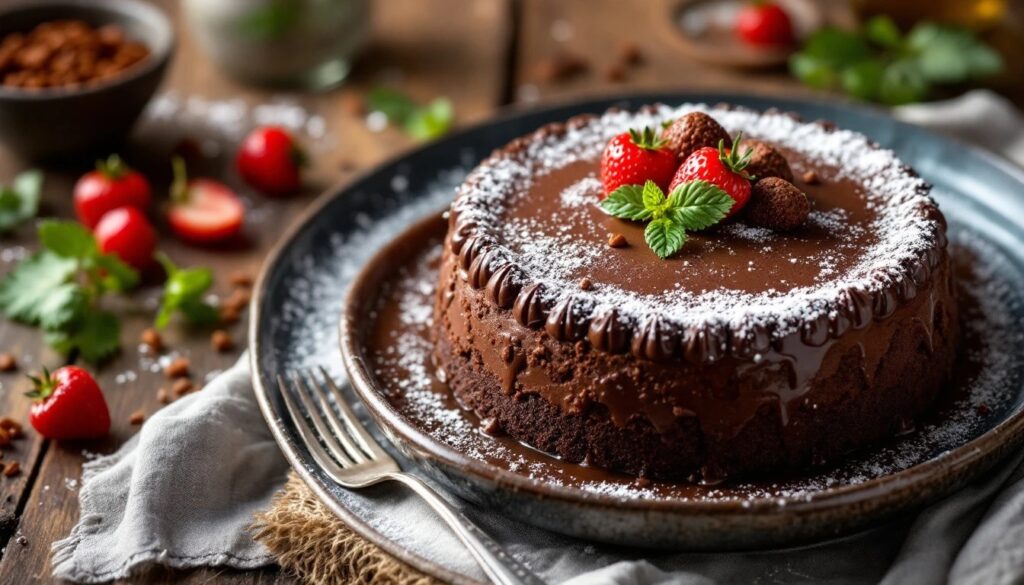
To truly appreciate this Gateau, we must first journey through the history embedded in its core ingredients. At the heart of it all is chocolate, a gift from the ancient Olmec, Maya, and Aztec civilizations of Mesoamerica. For millennia, cacao was revered, consumed as a bitter, frothy beverage, often spiced, in sacred rituals and daily life. It was a vital part of the New World before Hernán Cortés introduced it to Spain in the 16th century. From there, its journey across Europe saw it evolve from a courtly drink to a coveted dessert ingredient. The French, with their innate sense of culinary sophistication, quickly embraced chocolate, incorporating it into cakes, pastries, and confections, transforming its rich, complex bitterness into the sweet luxury we know today.
The “Mousseline” in the name refers to a delicate, airy preparation, typically a lightened buttercream or a refined mousse, that adds an almost cloud-like texture, contrasting beautifully with the dense intensity of the chocolate cake layers. This technique is a hallmark of classical French pastry, emphasizing precision and the skillful manipulation of eggs, sugar, and cream. The development of such intricate preparations flourished in the opulent kitchens of 18th and 19th-century France, where culinary innovation was synonymous with status and artistry.
Beyond the chocolate, other ingredients whisper tales of global migration. Vanilla, its intoxicating aroma so intertwined with chocolate, also hails from Mesoamerica, a precious orchid bean that traveled across the Atlantic alongside cacao. The dark rum, a deep, warming spirit, speaks of sugarcane plantations and the complex, often dark, history of colonial trade that connected the Caribbean to Europe. Even the humble instant coffee, far from being a modern cheat, is a secret weapon among pastry chefs, its deep roasty notes acting as a remarkable amplifier for chocolate, deepening its complexity without asserting its own flavor. This technique, subtly enhancing chocolate, is a cornerstone of sophisticated chocolate work.
Preparing “Le Gateau Victoire” is an act of love and patience. For aspiring bakers, the key lies in understanding the alchemy of ingredients. When melting chocolate, do so gently, preferably over a double boiler, to prevent seizing. The eggs are crucial: yolks provide richness and emulsification, while whisked whites create the airy lift for the mousseline. When folding the whipped cream and egg whites into the chocolate base for the mousseline, gentleness is paramount; retain that precious air to achieve the desired light texture. Don’t be tempted to skip the instant coffee; it’s a subtle game-changer. Finally, allow the cake to chill thoroughly. This not only sets the mousseline but also allows the flavors to meld and deepen, transforming a collection of ingredients into a truly victorious dessert. It’s a timeless classic, a celebration of history, technique, and pure indulgence.
LE GATEAU VICTOIRE AU CHOCOLAT, MOUSSELINE (Chocolate Mousse Dessert Cake)
Behold "Le Gâteau Victoire au Chocolat, Mousseline"—a dessert whose very name heralds triumph and indulgence. This exquisite creation delivers an unparalleled chocolate mousse experience, a testament to classic French patisserie. Conceived as the ultimate celebratory centerpiece, its refined presence and deeply nuanced, yet intensely satisfying, chocolate profile make every occasion truly unforgettable.
Ingredients
- 1 Tablespoon instant coffee
- 4 Tablespoons hot water
- 4 Tablespoons dark rum
- 14 ounces semisweet baking chocolate
- 2 ounces unsweetened baking chocolate
- 6 large eggs
- ½ cup sugar
- 1 cup whipping cream chilled
- 1 Tablespoon vanilla
- Confectioners' sugar for garnish
Instructions
-
Liberally grease the interior of a 10-cup capacity cake pan, ideally one featuring a non-stick finish, ensuring complete coverage.
-
Carefully affix a circle of wax paper to the base of the prepared pan, then lightly dust the entire interior surface with flour, tapping out any excess.
-
Should you opt for a square baking vessel, ensure its dimensions are precisely 9x9x2 inches.
-
Position an oven rack in the lower-third section of your oven, then preheat the appliance to 350°F (175°C).
-
Select a roasting pan of sufficient size to...
Recipe Notes
The provided culinary guidance for this recipe is unfortunately incomplete, concluding abruptly at a critical juncture. The existing directives meticulously outline the initial preparation of a 10-cup cake pan (or a 9x9x2 inch square alternative), detailing the process of buttering, lining with wax paper, and flouring. Furthermore, it specifies the precise oven temperature of 350°F (175°C) and the correct rack placement in the lower-third, strongly suggesting a subsequent baking stage, likely employing a water bath technique given the preliminary mention of selecting a 'roasting pan.' Regrettably, the essential procedural steps for ingredient amalgamation, the crafting of the signature mousse, and the subsequent baking and final assembly of this exquisite cake are entirely absent.
Global Heritage Archive
Anthropological & Spice Migration Record
“The culinary culture surrounding this dish is one of classic French high patisserie, where exquisite technique, richness of ingredients, and elegant presentation converge to create a sublime dessert experience.”
🌿 Spice & Botanical Migration
The primary flavorings in this “Gateau Victoire” tell a profound story of global exchange. Chocolate and vanilla, both integral to its character, originated in Mesoamerica (modern-day Mexico and Central America) and were introduced to Europe via the Columbian Exchange in the 16th century. Rum, derived from sugarcane (native to Southeast Asia), became a product of the Atlantic slave trade and Caribbean colonial plantations before arriving in European kitchens. Coffee, originating in Ethiopia, spread globally through Arab traders and later European colonial empires, ultimately finding its way into patisserie where it subtly enhances chocolate.
🏺 Historical & Archaeological Record
The earliest archaeological evidence for the consumption of cacao, the source of chocolate, dates back to the Olmec civilization in Mesoamerica around 1900 BCE, primarily consumed as a bitter beverage. While early forms of sweetened breads or cakes exist in ancient Mediterranean civilizations, a multi-layered, chocolate-infused cake of this specific nature—especially one employing refined sugar, rum, and the sophisticated mousseline technique—would not have emerged before the widespread availability of these ingredients and advanced baking technologies in European, particularly French, kitchens, likely in the 18th to 19th centuries.
💡 Little Known Facts
- The “Victoire” in the name, meaning “victory” in French, likely celebrates not a specific historical event but rather the triumphant culinary achievement of blending rich chocolate with delicate mousseline, creating a dessert that feels like a triumph for the palate.
- While instant coffee might seem like a modern shortcut, its inclusion in chocolate desserts is a time-honored trick among pastry chefs, not for its coffee flavor but for its remarkable ability to intensify and deepen the complex, bittersweet notes of chocolate without adding any discernible coffee taste.
📸 Made This Heritage Recipe?
We would love to see how your dish turned out! Send a photo of your culinary creation to [email protected] to be featured in our community gallery.
Leave a review and rate this recipe below!
Curated Literature & Washington DC Downtown Calendar
The Culinary Alchemist: Modern Gastronomy & Flavor Pairing
By LDN Gastronomy Series
Artisanal technique, seasonal sourcing, and kitchen mastery.
Upcoming Downtown Happenings
Live acoustic sessions, gallery receptions, literary salons, and independent trade shows across Washington DC.
