
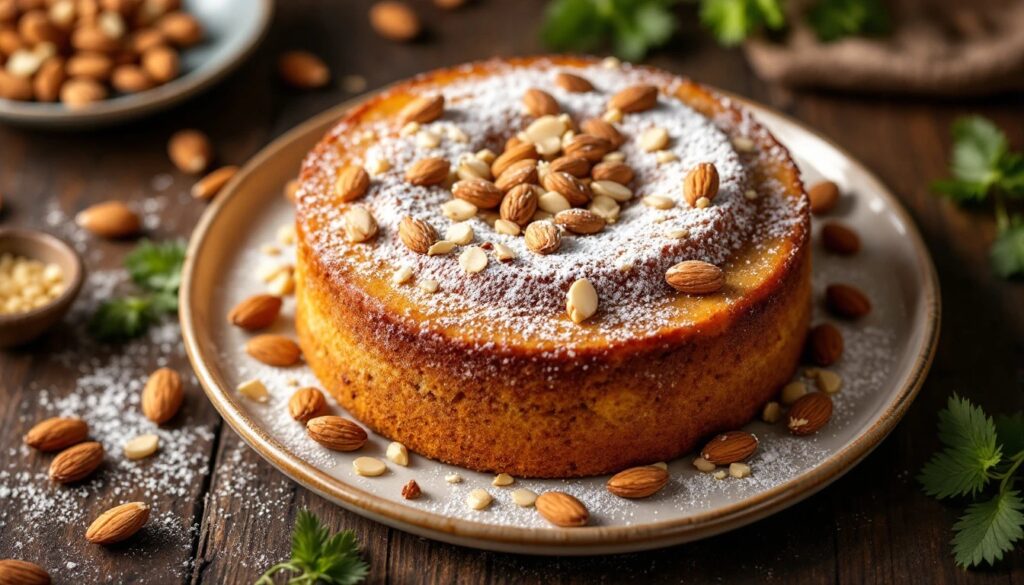
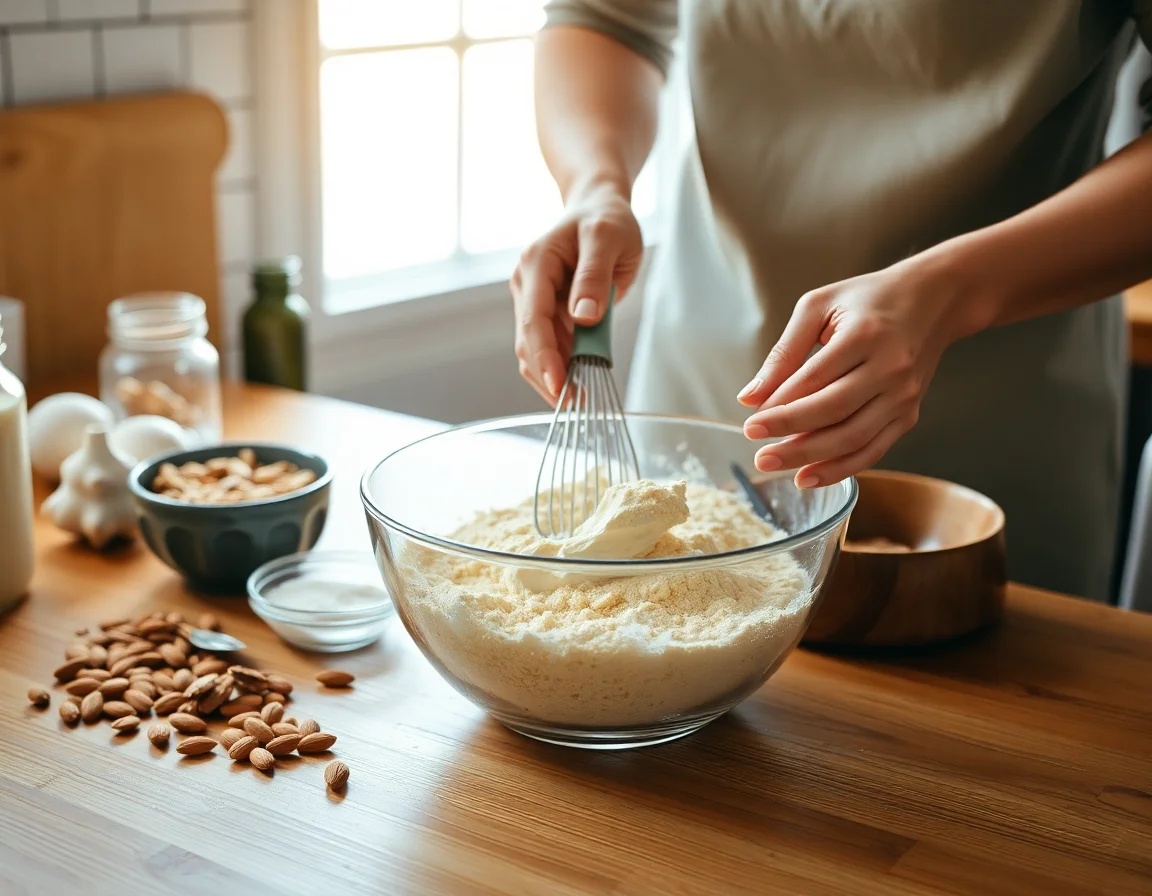
The humble almond, a kernel of ancient history, holds within its delicate flavor the whispers of millennia of human migration and culinary evolution. When transformed into a tender Almond Cake, it tells a story that spans continents and centuries.
The almond tree, one of the earliest domesticated fruit trees, first graced human civilization over 6,000 years ago in the Near East. From its birthplace, this resilient nut embarked on an epic journey, carried westward by ancient trade routes. The Phoenicians and Greeks introduced it to the Mediterranean, where it flourished in Italy, Spain, and France. Romans revered almonds, incorporating them into their banquets and sweet dishes, laying the groundwork for Europe’s profound love affair with this versatile ingredient.
The ‘Almond Cake’ as we know it is a tapestry woven from European culinary heritage. The use of almond paste, a refined blend of ground almonds and sugar, has roots in medieval Persia, where marzipan-like confections were crafted. Through Arab conquests, this delicacy traveled across North Africa to Spain and Sicily, eventually spreading to France, Italy, and Germany. Monastic kitchens, renowned for their confectionery skills, further perfected these sweet creations, transforming them from medicinal treats into luxurious indulgences.
This rendition, with its rich butter, delicate crumb, apricot glaze, and sophisticated liqueur-laced cream, speaks to the pinnacle of Western European patisserie. The apricot, another ancient traveler from Central Asia via the Silk Road, lends its tart sweetness, echoing techniques found in classic French and Austrian tortes. Vanilla, a fragrant bounty from the New World, adds its intoxicating aroma, a testament to the Columbian Exchange’s global impact. The choice of Grand Marnier or Kirsch for the cream is a subtle nod to French elegance and Central European tradition, allowing for personal preference while maintaining a sophisticated European flair.
Crafting this Almond Cake is an act of culinary reverence. To achieve its exquisite texture, ensure your almond paste is at room temperature for easy incorporation, yielding a uniformly moist crumb. Avoid overmixing the batter once flour is added to preserve tenderness. For the perfect apricot glaze, warm the jam gently and strain it for a smooth, translucent sheen. Serve slices with a generous dollop of whipped cream, lightly sweetened and perfumed with strawberry liqueur and your chosen spirit. Garnish with fresh berries and mint, and you have not just a cake, but a celebration of history, flavor, and the enduring artistry of the baker. It is a dessert that transcends borders, uniting flavors from across the globe into one harmonious, utterly delightful experience.
Almond Cake
Prepare to unveil a truly captivating confection, as this magnificent almond creation metamorphoses into an enchanting 'Fresh Fruit Jewel Box.' An ideal showstopper for any festive gathering, its delicate crumb is deeply imbued with the rich essence of almond paste and a hint of pure extract. This tender loaf cake awaits transformation, its heart scooped to cradle a glistening bounty of seasonal fruits, culminating in an unforgettable, flavor-packed dessert that commands attention.
Ingredients
- 2 cups plus 2 Tablespoons flour all-purpose flour sifted
- 1½ teaspoons baking powder
- 1½ sticks unsalted butter room temperature
- ¼ cup plus 2 Tablespoons almond paste 3 ounces
- Dash salt
- 1 cup plus 2 Tablespoons sugar
- 3 eggs room temperature
- ¼ cup milk
- 1½ teaspoons vanilla
- 1 to ½ teaspoon almond extract
- 1/3 cup melted and strained apricot jam
- 4 ounces toasted, sliced almonds about 1 cup
- 1½ cup whipping cream
- 1 Tablespoon sugar
- 1 Tablespoon strawberry liqueur, Grand Marnier or kirsch
- 1 pint fresh fruit cut into bite-size pieces
- Fresh mint for garnish
Instructions
-
Prepare your oven by positioning an adjustable rack in the lower third, then preheating it to a consistent 350°F (175°C).
-
Thoroughly coat an 8½x4½-inch loaf pan with butter or cooking spray, then dust lightly with flour, tapping out any excess.
-
In a separate bowl, combine the all-purpose flour, baking powder, and salt, then sift them together to ensure aeration and even distribution.
-
Using a large mixing bowl, beat the softened unsalted butter until it reaches a light and fluffy consistency.
-
Incorporate the almond paste into the creamed butter, mixing meticulously until the mixture is uniform and velvety.
-
Slowly introduce the granulated sugar, a little at a time, continuing to beat until the mixture is pale and airy.
-
Whisk in the large eggs, one at a time, ensuring each is fully incorporated by beating for approximately 30 seconds before adding the next.
-
Gently fold the prepared dry flour mixture into the batter alternately with the whole milk, commencing and concluding with the flour addition, mixing only until just combined.
-
Fold in the pure vanilla extract and additional almond extract until just blended.
-
Transfer the completed batter evenly into the specially prepared loaf pan.
-
Bake for approximately 60 to 65 minutes, or until a wooden skewer or cake tester inserted into the center emerges clean, indicating it's fully cooked (a characteristic fissure will appear along the cake's top surface).
-
Allow the cake to rest in its pan on a wire cooling rack for a precise 10 minutes.
-
Invert the cake onto the wire rack, carefully removing the pan, and permit it to cool completely before proceeding.
-
Once entirely cool, use a serrated knife to carefully slice a 5/8-inch-thick horizontal layer from the top surface of the cake; this will serve as your "lid."
-
With the "lid" removed, carefully score and cut into the remaining cake base, leaving a ½-inch border along the perimeter, to begin forming the central cavity or "treasure chest" interior.
Recipe Notes
Please note that the assembly instructions provided here detail only the initial steps for crafting your 'Fresh Fruit Jewel Box.' To fully realize this magnificent presentation, you would typically proceed by carefully scooping out the interior cake from the cavity you've created, leaving a sturdy base and walls. For an exquisite touch, consider brushing the interior surfaces with a warmed, strained apricot jam to add moisture and a subtle glaze. Then, lavishly fill the hollowed center with a vibrant medley of your freshest seasonal fruits and a generous dollop of freshly whipped cream. Finally, crown your creation by gently replacing the reserved cake 'lid' atop the fruit-filled treasure. As a testament to its rich texture and perfect bake, expect a charming, characteristic split to appear down the center of your almond cake during the baking process.
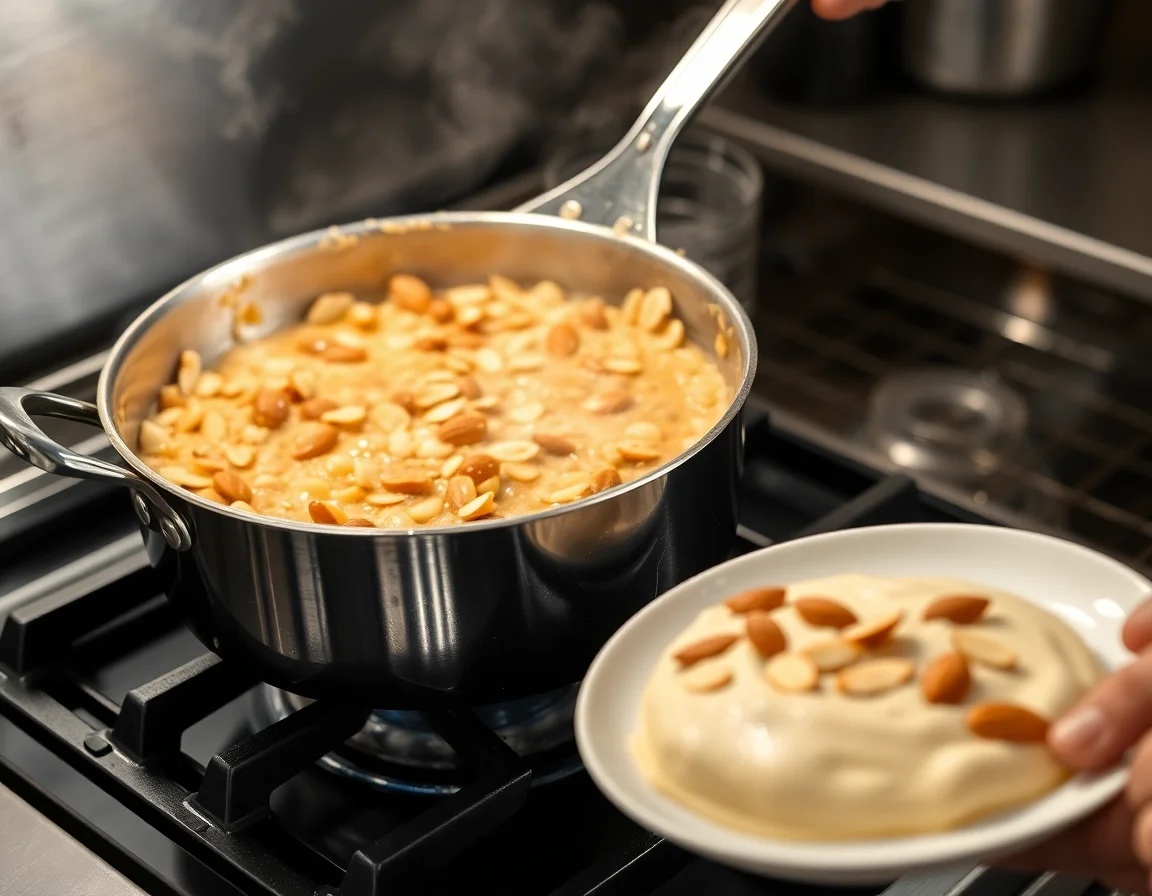
Editorial View: Active cooking process and preparation steps for Almond Cake.
Global Heritage Archive
Anthropological & Spice Migration Record
“French culinary culture, renowned for its sophisticated patisserie, precise techniques, and emphasis on elegant presentation, where desserts are often celebratory centerpieces.”
🌿 Spice & Botanical Migration
Almonds, native to the Middle East and Central Asia, traveled westward through ancient trade routes, integrating into Mediterranean and European cuisines. Vanilla, originating in Mesoamerica, was introduced to Europe by Spanish conquistadors after the Columbian Exchange. Apricots, first cultivated in Central Asia, spread west via the Silk Road, reaching the Mediterranean and becoming a staple for preserves.
🏺 Historical & Archaeological Record
The earliest archaeological evidence of almonds dates back to around 4000 BCE in Jordan. Written records detailing sweet almond confections, precursors to modern almond paste, appear in medieval Arabic cookbooks from the 9th century and in European texts (e.g., Sicily) by the 12th century. The refinement of flour, sugar, and the introduction of chemical leavening like baking powder in the 19th century mark the emergence of cakes resembling the modern “Almond Cake.”
💡 Little Known Facts
- The almond tree is one of the earliest domesticated fruit trees, with archaeological evidence of its cultivation dating back to the Early Bronze Age in the Near East.
- While marzipan’s exact origin is debated, a popular theory posits it originated in Persia, spreading to Europe via Arab conquests, notably to Spain and Sicily, becoming a staple in monastic confectionery.
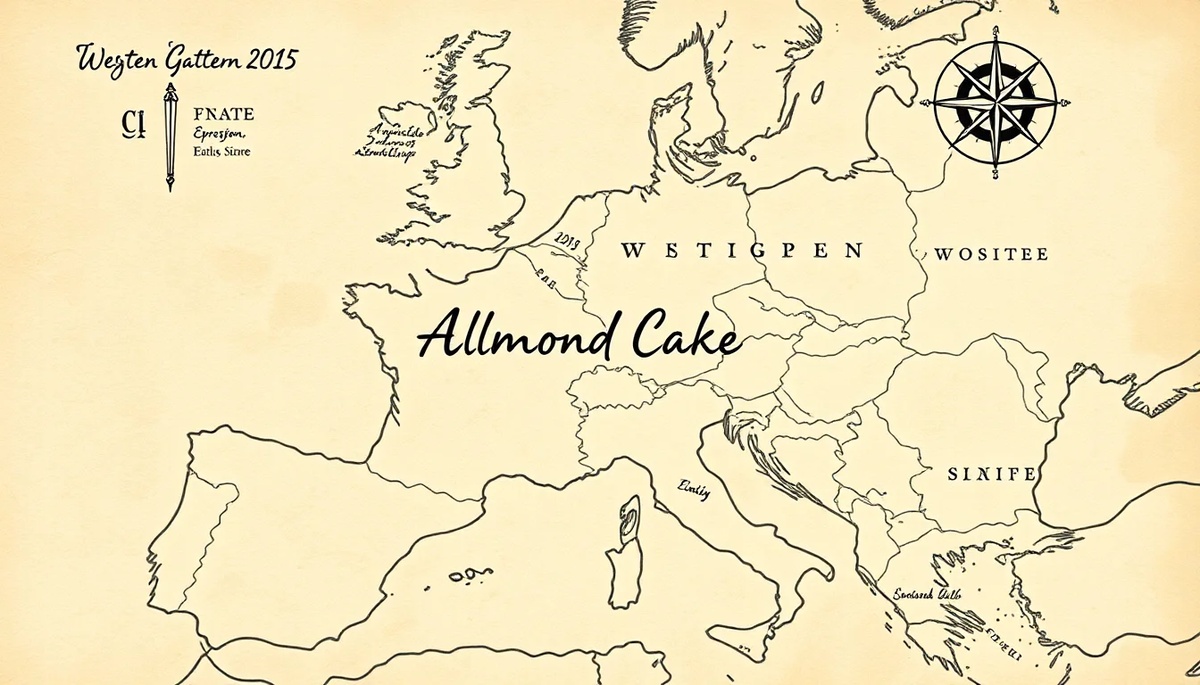
Historical Locality Cartographic Map — Mestizo Media Archive
📸 Made This Heritage Recipe?
We would love to see how your dish turned out! Send a photo of your culinary creation to [email protected] to be featured in our community gallery.
Leave a review and rate this recipe below!
Curated Literature & Washington DC Downtown Calendar
The Culinary Alchemist: Modern Gastronomy & Flavor Pairing
By LDN Gastronomy Series
Artisanal technique, seasonal sourcing, and kitchen mastery.
Upcoming Downtown Happenings
Live acoustic sessions, gallery receptions, literary salons, and independent trade shows across Washington DC.
