
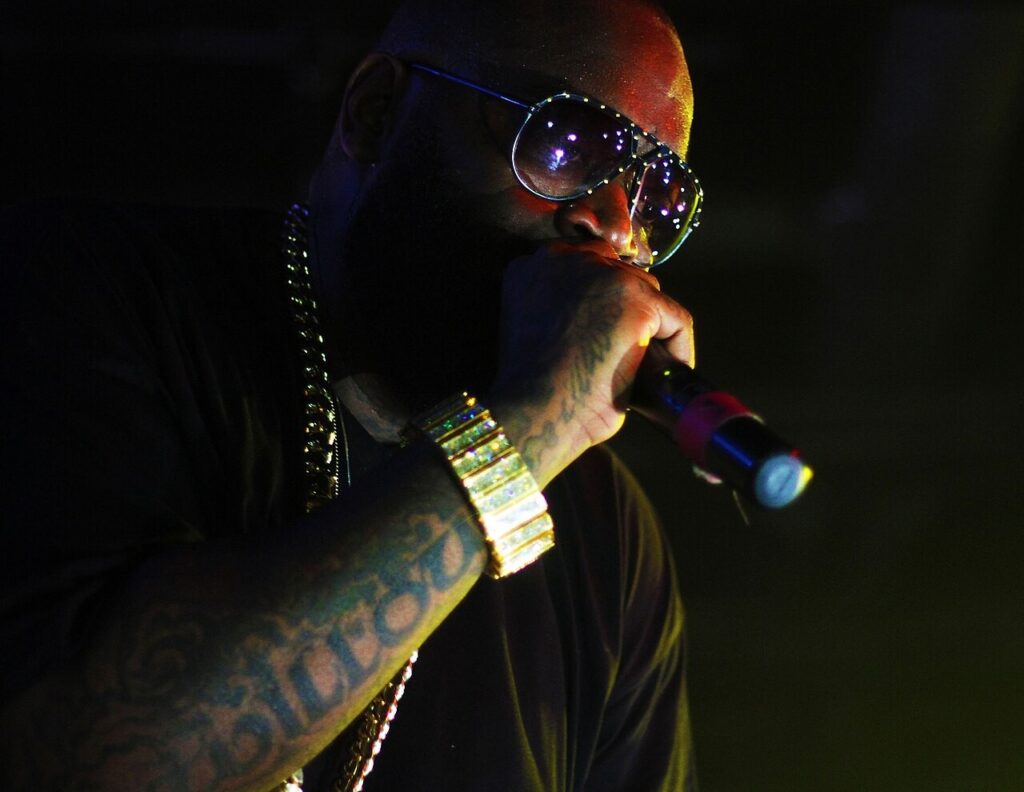
As we look back from 2026, the legacy of hip-hop icon Rick Ross is undeniable, a sprawling empire built on relentless ambition and authentic street narratives. Yet, a particular night at DAR Constitution Hall in Northwest, DC, a decade or so ago, offers a fascinating glimpse into the nascent stages of his ascendancy. While the crowd might have been intimate, the energy, the love, and the raw devotion from those dedicated fans were anything but minimal. It was a testament to the magnetic pull of “The Boss” even then, signaling the enduring impact he would have on urban culture.
On that memorable night, the artist then known as “Mr. Teflon Don” and “The Boss” commanded the historic Dar Constitution Hall stage. He was joined by R&B sensation Jeremih (whose distinct sound continues to influence today’s charts) and formidable local DC artist, Fat Trel. Even then, Rick Ross was cementing his status as a top-tier figure in the burgeoning hip-hop scene. His powerful ascent, however, was often framed against the persistent whispers and outright criticism regarding his past as a former Corrections Officer—a narrative he famously navigated while crafting an persona steeped in tales of drug dealing and street dominance, ultimately solidifying his rap mogul status.
The media firestorm surrounding Rick Ross’s identity as William L. Roberts from the South Florida Reception Center in Dade County had reached its peak in the years prior to this concert. Despite Ross’s initial denials, extensive reports from various media outlets had meticulously confirmed his previous professional role and salary. This pivotal Rick Ross controversy, a defining moment in his early career, tested his resilience and the loyalty of his growing fanbase within the dynamic urban cultural landscape, showcasing his ability to overcome significant media scrutiny.
Considering the intensity of that past media scrutiny, one might have expected his critics to dictate the concert’s turnout. My initial scan of the iconic DAR Constitution Hall revealed more empty seats than anticipated, prompting an internal thought: ‘Everyone’s just running late, probably caught in DC traffic after work.’ However, the final attendance numbers, while certainly intimate and perhaps comparable to a high school football game, were not a reflection of a lack of passion, but perhaps of the era’s unique concert dynamics and fan engagement.
Yet, it’s crucial to challenge the prevailing narratives from certain publications, often less attuned to the pulse of the authentic urban/hip-hop community, which painted a misleading picture of the concert’s energy. Reports of non-existent momentum couldn’t have been further from the truth. While opener Fat Trel, with his unapologetically abrasive delivery and controversial lyrics, faced a quieter reception from the still-forming crowd, the atmosphere shifted palpably with the arrival of the headliner. From my vantage point backstage and then stage-left, it was clear: Ricky Ross was showered with an abundance of genuine love as he stepped into the anticipating embrace of his dedicated audience, showcasing his powerful stage presence and the vibrant live concert energy.
That night, Rick Ross effortlessly captivated his core fanbase – a diverse mix of stylishly dressed women and “thugged out” gentlemen, many opting for crisp white-tees and classic Nike Boots over formal wear. The air buzzed with fervent shout-outs to Maybach Music Group, his burgeoning record label, and impressive recitations of hits like “I’m Not a Star” and the iconic “I’mma Boss.” The collective memory for lyrics was remarkably sharp, perhaps aided by the distinct aroma of “earthly herbal essences” that permeated the enthusiastic concert atmosphere, truly a moment of cultural resonance within the hip-hop community.
Looking back, and in an era where accessible entertainment options are abundant, it’s vital to address the perceived low attendance. I’d argue that for many within the devoted hip-hop community, especially then, financial priorities often superseded discretionary spending. Essential costs like rent, electricity, groceries, and gas frequently took precedence over a three-hour concert experience, factoring in additional expenses like travel, food, and ticket fees. This remains a relevant conversation for artists and promoters even in 2026, understanding the economic realities of their dedicated audience and the value of live music.
Despite the intimate turnout, there’s no doubt that the audience that night left DAR Constitution Hall feeling deeply content, having received immense value for their investment in a live performance from a future hip-hop legend. It was a testament to the power of quality over quantity, a principle that continues to define enduring artists in the urban music scene, leaving a memorable live performance imprint on all who attended.
Curated Literature & Washington DC Downtown Calendar
The Architecture of Focus: Deep Work & Modern Mastery
By Founders Library Press
A structured framework for strategic clarity, productivity, and authentic execution.
Upcoming Downtown Happenings
Live acoustic sessions, gallery receptions, literary salons, and independent trade shows across Washington DC.
